
Pairing caviar with champagne: the expert guide
Pairing caviar with champagne is defined by a precise interplay of effervescence, acidity, and minerality that amplifies the delicate, briny character of fine caviar. This is not a pairing born of convention alone. The fine bubbles cleanse the palate and reset your taste receptors between each bite, ensuring the first pearl of caviar is as vivid as the last. Not all champagnes or caviars are created equal, however, and choosing the right styles, whether Brut, Extra Brut, or Blanc de Blancs, is what separates a memorable occasion from a merely pleasant one. Aptent has curated this guide to help you make that distinction with confidence.
What makes champagne the ideal partner for caviar?
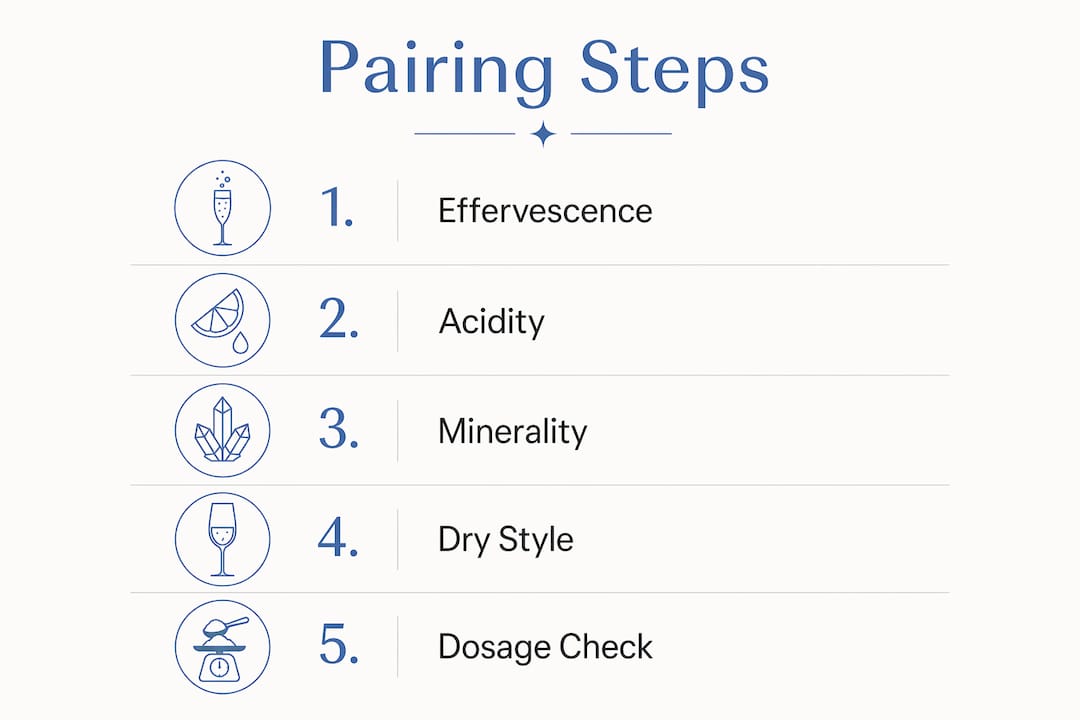
Champagne is the classic pairing for caviar because its flavour architecture mirrors and complements caviar’s sensory profile in three distinct ways. The effervescence, the acidity, and the mineral character each perform a specific role. Understanding those roles transforms how you approach every caviar and champagne combination.
Effervescence as a palate cleanser
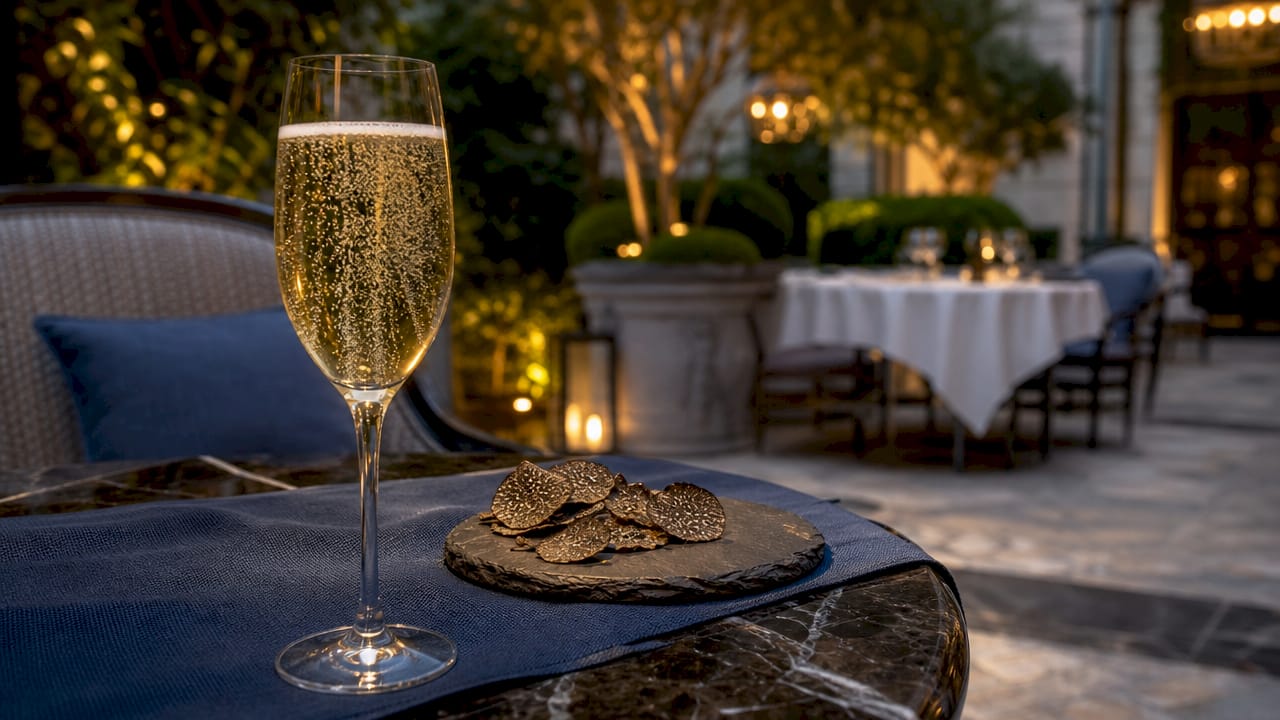
Caviar is rich, buttery, and intensely saline. Without something to reset the palate, successive bites lose their definition and the experience flattens. Champagne’s fine bubbles reset taste receptors, ensuring each mouthful of caviar registers with full clarity. This is why still wines, however excellent, rarely achieve the same synergy with caviar that a well-chosen sparkling wine does.
Acidity as a counterweight to richness
The high natural acidity found in Champagne cuts through the fatty, unctuous texture of premium caviar. Think of it as a squeeze of lemon over oysters. The acidity does not overpower the caviar’s flavour. It lifts it, creating a sensation of brightness that makes the pairing feel lighter and more refined than either element alone.
Mineral notes as a flavour echo
Champagne grown on the chalky soils of the Marne Valley carries a distinctive mineral, almost saline quality. That character echoes the brininess of caviar, producing a resonance rather than a contrast. When two ingredients share a flavour frequency, the pairing feels inevitable rather than constructed.
The style of champagne matters enormously here. Dry styles such as Brut and Extra Brut avoid introducing residual sweetness that would compete with caviar’s saltiness and muddy the pairing. A demi-sec or rich champagne, however prestigious the house, will undermine the very qualities that make this combination so celebrated.
Pro Tip: When selecting a champagne for caviar, read the dosage on the label before the producer’s name. A dosage below 6 grams per litre, classified as Extra Brut, will almost always outperform a sweeter style regardless of the prestige cuvée on the label.
Which champagne styles pair best with different types of caviar?
The most practical way to approach caviar pairing suggestions is to match the weight and intensity of the champagne to the flavour profile of the caviar. Delicate caviars call for lighter, more precise champagnes. Richer, nuttier caviars reward a wine with more depth and texture.
| Caviar type | Champagne style | Why it works |
|---|---|---|
| Beluga and Daurenki | Blanc de Blancs (Extra Brut) | Pure Chardonnay delivers fine minerality and elegance that honours delicate, buttery flavours |
| Oscietre (Oscietra) | Blanc de Noirs or aged Brut | Pinot Noir-driven wines match the nutty richness and golden complexity of Oscietre |
| Baeri (Siberian Sturgeon) | Non-vintage Brut | Fresh acidity and approachable structure complement Baeri’s clean, mild brininess |
| Premium or aged caviars | Vintage or prestige cuvée | Prestige cuvées have depth that complements the richness of high-end caviar types |
Blanc de Blancs, made exclusively from Chardonnay, is mineral and refined in a way that suits the most delicate caviars without overwhelming them. Aptent’s Extra Brut Blanc de Blancs Grand Cru exemplifies this style, offering the chalky precision and citrus tension that Beluga and Daurenki demand.
For Oscietre, the pairing logic shifts. This caviar carries a pronounced nutty richness and a golden, almost hazelnut quality that a Blanc de Blancs can feel too lean to support. A Blanc de Noirs, or a well-aged non-vintage Brut with some toasty complexity, provides the textural weight to match it. Aptent’s Oscietre Signature Caviar rewards this approach beautifully.
For the grandest occasions, a vintage champagne brings a dimension of aged complexity, dried fruit, brioche, and layered minerality, that elevates premium caviar into something genuinely extraordinary. Aptent’s vintage Le Secret de Jules is precisely this kind of wine.
Pro Tip: If you are serving multiple caviar types at a single event, begin with the lightest caviar and the most delicate champagne, then progress to richer caviars and more complex wines. This sequence preserves your palate and builds the experience deliberately.
What are the best alternatives to champagne for pairing with caviar?
The biggest misconception in caviar pairing is that only Champagne from the Champagne region will do. Style, not geography, is the governing principle. Dryness, acidity, and mineral character are the three criteria by which any alternative should be evaluated.
Crémant is the most compelling alternative. Crémant de Bourgogne, d’Alsace, and de Loire are produced using the traditional method, the same technique used in Champagne, and offer comparable effervescence and acidity at a fraction of the price. Crémant d’Alsace made from Auxerrois or Pinot Blanc carries a gentle creaminess that works particularly well with Baeri caviar’s clean, approachable profile.
Still white wines are an underrated category for caviar pairing suggestions. Chablis and Sancerre bring oyster-shell minerality, lemon zest, and bright acidity that mirror the qualities of a good Blanc de Blancs without the bubbles. Chablis Premier Cru, in particular, has a flinty, almost saline quality that creates a compelling dialogue with the brininess of fine caviar. Sancerre, made from Sauvignon Blanc in the Loire Valley, adds a grassy, citrus-driven freshness that suits lighter caviars well.
Italian Franciacorta, produced in Lombardy using the traditional method, offers a creamy, fine-bubbled alternative with genuine mineral depth. Dry Prosecco, specifically Prosecco Superiore DOCG with low residual sugar, provides a lighter, more floral pairing suited to occasions where elegance is preferred over intensity. The key with any alternative is to confirm the wine is genuinely dry. A Prosecco with perceptible sweetness will clash with caviar’s salinity rather than complement it.
How should you serve caviar and champagne for the best experience?
Serving conditions are not incidental to the pairing. They are part of it. The finest caviar and champagne combination will underperform if either element is served at the wrong temperature or with the wrong vessel.
-
Chill champagne to between 8°C and 10°C. This range preserves aromatic complexity while keeping the wine refreshing. Serving champagne too cold, below 6°C, suppresses the mineral and fruit notes that make the pairing work. A standard refrigerator set to 4°C is too cold. Use an ice bucket with a mix of ice and water for the final 20 minutes before serving.
-
Keep caviar cold but not frozen. Caviar served cold with non-metal spoons prevents off-flavours caused by metallic oxidation. Mother-of-pearl, bone, or horn spoons are the traditional choice. Even a clean plastic spoon is preferable to silver or stainless steel, which impart a metallic note that distorts the caviar’s flavour.
-
Follow the tasting sequence. Take a sip of champagne first to prime the palate with acidity and effervescence. Then place a small amount of caviar on the back of your hand or directly on the tongue. Follow with another sip of champagne to cleanse and integrate. This sequence is not ceremony for its own sake. It is the most efficient way to experience the full range of flavours in both products.
-
Pace the experience deliberately. Caviar is best appreciated in small quantities. A 30 gram portion served across 20 to 30 minutes, with unhurried conversation between bites, allows the palate to remain receptive. Rushing the experience compresses the flavour arc and diminishes the return on what is, by any measure, a significant investment.
Pro Tip: Serve caviar on a bed of crushed ice in a non-reactive vessel, such as glass or crystal, and bring it to the table no more than five minutes before serving. Prolonged exposure to air dulls the pearls’ lustre and subtly alters the flavour.
Key takeaways
The most effective approach to pairing caviar with champagne is to prioritise dryness and mineral character in the wine, match champagne weight to caviar intensity, and serve both at precise temperatures.
| Point | Details |
|---|---|
| Style over price | Dryness and minerality matter more than prestige or cost when selecting champagne for caviar. |
| Match weight to intensity | Delicate caviars suit Blanc de Blancs; richer Oscietre rewards a Blanc de Noirs or aged Brut. |
| Alternatives are legitimate | Crémant, Chablis, and Sancerre share the key qualities of champagne and pair with caviar equally well. |
| Temperature is non-negotiable | Champagne at 8°C to 10°C and caviar served cold on ice preserve the flavours that make the pairing work. |
| Tasting sequence matters | Sip champagne first, then taste caviar, then cleanse with champagne to experience the full flavour arc. |
Aptent’s perspective on getting this pairing right
The most persistent mistake made when approaching caviar and champagne combinations is conflating price with suitability. A grand prestige cuvée from a celebrated house is a magnificent wine. But if it carries 10 or 12 grams of dosage per litre, it will compete with caviar’s salinity rather than complement it. Aptent has seen this play out at tastings repeatedly, and the disappointment is always the same. The wine and the caviar each perform well in isolation, but together they produce a kind of flavour interference rather than harmony.
The liberating corollary to this is that you do not need to spend extravagantly to achieve an extraordinary pairing. A well-chosen Crémant de Bourgogne or a precise Chablis Premier Cru will outperform a sweet prestige cuvée every time. The criteria are simple: dry, mineral, and high in acidity. Once you internalise those three qualities, the selection process becomes instinctive rather than intimidating.
Aptent’s personal recommendation for a first serious pairing is Baeri caviar alongside a non-vintage Brut or a Blanc de Blancs. Baeri’s clean, mild brininess is forgiving and expressive, making it an ideal canvas for understanding how champagne’s acidity and effervescence interact with caviar’s texture. From that foundation, the progression to Oscietre with a Blanc de Noirs, or Beluga with a vintage cuvée, feels natural and earned rather than arbitrary.
Do not be deterred by the formality that surrounds this pairing tradition. The etiquette exists to serve the flavour, not the other way around.
— Aptent
Discover Aptent’s curated caviar and champagne selections
Aptent brings together a collection of premium caviars and champagnes sourced from prestigious producers, selected specifically for their pairing potential.
For those beginning their exploration, Aptent’s Baeri Signature Caviar offers an approachable yet refined introduction, best paired with the Tradition Brut Champagne from Aptent’s curated cellar. For a more opulent occasion, the Oscietre Signature Caviar alongside a vintage prestige cuvée represents the full expression of this pairing tradition. Browse Aptent’s complete wine and caviar collection to find the combination that suits your next occasion, whether an intimate dinner or a bespoke event for discerning guests.
FAQ
What is the best champagne style for pairing with caviar?
Brut and Extra Brut Champagne, particularly Blanc de Blancs made from Chardonnay, are the best choices for pairing with caviar. Their dryness, high acidity, and mineral character complement caviar’s salinity without competing with it.
Can you pair caviar with wines other than champagne?
Still white wines such as Chablis and Sancerre, along with Crémant from Burgundy, Alsace, or the Loire, are excellent alternatives that share the key qualities of dryness, acidity, and minerality that make champagne so well suited to caviar.
Why should you avoid sweet champagne with caviar?
Residual sugar in sweeter champagne styles clashes with caviar’s natural saltiness, creating a discordant flavour rather than harmony. Dryness is the single most important criterion when selecting a champagne for caviar.
What utensils should be used when serving caviar?
Non-metallic utensils, specifically mother-of-pearl, bone, or horn spoons, are recommended for serving caviar. Metal spoons impart a metallic off-flavour that distorts the caviar’s delicate taste profile.
Does the type of caviar change which champagne you should choose?
The weight and intensity of the caviar should guide the champagne selection. Delicate caviars such as Beluga suit a precise Blanc de Blancs, while nuttier Oscietre pairs better with a Blanc de Noirs or an aged Brut with greater textural depth.


