
Blanc de blancs vs blanc de noirs: the real difference
Blanc de blancs means “white from whites”: a Champagne made entirely from white grapes, almost always 100% Chardonnay, delivering citrus, chalky minerality, and a leaner frame. Blanc de noirs means “white from blacks”: a pale wine pressed from dark-skinned Pinot Noir and Pinot Meunier, showing riper red fruit and a rounder palate.
- Want something bright to open an evening or partner with oysters and caviar? Reach for blanc de blancs.
- Want a fuller glass with your roast chicken or charcuterie board? Blanc de noirs earns its place.
Key takeaways
The grape used, Chardonnay for blanc de blancs versus Pinot Noir or Meunier for blanc de noirs, drives acidity, body, and the food pairings that work best with each style.
| Point | Details |
|---|---|
| Grape rule | Blanc de blancs uses white grapes, mostly Chardonnay; blanc de noirs uses dark grapes, mainly Pinot Noir and Meunier. |
| Tasting profile | Blanc de blancs leans citrus and mineral; blanc de noirs leans red fruit and fuller body. |
| Production can blur lines | Barrel ageing, malolactic fermentation, and extended lees contact can push either style toward the other. |
| Pairing logic | Match blanc de blancs to seafood and caviar, blanc de noirs to richer poultry and charcuterie. |
| Where to explore both | Aptent’s Champagne collection offers curated examples of both styles for direct comparison. |
Table of Contents
- Blanc de blancs vs blanc de noirs: definitions and grapes
- What blanc de blancs and blanc de noirs taste like
- How production and ageing choices reshape both styles
- Food pairing and serving suggestions for each style
- How to choose between blanc de blancs and blanc de noirs
- Aptent’s view on choosing the right style for your table
- Where to read more on Champagne styles
- What the evidence actually tells you to prioritise
- Explore curated Champagne and caviar pairings with Aptent
- Sources
Blanc de blancs vs blanc de noirs: definitions and grapes
The terms sound like siblings, but they describe entirely different starting materials. Blanc de blancs is white wine made from white grapes only, while blanc de noirs is white wine pressed from dark grapes, with the skins removed before colour bleeds into the juice. Both are legitimate Champagne styles, and both appear well beyond that region, though the rules loosen considerably once you leave it.
A quick note on spelling matters more than it seems. “Blanc de blanc” (singular) is a common mistake; the correct plural form, “blanc de blancs,” reflects multiple white grape varieties or lots, even when only Chardonnay is used. The same logic applies to “blanc de noir” versus “blanc de noirs.”
- Chardonnay dominance. In Champagne, blanc de blancs is almost always 100% Chardonnay, the appellation’s benchmark white grape.
- Pinot Noir and Pinot Meunier. Blanc de noirs draws on one or both of these dark varieties, sometimes blended, sometimes as a single-variety expression.
- Lesser-used whites. Champagne permits a handful of other white grapes (Pinot Blanc, Pinot Gris, Arbanne), though they show up rarely and in tiny proportions.
- Global usage varies. Outside Champagne, labelling isn’t tightly regulated, so producers use local white grapes and either tank or traditional method production under the same terminology.
What blanc de blancs and blanc de noirs taste like
Pour both side by side and the contrast is obvious before you even taste. Blanc de blancs tends to run pale, almost silvery, with fine, persistent bubbles, while blanc de noirs often carries a touch more colour, sometimes edging toward a faint blush, and a slightly broader bead.
On the palate, the differences follow the grape.
- Blanc de blancs: lemon, green apple, white flowers, wet chalk or flint, higher acidity, a leaner, more linear body.
- Blanc de noirs: strawberry, cherry, red-berry flesh, a touch of spice, and a broader, more textural palate.
Whether a bottle leans single-varietal or blended changes the picture further. A blanc de noirs built entirely from Pinot Noir tends to feel more structured than one dominated by Pinot Meunier, which softens the fruit and adds an earlier-drinking charm. That distinction matters for anyone planning a pairing, since a firmer Pinot Noir base holds up better against richer food.
Statistic Callout: Nearly 98% of all Chardonnay plantings in the Champagne appellation go toward blanc de blancs and blended cuvées, which is why the style is so reliably Chardonnay-driven in the region, even as producers elsewhere experiment with other white grapes entirely.
A Decanter panel tasting found blanc de blancs styles span a genuinely wide range, from delicate, citrus-forward non-vintage bottles built for early drinking to long-aged, complex wines that reward a decade in the cellar. Vintage and ageing choices shift the profile as much as the grape does.
How production and ageing choices reshape both styles
Grape variety sets the baseline, but the winemaker’s hand can push a wine well beyond expectation. Traditional method (secondary fermentation in the bottle) is standard for Champagne versions of both styles, while tank method sparkling wines elsewhere often use blanc de blancs or blanc de noirs labelling more loosely.
- Lees ageing and autolysis bring brioche and creamy notes, and extended time on lees can round out a blanc de blancs considerably.
- Oak and malolactic fermentation add weight and a buttery texture, sometimes enough to make a blanc de blancs taste closer to a blanc de noirs.
- Vintage character matters too: a warmer growing year can push Chardonnay toward riper, rounder fruit, narrowing the gap between the two styles.
- Ageing potential generally favours blanc de blancs, whose acid backbone tends to hold structure longer in the cellar than most blanc de noirs.
Winemaking technique can genuinely blur the line between these two categories, so a label alone won’t always predict the glass. Barrel ageing and malolactic fermentation are the two most common culprits when a blanc de blancs tastes fuller than its grape suggests.
Pro Tip: If you’re buying a prestige blanc de blancs for a special occasion, buy it early and let it rest for a few years. The acidity mellows, the brioche notes deepen, and the wine rewards patience far more than most blanc de noirs will.
Food pairing and serving suggestions for each style
Matching the right bottle to the right plate comes down to acid and weight. A wine’s structure should either cut through richness or match it, never compete against it.
- Blanc de blancs partners beautifully with oysters, caviar, and shellfish, where its acidity and mineral edge cleanse the palate between briny bites.
- Blanc de noirs suits richer white fish, roast pork, roast poultry, charcuterie, and even tomato-based dishes, where its fuller fruit and body stand up to more assertive flavours.
- Serving temperature should sit around 8 to 10 degrees Celsius for both, poured into a tulip-shaped glass rather than a flat coupe, which lets aroma concentrate.
- Occasion guidance: blanc de blancs works as a crisp aperitif or a full pairing with delicate seafood, while blanc de noirs holds its own across a longer meal, particularly one built around poultry or charcuterie.
How to choose between blanc de blancs and blanc de noirs
Reading the label properly tells you most of what you need before you even taste. Look for the grape indication, region, and whether the bottle is a single variety or a blend, since blends often soften the more extreme characteristics of either style.
- Vintage vs non-vintage: non-vintage bottles favour consistency and immediate drinking, while vintage releases reflect a specific year’s character and generally reward a little patience.
- Entry-level NV is the sensible choice for everyday celebration or a casual aperitif.
- Mid-range bottles offer more versatility across a meal and are worth seeking out for dinner parties.
- Prestige cuvées, particularly aged blanc de blancs, suit collectors and milestone celebrations where ageing potential adds real value.
- Ask your retailer whether the wine is barrel-fermented or has extended lees contact. Both push the flavour profile toward fuller and creamier, regardless of grape.
Aptent’s view on choosing the right style for your table
Aptent curates Champagne and caviar pairings for exactly this kind of decision, and the grape rule holds up consistently at the table. A crisp blanc de blancs alongside caviar is one of the most reliable luxury pairings in the gourmet world, its acidity lifting the brine rather than fighting it.
- Blanc de blancs with caviar, oysters, or fine seafood canapés.
- Blanc de noirs with richer hors d’oeuvres, charcuterie boards, or foie gras.
| Style | Best Aptent-curated pairing |
|---|---|
| Blanc de blancs | Caviar, oysters, chilled shellfish |
| Blanc de noirs | Charcuterie, foie gras, richer canapés |
Where to read more on Champagne styles
For readers who want to go deeper on grape rules, ageing, and tasting evidence, these are the sources behind the guidance above.
- Wine Enthusiast’s blanc de blancs guide for grape composition and Chardonnay planting figures.
- Decanter’s blanc de noirs explainer for production nuance and dark grape rules.
- Decanter’s blanc de blancs panel tasting for real tasting evidence across styles and vintages.
- VinoVonk’s overview of blanc de blancs for how the term is used outside Champagne.
Producer tasting notes and current panel results are worth checking for any specific bottle before you buy, since vintage variation can shift a wine noticeably from what general guidance suggests.
What the evidence actually tells you to prioritise
Most guides to blanc de blancs and blanc de noirs stop at the grape rule and leave it there, as though Chardonnay guarantees citrus and Pinot Noir guarantees red fruit every time. The tasting evidence says otherwise. Ageing, lees contact, and vintage warmth move the needle more than most drinkers expect, which means a label alone is a starting point, not a promise.
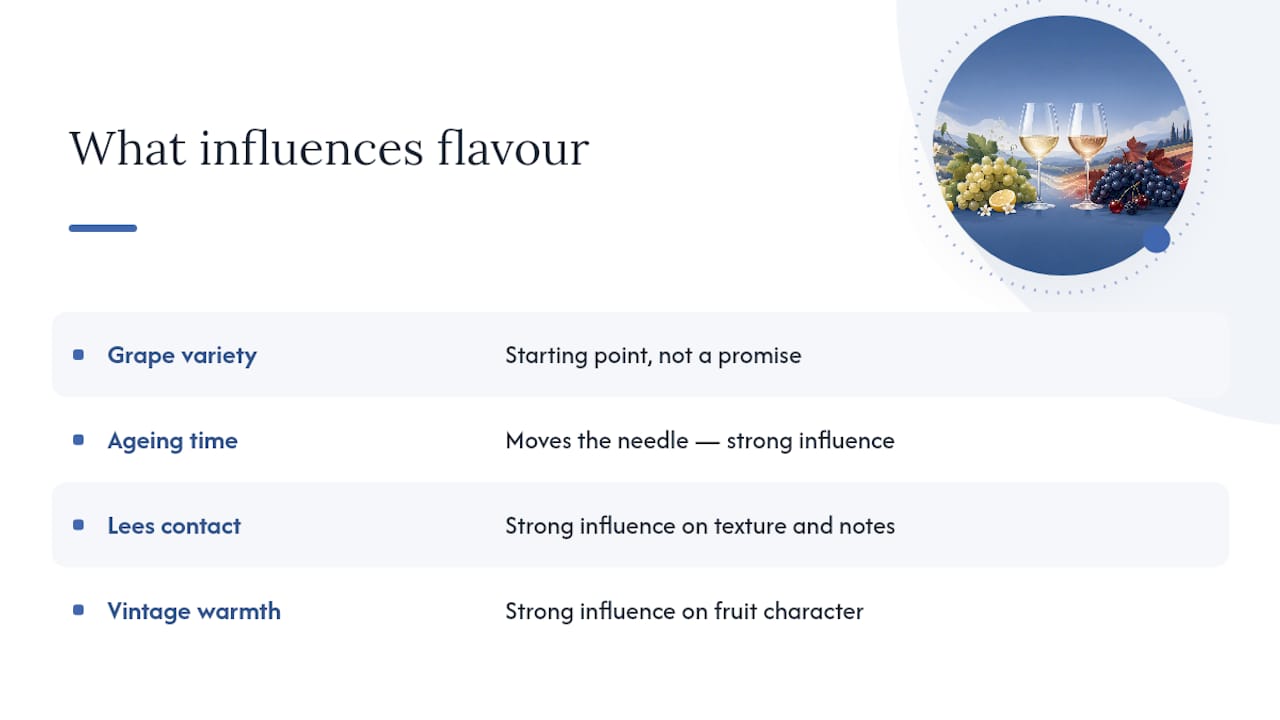
The bigger error is treating this as a binary choice rather than a spectrum. A young, unoaked blanc de blancs and a decade-aged, barrel-influenced one are almost different wines wearing the same label. The same goes for a Pinot Meunier heavy blanc de noirs against a structured, all Pinot Noir version. Before buying on grape alone, ask about vintage, lees ageing, and whether oak or malolactic fermentation was used. That single question will tell you more about what’s actually in the glass than the front label ever will.
If there’s one practical shift worth making, it’s pairing by acidity and weight rather than by name recognition. A rich blanc de blancs can outperform a light blanc de noirs at a heavier meal, and the reverse holds for delicate seafood. Trust the wine’s structure over its category.
— APTENT
Explore curated Champagne and caviar pairings with Aptent
Aptent gives you direct access to boutique grower Champagne and museum-grade caviar without wading through generic retail shelves that rarely distinguish a delicate NV blanc de blancs from a structured, cellar-worthy one. Every bottle in the Champagne collection is selected with grape composition, ageing, and pairing potential in mind, so you’re never guessing whether a blanc de blancs will suit your caviar service or overwhelm it.
If you’re building a tasting around seafood or caviar, the Extra Brut Blanc de Blancs Grand Cru is a strong starting point, its acidity and minerality doing exactly what the style promises against briny, delicate flavours. Pair it with the Oscietre Signature Caviar for a combination built on contrast rather than compromise. For a private event where you want both styles poured across courses, Aptent’s Gourmet Events service curates the full pairing, from aperitif to dessert. Browse the full gourmet collection to start planning your next tasting, or explore event catering ideas if you’re organising a larger celebration.
Sources
- What Does ‘Blanc de Blancs’ Mean in Wine? | Wine Enthusiast
- What is ‘blanc de noirs’ Champagne and sparkling wine? | Decanter
- Blanc de Blancs Champagne: Panel tasting results | Decanter
- Blanc de Blancs: Champagne from white grapes | VinoVonk


