
Why wine colour varies: the science explained
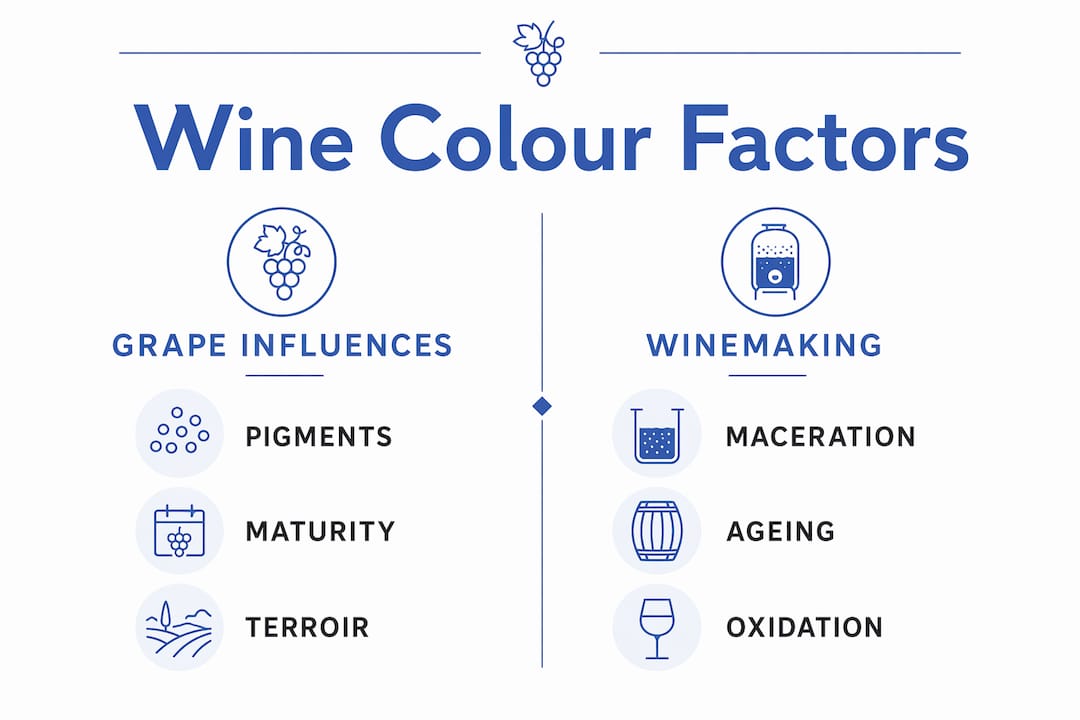
Wine colour varies primarily because of pigments concentrated in grape skins, the degree and duration of skin contact during vinification, and the chemical transformations that unfold as wine ages. These three forces interact continuously, producing the extraordinary spectrum of hues you encounter across the world’s finest bottles.
The principal drivers of colour variation are:
- Grape variety and skin pigment concentration: different cultivars carry vastly different levels of anthocyanins, the phenolic compounds responsible for red and purple hues.
- Maceration duration and temperature: longer, warmer skin contact extracts more pigment, deepening colour intensity.
- pH of the wine: lower pH produces brighter, more vivid reds; higher pH shifts colour toward duller, bluish tones.
- Ageing and oxidation: chemical reactions over time convert youthful purples into brick, tawny, and amber hues.
- Winemaking choices: decisions around pressing speed, barrel use, and fining agents all shape the final colour in the glass.
For the discerning enthusiast, colour is not merely aesthetic. It is a visible record of a wine’s origins, its winemaker’s intentions, and the passage of time.
Where wine colour begins: grape pigments and winemaking technique
The colour of a wine) derives almost entirely from the grape’s skin, not its juice. Pigments sit within the hypodermal cells of the drupe, which means the winemaker’s choices about skin contact determine how much colour enters the wine.
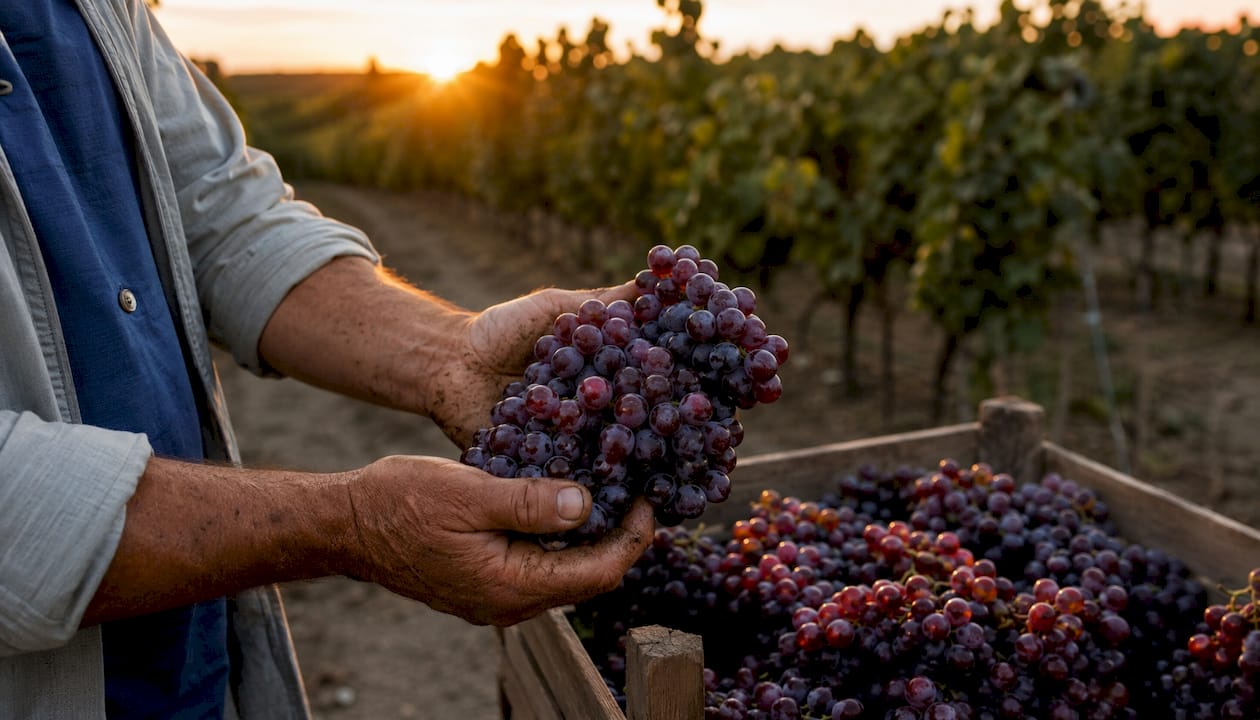
Anthocyanins are the primary pigments in red grape skins, and they exist in five principal forms. Among these, malvidin-3-glucoside is the dominant compound, and its relative concentration varies by variety, producing the subtle hue differences between a pale ruby Pinot Noir and the inky depth of a Barossa Valley Shiraz. White wines remain pale because the juice is separated from the skins almost immediately after crushing, allowing virtually no pigment transfer. Orange wines occupy a fascinating middle ground: white grapes fermented with extended skin contact, yielding amber and copper tones that speak directly to maceration time.
Maceration duration and temperature directly influence pigment extraction, with longer or warmer maceration producing deeper, more saturated colour. Australian winemakers working with Shiraz in warm inland regions such as the Barossa or McLaren Vale often manage fermentation temperatures carefully to balance colour extraction against the risk of extracting harsh tannins. Copigmentation adds another layer of complexity: anthocyanins stack molecularly with colourless flavonoids such as flavonols and hydroxycinnamic acids, amplifying colour intensity beyond what the raw anthocyanin concentration alone would suggest.
pH acts as a molecular switch for anthocyanin colour expression. At lower pH, the red flavylium cation dominates, producing vivid crimson tones. As pH rises, anthocyanins shift toward a colourless carbinol form or a purplish quinone base, dulling the wine’s visual presence. Teinturier grapes, a rare category that includes varieties such as Rubired, are the notable exception: their pigmented pulp) means they contribute colour even without prolonged skin contact, making them valuable for deepening blends.
Pro Tip: When tasting a red wine, tilt the glass against a white surface and observe the rim. A vivid purple rim signals youth and high anthocyanin concentration; a brick or orange rim indicates either age or a naturally lower-pigment variety.
How wine colour evolves through ageing and oxidation
Colour in wine is never static. From the moment fermentation ends, a cascade of chemical reactions begins reshaping the pigment profile, and the trajectory differs markedly between reds, whites, and rosés.
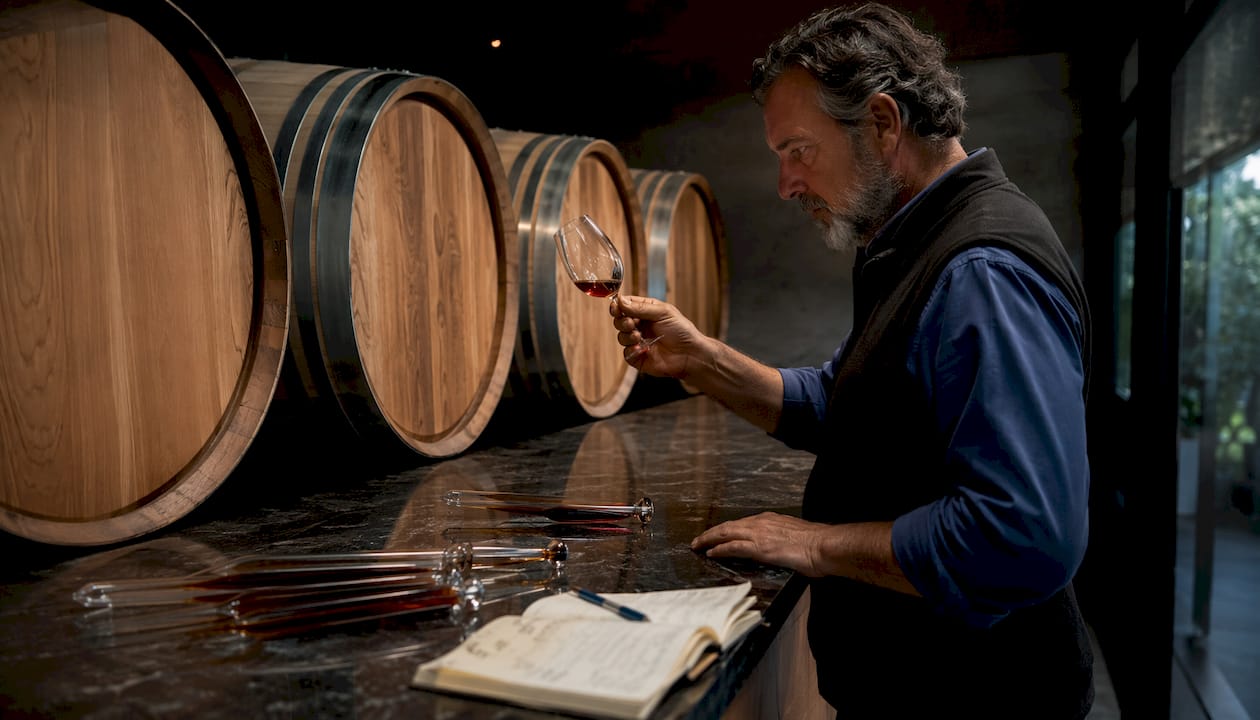
In red wines, autoxidation of anthocyanins and their polymerisation gradually shifts hue from youthful ruby and purple toward brick, tawny, and eventually amber. The mechanism involves acetaldehyde, produced during oxidation, which bridges anthocyanins and tannins to form stable polymeric pigments. These new compounds resist pH changes and sulphite bleaching far better than their monomeric precursors, which is why a well-aged red retains colour despite its chemical transformation. A young Shiraz or Cabernet Sauvignon typically presents as deep opaque purple-red, evolving through garnet and eventually to brick hues over years in bottle.
Ageing shifts unstable monomeric anthocyanins to stable polymeric pigments via acetaldehyde-mediated reactions, permanently altering wine colour from violet-red to brick. Barrel ageing accelerates this process through controlled oxygen ingress, which is why oak-matured Australian reds from regions such as Coonawarra or Margaret River often display more developed colour at release than tank-fermented equivalents.
White wines follow a different path. Phenolic oxidation over time drives colour from pale straw through yellow to deep amber, with heat dramatically accelerating the process. A white wine stored improperly, even briefly at elevated temperatures, can brown prematurely in a way that signals oxidative damage rather than graceful maturation. Rosés, with their limited phenolic content, tend to deepen from pale salmon toward copper as they age, though most are crafted for early consumption.
| Wine type | Young colour | Intermediate | Aged colour |
|---|---|---|---|
| Red (Shiraz, Cabernet) | Deep purple-red | Garnet | Brick, tawny |
| Red (Pinot Noir) | Pale ruby | Garnet-orange rim | Translucent brick |
| White (Chardonnay) | Pale straw | Golden yellow | Deep amber |
| Rosé | Pale salmon | Copper-pink | Copper-orange |
| Orange wine | Amber | Deep amber | Tawny |
What wine colour tells you about style and age
Colour classification in wine is both a practical and aesthetic language, one that rewards those who learn to read it with genuine insight into what lies in the glass.
The principal colour categories and their meanings:
- Deep purple-red: youth, high anthocyanin concentration, full body, and typically high tannin. Classic for young Shiraz and Cabernet Sauvignon.
- Garnet: moderate age or a naturally lighter variety; expect softer tannins and developed secondary aromas.
- Brick and tawny: significant age or oxidative winemaking; flavours shift toward dried fruit, leather, and earth.
- Pale ruby: lighter-bodied reds such as Pinot Noir, or cool-climate styles where pigment extraction is naturally restrained.
- Pale straw to gold: fresh white wines, with deeper gold suggesting barrel fermentation or age.
- Amber and orange: extended skin contact in whites, or significant oxidative ageing; expect texture and phenolic grip.
- Rosé (salmon to copper): determined by brief maceration or saignée; colour depth signals maceration duration.
Colour intensity also correlates with body. A deeply saturated, near-opaque red signals higher wine body, while a translucent, lighter-hued red suggests a more delicate structure. Teinturier varieties, with their pigmented pulp, can produce deeply coloured wines that defy this rule, offering intense colour without the corresponding tannin weight.
How scientists measure and quantify wine colour
Wine colour is not merely a subjective impression. Oenologists quantify it with precision using standardised colorimetric methods that reveal far more than the eye alone can detect.
The International Organisation of Vine and Wine (OIV) defines colour by colouring intensity, calculated as the sum of absorbance at 420, 520, and 620 nanometres, and by hue, expressed as the ratio of absorbance at 420 nm to 520 nm. These measurements allow winemakers to track colour evolution objectively across vintages and treatments.
| Parameter | Measurement | What it reveals |
|---|---|---|
| Absorbance at 420 nm | Yellow-brown component | Oxidation level, ageing degree |
| Absorbance at 520 nm | Red component | Anthocyanin concentration |
| Absorbance at 620 nm | Blue-violet component | Copigmentation, youth |
| Hue (A420/A520) | Ratio | Colour shift from red toward tawny |
| CIELAB L* | Lightness | Wine clarity and depth |
| CIELAB a* | Red-green axis | Redness intensity |
| CIELAB b* | Yellow-blue axis | Yellow component, oxidation |
The CIELAB colour space, which quantifies lightness (L*), red-green balance (a*), and yellow-blue balance (b*), allows researchers to compare wines across varieties, vintages, and winemaking treatments with statistical rigour. Sulphur dioxide bleaching temporarily suppresses colour by binding to anthocyanins, which is why measured colour can shift after sulphite additions, a critical consideration for quality control in commercial winemaking.
Reading wine colour as an Australian enthusiast
For Australian wine lovers, colour is one of the most accessible and informative tools available at the table, provided you know what to look for and what to discount.
A classic Barossa Valley Shiraz pours with an almost opaque purple-red in its youth, reflecting the warm climate’s generous anthocyanin development. By contrast, a cool-climate Pinot Noir from the Yarra Valley or Mornington Peninsula presents a translucent pale ruby, a colour profile explored in depth through Burgundy’s Pinot Noir tradition. Neither is superior; they are simply different expressions of grape, place, and winemaking intent.
Practical guidance for reading colour with confidence:
- Tilt the glass against a white background in natural light for the most accurate colour reading.
- A browning rim on a white wine signals either age or heat damage; context determines which.
- Deep colour in a red does not guarantee quality, only concentration. Tannin structure and balance matter equally, as explored in Aptent’s guide to why wine has tannins.
- Orange or brick tones at the rim of a red indicate oxidative ageing, whether intentional (as in aged Grenache) or the result of time.
- Pale colour in a red can reflect either a delicate variety or a winemaker’s deliberate restraint in extraction.
Improper storage accelerates colour change in ways that signal damage rather than development. White wines exposed to heat brown prematurely; reds stored upright with a compromised cork can oxidise unevenly. Aptent’s curated selection of Grand Cru wines exemplifies how provenance and storage integrity preserve the colour trajectory a winemaker intended.
Pro Tip: When assessing an aged red, compare the colour at the centre of the glass to the rim. A wide brick or tawny rim against a still-garnet centre suggests graceful, controlled ageing rather than premature oxidation.
How terroir shapes grape pigment development
Terroir, the combined influence of soil, climate, and sunlight, exerts a profound effect on the pigment concentration that grapes develop before harvest. Sunlight exposure is particularly consequential: ultraviolet radiation stimulates anthocyanin synthesis in grape skins as a protective response, meaning grapes grown in high-altitude or high-UV environments tend to develop deeper, more concentrated pigmentation. Australian regions such as the Clare Valley and Eden Valley, with their elevation and diurnal temperature variation, consistently produce grapes with vivid colour potential.
Soil composition influences pigment development indirectly through water availability and vine stress. Moderately stressed vines on well-drained soils tend to produce smaller berries with a higher skin-to-juice ratio, concentrating pigments naturally. Climate determines the length of the growing season and the temperature at which ripening occurs, both of which affect the rate and completeness of anthocyanin accumulation. Warm, sunny seasons in regions like the Barossa typically yield deeply coloured fruit, while cooler, wetter vintages produce paler, more translucent wines, a dynamic that vintage variation captures with particular clarity.
How grape maturity and harvest timing affect colour
Harvest timing is one of the most consequential decisions a winemaker makes, and its impact on colour is direct and measurable. Research on grape ripening and wine colour confirms that wines made from more mature grapes generally carry higher free anthocyanin content, and that during ageing, the decrease in free anthocyanins coincides with an increase in anthocyanin derivatives, the “new pigments” responsible for maintaining colour intensity and adding violet hues in aged wines.
Grapes harvested early retain higher acidity and lower sugar, producing wines with brighter, more vivid colour due to the favourable pH environment for anthocyanin expression. Later harvesting allows fuller phenolic ripeness, increasing the pool of anthocyanins available for extraction and subsequent polymerisation. The trade-off is that overripe fruit can produce wines with softer, less vivid colour if the pH climbs too high, shifting anthocyanins toward their colourless forms. Australian winemakers in warm regions often harvest at night or in the early morning to preserve colour and aromatic integrity, managing the fine balance between ripeness and freshness.
How additives and processing aids influence final wine colour
The winery is not a passive environment. A range of additives and processing aids can meaningfully alter the colour a wine presents at bottling.
Pectolytic enzymes, applied during crushing and maceration, break down grape skin cell walls to increase colour extraction. The purity of the enzyme preparation matters considerably: if beta-glucosidase activity is present as a contaminant, it can hydrolyse anthocyanin glucosides into less stable aglycone forms, actually reducing colour. Fining agents such as bentonite, egg white, and casein bind to phenolic compounds and can strip colour from wine if applied too aggressively, a particular concern with delicate reds or rosés where colour is a primary aesthetic attribute. Sulphur dioxide, used universally as an antioxidant and antimicrobial agent, temporarily bleaches anthocyanins through bisulphite addition, suppressing colour in the short term before the equilibrium restores. Yeast selection also plays a role: certain strains adsorb anthocyanins onto their cell walls during fermentation, reducing colour intensity in the finished wine, while others produce higher levels of pyruvic acid and acetaldehyde, promoting the formation of stable polymeric pigments that enhance long-term colour.
Key takeaways
Wine colour variation results from the interplay of grape skin pigments, winemaking technique, ageing chemistry, and environmental factors, all of which are visible in the glass if you know where to look.
| Point | Details |
|---|---|
| Skin contact determines colour | The duration and temperature of maceration control how much anthocyanin transfers from grape skins to wine. |
| pH shapes hue expression | Lower pH produces vivid reds; higher pH shifts anthocyanins toward duller, bluish, or colourless forms. |
| Ageing transforms pigments | Autoxidation and polymerisation convert youthful purples to brick and tawny hues via acetaldehyde-mediated reactions. |
| Terroir and harvest timing matter | High UV, well-drained soils, and later harvesting generally increase anthocyanin concentration and colour depth. |
| Processing aids alter colour | Enzymes, fining agents, sulphur dioxide, and yeast selection each influence the pigment profile at bottling. |


