
Why vintage variation matters for wine collectors
Vintage variation is defined as the year-to-year difference in a wine’s character, chemistry, and quality, driven primarily by the climatic conditions of each growing season. Understanding why vintage variation matters in wine is the single most important skill separating a casual drinker from a discerning collector. Regions such as Burgundy, Bordeaux, and the Mosel produce wines whose personalities shift dramatically from one harvest to the next, making the vintage year on a label far more than a date. Research confirms that vintage affects chemical composition more profoundly than grape variety or region alone, with amino acids in juice ranging from 905.2 to 2,892.8 mg/L across different years. That spread represents the difference between a wine of extraordinary depth and one of modest character.
Why does vintage variation occur in wine?
Vintage variation is caused by the interaction of temperature, rainfall, sunlight hours, and extreme weather events across the grape growing season. Each of these factors shapes how the vine develops, how the fruit ripens, and ultimately what ends up in the bottle.
Temperature is the most influential variable. A warm, dry season accelerates sugar accumulation in the grape, producing fuller, riper wines. A cool, wet season slows ripening, preserving natural acidity and producing wines of greater tension and finesse. Frost events in spring can decimate yields, as Burgundy experienced in 2021, while summer hailstorms can shred canopies and expose fruit to disease. Drought years force vines to dig deeper for water, concentrating flavours but risking phenolic imbalance if heat spikes arrive before the grapes are physiologically ready.
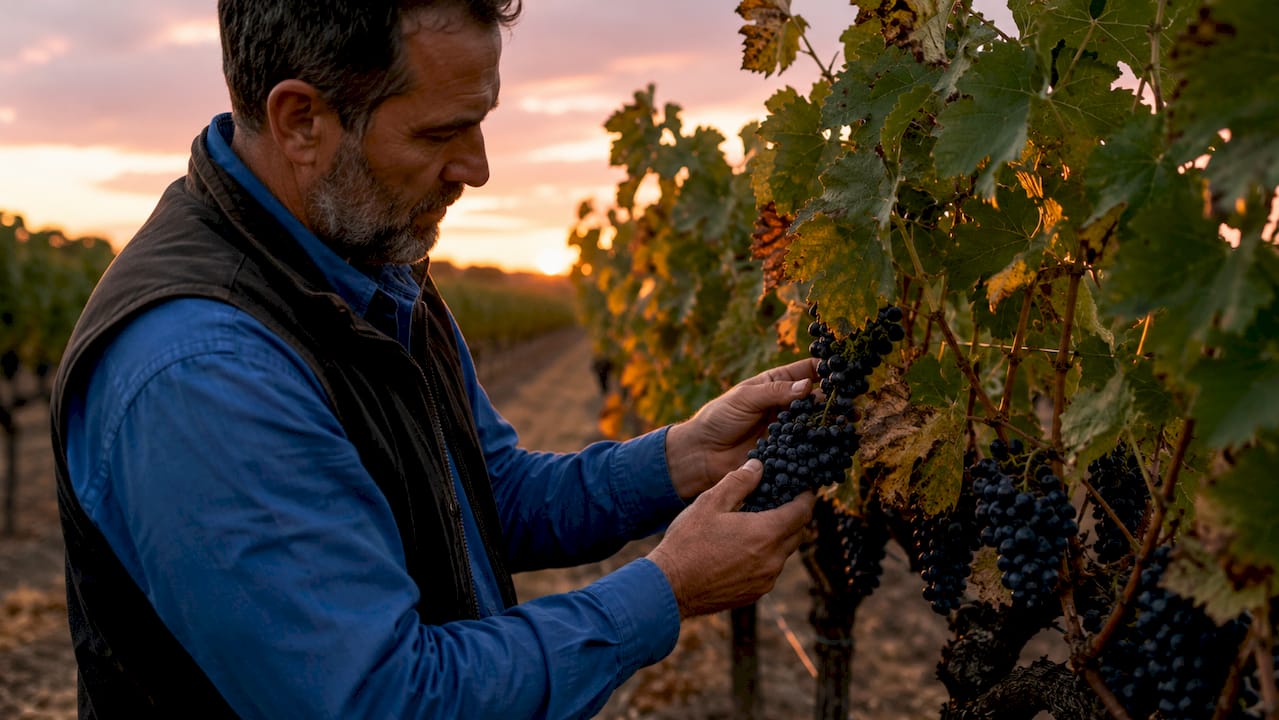
Disease pressure is another decisive factor. Wet, humid conditions invite botrytis and mildew, which can ruin entire parcels if not managed with precision. Conversely, a dry season with good airflow through the canopy produces clean, healthy fruit with minimal intervention required.
Viticultural decisions amplify or mitigate these natural forces. Green harvesting, where excess grape clusters are removed early in the season, concentrates the vine’s energy into fewer, higher-quality bunches. Precise harvest timing is equally critical. Climate change is accelerating sugar accumulation without corresponding phenolic maturity, meaning winemakers must now make harvest calls with greater urgency and precision than previous generations required.
The contrast between cooler and warmer regions illustrates the stakes clearly. In Burgundy or the Mosel, a single week of rain at harvest can transform a potentially great vintage into a merely good one. In Napa Valley or Jerez, the climate is stable enough that vintage variation is moderate, and technology fills the remaining gaps.
Pro Tip: When studying a new wine region, research the last ten vintages before purchasing. The range of scores across those years tells you more about a region’s vintage sensitivity than any single bottle can.
How does vintage variation affect flavour and ageing potential?
Vintage variation directly shapes a wine’s flavour profile, structural composition, and capacity to age. These are not abstract qualities. They determine whether a bottle rewards patience or demands immediate consumption.
The chemistry behind this is well established. Vintage influences volatile compounds such as ethyl caprylate, which contribute to a wine’s aromatic complexity, alongside amino acids that affect fermentation behaviour and mouthfeel. A vintage with abundant amino acids produces a wine with greater textural richness. One with fewer produces something leaner and more austere.
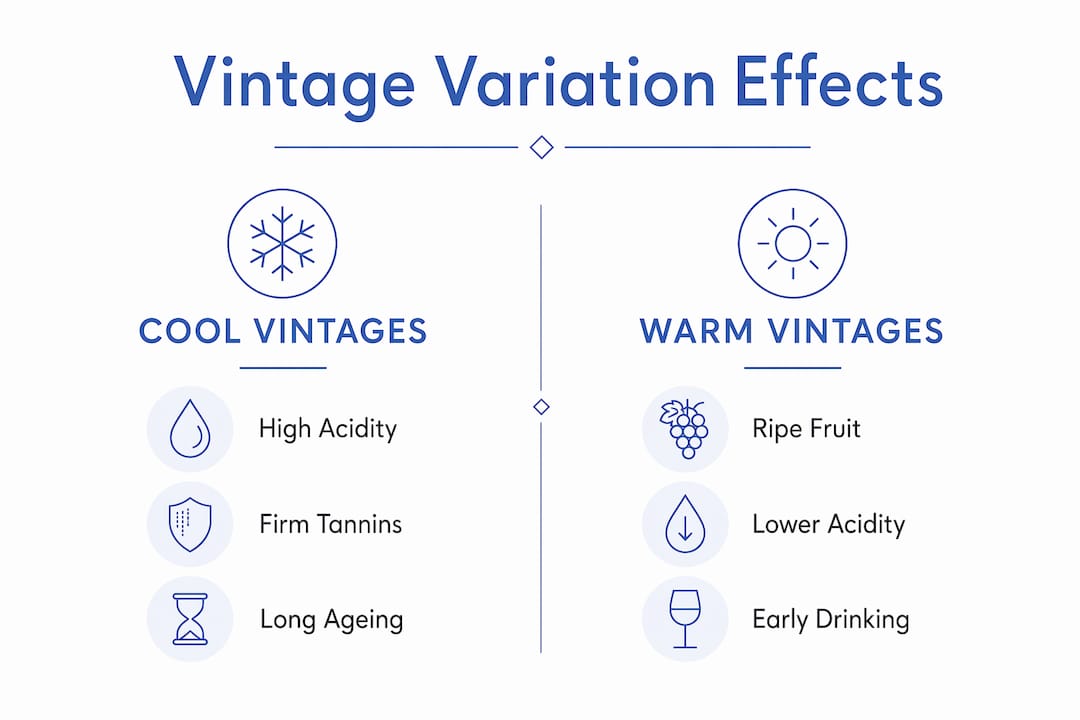
Tannins and acidity are the structural pillars that govern ageing. Cooler vintages in Bordeaux and Barolo tend to produce wines with firm, grippy tannins and high acidity, which act as preservatives over decades of cellaring. Warmer vintages deliver softer tannins and lower acidity, making wines more approachable young but sometimes less compelling at twenty years. Vintage Port and Barolo can require fifteen to twenty years to fully integrate their tannins, and the vintage year determines precisely how long that window extends.
The following table illustrates how vintage character translates into practical ageing guidance across three classic wine styles.
| Wine Style | Cool Vintage Character | Warm Vintage Character |
|---|---|---|
| Bordeaux Rouge | High acidity, firm tannins, 15–25 year window | Plush fruit, softer structure, 8–15 year window |
| Barolo | Austere, floral, requires extended cellaring | Richer, more accessible, earlier drinking |
| German Riesling | Racy acidity, mineral precision, ages 20+ years | Rounder, more generous, drinks well at 5–10 years |
Vintage matters less in regions with stable, warm climates or for wines designed for early consumption. A non-vintage Champagne, for example, is deliberately blended across years to achieve house consistency. Similarly, a simple Vermentino from Sardinia is crafted for freshness and is best consumed within two years regardless of the harvest conditions.
Pro Tip: For investment-grade wines, always cross-reference the vintage year with the producer’s track record in that specific year. A great producer in a modest vintage often outperforms a lesser producer in a celebrated one.
How do european and new world regions differ in vintage significance?
The importance of wine vintage differs substantially between traditional European regions and New World producers, and understanding this distinction sharpens both purchasing and collecting decisions.
Vintage variation is most dramatic in cooler, wetter regions such as Burgundy, Bordeaux, and the Mosel, where ageing potential can range from five years to well over thirty depending on the harvest. These regions sit at the climatic edge of viable viticulture, which is precisely what makes their wines so compelling and so variable. The Burgundy appellations of Gevrey-Chambertin and Chambolle-Musigny, for instance, can produce wines of entirely different personalities in consecutive years from the same vineyard.
In contrast, Napa Valley and Jerez benefit from predictable sunshine and warmth. Cool climate vintages reflect growing season conditions more authentically, while warm climate producers rely on technology and viticultural control to maintain stylistic consistency. This is not a criticism of New World wines. It is simply a recognition that vintage variation is less of a defining force when the sun reliably shines.
| Region | Vintage Sensitivity | Ageing Range | Collector Priority |
|---|---|---|---|
| Burgundy | Very High | 5–30+ years | Critical |
| Bordeaux | High | 8–25 years | Critical |
| Mosel Riesling | High | 5–20+ years | High |
| Napa Valley Cabernet | Moderate | 8–20 years | Moderate |
| Jerez (Sherry) | Low | Non-vintage blending | Lower |
Vintage charts serve as a starting point for navigating this complexity. Vintage ratings incorporate weather data, grower interviews, disease pressure assessments, and tastings of hundreds of wines per year. They are generalisations, not guarantees. A chart that rates 2013 Bordeaux as modest does not mean every producer made a modest wine that year. Producer skill remains the decisive variable beneath the regional average.
How should collectors use vintage knowledge to buy and invest?
Applying vintage understanding to purchasing and investment decisions requires a structured approach rather than reliance on a single score or chart. The following steps provide a practical framework for collectors at any level.
First, consult multiple vintage charts and compare their assessments. Wine Spectator, Jancis Robinson, and the International Wine Authority each publish vintage guides that draw on different tasting pools and methodologies. Discrepancies between sources often signal a vintage of genuine complexity, where producer variation is high and selective buying is rewarded.
Second, research the producer’s performance in the specific vintage you are considering. A skilled winemaker can produce a strong wine even in challenging conditions through green harvesting, precise sorting, and careful cellar work. Some lesser-rated vintages offer superior drinking pleasure and value precisely because they are underestimated by the market.
Third, understand the ageing window for the wine you are buying. Vintage assessments must account for environmental context. The 2013 and 2019 Bordeaux vintages, for example, should not be evaluated against the same baseline because their inherent quality distributions differ. Buying a wine at the right point in its ageing arc is as important as selecting the right vintage.
Fourth, practise comparative tasting across vintages of the same wine. Tasting a 2015 and a 2018 Barolo from the same producer side by side reveals more about vintage character than any written description. This exercise also trains your palate to recognise the structural signatures of warm versus cool years, which accelerates your ability to assess wines in the glass rather than on paper.
Fifth, track how climate change is reshaping vintage profiles. Warmer seasons are altering the concept of a great vintage, making evaluation increasingly complex. Regions once considered marginal are producing wines of new distinction, while historically reliable regions face new challenges. Collectors who monitor these shifts gain a genuine advantage in identifying emerging value.
Key takeaways
Vintage variation is the defining force behind a wine’s character, ageing potential, and investment value, making it the most consequential factor for serious collectors.
| Point | Details |
|---|---|
| Vintage shapes wine chemistry | Amino acids and volatile compounds vary dramatically across years, directly affecting flavour and texture. |
| Cooler regions show greatest variation | Burgundy, Bordeaux, and Mosel produce wines with ageing ranges from 5 to over 30 years depending on the vintage. |
| Producer skill modifies vintage impact | A talented winemaker can craft a compelling wine even in a modest vintage through precise viticultural decisions. |
| Vintage charts are guides, not absolutes | Ratings incorporate weather and tasting data but cannot account for individual producer performance within a region. |
| Climate change is redefining great vintages | Accelerating heat and drought events demand that collectors reassess traditional vintage hierarchies regularly. |
Aptent’s view: vintage variation as the soul of wine collecting
I have spent years sourcing wines from the world’s most celebrated cellars, and the question I am asked most often is whether vintage really matters or whether it is simply a marketing device. My honest answer is that vintage variation is not a complication. It is the reason wine collecting is worth pursuing at all.
A bottle of Burgundy wine from a cool, tense vintage like 2017 and one from the generous warmth of 2015 are not simply different expressions of the same wine. They are different arguments about what Pinot Noir can be. That dialogue between years is what gives a cellar its intellectual depth and its capacity to surprise.
Where I diverge from conventional wisdom is on the question of so-called lesser vintages. The market consistently underprices wines from years that received modest chart scores, and this is where the most rewarding discoveries live. A producer of genuine skill in a cool, challenging year often makes something more interesting than a celebrated producer in a universally praised year, because adversity demands creativity. I have opened bottles from years the critics dismissed and found wines of extraordinary precision and longevity.
Climate change is the variable that concerns me most as a collector. The shifting vintage profiles across Europe and the Southern Hemisphere mean that the vintage hierarchies established over the past fifty years are no longer reliable guides to the next fifty. The collector who adapts to this reality, who studies emerging regions and reassesses established ones with fresh eyes, will find opportunities that the market has not yet priced.
— Aptent
Discover vintage excellence at Aptent
For those who understand that the year on a label carries as much weight as the name of the producer, Aptent’s curated wine collection offers a considered selection of bottles from regions where vintage variation is most pronounced and most rewarding.
Aptent’s wine cellar brings together prestigious vintages from Burgundy, Bordeaux, the Rhône Valley, and beyond, each selected for its ability to express the character of its year with authenticity and refinement. Whether you are building a cellar for personal pleasure or acquiring wines with long-term investment potential, Aptent’s collection includes rare and collectible vintages sourced directly from distinguished producers. Explore the Aptent cellar and allow the vintage to tell its own story.
FAQ
What does vintage variation mean in wine?
Vintage variation refers to the year-to-year differences in a wine’s character and quality caused by changing climatic conditions during the growing season. These differences affect everything from flavour and aroma to structure and ageing potential.
Which wine regions show the most vintage variation?
Cooler, wetter regions such as Burgundy, Bordeaux, and the Mosel show the most dramatic vintage variation, with ageing windows ranging from five to over thirty years depending on the harvest conditions.
Does vintage matter for all wines?
Vintage matters most for wines designed to age, particularly those from cool climate regions. Wines made for early consumption, such as non-vintage Champagne or light whites, are deliberately crafted to minimise vintage influence.
How reliable are vintage charts for collectors?
Vintage charts are generalisations that summarise regional quality based on weather data and extensive tastings. They are useful starting points but cannot account for individual producer performance within a region.
How does climate change affect vintage variation?
Climate change is accelerating sugar accumulation in grapes without corresponding phenolic maturity, making harvest timing more critical and reshaping what constitutes a great vintage across traditional and emerging wine regions.


