
Gourmet food caviar: the definitive buyer's guide
Gourmet food caviar is defined as the salted roe of sturgeon, prized across fine dining establishments worldwide for its opulent flavour, silken texture, and extraordinary rarity. The industry term for the finest grade is malossol, a lightly salted preparation that preserves the roe’s natural oceanic and buttery character. Varieties including Beluga, Osetra, Sevruga, and Baerii each command devoted followings among discerning palates, and each carries a distinct personality shaped by species, geography, and aquaculture practice. Whether you are selecting a tin for personal indulgence, curating a gift of genuine distinction, or planning a fine dining experience, understanding what separates exceptional caviar from the ordinary is the foundation of every worthwhile purchase.
What are the main types of gourmet food caviar?
The four principal caviar varieties are Beluga, Osetra, Sevruga, and Baerii, each differing in pearl size, colour, taste profile, and geographic origin. That diversity is not merely academic. It determines price, availability, and the precise sensory experience you will encounter at the table.

Beluga (Huso huso) produces the largest pearls, ranging from pale grey to deep charcoal, with a famously buttery smoothness and a finish that lingers without aggression. It is the rarest and most expensive variety, and wild Beluga imports are banned in many countries due to conservation pressures. Osetra (Acipenser gueldenstaedtii) offers medium-sized pearls in golden to dark brown tones, delivering nutty, complex layers that many connoisseurs regard as the most intellectually rewarding of all caviar types. Sevruga (Acipenser stellatus) produces smaller, darker pearls with a pronounced briny intensity that suits those who prefer a bolder marine character. Baerii (Acipenser baerii, Siberian sturgeon) has become the workhorse of sustainable aquaculture, yielding firm, dark pearls with a clean, mild flavour that makes it an excellent introduction to premium fish roe.
| Variety | Pearl Size | Flavour Profile | Typical Origin | Price Range |
|---|---|---|---|---|
| Beluga | Large | Buttery, delicate | Caspian Sea region | Very high |
| Osetra | Medium | Nutty, complex | Caspian, Black Sea | High |
| Sevruga | Small | Briny, intense | Caspian Sea region | Moderate to high |
| Baerii | Small to medium | Clean, mild | France, China, Uruguay | Moderate |
Geographic origin matters beyond mere provenance. French Baerii from producers in Aquitaine, for instance, benefits from controlled freshwater environments and strict feeding protocols that produce a consistency rarely matched by wild-caught alternatives. Aptent sources its Baerii Signature Caviar from precisely this calibre of producer, where traceability begins at the hatchery.
Pro Tip: When comparing varieties side by side at caviar tasting events, always begin with the mildest variety, such as Baerii, and progress toward the most intense, such as Sevruga. Starting with a bold flavour will overwhelm the palate and obscure the subtleties of lighter caviars.
How should caviar be stored for optimal freshness?
Caviar is one of the most temperature-sensitive luxury foods in existence, and improper storage is the single most common reason a premium tin disappoints at the table. Ideal storage temperature sits between -2°C and 2°C, which is colder than most domestic refrigerators run by default. Place your tin in the coldest section of the fridge, typically the back of the lowest shelf or the dedicated meat drawer, and keep it away from the door where temperature fluctuates with every opening.
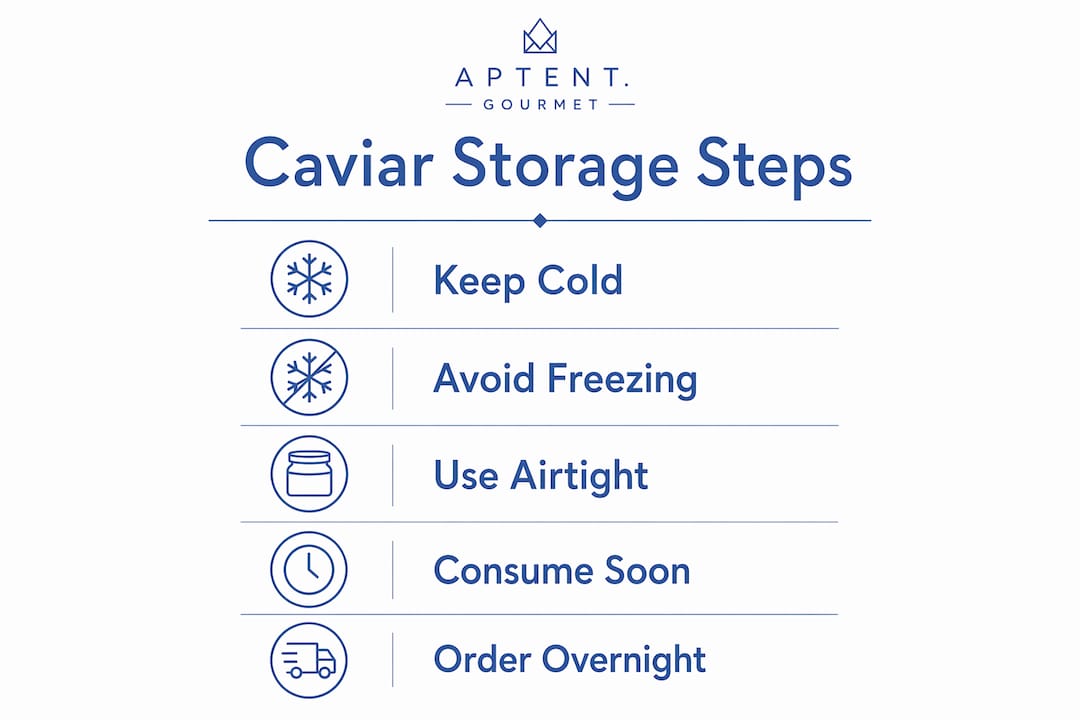
Unopened, a quality tin will remain fresh until its consume-by date, typically four to eight weeks from processing. Once opened, the calculus changes entirely. Exposure to air accelerates spoilage and introduces off-flavours, so any remaining caviar must be consumed within two to three days. Transfer leftovers to an airtight container if the original tin cannot be resealed properly.
Temperature fluctuations cause softening of the eggs, oil separation, and microbial growth. These are not minor aesthetic concerns. They represent a genuine degradation of the product’s safety and flavour integrity. Fine dining restaurants and reputable retailers invest in dedicated caviar refrigeration units that maintain stable humidity and minimal light exposure for precisely this reason.
When ordering online, timing your delivery is as important as the product itself. Reputable suppliers ship overnight in insulated boxes with gel packs or dry ice. Avoid scheduling delivery on a Friday if you cannot receive the parcel immediately, as a weekend sitting in a courier depot will compromise even the finest tin.
Pro Tip: Never freeze caviar. Freezing ruptures the delicate egg membrane, resulting in a mushy texture and a flat, overly briny taste that no amount of elegant presentation can rescue.
What legal and authenticity considerations matter in 2026?
Caviar trade is governed internationally by CITES, the Convention on International Trade in Endangered Species. All commercially traded caviar must carry compliant labelling that includes the species code, country of origin, processing facility identifier, and harvest year. This is not bureaucratic formality. It is the mechanism that connects every tin to a verifiable chain of custody, protecting both the buyer and the species.
CITES regulations have driven a decisive shift from wild fisheries toward sustainable aquaculture. Wild Beluga caviar imports remain banned in Australia and the United States due to conservation concerns, meaning the Beluga you encounter from reputable suppliers is farm-raised. That is not a compromise. Modern aquaculture from producers in France, Italy, and China has reached a standard where farm-raised caviar is indistinguishable in quality from wild-caught, and in many cases more consistent.
When assessing a tin for authenticity, scrutinise the label with care. A legitimate product will display a clear species code (such as HUS for Beluga or GUE for Osetra), a four-digit harvest year, and a processing facility code traceable to a registered producer. Missing or vague labelling is the clearest red flag for counterfeit or illegally sourced product. For gifting and cross-border transport, CITES documentation must accompany the shipment, and quantities above personal-use thresholds require formal export permits.
The price implications are direct. Legally sourced, fully traceable caviar from certified aquaculture operations commands a premium that reflects genuine production costs. Suspiciously low prices almost always signal either a mislabelled species or a compromised cold chain.
How to taste and serve caviar to fully appreciate its qualities
Serving caviar correctly is not affectation. It is the difference between experiencing the product as its producer intended and wasting a considerable investment on a diminished impression. Remove the tin from refrigeration ten to fifteen minutes before serving and place it on a bed of crushed ice in a chilled bowl. This brief tempering allows the pearls to release their aromatic compounds without warming to a temperature that accelerates oxidation.
The classic tasting method is to place a small amount on the back of your hand between thumb and forefinger, where body warmth gently opens the flavour. The sequence of sensations to seek is: first, a clean oceanic salinity; then the characteristic note of the variety, whether buttery in Osetra or briny in Sevruga; and finally, a long, clean finish without any metallic or fishy aftertaste. A metallic finish indicates either contact with reactive metal utensils or compromised freshness. Always use mother-of-pearl, bone, or gold-plated spoons. Silver and stainless steel react with caviar and corrupt the flavour immediately.
Premium malossol caviar is lightly salted, and that restraint is deliberate. Salt is the primary variable influencing whether the natural marine and buttery flavours shine or are buried. A well-made malossol tin should taste of the sea, not of salt.
For accompaniments and caviar pairing suggestions, the traditional approach remains the most reliable. Blinis (small buckwheat pancakes) and crème fraîche provide a neutral, slightly tangy base that amplifies rather than competes with the caviar’s flavour. Champagne, particularly a blanc de blancs from a grower house, offers the acidity and fine bubbles that cleanse the palate between servings. Aptent’s Oscietre Signature Caviar pairs exceptionally well with a vintage Champagne, where the wine’s toasty complexity mirrors the caviar’s nutty richness.
Pro Tip: Avoid serving caviar with heavily flavoured accompaniments such as smoked salmon, strong cheeses, or acidic dressings. These overwhelm the delicate roe and render the experience indistinguishable from far less expensive alternatives.
Key takeaways
The finest gourmet caviar rewards buyers who prioritise verified traceability, precise cold-chain storage, and species knowledge over price alone.
| Point | Details |
|---|---|
| Know your varieties | Beluga, Osetra, Sevruga, and Baerii each offer distinct flavour profiles suited to different occasions and palates. |
| Store at -2°C to 2°C | Keep caviar in the coldest part of the fridge and consume within 2–3 days of opening. |
| Verify CITES labelling | Authentic tins display species code, harvest year, origin, and processing facility. Vague labels are a red flag. |
| Serve slightly tempered | Remove from refrigeration 10–15 minutes before serving and use mother-of-pearl spoons only. |
| Pair with restraint | Blinis, crème fraîche, and a quality blanc de blancs Champagne complement without overpowering. |
Aptent’s perspective on selecting premium caviar
After years of curating caviar for discerning clients across Australia, the most consistent observation is this: buyers who focus exclusively on price miss the point entirely. The most expensive tin is not always the most rewarding. A beautifully produced Baerii from a certified French aquaculture operation will outperform a poorly stored Osetra at twice the price, every single time.
The label is where the selection process truly begins. Before you consider flavour notes or pearl size, verify the CITES compliance details. A producer who cannot or will not provide complete traceability is not a producer worth trusting, regardless of how elegant the packaging appears. This is not excessive caution. It is the standard that every serious caviar house operates to.
The cold chain deserves equal scrutiny. Ask your supplier directly about their shipping method and temperature monitoring. A retailer who ships standard post or cannot confirm overnight delivery with temperature control is not equipped to handle this product responsibly. The finest caviar in the world arrives compromised if the cold chain is broken for even a few hours.
Beyond the classics, caviar rewards experimentation. A small amount of Baerii on a warm potato blini with a touch of cultured butter, served alongside a glass of aged white Burgundy, is an experience that rivals any traditional presentation. The key is restraint in accompaniments and confidence in the quality of the caviar itself.
For those new to premium fish roe, Aptent recommends beginning with a 30g Baerii tin before committing to larger quantities. It is the most forgiving introduction to the category and the most honest expression of what sustainable, artisanal caviar can achieve.
— Aptent
Discover aptent’s curated caviar collection
For those ready to experience the finest gourmet food caviar available in Australia, Aptent has assembled a collection sourced exclusively from certified producers who meet the highest standards of traceability and cold-chain integrity.

From the clean, approachable character of Baerii Signature Caviar to the complex nutty richness of Oscietre Signature Caviar, every tin in the Aptent range arrives with full CITES documentation and overnight cold-chain delivery. For gifting, the Aptent gourmet gift card offers the recipient the freedom to select their preferred variety. Aptent also hosts exclusive caviar tasting events for high net worth individuals and corporate clients seeking a truly bespoke luxury experience.
FAQ
What is the difference between malossol and regular caviar?
Malossol caviar is lightly salted, typically containing less than 5% salt by weight, which preserves the roe’s natural buttery and oceanic flavours. Regular or heavily salted caviar uses salt as a primary preservative, which masks the delicate flavour profile that defines premium quality.
How long does caviar last once opened?
Opened caviar should be consumed within two to three days when stored in an airtight container at -2°C to 2°C. Exposure to air and temperature fluctuation accelerates spoilage and introduces off-flavours.
Is farm-raised caviar as good as wild caviar?
Farm-raised caviar from certified aquaculture operations is widely regarded as equal in quality to wild-caught, and often more consistent. CITES-driven aquaculture standards have produced farm-raised Beluga, Osetra, and Baerii that rival wild varieties in flavour and texture.
What should i look for on a caviar label to confirm authenticity?
A genuine, CITES-compliant tin displays the species code, harvest year, country of origin, and processing facility identifier. Missing or incomplete labelling is the primary indicator of counterfeit or illegally sourced product.
What is the best champagne to pair with caviar?
A blanc de blancs Champagne, made entirely from Chardonnay, is the most complementary pairing for premium caviar. Its high acidity and fine bubbles cleanse the palate between servings, while its mineral character mirrors the oceanic salinity of the roe without competing with it.


