
How caviar pairing menus work: a gourmet guide
A caviar pairing menu is a curated tasting experience designed to present multiple caviar varieties alongside complementary foods and beverages, revealing the full spectrum of flavour that this black gold offers. Understanding how caviar pairing menus work means grasping the logic behind progression, accompaniment, and drink selection — each element chosen to amplify rather than obscure the roe’s delicate character. The finest menus move from mild to bold, introduce neutral bases that honour the caviar’s nuance, and offer drinks whose acidity and minerality cleanse the palate between each exquisite bite. Mastering these principles transforms a tasting from a simple indulgence into a genuine act of connoisseurship.
How are caviar pairing menus structured?
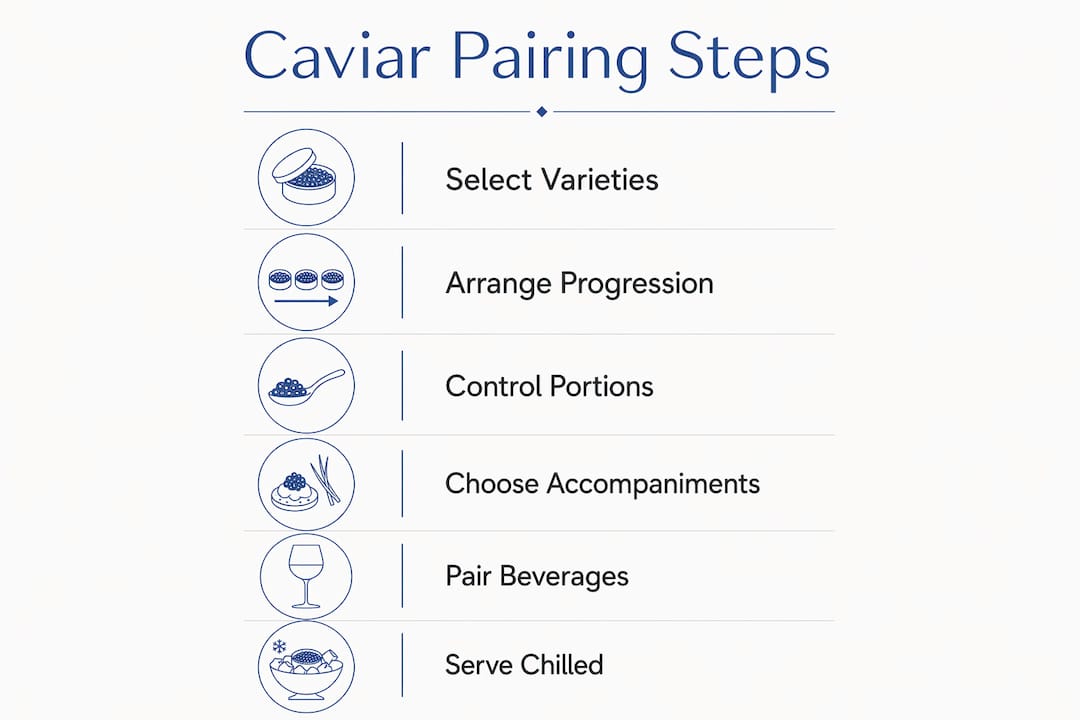
A well-designed caviar pairing menu follows a deliberate progression, moving from the most delicate varieties to the most assertive. This sequencing is not arbitrary. It reflects how species, environment, and diet shape each roe’s character, and it protects the palate from fatigue that would otherwise blunt appreciation of subtler notes.
A tasting flight typically features 10–20 grams of each caviar variety per person, served at a precise temperature between -2°C and 2°C. Serving above 4°C causes lipids to soften prematurely, which destroys the tactile resistance that defines a superior roe. That firm, yielding pop against the palate is not accidental; it is the product of disciplined temperature control from storage through to service.
The progression of caviar species — from Siberian Baeri through Osetra to Kaluga — mirrors the journey from clean, lightly briny notes to the deeper, nuttier richness found in larger, more mature roe. Each step in this sequence teaches the palate something new about how terroir, in the aquatic sense, expresses itself in flavour. Guests who experience this arc rarely forget the moment a Kaluga’s buttery depth arrives after the comparative restraint of a Siberian variety.
Portion discipline matters as much as sequence. Generous servings of a bold variety early in the menu will overwhelm everything that follows. Keeping portions within the 10–20 gram range per variety preserves the integrity of the entire experience.
Pro Tip: Always use individual mother-of-pearl spoons for each variety. Metal imparts a metallic flavour that distorts the roe’s true character, and sharing a spoon between varieties causes unwanted flavour mixing.
What are the best food accompaniments for caviar?
The art of food accompaniment in a caviar tasting menu rests on a single principle: support without competition. Every base and garnish exists to frame the roe, not to rival it.
Traditional accompaniments include blinis, toast points, crème fraîche, finely chopped egg, and chives. These elements provide neutral, balancing textures and flavours that allow the caviar’s saline, buttery, and sometimes hazelnut-like qualities to speak clearly. Crème fraîche, in particular, offers a gentle acidity that lifts the roe without introducing competing flavours. Blinis provide a soft, yielding base whose mild fermented note is sympathetic rather than intrusive.
Modern pairings introduce lightly buttered baby potatoes, soft scrambled eggs, and delicate seafood dishes to add textural variety while preserving harmony. These choices bring richness and body to the menu without overwhelming the roe. A small portion of scrambled egg beneath a spoonful of Oscietre, for instance, creates a layered experience of fat, salt, and umami that is genuinely revelatory.
Strong spices, aged cheeses, and acidic condiments such as capers or pickles are generally avoided in formal caviar menus. Their intensity overrides the roe’s subtlety, which defeats the purpose of a structured tasting. The guiding philosophy is restraint: every element on the plate should make the caviar taste more like itself.
Pro Tip: Chill your serving plates and blinis briefly before plating. A cold base extends the window of optimal caviar temperature during service, preserving that essential textural integrity through each course.
How do beverage pairings work within caviar tasting menus?
Beverage selection in a caviar tasting menu is not merely a matter of tradition. It is a sensory strategy. The right drink cleanses the palate, resets the taste buds, and echoes or contrasts the roe’s saline and buttery notes in ways that deepen the overall experience.
The table below presents the principal beverage categories used in caviar pairing menus, with the sensory rationale for each choice.
| Beverage | Style | Why It Works |
|---|---|---|
| Champagne Blanc de Blancs | Sparkling, high acidity | Fine bubbles cleanse the palate; mineral notes echo the sea |
| Champagne Brut | Sparkling, dry | Effervescence resets taste buds; low dosage avoids sweetness |
| Chilled premium vodka | Still, neutral | Clean profile amplifies briny notes without competing flavours |
| Chablis | Still white, mineral | High acidity and chalky minerality mirror caviar’s saline character |
| Sancerre | Still white, crisp | Sauvignon Blanc’s citrus and flint complement delicate roe |
| Dry Riesling | Still white, aromatic | Bright acidity and mineral depth balance richer, nuttier varieties |
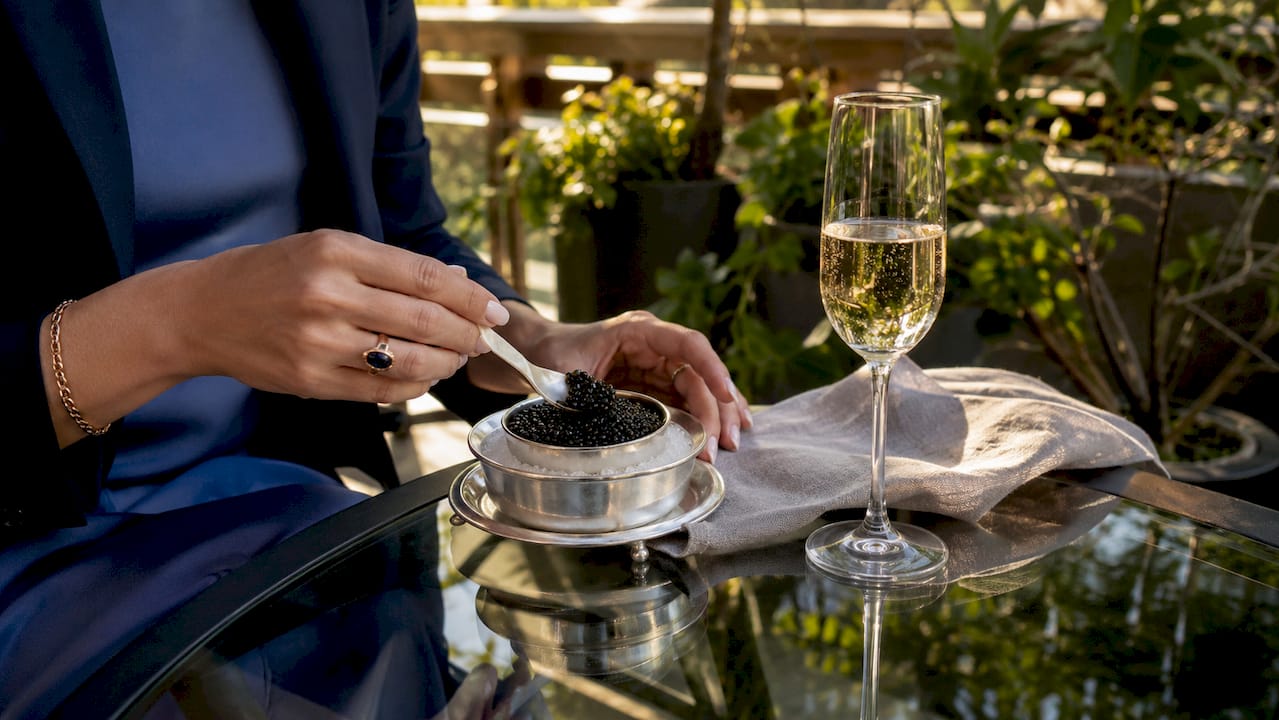
Champagne and caviar pairing succeeds because the two share fundamental characteristics. The effervescence and acidity of Champagne cleanse the palate, while the mineral notes echo the sea, complementing caviar’s saline tang. This harmony lifts the tasting experience beyond luxury prestige alone into genuine sensory dialogue.
Sommeliers favour Blanc de Blancs and Chablis because their natural mineral and saline qualities mimic the sturgeon’s natural habitat, creating a nuanced, harmonious pairing. For guests who prefer still wines, Chablis, Sancerre, and dry Riesling offer brightness and mineral depth that complement rather than compete with the roe. Explore Aptent’s curated Champagne collection and white wine selection for bottles chosen specifically with caviar service in mind.
Tannic red wines, heavily oaked whites, and spiced cocktails are incompatible with caviar menus. Their astringency and weight suppress the roe’s delicacy, leaving the palate fatigued rather than refreshed.
What practical tips help when designing a caviar pairing menu?
Designing a caviar pairing menu that genuinely satisfies requires attention to detail at every stage, from sourcing through to presentation. The following principles guide both the experienced host and the curious first-timer.
Freshness is non-negotiable. Caviar’s flavour degrades rapidly once a tin is opened. Plan your menu so that each variety is opened immediately before service, and never leave opened tins at room temperature. The Baeri Signature Caviar from Aptent, for instance, is sourced and handled with the kind of cold-chain rigour that makes this possible.
Temperature and presentation are inseparable. Serve caviar on crushed ice or chilled plates, and keep the service environment cool. Presentation on crushed ice with proper utensils enhances both the visual refinement and the sensory integrity of the experience.
Progression protects the palate. Always move from lighter to stronger flavours. Opening with a bold Kaluga before a delicate Baeri is the equivalent of drinking espresso before a white tea. The sequence should build anticipation, not exhaust it.
Portion control is a form of respect. Generous portions of any single variety reduce the guest’s capacity to appreciate what follows. The 10–20 gram guideline per variety exists for good reason: it is enough to form a genuine impression without saturation.
Pro Tip: Offer a small glass of still, room-temperature water alongside each beverage pairing. Water neutralises the palate between very different caviar varieties, particularly when moving from a delicate Siberian to a rich Kaluga, without the flavour influence of wine or spirits.
Key takeaways
A caviar pairing menu succeeds when progression, temperature, accompaniment, and beverage selection work together to reveal each variety’s distinct character rather than obscure it.
| Point | Details |
|---|---|
| Structured progression | Arrange caviar from mild to bold to protect the palate and reveal flavour nuance. |
| Temperature discipline | Serve at -2°C to 2°C; above 4°C, lipids soften and texture is lost. |
| Neutral accompaniments | Use blinis, crème fraîche, and toast points to frame caviar without competing flavours. |
| Beverage logic | Choose Champagne, Chablis, or Sancerre for their acidity and minerality, which cleanse and complement. |
| Serving tools matter | Mother-of-pearl spoons preserve true flavour; metal distorts it. |
Aptent’s view on the art of caviar pairing
After years of curating caviar experiences for discerning guests, the most consistent observation at Aptent is this: the pairing menu format changes how people listen to food. Guests who arrive expecting a straightforward luxury indulgence leave with something more considered. They begin to notice the difference between the clean oceanic salinity of a Siberian Baeri and the hazelnut depth of a mature Oscietre. The menu structure is what makes that discovery possible.
The moments that stay with us are rarely the most extravagant. They are the moments of genuine surprise: when a guest encounters Chablis alongside Oscietre for the first time and realises that the wine’s chalky minerality is not merely compatible with the roe but seems to complete it. That kind of discovery cannot be engineered through opulence alone. It requires balance, sequencing, and a willingness to let the caviar lead.
The communal dimension of a well-crafted pairing menu is also worth acknowledging. Sharing a flight of Siberian, Osetra, and Kaluga with others, comparing impressions, debating whether the Blanc de Blancs or the Sancerre serves the Oscietre better — this is one of the more civilised forms of conversation available. Approach your next pairing menu with curiosity and a genuine respect for balance, and the experience will reward you in ways that a single, unaccompanied tin of caviar simply cannot.
— Aptent
Discover aptent’s caviar and pairing collection
Aptent’s curated selection of premium caviars and complementary beverages provides everything you need to design a tasting menu of genuine distinction.

Aptent’s Baeri Signature Caviar and Oscietre Signature Caviar are available in multiple sizes, from intimate 30-gram portions to generous 100-gram tins, making them equally suited to an elegant dinner for two or a grand tasting event. Pair them with selections from Aptent’s Grand Cru wine range or browse the full gourmet accessories collection for mother-of-pearl spoons, serving vessels, and everything else a considered caviar host requires. Visit Aptent Gourmet to explore the full collection and arrange personalised guidance for your next occasion.
FAQ
What is a caviar pairing menu?
A caviar pairing menu is a structured tasting experience that presents multiple caviar varieties in a deliberate sequence alongside complementary foods and beverages. The goal is to reveal each variety’s distinct flavour profile through contrast and harmony.
How much caviar is served per person in a tasting menu?
A standard tasting flight offers 10–20 grams of each caviar variety per person. This portion is sufficient to form a clear flavour impression without overwhelming the palate before the next variety is served.
Why is champagne the classic pairing for caviar?
Champagne’s fine bubbles cleanse the palate between bites, while its acidity and mineral notes echo the saline character of the roe. Blanc de Blancs and Brut styles are preferred because their low dosage avoids sweetness that would compete with the caviar’s delicacy.
Can you pair caviar with still wine instead of champagne?
Still white wines with high acidity and minerality, such as Chablis, Sancerre, and dry Riesling, are excellent alternatives. Their brightness and mineral depth complement rather than compete with the roe’s flavour.
Why should you avoid metal spoons when serving caviar?
Metal spoons impart a metallic flavour that distorts the caviar’s true taste. Mother-of-pearl, bone, or glass spoons are the correct choice, and each variety should have its own individual spoon to prevent flavour mixing between courses.


