
Storing fine wine correctly: the essential guide
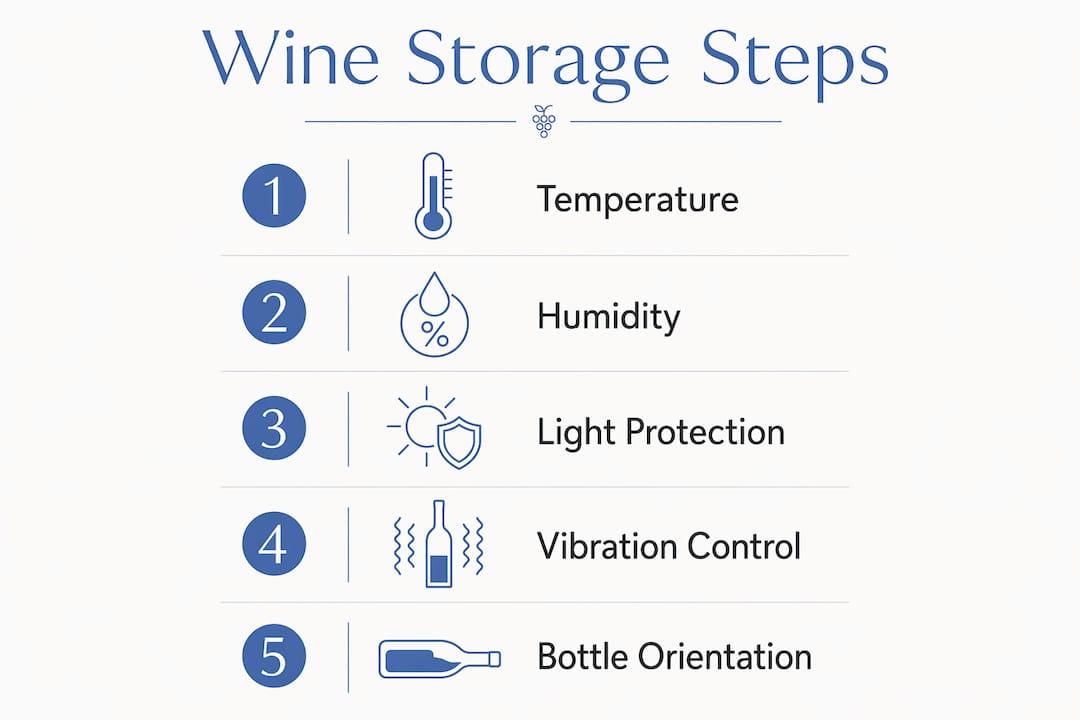
Storing fine wine correctly is defined as maintaining a stable environment that protects the wine’s chemical integrity across its full ageing potential. The five factors that govern this environment are temperature, humidity, light, vibration, and bottle orientation. Each one acts independently, yet together they determine whether a bottle of aged Burgundy or a treasured Barossa Shiraz reaches its peak or quietly deteriorates on the shelf. Collectors who understand these factors do not chase perfection. They chase consistency, and that distinction changes everything about how they set up their cellars.
What is the ideal temperature and humidity for storing fine wine?
Temperature is the single most powerful variable in wine preservation. The widely accepted target is 13°C (55°F), within a range of 10–15°C (50–59°F). Chemical reactions in wine double with every 10°C rise in temperature, which means a bottle stored at 23°C ages at roughly twice the rate of one stored at 13°C. Sustained heat above 21°C (70°F) effectively cooks the wine, collapsing its aromatic structure and flattening its palate.
Stability matters more than hitting the exact number. A consistent 58°F outperforms a cellar that swings between 50°F and 65°F across seasons. Thermal cycling forces wine to expand and contract against the cork, stressing the seal and allowing micro-doses of oxygen to enter the bottle. That oxidation accumulates over years and is irreversible.
Humidity sits alongside temperature as a critical variable, though its role is more specific. Relative humidity between 60% and 75% preserves the integrity of natural cork closures, preventing them from drying, shrinking, and allowing air ingress. Humidity that drops below 50% will eventually cause cork failure in long-term bottles. Conversely, humidity above 80% promotes mould growth on labels and cardboard packaging, which, while not directly harmful to the wine, degrades provenance records and resale value.
Humidity is irrelevant for bottles sealed with screwcaps or synthetic closures. Those seals do not rely on moisture to maintain their integrity, so collectors storing predominantly screwcap wines can relax this requirement considerably.
Pro Tip: Use a digital hygrometer and thermometer combination unit placed at mid-rack height in your storage space. Readings at floor level or near the ceiling will not reflect the actual conditions your bottles experience.
To measure and control your environment without a dedicated cellar, a thermoelectric wine refrigerator with an external humidity tray placed inside the unit gives you reliable control over both variables. Avoid compressor-based units in small spaces unless they are purpose-built for wine, as standard compressor refrigerators run too cold and too dry for long-term cellaring.
How should you protect wine from light, vibration, and bottle orientation?
Light is a silent aggressor. UV radiation triggers photodegradation in wine, breaking down aromatic compounds and producing unpleasant sulphur-related off-flavours. Fluorescent lighting poses a cumulative threat even through glass bottles, which is why traditional cellars were built underground and away from windows. The practical solution for any storage space is to use LED lighting only, keep the area dark when not in use, and avoid positioning bottles near skylights or south-facing windows.
Vibration is the most misunderstood factor in home wine storage.
- For bottles consumed within six months, vibration is largely negligible. Short-term storage near a washing machine or dishwasher will not meaningfully harm a wine destined for the dinner table next month.
- For bottles ageing beyond five years, vibration becomes a genuine concern. Continuous low-frequency movement from appliance motors or HVAC units disrupts sediment and may interfere with the slow chemical reactions that build complexity in aged wine.
- The practical rule is straightforward: keep long-term bottles away from any surface that transmits mechanical vibration. Freestanding racks positioned against an internal wall, away from the kitchen and laundry, are the most accessible solution for home collectors.
Pro Tip: If your only available space is near an appliance, place a dense rubber mat beneath the rack. It absorbs a significant portion of low-frequency vibration before it reaches the bottles.
Bottle orientation is another area where received wisdom deserves scrutiny. Natural cork bottles require horizontal storage to keep the cork moist and swollen against the neck, maintaining an airtight seal. This is not optional for long-term cellaring of traditionally sealed bottles. However, bottles sealed with screwcaps or synthetic corks can be stored upright without any risk to the seal. That distinction matters for cellar design: a collection that mixes closure types does not need every bottle lying flat, which opens up more flexible racking options.
What practical solutions exist for home wine storage?
Most collectors do not need a purpose-built underground cellar. A cool, dark closet or a quality thermoelectric fridge is sufficient for wines intended for consumption within three years. Professional-grade cellars deliver meaningful benefit primarily for collections ageing beyond five years, where temperature stability and humidity control over extended periods become critical to the wine’s development.
The main home storage options each carry distinct advantages and limitations.
A dedicated wine cellar offers the most control. Proper construction requires insulation, vapour barriers, and a purpose-built cooling unit. Vapour barriers prevent moisture from migrating into the insulation, which would destabilise temperature and shorten the life of the cooling equipment. A well-built cellar can maintain 13°C and 65% humidity year-round regardless of the Australian summer heat outside. The investment is substantial, but for a collection of several hundred bottles with ageing horizons beyond a decade, it is the only truly reliable solution.
A converted room or under-stair space represents a practical middle ground. With adequate insulation, a split-system air conditioner set to 13°C, and a separate humidifier, a converted space can approximate cellar conditions at a fraction of the cost. The limitation is that standard air conditioners dehumidify aggressively, so humidity management requires active monitoring and supplementation.
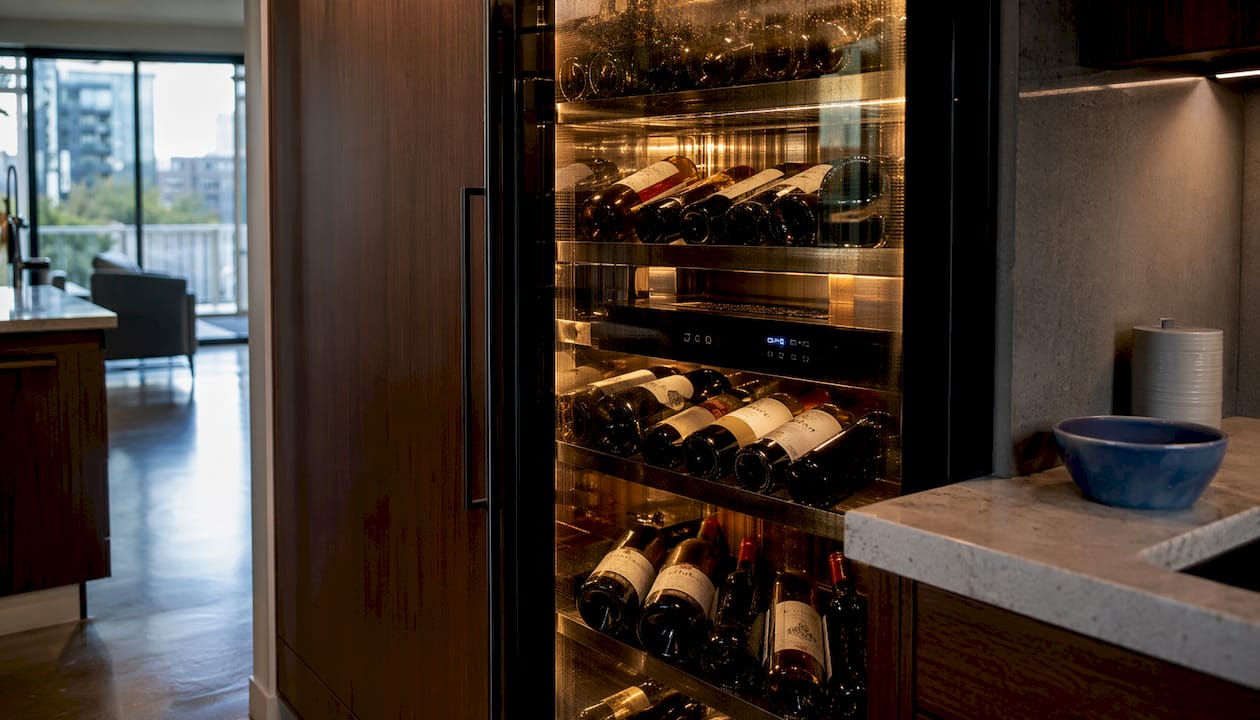
A dual-zone wine refrigerator suits collectors with smaller holdings or mixed collections. The upper zone typically runs at serving temperature for whites (8–12°C), while the lower zone holds reds at cellaring temperature (13–15°C). These units control light and vibration well, though their humidity levels vary by model. For wines to be consumed within three years, a quality single-zone unit at 13°C is entirely adequate.
For collectors in apartments or rental properties without climate control options, the best available approach is to identify the coolest, darkest interior space in the dwelling, typically an interior wardrobe away from exterior walls, and use a purpose-built wine fridge. Avoid storing bottles in the kitchen, above the refrigerator, or near any heat source.
How to organise your wine collection for optimal ageing
Organisation is the discipline that protects your investment once the storage conditions are correct. The most effective method is to categorise bottles by drinking window rather than by region or producer. Drinking window categories such as “drink now,” “2025–2028,” and “2030+” allow you to retrieve the right bottle at the right time without disturbing long-term bottles unnecessarily.
Minimal movement is a genuine principle, not a collector’s affectation. Every time a bottle is moved, sediment is disturbed and the cork is briefly stressed. Long-term bottles should be placed in a dedicated section of the cellar or fridge and left undisturbed until they approach their drinking window.
Tracking your collection with a written log or a digital inventory tool prevents the two most common collector errors: opening a bottle before it reaches its peak, and forgetting a bottle until it has passed its window entirely. A simple spreadsheet recording producer, vintage, quantity, purchase date, and estimated drinking window is sufficient for most home collections. For larger holdings, dedicated wine cellar management software offers barcode scanning, tasting notes, and valuation tracking. The collector’s guide to cellar inventory from Aptent covers this process in detail for those building a more structured approach.
Many wines are not intended for ageing at all. Correct cellaring decisions save space and preserve investment by ensuring that bottles designed for early drinking are consumed promptly, freeing premium cellar positions for wines that genuinely benefit from extended ageing. Knowing which wines in your collection belong in which category is as important as the storage conditions themselves. For guidance on selecting wines worth cellaring, Aptent’s expert guide offers a considered framework for collectors at every level.
Key takeaways
Storing fine wine correctly requires stable temperature around 13°C, controlled humidity between 60–75%, darkness, minimal vibration, and horizontal orientation for natural cork bottles.
| Point | Details |
|---|---|
| Temperature stability | A consistent 13°C protects wine far better than a fluctuating environment, even if the average is correct. |
| Humidity for cork closures | Maintain 60–75% relative humidity to prevent cork drying; screwcap bottles do not require humidity control. |
| Light and UV protection | Use LED lighting only and keep storage dark; fluorescent light causes cumulative photodegradation. |
| Bottle orientation by closure | Store natural cork bottles horizontally; screwcap and synthetic closure bottles can stand upright. |
| Organise by drinking window | Categorise bottles as “drink now,” mid-term, or long-term to avoid premature or overdue opening. |
What experience has taught us about wine storage
The most persistent mistake collectors make is treating temperature as the only variable that matters. Humidity, light, and vibration receive far less attention, yet a bottle stored at a perfect 13°C under fluorescent lighting in a dry environment will deteriorate faster than one stored at 15°C in a dark, humid, vibration-free space. The conditions work as a system, and neglecting any one of them undermines the others.
The second mistake is overcomplicating the starting point. Collectors who wait until they can afford a purpose-built cellar often store their bottles in unsuitable conditions for years in the interim. A quality thermoelectric wine fridge, positioned in a cool interior space and set to 13°C, is a genuinely adequate solution for any collection under 100 bottles with a five-year ageing horizon. The perfect should not be the enemy of the good here.
Ageing expectations should drive storage choices, not the other way around. If your collection consists primarily of wines for drinking within three years, a modest, well-controlled fridge is entirely appropriate. If you are cellaring first-growth Bordeaux or aged Penfolds Grange for a decade or more, the investment in a properly constructed cellar with vapour barriers and a dedicated cooling unit is justified and necessary. Matching the storage solution to the wine’s actual ageing trajectory is the most financially sound decision a collector can make. Preserving fine food and drink with the same care applies across categories, much as quality preservation of artisan products depends on controlling the right environmental variables from the outset.
— Aptent
Aptent Gourmet: fine wine and luxury provisions for the discerning collector
Aptent curates a selection of premium wines and gourmet provisions sourced from some of the world’s most prestigious producers. For collectors who take their cellaring seriously, the grand cru wine collection brings together rare cuvées and aged expressions worthy of the finest storage conditions you can provide.

Aptent’s team brings the same rigour to sourcing that you bring to cellaring. Whether you are building a collection for personal enjoyment or curating a selection for a private event, Aptent offers personalised guidance and access to provisions that reward patience and discernment. Explore the full range at Aptent Gourmet and find wines that are genuinely worth cellaring.
FAQ
What is the ideal temperature for storing fine wine?
The ideal temperature for long-term wine storage is 13°C (55°F), within a range of 10–15°C. Stability matters more than the exact figure; temperature fluctuations stress the cork and accelerate oxidation.
Does humidity matter if my bottles have screwcaps?
Humidity is only relevant for bottles sealed with natural cork. Screwcap and synthetic closure bottles maintain their seal without moisture, so humidity control is unnecessary for those wines.
How long can wine be stored in a standard wine fridge?
A quality wine fridge set to 13°C is suitable for wines consumed within three to five years. Bottles intended for ageing beyond five years benefit from a purpose-built cellar with dedicated humidity and temperature control.
Should all wine bottles be stored on their side?
Only bottles sealed with natural cork require horizontal storage to keep the cork moist. Screwcap and synthetic cork bottles can be stored upright without any risk to the seal or wine quality.
How do I organise a home wine collection effectively?
Organise bottles by drinking window, using categories such as “drink now,” mid-term, and long-term. Track your inventory with a written log or digital tool to avoid opening bottles too early or too late.


