
Selecting wine for a collector: the expert guide
Selecting wine for a collector is defined as the disciplined process of identifying bottles that combine ageing potential, producer reputation, market liquidity, and personal palate alignment to build a collection of genuine value. In the fine wine trade, this practice is often called investment-grade wine curation, and the distinction matters. A bottle chosen without regard for provenance, vintage quality, or exit strategy is simply a purchase. A bottle chosen with all four factors in mind is an asset. The most effective collectors treat their cellar as a living portfolio, guided by frameworks like the five-factor model and market indices such as Liv-ex, while never losing sight of the pleasure that drew them to wine in the first place. Personal palate alignment enhances collector satisfaction even within investment-grade portfolios, delivering both financial and experiential returns.
What criteria define the best wines for collectors and investors?
The best wines for collectors share four measurable qualities: producer reputation, critical acclaim, scarcity, and verified ageing potential. Each criterion filters out the vast majority of bottles on the market and narrows the field to those with genuine collector appeal.
Producer reputation is the single most reliable predictor of long-term value. Estates like Domaine de la Romanée-Conti in Burgundy, Château Lafite Rothschild in Bordeaux, and Sassicaia in Tuscany command premiums precisely because their track records span decades. Critical acclaim from publications such as Decanter, Wine Spectator, and Jancis Robinson adds a second layer of validation, translating subjective quality into a score the market can price.
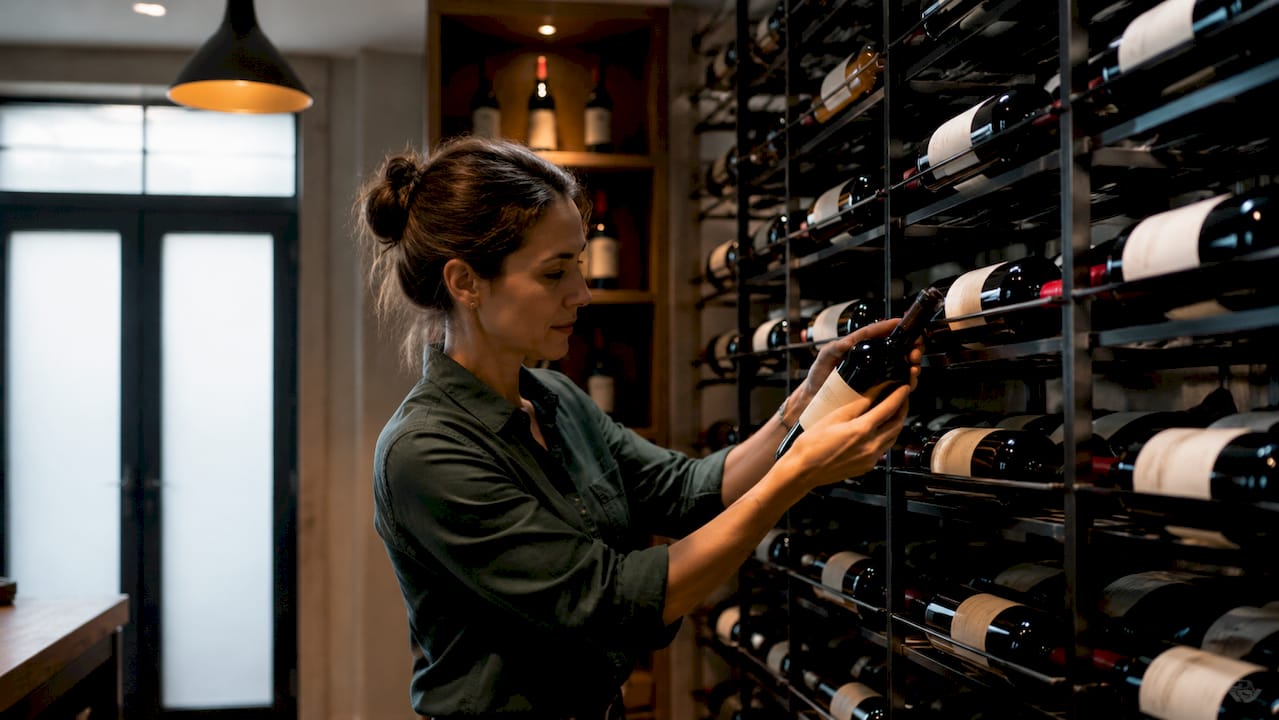
Liquidity is the criterion most collectors underestimate. Investment-grade wines require a minimum holding period of 5–7 years, and their bid-offer spreads reveal how easily you can exit a position. First-growth Bordeaux and top Burgundy grands crus carry spreads under 10%, meaning the gap between what a buyer will pay and what a seller will accept is narrow. Niche categories, by contrast, see spreads of 15–25%, which can erode returns significantly. That spread differential is the practical difference between a liquid asset and a bottle that may sit unsold for years.
Scarcity amplifies all other criteria. Limited production runs, single-vineyard designations, and weather-affected harvests that reduce yields all restrict supply. When demand from collectors in Asia, Europe, and North America competes for a finite number of cases, prices respond accordingly.
- Prioritise producers with at least two decades of consistent critical scores above 90 points.
- Favour wines with documented production figures below 5,000 cases per vintage.
- Check bid-offer spreads on Liv-ex before committing to any bottle above $500 per unit.
- Confirm the wine has a minimum 10-year ageing window from the vintage date.
- Align at least some acquisitions with your own palate so the collection remains enjoyable, not merely theoretical.
Pro Tip: Before purchasing any bottle above $1,000, search its trading history on Liv-ex or Wine-Searcher to confirm it has traded at least quarterly over the past two years. Illiquid wines are not investments; they are expensive storage problems.
How to spot value in collectible wines: timing and vintage selection
Value in collectible wine is found at the intersection of quality and price disparity, and the most rewarding opportunities appear when the market misprices a vintage relative to its actual drinking quality. This is where serious collectors separate themselves from casual buyers.
Vintage variation within a single producer’s range offers some of the clearest value signals available. Consider Château Cheval Blanc in Saint-Émilion: the 2023 vintage is priced at a 68% discount relative to the 2015, despite comparable critical assessments of quality. That disparity reflects market sentiment and recency bias far more than it reflects what is actually in the bottle. Collectors who conduct vintage-by-vintage analysis rather than simply buying the most celebrated year consistently acquire superior value.
Market dislocations present equally compelling entry points. The Liv-ex 1000 index fell 13% during 2023–2024, driven by broader macroeconomic pressures including rising interest rates. That decline created historic buying conditions for discerning collectors who understood that the underlying quality of first-growth Bordeaux and Burgundy grands crus had not changed. The wines were simply cheaper because sentiment had shifted.
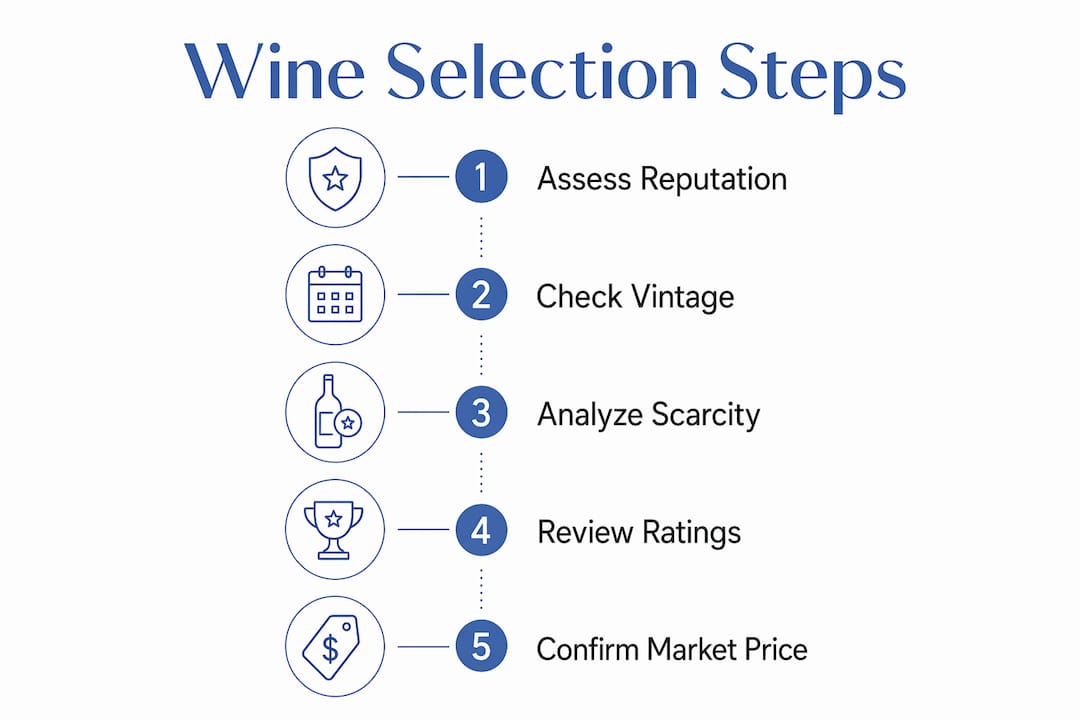
The following steps outline a repeatable process for identifying value before committing capital:
- Identify the producer’s quality tier. Confirm the estate consistently produces wines rated 92 points or above across multiple vintages by at least two independent critics.
- Map the vintage price curve. Use the Decanter Fine Wine Index or Liv-ex to chart price movements across five or more consecutive vintages from the same producer.
- Locate the outlier vintage. Find the vintage trading at a meaningful discount (typically 30% or more) relative to its peers, then cross-reference critic notes to confirm quality is not materially lower.
- Assess market timing. If a broader index like Liv-ex 1000 is in decline, the entry point is more attractive. Buying into a rising market compresses future returns.
- Define your exit thesis before purchase. Decide whether the bottle is destined for consumption, private sale, or auction, and set a target price or timeline before the transaction is complete.
| Vintage | Producer | Relative price vs. benchmark | Quality rating |
|---|---|---|---|
| 2023 | Château Cheval Blanc | 68% discount to 2015 | Comparable quality |
| 2015 | Château Cheval Blanc | Benchmark | 98 points |
| 2013 | Opus One | Significant discount to 2013 | 93 points |
Pro Tip: Set a price alert on Wine-Searcher for any producer you are monitoring. When a vintage drops 20% or more from its 12-month high without a corresponding drop in critic scores, that is your signal to act.
What practical steps build a balanced and intentional wine collection?
Serious collectors structure their cellars into three distinct tiers: everyday bottles for casual enjoyment, mid-term wines for special occasions, and long-term treasures held for appreciation or significant events. This three-tier model prevents the most common collector error, which is acquiring bottles with no clear purpose and allowing the cellar to stagnate.
The allocation framework matters as much as the individual selections. Balanced collections allocate roughly 50–60% to blue-chip wines for stability, with the remaining 40–50% directed toward emerging producers and undervalued vintages for growth potential. This ratio mirrors the logic of a diversified investment portfolio and protects against the risk of concentrating too heavily in any single region or producer.
Storage and inventory management are the operational foundations of a well-run cellar. Professional storage services help collectors separate near-term wines from long-term holdings, maintaining appropriate temperature and humidity for each tier. Services like UOVO in the United States and similar specialist facilities in Australia provide bonded storage with full provenance documentation, which is critical for resale value.
- Catalogue every bottle with vintage, producer, purchase price, and intended purpose at the time of acquisition.
- Review the cellar at least twice per year and rotate bottles approaching their drinking window into active use.
- Use a vertical tasting approach to assess how a producer’s wines evolve across vintages before committing to large purchases.
- Avoid acquiring more than 12 bottles of any single wine unless you have a confirmed exit plan for the surplus.
- Maintain a written exit thesis for every bottle above $300, noting whether it is destined for consumption, private sale, or auction.
Pro Tip: Photograph every label and cork at the time of purchase and store the images in a cloud-based catalogue. Provenance documentation adds measurable value at auction and protects you against disputes over authenticity.
Which regions and producers offer the highest liquidity and collector appeal?
The regions that consistently underpin serious collections are Bordeaux, Burgundy, Champagne, Napa Valley, Piedmont, the Rhône Valley, and Tuscany. These regions form the backbone of collections favoured by investors worldwide, offering the combination of ageing potential and market depth that defines true collector appeal.
Bordeaux first growths, specifically Château Lafite Rothschild, Château Margaux, Château Latour, Château Mouton Rothschild, and Château Haut-Brion, remain the most liquid wines in the world. Their bid-offer spreads on Liv-ex are consistently below 10%, and they trade in volume across every major auction house from Christie’s to Sotheby’s. Burgundy grands crus from producers such as Domaine de la Romanée-Conti, Armand Rousseau, and Leroy command extraordinary prices and equally strong demand, though their tiny production volumes mean availability is always constrained.
Champagne from prestige cuvées, including Dom Pérignon, Krug, and Salon, occupies a unique position in the collector market. These wines age magnificently, trade with reasonable liquidity, and carry the brand recognition that supports resale in markets where Burgundy names may be less familiar. Napa Valley producers like Screaming Eagle, Harlan Estate, and Opus One have established genuine secondary market depth over the past two decades, making them credible alternatives to European blue chips.
| Region | Key producers | Bid-offer spread | Ageing potential |
|---|---|---|---|
| Bordeaux (first growths) | Lafite, Margaux, Latour | Under 10% | 20–50 years |
| Burgundy (grands crus) | Romanée-Conti, Rousseau | Under 10% | 15–40 years |
| Champagne (prestige) | Dom Pérignon, Krug, Salon | 10–15% | 10–30 years |
| Napa Valley | Screaming Eagle, Harlan, Opus One | 12–18% | 15–30 years |
| Piedmont | Giacomo Conterno, Bruno Giacosa | 15–20% | 20–40 years |
| Rhône Valley | Chapoutier, Guigal La La La | 15–22% | 15–35 years |
| Tuscany | Sassicaia, Ornellaia | 12–18% | 15–30 years |
Piedmont and the Rhône Valley offer the most compelling value proposition for collectors willing to accept slightly wider spreads in exchange for lower entry prices and genuine ageing potential. Barolo from Giacomo Conterno and Rhône blends from producers like Chapoutier and Guigal’s La La La series have demonstrated consistent appreciation over 15-year horizons.
Key takeaways
Selecting wine for a collector requires combining producer reputation, vintage analysis, liquidity assessment, and a structured portfolio approach to build a cellar that delivers both financial and sensory returns.
| Point | Details |
|---|---|
| Liquidity determines exit options | Favour wines with bid-offer spreads under 10%, such as Bordeaux first growths and Burgundy grands crus. |
| Vintage disparity creates value | A 68% price gap between comparable vintages, as seen with Château Cheval Blanc, signals a genuine buying opportunity. |
| Three-tier cellar structure | Divide holdings into everyday, mid-term, and long-term tiers to prevent stagnation and align purpose with each bottle. |
| Portfolio allocation matters | Allocate 50–60% to blue-chip wines for stability and 40–50% to emerging producers for growth potential. |
| Exit thesis before every purchase | Define whether each bottle is for consumption, private sale, or auction before the transaction is complete. |
Aptent’s perspective on building a purposeful cellar
The most common mistake we observe among new collectors is acquiring without intention. A cellar filled with celebrated names but no drinking plan is not a collection; it is an expensive warehouse. Avoiding the trap of collecting without drinking is the single most important discipline a collector can develop, because wine that is never opened provides no return of any kind.
The collectors whose cellars we genuinely admire treat every acquisition as a decision with two dimensions: financial and experiential. They know which bottles they intend to drink at their peak, which they plan to sell at auction in a decade, and which they are holding for a milestone occasion. That clarity of intent transforms a passive accumulation of bottles into a dynamic, purposeful portfolio that rewards them continuously rather than simply sitting in a temperature-controlled room.
Our strongest recommendation is this: before you spend a dollar on any bottle above $200, write down why you are buying it and when you expect to open or sell it. That single discipline will improve your collection more than any scoring system or market index ever could. The finest cellars we have encountered are not the largest ones. They are the most intentional ones.
— Aptent
Discover curated collector wines at Aptent Gourmet
Aptent sources its fine wine collection directly from prestigious producers across Bordeaux, Burgundy, Champagne, and beyond, offering collectors access to bottles that meet genuine investment-grade criteria. Every selection in the Grand Cru and rare cuvée range is chosen for ageing potential, provenance integrity, and market relevance, so you can build your cellar with confidence rather than guesswork.
Whether you are assembling your first serious collection or adding depth to an established cellar, the Aptent Gourmet wine collection offers curated selections that balance blue-chip stability with the kind of refined character that makes every bottle worth opening. Explore the full range and speak with the Aptent team about personalised cellar guidance tailored to your taste and investment goals.
FAQ
What makes a wine investment-grade?
Investment-grade wines combine producer reputation, critical acclaim above 92 points, documented scarcity, and a minimum ageing window of 10 years. They also trade with bid-offer spreads under 15% on platforms like Liv-ex, confirming genuine market liquidity.
How long should I hold collectible wines before selling?
Investment-grade wines require a minimum holding period of 5–7 years to realise meaningful appreciation. Selling before this window closes typically yields insufficient returns to justify storage and insurance costs.
Which wine regions offer the best resale liquidity?
Bordeaux first growths and Burgundy grands crus offer the strongest liquidity, with bid-offer spreads consistently under 10%. Champagne prestige cuvées and Napa Valley icons like Screaming Eagle and Harlan Estate also trade with reliable secondary market depth.
How do I find undervalued vintages from top producers?
Compare price curves across five or more consecutive vintages using the Decanter Fine Wine Index or Liv-ex. A vintage trading at a 30% or greater discount to its peers, without a corresponding drop in critic scores, represents a credible value opportunity.
How should I structure a wine collection as a portfolio?
Allocate 50–60% of your cellar to blue-chip wines for stability and direct the remaining 40–50% toward emerging producers and undervalued vintages for growth. Divide the cellar into three tiers: everyday, mid-term, and long-term holdings, each with a defined purpose and exit plan.


