
Gourmet cheese and wine pairing: the expert guide
Gourmet cheese and wine pairing is the art of matching flavour intensity, texture, and regional origin to create combinations where each element amplifies the other. The practice, known professionally as fromage et vin matching, rewards those who understand a handful of governing principles rather than memorising endless rules. Sauvignon Blanc with fresh goat cheese, Champagne across a mixed board, and Gruyère alongside a Jura white are not accidents. They are the result of deliberate thinking about weight, acidity, and origin. Master these principles and you will never second-guess a pairing again.
What are the foundational principles of gourmet cheese and wine pairing?
Intensity matching is the single most important principle in fine cheese wine pairing. Delicate cheeses require light wines; bold, aged cheeses demand full-bodied wines. When intensity is mismatched, one element erases the other entirely.
Regional pairing is the second pillar, and it is the most reliable shortcut available. Wines and cheeses that share a geographic origin evolved alongside each other through the same climate, soil, and culinary tradition. Regional pairing produces a harmonious result up to 80% of the time. The classic example is French Comté with a white wine from the Jura region. Both carry the same mineral earthiness born from the same limestone plateau.
The third principle is balancing salt with sweetness. Salty cheeses, particularly blue varieties, create a counterintuitive but deeply satisfying synergy with sweet wines like Sauternes or Port. The sweetness tames the aggressive salt and amplifies the cheese’s underlying creaminess.
One persistent misconception deserves direct correction: red wine is not automatically the best partner for cheese. Soft, creamy cheeses frequently pair far better with white, sparkling, or sweet wines. Tannins in bold reds react with the fat and protein in creamy cheese, producing metallic off-flavours that diminish both the wine and the cheese.
Pro Tip: When in doubt, reach for a dry white or a sparkling wine. Both carry the acidity needed to cut through fat without the tannin interference that ruins soft cheese pairings.
Which gourmet cheeses pair best with specific wines?
Understanding how to pair cheese and wine by category removes the guesswork and gives you a reliable framework for any occasion.
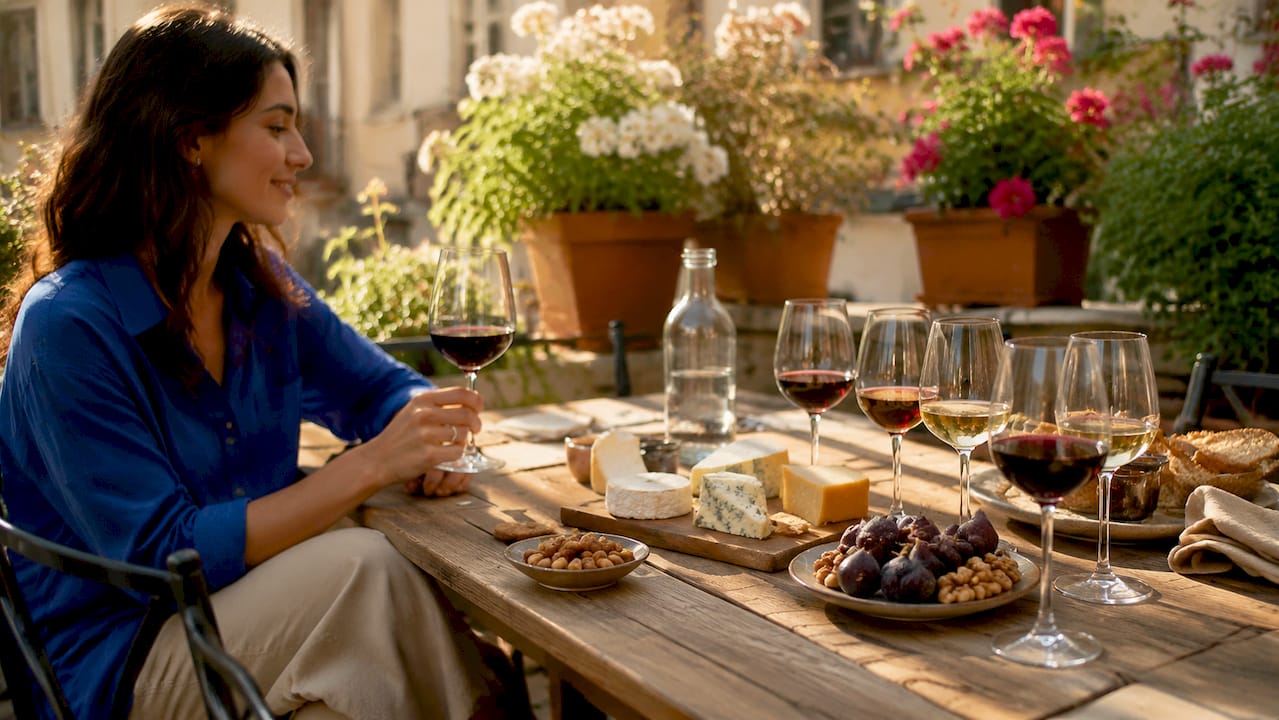
Fresh cheeses such as chèvre (French goat cheese) and fresh mozzarella are bright, tangy, and light in texture. They call for wines with matching acidity and freshness. Sauvignon Blanc from the Loire Valley, particularly Sancerre or Pouilly-Fumé, is the textbook choice. Prosecco and other dry sparkling wines work equally well, as their effervescence lifts the milky freshness of the cheese.
Soft-ripened cheeses like Brie de Meaux and Camembert de Normandie carry a buttery smoothness and an earthy, mushroomy rind. White Burgundy (Chardonnay) matches their richness without overwhelming the delicate interior. A light Pinot Noir from Burgundy or Central Otago also works, provided the wine is restrained and fruit-forward rather than tannic.
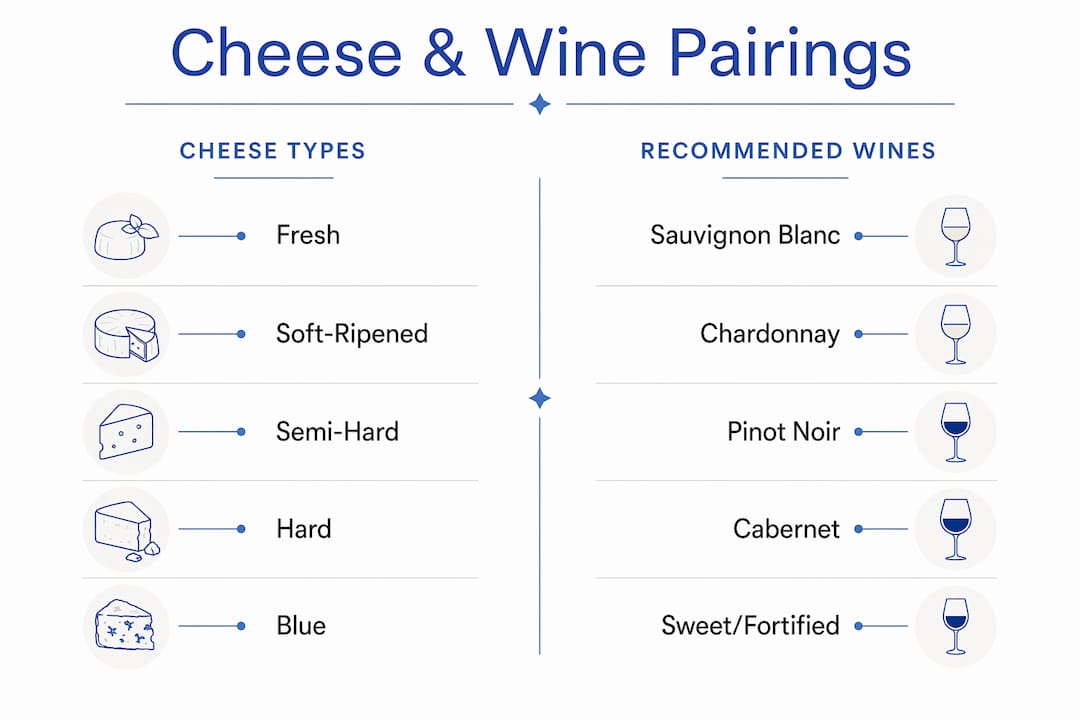
Semi-hard cheeses represent the most versatile category for wine pairing. Gruyère, aged Gouda, and Comté all carry a nutty richness and firm texture that responds well to both white and light red wines. Chardonnay with some oak suits Gruyère beautifully. Pinot Noir complements the caramel sweetness of aged Gouda.
Hard aged cheeses such as Parmigiano-Reggiano and aged Cheddar have undergone significant protein breakdown, which changes how they interact with tannins. This is where Cabernet Sauvignon, mature Rioja, and Barolo finally earn their place at the cheese board. The crystalline texture and concentrated umami of these cheeses can stand up to a wine’s full structure.
Blue cheeses including Roquefort, Gorgonzola Piccante, and Stilton are the most demanding category. Their salt and pungency require a wine with enough sweetness or fortification to create balance. Sauternes with Roquefort is one of the great classical pairings in French gastronomy. Vintage Port with Stilton is the British equivalent, and both combinations demonstrate why balancing salty blue cheeses with sweet wines is the most rewarding rule in the discipline.
| Cheese Category | Example Cheeses | Recommended Wine |
|---|---|---|
| Fresh | Chèvre, mozzarella | Sauvignon Blanc, Prosecco |
| Soft-ripened | Brie, Camembert | White Burgundy, light Pinot Noir |
| Semi-hard | Gruyère, aged Gouda | Chardonnay, Pinot Noir |
| Hard aged | Parmigiano-Reggiano, aged Cheddar | Cabernet Sauvignon, Rioja |
| Blue | Roquefort, Stilton | Sauternes, Vintage Port |
Sparkling wine achieves an 80–90% success rate across mixed cheese boards, making it the single most versatile choice for entertaining. Its acidity and carbonation cut through fat across every cheese category, from fresh to aged.
Pro Tip: Serve a vintage Champagne alongside your cheese board as the anchor wine. It will complement almost every cheese present and signal genuine connoisseurship to your guests.
How do you build a cheese and wine board for entertaining?
A well-constructed cheese and wine board for entertaining follows a simple but effective formula. Professionals use a house formula of three wines: one sparkling, one light red, and one dry medium-bodied white. This trio covers approximately 90% of cheese types and removes the pressure of matching every cheese to its own bottle.
Building the board itself follows a logical sequence.
- Select one cheese from each texture category: one fresh or soft-ripened, one semi-hard, and one aged or blue. This gives guests contrast and ensures the wines you have chosen will each find at least one natural partner.
- Arrange cheeses from mildest to most intense, moving clockwise around the board. This guides guests through a natural tasting progression without instruction.
- Include palate cleansers between cheese sections. Plain water crackers, sliced baguette, and fresh grapes all reset the palate without introducing competing flavours.
- Serve cheeses at room temperature. Remove them from the refrigerator at least 45 minutes before serving. Cold suppresses the aromatic compounds that make fine cheese worth eating.
- Pour wines in order of weight: sparkling first, dry white second, light red last. This mirrors the cheese progression and prevents heavier wines from overwhelming earlier, more delicate pairings.
When buying for an event, calculate roughly 100–150 grams of cheese per person for a standalone cheese course, or 60–80 grams per person if the board is one element of a broader spread. For wine, one bottle serves approximately five to six standard pours. A gathering of eight guests with three wines requires two bottles of each, giving you comfortable coverage without excess.
Pro Tip: Label each cheese with its name, milk type, and origin. Guests who know what they are eating engage more deeply with the pairing and remember the experience far longer.
What are the most common pairing pitfalls and how do you avoid them?
The most damaging mistake in cheese and wine pairing is placing a high-tannin red wine next to a soft, creamy cheese. Tannins react negatively with the fat and protein in creamy cheese, producing metallic tastes that diminish both elements. Wines like Barolo, Shiraz, and Cabernet Sauvignon should be reserved for hard aged cheeses where the protein structure has changed sufficiently to absorb tannin without conflict.
Regional mismatches are a subtler but equally common problem. Pairing a bold Napa Valley Cabernet with a delicate French Époisses, for example, produces a collision rather than a conversation. The wine’s power erases the cheese’s nuance entirely. When you are uncertain about a pairing, defaulting to a regional match is the most reliable correction available.
Washed-rind cheeses present a particular challenge. Varieties like Époisses, Taleggio, and Limburger carry an intensity that overwhelms most wines. Aromatic whites like Gewurztraminer or even Belgian ales match the pungency rather than fighting it, making them more successful than traditional wine pairings in this category.
Fat and salt content also affect how wine tastes on the palate. High-fat cheeses coat the mouth and suppress the perception of tannin, which is why a cheese that seems to soften a red wine’s aggression can actually be masking a structural flaw. The wine may taste smoother, but the pairing is not genuinely harmonious.
“The biochemical interaction between wine and cheese is mutual: cheese enhances wine’s fruit aromas and reduces astringency, while wine’s acidity cuts through cheese fat, improving both elements simultaneously.”
This interaction explains why the combination has endured for centuries across every wine-producing culture. Understanding it helps you troubleshoot pairings that feel off. If a wine tastes harsh alongside a cheese, the solution is almost always to increase the sweetness or acidity of the wine, not to change the cheese.
Key takeaways
Successful gourmet cheese and wine pairing requires matching intensity, respecting regional origin, and using sweetness or acidity to balance salt and fat.
| Point | Details |
|---|---|
| Match intensity first | Pair delicate cheeses with light wines and bold aged cheeses with full-bodied wines. |
| Use regional pairing as a shortcut | Cheeses and wines from the same region share terroir and produce harmonious results up to 80% of the time. |
| Avoid tannins with soft cheeses | Bold red wines produce metallic off-flavours with creamy cheeses; choose white or sparkling instead. |
| Sweet wines balance blue cheese | Sauternes or Vintage Port tame the aggressive salt in blue cheeses, creating genuine synergy. |
| Use the house formula for entertaining | One sparkling, one dry white, and one light red covers approximately 90% of cheese types at any gathering. |
Aptent’s perspective: why simplicity outperforms complexity at the table
After years of curating gourmet experiences for discerning guests, Aptent has observed one consistent truth: the most memorable pairings are rarely the most complicated ones. The hosts who impress most are not those who have memorised every regional rule. They are the ones who have chosen three exceptional wines and three exceptional cheeses, and who understand why those six things belong together.
The fallback trio that Aptent returns to most reliably for gatherings is a grower Champagne, a well-aged white Burgundy, and a restrained Pinot Noir from Burgundy or New Zealand’s Central Otago. These three wines, placed alongside a fresh chèvre, a ripe Brie, and an aged Comté, produce a tasting experience that requires no explanation and no apology.
Regional terroir connects cheese and wine at a level that goes beyond flavour. It links two products to a specific place, a specific climate, and centuries of shared culinary tradition. When you serve a Comté with a Jura Chardonnay, you are not just pairing two foods. You are presenting a piece of French cultural geography on a plate. That context enriches the experience for guests who appreciate it and adds nothing burdensome for those who simply enjoy the taste.
Experiment within the principles rather than against them. Try a Gewurztraminer with a washed-rind cheese. Serve a Sauternes alongside a Roquefort at the end of a dinner. These are not unconventional choices. They are the choices that separate a confident host from one who is simply following a list.
— Aptent
Discover aptent’s curated wine and gourmet collections
For those who wish to put these pairing principles into practice with wines and gourmet products of genuine distinction, Aptent has assembled collections sourced from prestigious producers across France and beyond.
The Grand Cru and rare cuvée wines at Aptent represent the finest expressions of their respective regions, each selected for its ability to complement the complexity of artisan cheeses. For those drawn to the sparkling category, Aptent’s boutique grower Champagnes offer the acidity and refinement that make them the most versatile partner for any cheese board. Aptent also offers bespoke gourmet events and gifting experiences for those seeking to share these pleasures with guests or present them as a considered gift of genuine luxury.
FAQ
What is the best wine for a mixed cheese board?
Sparkling wine, particularly Champagne, is the most versatile choice for a mixed board, succeeding with 80–90% of cheese types due to its acidity and effervescence cutting through fat across all categories.
Does red wine always pair well with cheese?
Red wine is not universally suited to cheese. Bold, tannic reds clash with soft and creamy cheeses, producing metallic flavours. Reserve full-bodied reds like Cabernet Sauvignon for hard aged cheeses such as Parmigiano-Reggiano or aged Cheddar.
How do you pair wine with blue cheese?
Blue cheeses pair best with sweet or fortified wines. Roquefort with Sauternes and Stilton with Vintage Port are the two most celebrated combinations, where the wine’s sweetness balances the cheese’s aggressive saltiness.
What does regional pairing mean in cheese and wine?
Regional pairing means selecting a cheese and wine from the same geographic area. Because they share the same terroir and culinary tradition, they almost always complement each other, with a success rate of up to 80%.
How much cheese and wine should you serve per person?
For a standalone cheese course, allow 100–150 grams of cheese per person and one bottle of wine for every five to six guests. For a broader spread where cheese is one element among many, 60–80 grams per person is sufficient.


