
Storing caviar at home: the essential 2026 guide
Storing caviar correctly is defined by one non-negotiable condition: temperature. The optimal storage range sits between -2°C and 0°C, a near-freezing zone that slows bacterial activity and preserves the delicate membrane of each roe. Most home refrigerators run between 1°C and 4°C, which means the average kitchen fridge falls short of the ideal. Understanding this gap is the first step toward protecting what is, by any measure, one of the world’s most perishable luxury ingredients. Whether you are handling a tin of Baeri or a jar of Oscietre, the principles of caviar preservation are the same: cold, dark, still, and swift.
What do you need to store caviar properly at home?
The single most important factor in home caviar storage is achieving and maintaining a temperature between -2°C and 0°C. Standard domestic refrigerators run warmer than this, typically between 1°C and 4°C, which accelerates bacterial growth and softens the roe’s texture over time. That gap matters enormously when you are working with a product as unforgiving as caviar.
To bridge that gap at home, you need a few specific tools and conditions working together.
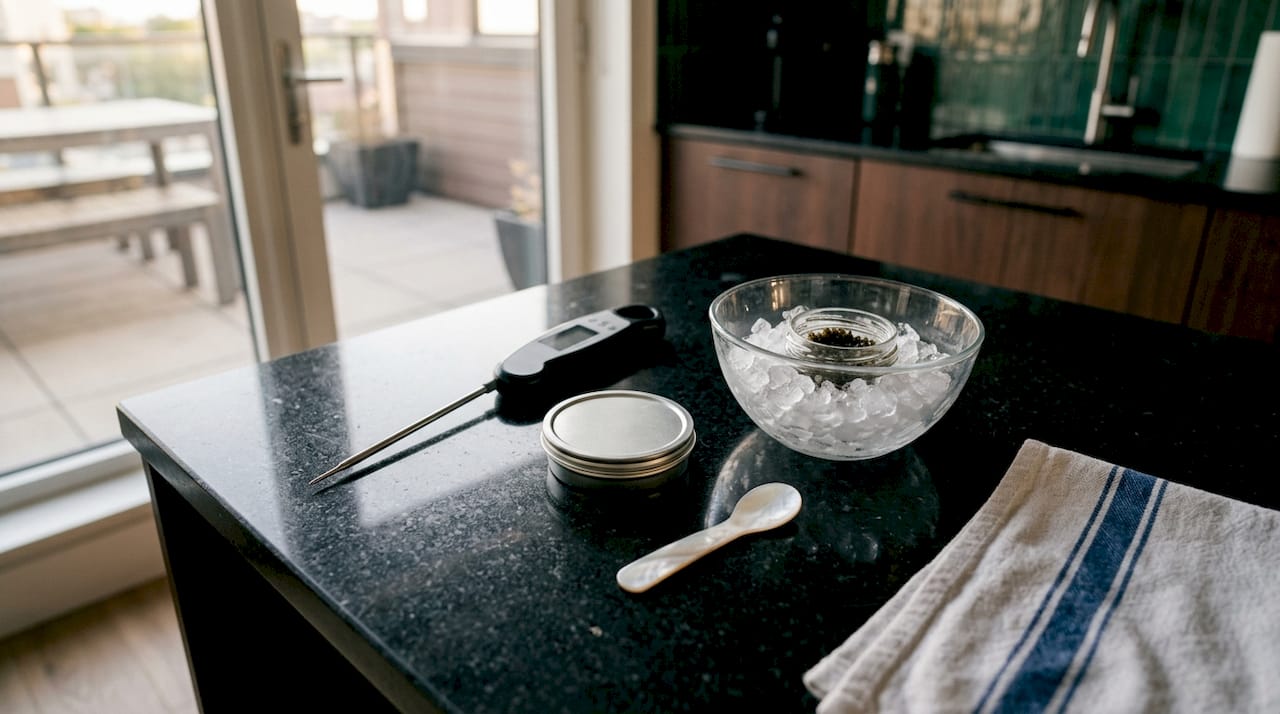
A refrigerator thermometer is the first requirement. Most built-in fridge displays are inaccurate by one to two degrees, and that margin is significant at near-freezing temperatures. Place the thermometer on the shelf where you intend to store the tin, not in the door, which fluctuates with every opening.
A crushed ice bath inside the fridge is the most reliable method for achieving stable cold. Specialist retailers recommend placing the sealed tin in a bowl of crushed ice inside the refrigerator, which moderates the temperature fluctuations common in busy household fridges. This technique brings the tin’s immediate environment closer to the ideal range without requiring specialist equipment.
Light and vibration also degrade quality. Keep the tin away from the fridge fan and away from shelves that receive direct light when the door opens. The back of the bottom shelf, away from the fan vent, is the coldest and most stable position in most domestic fridges.
| Condition | Requirement | Why it matters |
|---|---|---|
| Temperature | -2°C to 0°C | Slows bacterial growth and preserves roe texture |
| Position in fridge | Back of bottom shelf | Coldest, most stable zone in a domestic fridge |
| Storage method | Crushed ice bath | Moderates temperature fluctuations |
| Packaging | Original sealed tin | Prevents oxidation and contamination |
| Environment | Dark, still | Reduces light and vibration damage |
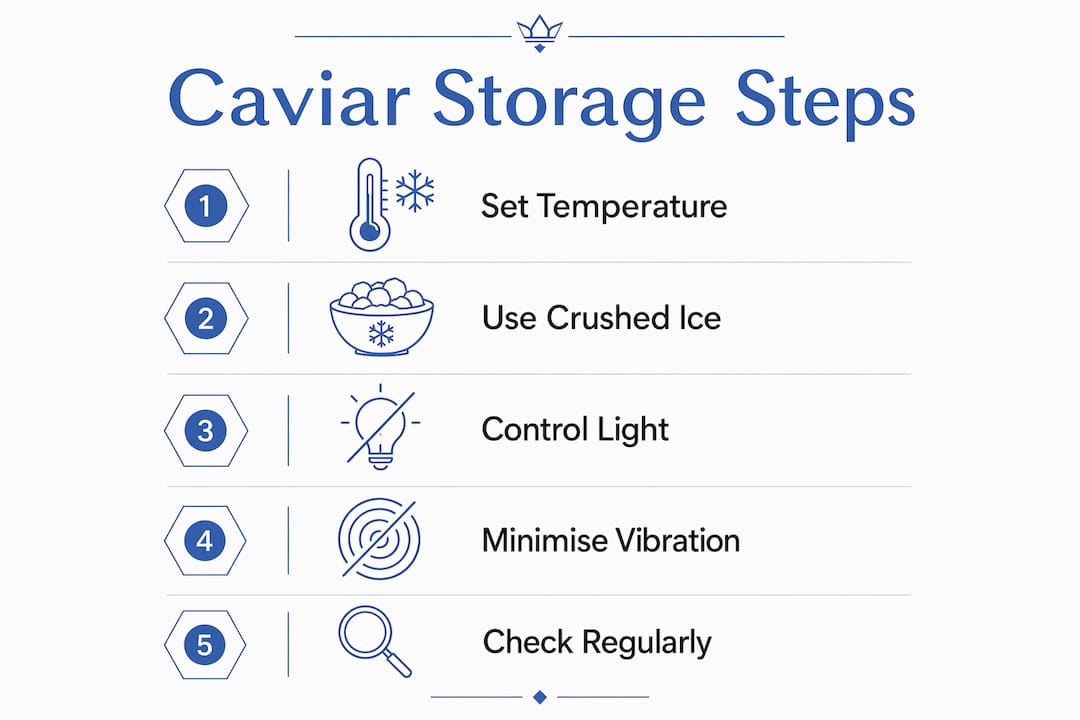
Pro Tip: Invest in a digital probe thermometer and check your fridge’s bottom shelf temperature before storing any caviar. A two-degree difference can halve the product’s effective shelf life.
How to store unopened caviar for maximum shelf life
Unopened caviar, stored correctly, offers a generous window of quality. Vacuum-sealed tins last 4–6 weeks under proper refrigeration, while pasteurised tins can remain viable for up to a year. Salt content also plays a role: malossol caviar, which uses minimal salt, has a shorter shelf life than more heavily salted varieties because salt acts as a natural preservative.
Follow these steps to maximise the shelf life of an unopened tin.
- Place the sealed tin in a bowl of crushed ice inside the refrigerator immediately upon arriving home. Do not leave it at room temperature while you unpack other groceries.
- Position the bowl at the back of the bottom shelf, away from the fridge fan and door seal.
- Check the ice bath every 24 hours and replenish as needed to maintain consistent cold.
- Keep the tin in its original vacuum-sealed packaging until the moment you are ready to serve. Breaking the seal early introduces oxygen and shortens the window dramatically.
- Do not freeze unopened caviar unless the manufacturer explicitly states it is suitable for freezing. Ice crystals rupture the roe membranes, and the texture upon thawing is irreparably damaged.
Salt content is worth understanding before you buy. A malossol tin, which contains less than 5% salt, delivers the purest flavour but demands the most careful handling and the shortest storage window. If you are new to buying premium caviar and uncertain about how quickly you will consume it, a slightly higher-salt variety offers a more forgiving margin.
Pro Tip: Write the date you placed the tin in the fridge on a small piece of tape on the lid. It sounds simple, but it prevents the common mistake of losing track of how long an unopened tin has been sitting.
How to best store opened caviar and extend freshness
Opening a tin of caviar begins a countdown. Opened caviar should be consumed within 1–3 days, with the first 24–48 hours representing the window of peak quality. Oxygen and warmth are the two enemies once the seal is broken, and every minute at room temperature accelerates degradation.
- Serve only what you intend to eat. Return the tin to cold storage immediately rather than leaving it on the table.
- Press plastic wrap directly onto the surface of the roe before replacing the tin’s lid. This contact method displaces air and significantly slows oxidation compared to simply covering the tin loosely.
- Return the tin to its crushed ice bath in the coldest part of the fridge within minutes of serving.
- Avoid using the same spoon twice without wiping it. Cross-contamination from saliva introduces bacteria that accelerate spoilage.
- Do not transfer the roe to a different container. The original tin is designed to minimise air space and maintain the product’s integrity.
A few additional points deserve attention.
Repeated handling is the most common cause of premature spoilage at home. Each time you open the tin, you introduce warm air and the risk of contamination. Decide in advance how much you need, remove it cleanly, and reseal immediately.
Avoid storing opened caviar near strong-smelling foods. Roe absorbs odours readily, and a tin stored next to aged cheese or cured meats will reflect those flavours within hours.
The principles here mirror those used in preserving other delicate luxury products. The same logic of minimising air contact and maintaining cold applies whether you are storing caviar or following a guide to gin storage, where oxidation is equally the primary threat to flavour integrity.
Pro Tip: If you have leftover caviar after 48 hours and are uncertain about quality, trust your nose. Fresh caviar smells clean and oceanic. Any sour, ammonia-like, or overly fishy note means it is past its best.
What is the correct way to serve caviar after proper storage?
Serving caviar well is the final act of preservation. All the care taken in storage can be undone in minutes by incorrect serving temperature or the wrong utensil. Chef Eric Ripert has noted that serving temperature directly affects caviar’s flavour profile, with excess warmth causing unwanted fishy notes to emerge and masking the buttery, nutty richness that defines a premium roe.
The following practices define correct service.
Remove the tin from the fridge 10–15 minutes before serving. This brief rest allows the roe to reach its ideal tasting temperature without warming to the point where flavour degrades. Do not rush this step, and do not skip it: caviar served straight from the ice bath is too cold to express its full aromatic complexity.
Serve on crushed ice to maintain the correct tasting temperature of 28°F to 32°F (approximately -2°C to 0°C) throughout the meal. Place the tin directly on the ice in a shallow bowl or on a dedicated caviar service dish.
Metal utensils react with caviar and alter its flavour. Use mother-of-pearl, bone, wood, or glass spoons exclusively. Many premium tins include a mother-of-pearl spoon for precisely this reason.
Do not leave caviar out for longer than 30 minutes without refreshing the ice beneath it. Beyond that window, the roe begins to warm and the texture softens irreversibly. For a longer tasting event, replenish the crushed ice every 20–25 minutes.
Pro Tip: Pair your service with a champagne pairing guide to complete the experience. The acidity of a well-chosen Champagne cleanses the palate between tastings and amplifies the roe’s mineral character.
Key takeaways
Proper caviar storage requires near-freezing temperatures between -2°C and 0°C, minimal air exposure, and consumption within 24–48 hours of opening to preserve flavour and texture.
| Point | Details |
|---|---|
| Ideal storage temperature | Keep caviar at -2°C to 0°C using a crushed ice bath inside the fridge. |
| Unopened shelf life | Vacuum-sealed tins last 4–6 weeks; pasteurised tins can last up to a year. |
| After opening | Consume within 24–48 hours and press plastic wrap directly onto the roe surface. |
| Serving temperature | Rest the tin 10–15 minutes before serving, then present on crushed ice. |
| Utensil choice | Use mother-of-pearl, wood, or glass spoons to avoid flavour contamination. |
What home storage taught me about respecting caviar
The most common mistake I see is treating caviar like any other refrigerated product. People place the tin on a middle shelf, assume the fridge is cold enough, and wonder why the flavour is flat or the texture mushy by the second day. The problem is almost always temperature, and it is almost always preventable.
A digital thermometer costs very little relative to the price of a premium tin. Yet most people who spend generously on Baeri or Oscietre caviar have never checked the actual temperature of their fridge shelf. That asymmetry surprises me every time.
The ice bath method feels like extra effort until you taste the difference. Caviar stored in a proper ice bath inside the fridge retains a clarity and brightness that shelf-stored caviar simply does not. The roe stays firm, the brine stays clean, and the flavour holds its definition for the full shelf life of the tin.
For those new to storing caviar at home, I recommend starting with a pasteurised tin. The longer shelf life gives you more time to develop good habits without the pressure of a narrow consumption window. Once you are confident in your setup, malossol varieties reward the extra care with a flavour that is genuinely incomparable.
Caviar is sometimes called “black gold,” and the description is apt not just for its price but for the care it demands. Treat it with the same deliberateness you would apply to any irreplaceable luxury, and it will repay you with an experience that justifies every degree of effort.
— Aptent
Aptent Gourmet: premium caviar worth storing properly
When the caviar itself is exceptional, proper storage becomes an act of respect rather than obligation.

Aptent sources its caviar from prestigious producers to deliver tins that reward careful handling. The Baeri Signature Caviar offers a buttery smoothness and clean brine that reflects ideal cold-chain handling from producer to tin. For those drawn to a more complex, nutty richness, the Oscietre Signature range represents one of the finest expressions of the species available in Australia. Aptent also carries a curated selection of gourmet accessories including serving tools designed to complement proper caviar service. Every tin arrives ready for the ice bath.
FAQ
What is the ideal temperature for storing caviar?
The ideal temperature for storing caviar is between -2°C and 0°C. Standard home fridges run warmer than this, so a crushed ice bath inside the refrigerator is the most reliable method for achieving the correct range.
How long does unopened caviar last in the fridge?
Vacuum-sealed, unpasteurised caviar lasts 4–6 weeks under proper refrigeration. Pasteurised tins can remain viable for up to a year when stored at the correct temperature.
How long can you keep caviar after opening?
Opened caviar should be consumed within 24–48 hours for peak quality, and no later than three days after opening. Exposure to oxygen and warm air accelerates flavour degradation rapidly once the seal is broken.
Can you freeze caviar to extend its shelf life?
Freezing is not recommended for most fresh or malossol caviar. Ice crystals rupture the delicate roe membranes, and the texture after thawing is permanently compromised.
Why should you avoid metal spoons with caviar?
Metal reacts chemically with caviar and introduces a metallic note that masks the roe’s natural flavour. Mother-of-pearl, wood, and glass spoons are the correct choice for both serving and tasting.


