
Is caviar cooked? Raw vs pasteurised explained
Caviar is defined as salt-cured fish roe served raw and chilled, never subjected to culinary heat. The malossol technique, which translates literally as “little salt,” is the gold standard of caviar preparation: roe is lightly salted at under 5% concentration, sealed, and refrigerated without any heat treatment whatsoever. This single fact separates caviar from virtually every other luxury food. The delicate egg membranes, the signature buttery pop, and the layered aromatic complexity that define great caviar all depend entirely on the absence of heat. Understanding why caviar is raw, and how pasteurisation differs from cooking, is the foundation of appreciating this black gold properly.
Why is caviar not cooked?
Heat is the enemy of caviar quality. Heat exposure breaks down the eggs’ delicate membranes, causing them to soften, collapse, or turn rubbery. The result is a mouthfeel that bears no resemblance to the firm, yielding pop that defines premium roe.
The aromatic complexity of caviar is equally vulnerable. The subtle notes of ocean brine, nuttiness, and buttery richness that distinguish a fine Oscietre from a lesser product are volatile compounds. Heat disperses them rapidly and irreversibly. What remains after cooking is a flat, diminished flavour profile that no amount of seasoning can restore.
The structural integrity of the egg is also what creates the sensory experience. When you press a properly served caviar bead against the palate, the membrane yields cleanly and releases a concentrated burst of flavour. Culinary professionals stress that preserving this structural integrity requires avoiding heat, metal utensils, and improper storage in equal measure.
Pro Tip: Never leave caviar at room temperature for more than 30 minutes. Even ambient warmth begins to soften the membranes and dull the flavour before any visible change occurs.
The key distinctions between heat’s effects on caviar are worth understanding clearly:
- Softening of egg membranes, leading to a mushy or rubbery texture
- Loss of volatile aromatic compounds that create complex tasting notes
- Destruction of the characteristic buttery pop and clean finish
- Irreversible degradation of flavour that cannot be corrected after the fact
What is pasteurisation and how does it differ from cooking?
Pasteurisation is a mild, controlled heat treatment applied after curing to stabilise the roe and eliminate harmful bacteria. It is not cooking. The temperatures used are far lower than culinary cooking and the exposure time is brief, with the specific goal of extending shelf life rather than altering texture or flavour intentionally.
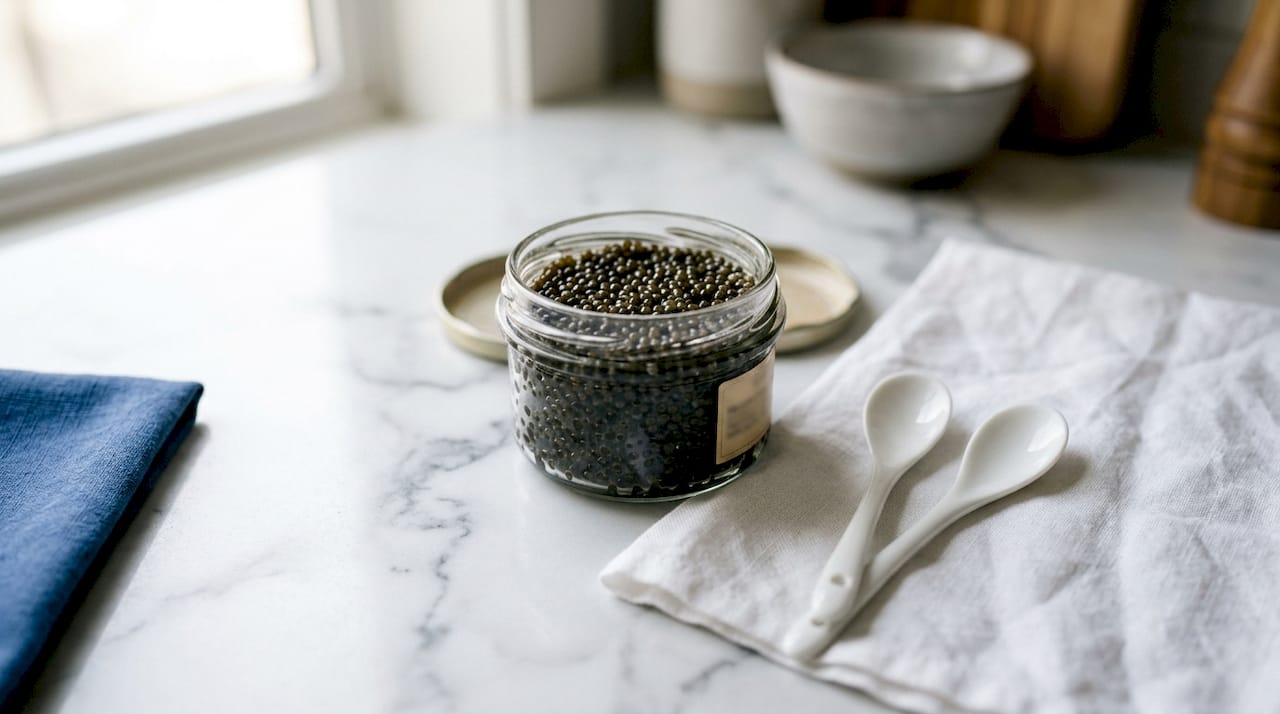
The trade-off is significant. Pasteurisation extends shelf life from a few weeks to 6–12 months unopened, which provides enormous logistical advantages for importers and retailers. That convenience comes at a measurable cost to quality. Jean-Pierre Esmilaire notes that pasteurisation sacrifices approximately two-thirds of caviar’s characteristic flavour complexity. That figure is not trivial. It means pasteurised caviar, while safe and shelf-stable, delivers a noticeably flatter sensory experience than its fresh, malossol counterpart.
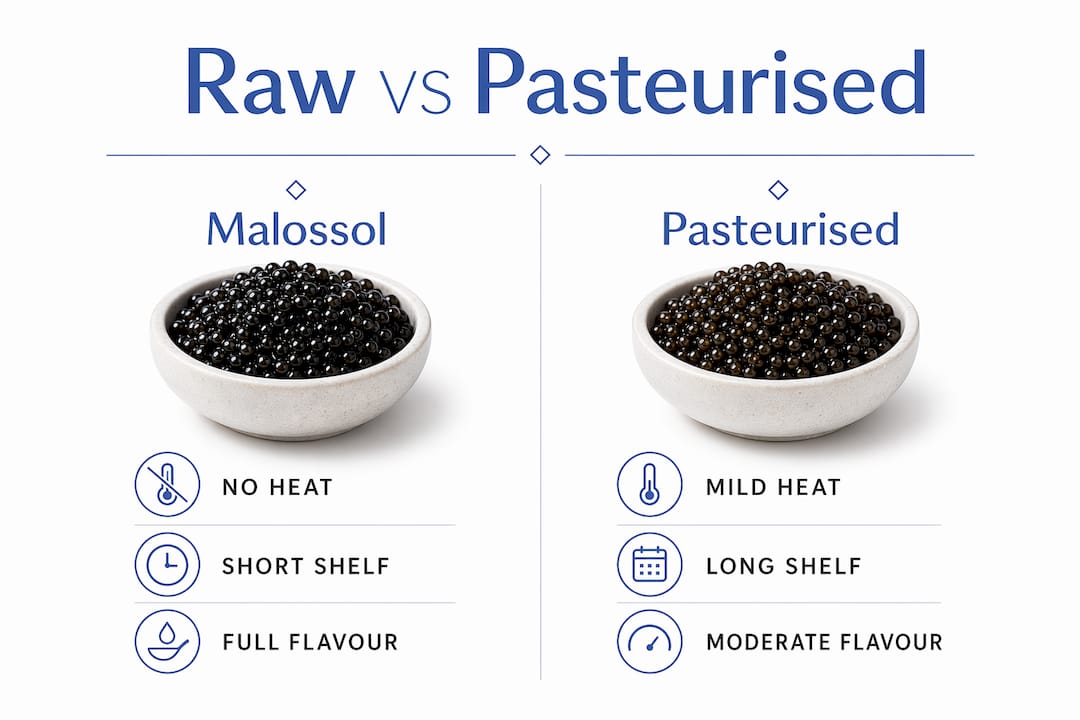
Malossol caviar lasts 4–6 weeks unopened under refrigeration. Pasteurised caviar can last several months. The choice between them is a direct trade-off between flavour fidelity and convenience.
Pro Tip: When purchasing caviar for a special occasion, choose malossol over pasteurised whenever possible. The flavour difference is immediately apparent to any attentive palate.
The table below clarifies the key differences between the two preparation methods.
| Feature | Malossol caviar | Pasteurised caviar |
|---|---|---|
| Heat treatment | None | Mild heat post-curing |
| Shelf life (unopened) | 4–6 weeks refrigerated | 6–12 months |
| Flavour complexity | Full aromatic profile | Approximately 66% retained |
| Texture | Firm, clean pop | Slightly softer |
| Best use | Special occasions, immediate enjoyment | Travel, gifting, longer storage |
How is caviar traditionally prepared and served?
Proper caviar preparation begins long before the tin reaches the table. The malossol method preserves freshness through precise salting rather than heat, and every subsequent handling decision either protects or diminishes that quality. Understanding traditional serving practices is as important as choosing the right product.
Storage is the first critical variable. Caviar must be kept at 0–7°C in the coldest part of the refrigerator, ideally in its sealed tin or jar. Temperature fluctuations degrade quality rapidly, and freezing damages the buttery texture irreversibly. Once opened, caviar should be consumed within 24–48 hours to maintain peak quality.
The choice of utensil matters more than most foodies realise. Metal spoons impart off-flavours that degrade caviar’s delicate aroma and taste. Mother-of-pearl, bone, and wood are the correct materials. This is not affectation. The metallic ions in silver or stainless steel react with the roe’s natural compounds and introduce a harsh, bitter note that overwhelms the subtlety of even the finest caviar.
Serving caviar chilled on crushed ice is the standard practice at any serious table. The ice maintains the ideal temperature throughout service and slows any further degradation. Caviar served on crushed ice retains its flavour and texture far longer than caviar left on a plate at room temperature.
The following practices define a properly executed caviar service:
- Remove the tin from the refrigerator no more than 10 minutes before serving.
- Place the sealed tin on a bed of crushed ice in a non-reactive bowl.
- Open the tin at the table for maximum freshness and presentation.
- Serve with mother-of-pearl, bone, or wood spoons exclusively.
- Portion at 1–3 ounces per guest for a dedicated tasting or event service.
Standard portion sizes of 1–3 ounces per person reflect both the intensity of caviar’s flavour and its value. Larger portions rarely improve the experience and often overwhelm the palate.
Caviar pairing and culinary uses without cooking the roe
Caviar pairs beautifully with warm dishes, but the roe itself is never exposed to heat during preparation. The correct technique is to add caviar as a garnish after cooking is complete and the dish has been plated. This preserves the eggs’ texture and flavour while allowing the warmth of the dish to subtly enhance the overall sensory experience.
The classic pairings for raw caviar reflect centuries of refined culinary tradition. Blinis served warm with crème fraîche provide a neutral, slightly tangy base that amplifies rather than competes with the roe’s complexity. Chilled potato dishes, particularly those finished with butter or cream, offer a similar complementary richness. For a caviar and champagne pairing, the high acidity and fine bubbles of a quality blanc de blancs cut through the fat of the roe and refresh the palate between bites.
The guiding principle across all pairings is temperature contrast and flavour neutrality. Accompaniments should support the caviar, not overshadow it. Strong flavours, acidic dressings, and heavily seasoned bases all compete with the roe’s delicate profile. The best pairings are those where the caviar remains the unambiguous centrepiece.
The following pairing principles apply regardless of the occasion:
- Add caviar to warm dishes only after removing them from heat and plating.
- Pair with blinis, crème fraîche, or lightly buttered toast points for classic service.
- Serve alongside chilled potatoes or eggs for a more substantial presentation.
- Match with dry champagne, blanc de blancs, or unoaked white wines.
- Avoid strongly flavoured accompaniments that compete with the roe’s aromatic subtlety.
Common misconceptions about cooking caviar
The most persistent myth about caviar is that cooking it could enhance its flavour or create a more accessible product. The opposite is true. Heat destroys the very qualities that make caviar worth its price. Any recipe that calls for cooking caviar directly is misusing the ingredient and producing an inferior result.
A second common error is the use of metal spoons. Many foodies who understand the raw serving rule still reach for a silver teaspoon out of habit or aesthetic preference. The metallic taste transfer is immediate and unmistakable to a trained palate. Mother-of-pearl spoons exist for a functional reason, not merely as a luxury affectation.
Confusion between pasteurisation and cooking is also widespread. Pasteurised caviar is not cooked caviar. It has undergone a controlled heat treatment to extend shelf life, but it is still served raw and chilled. The distinction matters because pasteurised caviar is widely available and entirely appropriate for many occasions, provided you understand the flavour trade-off involved.
Pro Tip: If you are unsure whether a product is malossol or pasteurised, check the label for salt percentage and shelf life. Malossol products will indicate low salt content and a shorter refrigerated shelf life.
Improper storage is the final common mistake. Leaving caviar at room temperature, even briefly, accelerates membrane degradation and flavour loss. The impact of improper storage is cumulative and cannot be reversed once it occurs.
Key takeaways
Caviar is always served raw and chilled because heat irreversibly destroys the egg membranes, aromatic complexity, and buttery texture that define its quality.
| Point | Details |
|---|---|
| Caviar is always raw | Culinary heat destroys texture and flavour; caviar is cured with salt, not cooked. |
| Pasteurisation is not cooking | Mild heat extends shelf life to 6–12 months but reduces aromatic complexity significantly. |
| Malossol is the gold standard | Lightly salted and heat-free, malossol caviar delivers the fullest flavour profile. |
| Utensils matter | Metal spoons impart off-flavours; use mother-of-pearl, bone, or wood exclusively. |
| Add caviar after cooking | When pairing with warm dishes, always add caviar post-heat to preserve its integrity. |
Aptent’s perspective on respecting the raw tradition
There is a temptation, particularly among enthusiastic home cooks, to treat caviar as an ingredient to be incorporated rather than a centrepiece to be honoured. Every time I encounter a recipe that calls for folding roe into a warm sauce or stirring it through a hot pasta, I feel a quiet frustration. The person writing that recipe has fundamentally misunderstood what caviar is.
The raw tradition is not arbitrary. It is the product of centuries of refinement by producers in the Caspian basin and beyond, who understood that the roe’s value lies entirely in its living complexity. The moment heat enters the equation, that complexity collapses. What remains is protein and salt. The buttery pop, the oceanic depth, the lingering nuttiness: all of it gone.
What I have found, after years of working with premium caviar, is that the foodies who appreciate it most deeply are those who resist the urge to do anything with it. They serve it cold, on ice, with a mother-of-pearl spoon, and they let it speak for itself. The restraint is the sophistication. A tin of fine Baeri Signature opened at the table, served simply with warm blinis and a glass of well-chosen champagne, is an experience that no amount of culinary intervention can improve.
The practical wisdom is simple: buy the best quality you can afford, store it correctly, serve it cold, and use the right spoon. Everything else is distraction.
— Aptent
Aptent’s curated selection for authentic caviar enjoyment
For those who want to experience caviar as it was intended, Aptent’s range begins with the finest malossol preparations, sourced from prestigious producers and handled with the care this ingredient demands.

The 100G Baeri Signature Caviar is the ideal introduction to authentic raw caviar service, offering the full malossol flavour profile in a generous portion suited to a dedicated tasting or intimate dinner. For a larger occasion, the 100G Oscietre Signature Caviar delivers the nutty richness and firm texture that define this celebrated variety. Both products are best served chilled on crushed ice, with mother-of-pearl spoons, and paired with a glass from Aptent’s curated champagne selection. Explore the full range at Aptent Gourmet and bring the raw tradition to your table.
FAQ
Is caviar always served raw?
Yes. Authentic premium caviar is always served raw and chilled. Culinary heat destroys the egg membranes, texture, and aromatic complexity that define its quality.
Is caviar pasteurised?
Not always. Malossol caviar receives no heat treatment and offers the fullest flavour. Pasteurised caviar undergoes a mild heat process to extend shelf life to 6–12 months, but at the cost of approximately two-thirds of its aromatic complexity.
Can you cook caviar in recipes?
Caviar should never be cooked directly. Culinary professionals recommend adding it as a garnish after all heat has been removed from a dish, preserving its texture and flavour entirely.
What temperature should caviar be stored at?
Caviar must be stored at 0–7°C in the coldest part of the refrigerator. Once opened, it should be consumed within 24–48 hours for peak quality.
Why can’t you use metal spoons with caviar?
Metal spoons react with caviar’s natural compounds and impart a harsh, metallic off-flavour. Mother-of-pearl, bone, or wood spoons are the correct choice for serving.


