
Champagne selection for events: the 2026 guide
Champagne selection for events is defined by four variables: event type, guest count, service moment, and menu pairing. Get these right and the champagne becomes part of the occasion. Get them wrong and even a prestigious label feels out of place. This guide covers how champagne selection works at events, from calculating quantities with precision to matching styles like Brut Non-Vintage, Blanc de Blancs, and Demi-Sec to specific courses and celebration moments. Whether you are planning a wedding, a corporate reception, or an intimate dinner, the principles here apply directly.
How champagne selection works at events: quantity first
The most common mistake event hosts make is underestimating volume. Quantity planning starts with a simple rule: one bottle per three guests for a welcome aperitif, based on two glasses per guest. For a seated meal where champagne flows across multiple courses, that ratio tightens to one bottle per two guests.
Service format changes the calculation further. A cocktail reception, where guests circulate and sip continuously, consumes more champagne than a seated dinner with structured pours. A cocktail event typically requires one bottle per five to six guests, while a dinner format calls for one bottle per two to three guests. The difference reflects pace, duration, and the absence of food to slow consumption.
Always build in a buffer. Adding 10% extra bottles to your final order protects against unexpected guests, generous pours, and the inevitable bottle that gets opened prematurely. Running out of champagne at a wedding toast is not a recoverable situation.
The table below gives practical starting points for common event formats.
| Event format | Guests | Bottles (base) | Bottles with 10% buffer |
|---|---|---|---|
| Welcome aperitif | 30 | 10 | 11 |
| Welcome aperitif | 60 | 20 | 22 |
| Seated dinner | 30 | 15 | 17 |
| Seated dinner | 60 | 30 | 33 |
| Cocktail reception | 60 | 10–12 | 11–14 |
For large events, magnums and Jéroboams offer a practical advantage. A magnum holds 1.5 litres and serves approximately 12 glasses. A Jéroboam holds 3 litres and serves approximately 24 glasses. Larger formats also age more slowly, producing a richer mousse and a more refined tasting experience at the table.
Pro Tip: Order your champagne at least two weeks before the event. This gives you time to chill bottles slowly in a cool environment, which preserves carbonation and sediment far better than last-minute ice-bucket cooling.
Which champagne styles suit different event moments?
Champagne is not a single product. The style you choose should reflect the moment it is being served, the food on the table, and the tone of the occasion. Industry standards recommend Brut Non-Vintage for welcome receptions, Blanc de Blancs for seafood and white meat courses, and Demi-Sec for desserts and wedding cakes.
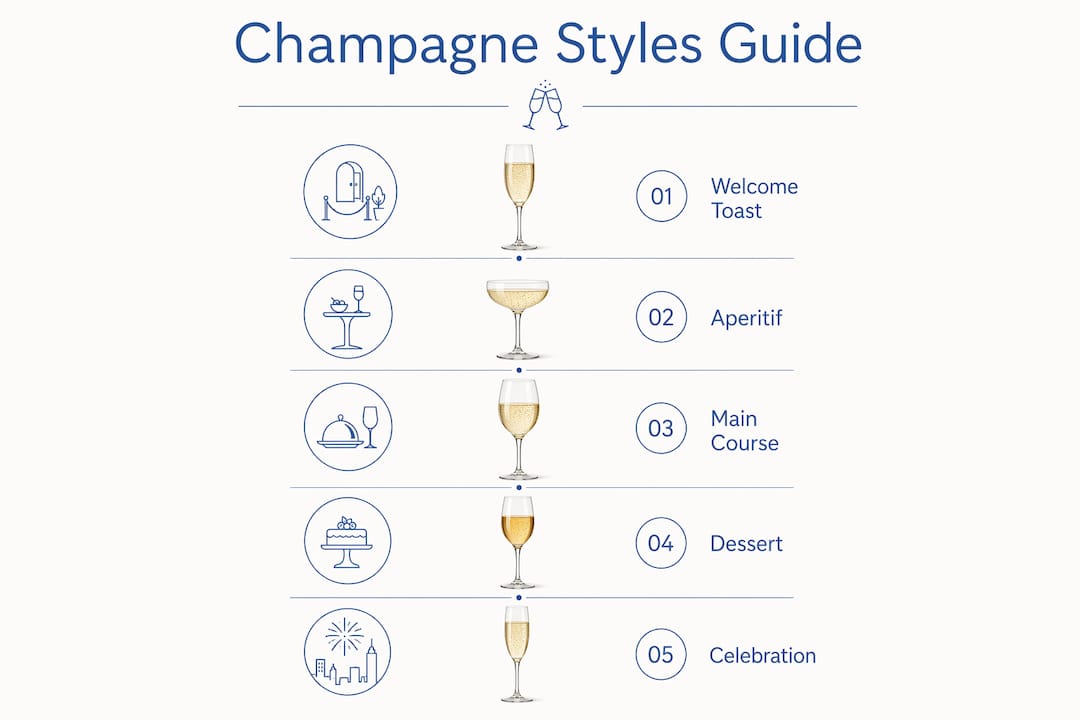
Each style has a distinct character that either supports or competes with what guests are eating and feeling at that moment.
Brut Non-Vintage is the most versatile choice in any champagne selection guide. Its balanced acidity and low dosage make it approachable for mixed palates. It works across a welcome toast, a passed canapé service, and a light entrée course without demanding attention from the food.
Blanc de Blancs, made exclusively from Chardonnay, carries a bright, mineral acidity that cuts through the fat in oysters, smoked salmon, and delicate white meat dishes. It is the natural choice for a refined seafood course or a light starter at a formal dinner.
Demi-Sec carries a higher dosage, meaning more residual sugar, which makes it the correct pairing for dessert. Served alongside a wedding cake or a fruit-based tart, it complements sweetness without clashing. Serving a Brut at this moment creates a sharp, unpleasant contrast.
Brut Rosé brings a fruit-forward expressiveness that suits celebratory toasts and red fruit desserts. Its personality is vivid and festive, making it a strong choice when the event calls for visual impact as well as flavour.
Vintage champagnes carry complexity and depth that reward guests at formal dinners with refined dishes. They pair with dishes that have layered flavours, such as aged cheeses, truffle preparations, and slow-cooked proteins. For a vintage champagne of genuine distinction, the occasion should match the wine’s character.
The key principle behind champagne and food pairing is structural alignment. Match the champagne’s acidity and dosage to the dominant sensations in the dish: salt, fat, and umami. Champagne thrives alongside salty and fatty foods like oysters and fried chicken. It clashes with aggressive vinegar dressings and chili heat, which strip the wine of its finesse.
Pro Tip: Avoid serving a high-acid Blanc de Blancs alongside a vinaigrette-dressed salad. The competing acids create a flat, metallic sensation. Opt for a Brut Non-Vintage instead, which has the structure to hold its own.
How does event formality shape your champagne choice?
Event formality is the single most underrated factor in champagne selection. Formality should dictate style, not budget alone. Serving a prestige cuvée at a casual garden party does not impress guests who would have preferred something approachable and generous. The reverse is equally true: a modest Non-Vintage at a black-tie gala signals a lack of care.
Formal events, including weddings, gala dinners, and corporate celebrations, call for champagnes that reinforce the occasion’s weight. Vintage cuvées, prestige labels, and large-format bottles all communicate that the host has invested in the experience. Guests at these events arrive with elevated expectations, and the champagne should meet them.
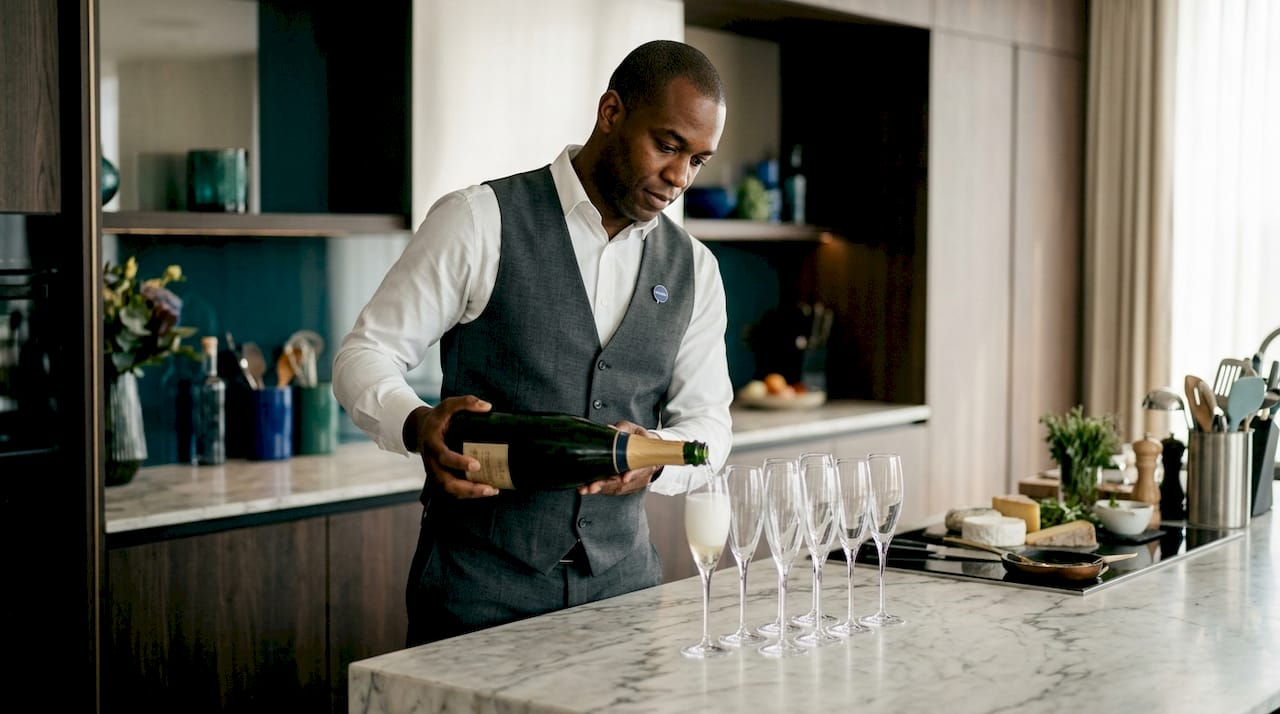
Less formal settings, including birthday parties, casual receptions, and outdoor celebrations, favour versatility over prestige. A well-chosen Brut Non-Vintage from a reputable house serves mixed palates without alienating guests who are not champagne enthusiasts. Forcing a complex Vintage on guests who prefer something light and refreshing creates the wrong kind of impression.
Guest demographics matter as well. A younger crowd at a milestone birthday may respond more warmly to a Brut Rosé than to a structured Blanc de Blancs. An older, more experienced group at a formal anniversary dinner will appreciate the depth of a Vintage. Understanding who is in the room is as important as understanding what is on the menu. For ideas on incorporating champagne into a broader event pairing programme, the principles of matching wine to moment apply equally here.
What are the best practices for champagne service at events?
Temperature is the first discipline of champagne service. Serve champagne between 7°C and 10°C for the best balance of aroma and effervescence. Below 7°C, the cold suppresses the wine’s aromatic complexity. Above 10°C, the bubbles dissipate too quickly and the wine feels flat.
Achieving the right temperature requires planning, not improvisation. Chill bottles slowly in a refrigerator for several hours before service. Rapid cooling methods such as freezers or ice-salt baths disturb the sediment and destabilise the carbonation. The result is a wine that opens flat or with excessive foam.
Bottle opening timing is equally critical. Opening bottles too early kills effervescence before the glass reaches the guest. Opening during service, without trained staff, creates delays and spills at the worst possible moments. The solution is a structured service plan with trained hosts who open bottles to order, not in advance.
For large events, the service sequence should follow this order:
- Chill all bottles slowly in a refrigerator for a minimum of four hours before service.
- Transfer bottles to ice buckets no more than 30 minutes before the first pour.
- Assign one trained host per 20–25 guests for efficient opening and pouring.
- Use magnums for table service at seated dinners to reduce the number of openings required.
- Keep reserve bottles chilled and ready to replace empties without interruption to service.
Pro Tip: Tilt the bottle at a 45-degree angle when opening and rotate the cork slowly rather than pulling it. This releases pressure gradually, preserves the mousse, and eliminates the loud pop that can startle guests and waste wine.
For expert guidance on pairing champagne with caviar as part of your event service, the interplay between Brut acidity and the salinity of fine caviar is one of the most refined combinations in luxury entertaining.
Key takeaways
Champagne selection for events succeeds when style, quantity, and service temperature are matched precisely to the event format, the menu, and the formality of the occasion.
| Point | Details |
|---|---|
| Quantity by format | Plan one bottle per three guests for aperitifs; one per two guests for seated dinners, plus a 10% buffer. |
| Style to moment | Match Brut Non-Vintage to receptions, Blanc de Blancs to seafood, Demi-Sec to desserts, and Vintage to formal dinners. |
| Formality drives choice | Event tone should guide champagne style; prestige labels do not improve guest experience in casual settings. |
| Temperature discipline | Serve between 7°C and 10°C; chill slowly for hours in advance and never use rapid cooling methods. |
| Large format advantage | Magnums and Jéroboams reduce service interruptions and deliver a richer mousse at premium events. |
Aptent’s perspective on champagne selection
The most persistent error I see event hosts make is treating champagne as a single category. They order one style, serve it across every moment of the evening, and wonder why the dessert course feels sharp or the welcome toast feels heavy. Champagne is not a backdrop. It is a participant in every moment it appears.
The second error is conflating budget with quality of experience. A well-chosen Brut Non-Vintage from a respected grower house, served at the correct temperature by attentive staff, will outperform a prestige cuvée opened an hour early and poured warm into a crowded room. The wine is only as good as the conditions in which it is served.
What I find genuinely rewarding about champagne selection is the precision it demands. Every variable, from the acidity of the Blanc de Blancs to the dosage of the Demi-Sec, has a direct effect on how a guest experiences the moment. That precision is not intimidating once you understand the structure. It is, in fact, what makes champagne the most versatile celebratory wine in the world.
The hosts who get it right are the ones who plan the champagne alongside the menu, not after it. They think about the arc of the evening, the moments that need weight and the moments that need lightness, and they select accordingly. That approach is what separates a memorable celebration from a forgettable one.
— Aptent
Curated champagnes for your next celebration
Aptent sources its champagne collection directly from boutique grower houses and prestigious producers, covering every style from expressive Brut Rosé to structured Vintage cuvées. Each selection is chosen for its suitability across different event formats and guest palates.
For event hosts who want to pair champagne with something truly exceptional, Aptent’s signature caviar collection offers the ideal accompaniment. The salinity and richness of fine caviar alongside a well-chosen Brut is one of the defining combinations of luxury entertaining. Browse Aptent’s full champagne collection to find the right style for your occasion, or explore the Grand Cru and rare cuvées for events that call for something truly distinctive.
FAQ
How much champagne do I need for a wedding reception?
Plan one bottle per three guests for a welcome aperitif, based on two glasses per guest, and add a 10% buffer to your total order. For a full seated dinner, increase to one bottle per two guests.
What is the best champagne style for a welcome toast?
Brut Non-Vintage is the most reliable choice for a welcome toast. Its balanced acidity and approachable character suit mixed palates and complement a wide range of canapés.
What temperature should champagne be served at events?
Serve champagne between 7°C and 10°C. Chill bottles slowly in a refrigerator for several hours before service; avoid rapid cooling methods that disturb carbonation.
What champagne pairs best with a wedding cake?
Demi-Sec is the correct pairing for wedding cake and dessert courses. Its higher residual sugar complements sweetness without creating the sharp contrast that a Brut would produce.
When should I use magnums at an event?
Use magnums and larger formats at events with 30 or more guests. A magnum serves approximately 12 glasses, reduces the number of bottle openings required, and delivers a richer mousse than a standard 750ml bottle.


