
What is natural wine? a clear guide for curious drinkers
Natural wine is defined as wine made from organically grown grapes, fermented spontaneously with native yeasts, and produced with minimal or no additives. The term “natural wine” is widely used but carries no single binding legal definition worldwide, which makes understanding its core principles all the more valuable. What unites producers under this philosophy is a commitment to letting the vineyard speak for itself, without the chemical corrections and commercial shortcuts that define mass-market winemaking. For anyone curious about what is natural wine and why it has captured the attention of sommeliers, collectors, and casual drinkers alike, the answer begins in the soil.
What is natural wine and how is it made?
Natural wine production is defined by what the winemaker chooses not to do. No commercial yeast is added to trigger fermentation. Instead, wild ambient yeasts present on the grape skins and in the cellar air drive the process on their own. This spontaneous fermentation is slower and less predictable than inoculated fermentation, but it contributes layers of aroma and flavour that are genuinely site-specific.
The process begins in the vineyard, where organic or biodynamic farming replaces synthetic pesticides and herbicides with compost, cover crops, and careful observation. Grapes are hand harvested to avoid bruising, which matters because damaged fruit introduces unwanted oxidation before fermentation even begins. Once in the cellar, the winemaker steps back. Fermentation runs at its own pace, sometimes for weeks or months.
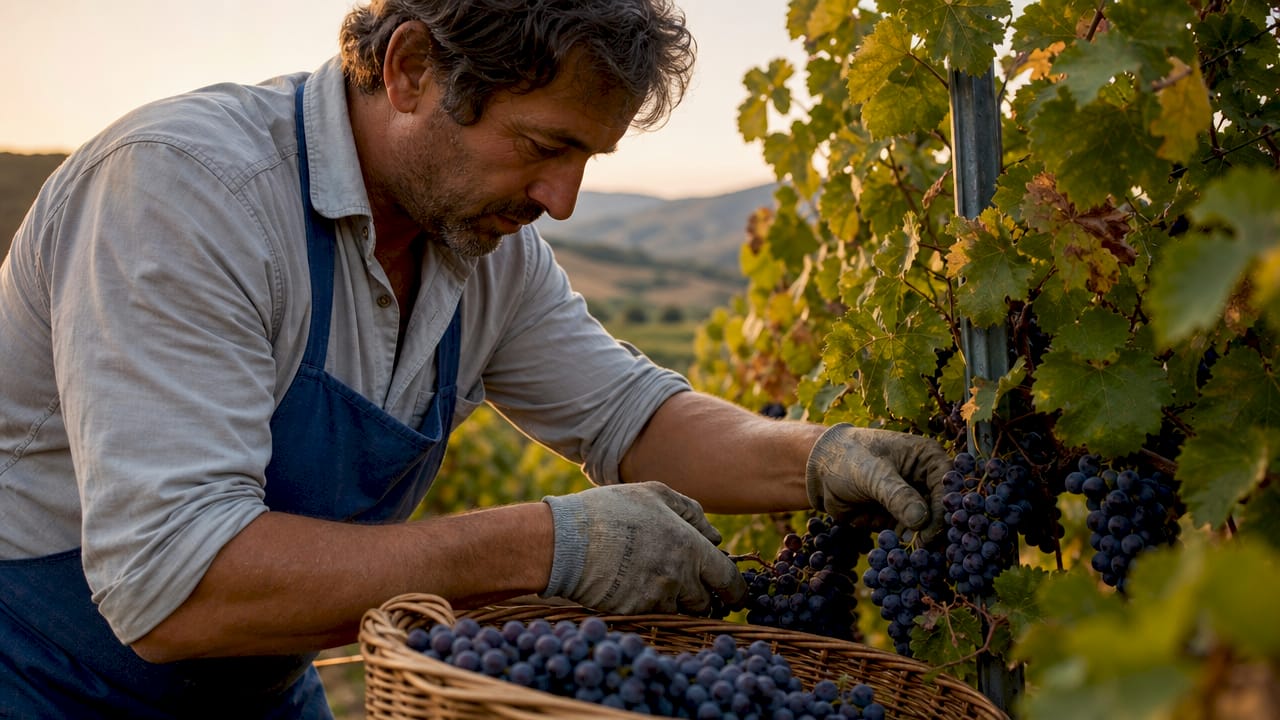
In the cellar, the philosophy of restraint continues. Fining and filtration are avoided, which means the finished wine may appear hazy or carry visible sediment. This is not a flaw. It is a hallmark of minimal intervention. Sulfites, the preservative most commonly added to conventional wine, are kept extremely low. Credible producers typically cap sulfur dioxide at or near 40 mg/L, and many add none at all.
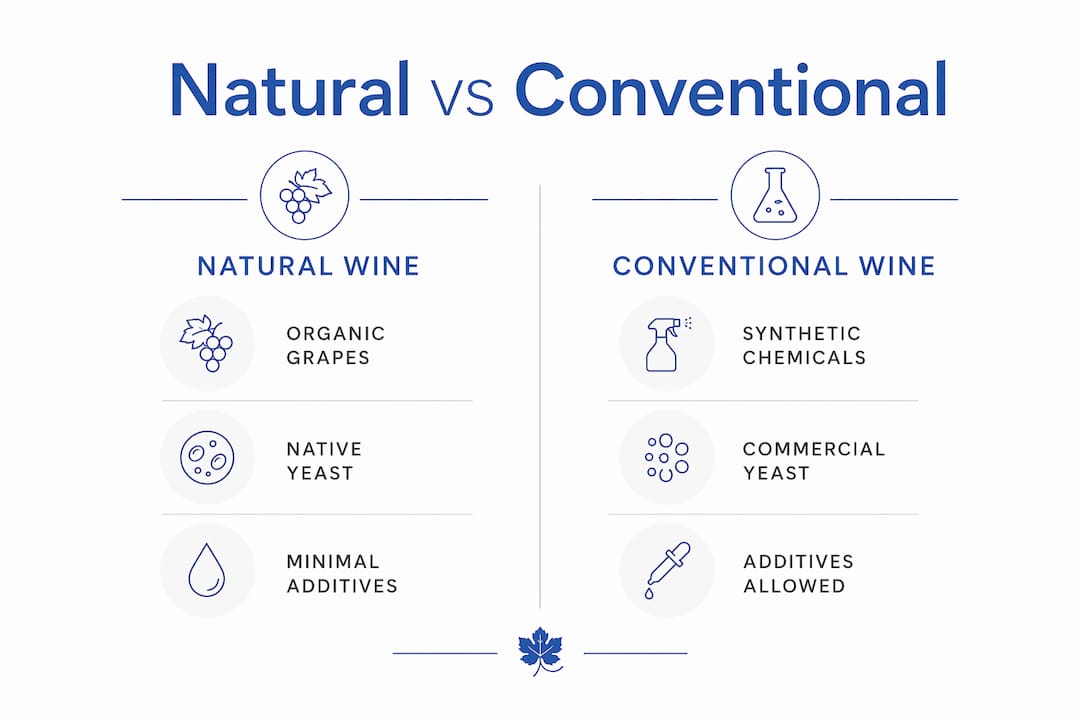
The contrast with conventional winemaking is stark. Conventional producers may use commercial yeast strains selected for reliability, acidity regulators, fining agents such as bentonite or egg whites, and sulfite levels well above those found in natural wine. The result is a consistent, shelf-stable product, but one shaped as much by the cellar as by the vineyard.
Pro Tip: If you are new to natural wine, look for the words “unfiltered” or “no added sulfites” on the label. These are reliable signals that the producer is working with minimal intervention, even in the absence of formal certification.
Are there legal definitions or certifications for natural wine?
No universal legal definition for natural wine exists globally. This is the single most important fact for any consumer to understand. Without a binding standard, any producer can label a bottle “natural” regardless of their actual practices. That gap between marketing and method is where consumer confusion takes root.
Two significant frameworks have emerged to address this. France introduced the voluntary, government-recognised Vin Méthode Nature label in 2020. The certification requires organic vineyard management, fermentation with native yeasts only, and strict limits on additives. It does not guarantee zero sulfites, but it sets a credible, audited floor that self-labelled products cannot claim.
Georgia moved further. Georgia’s 2026 law formally defines natural wine in legislation, mandating spontaneous fermentation from organically grown grapes and capping sulfur dioxide at 40 mg/L. Georgia is one of the world’s oldest wine cultures, and its legal definition carries weight precisely because it is enforceable rather than voluntary.
The table below summarises the key distinctions between these frameworks and the broader self-labelled category.
| Standard | Jurisdiction | Key requirements | Legally binding? |
|---|---|---|---|
| Vin Méthode Nature | France | Organic farming, native yeast, additive limits | No (voluntary) |
| Georgia Natural Wine Law | Georgia | Organic grapes, spontaneous fermentation, SO₂ ≤ 40 mg/L | Yes (from 2026) |
| Self-labelled “natural” | Global | No defined requirements | No |
For consumers, the practical guidance is straightforward. Recognised certifications and producer reputation are far more reliable guides than the word “natural” printed on a label.
How does natural wine differ from conventional wine?
The differences between natural and conventional wine run from the paddock to the palate. Conventional winemaking is an industrial process designed for consistency and volume. Natural winemaking is an artisanal practice designed for expression and authenticity. Understanding where those paths diverge helps you appreciate what you are tasting.
Farming and fermentation
Conventional vineyards rely on synthetic herbicides, fungicides, and fertilisers to manage yield and disease pressure. Natural vineyards use organic or biodynamic methods, accepting lower yields and greater seasonal risk in exchange for healthier soils and more expressive fruit. Fermentation in conventional wine uses commercial yeast strains chosen for speed and predictability. Spontaneous fermentation with ambient yeasts, as used in natural wine, introduces variability and potential microbial complexity, including volatile acidity and brettanomyces, which some drinkers find characterful and others find challenging.
Additives and preservation
Conventional wine production permits a wide range of additives and processing aids, including commercial yeast, fining agents, acidity regulators, and sulfites. Natural wine restricts all of these, with minimal exceptions. One point worth clarifying: all wines contain some naturally occurring sulfites produced during fermentation, usually under 10 mg/L. A label reading “contains sulfites” does not mean sulfites were added. It means the legal threshold for disclosure was met, which applies to virtually every wine on the market.
Appearance, flavour, and stability
Natural wines often appear hazy and may show sediment in the bottle. Their flavour profiles tend toward earthy, funky, or bright fruit characters rather than the polished, fruit-forward style common in commercial wines. Vintage variation is pronounced. Natural wines evolve quickly in the bottle and are sensitive to temperature changes, which means storage conditions matter more than they do for conventional wines. This sensitivity is a direct consequence of lower sulfite levels, which reduce chemical stability.
Pro Tip: Serve natural wine slightly cooler than you would a conventional red. The lower temperature slows oxidation and gives you more time to appreciate the wine’s character as it opens in the glass.
What are the benefits and challenges of natural wine?
Natural wine offers genuine advantages, but it also demands more from the drinker. Understanding both sides prevents disappointment and deepens appreciation.
The environmental case for natural wine is strong. Organic and biodynamic farming builds soil health, reduces chemical runoff into waterways, and supports biodiversity in the vineyard. These are not abstract benefits. They translate into vineyards that are more resilient to drought and disease over the long term. The vintage variation that results from farming without chemical correction is also, for many collectors, a feature rather than a flaw.
The philosophical appeal is equally compelling. Natural wine represents a return to pre-industrial winemaking, where the farmer’s skill and the land’s character determined the wine’s quality. Spontaneous fermentation with native yeasts produces flavours that cannot be replicated in a laboratory, and that authenticity resonates with drinkers who value provenance.
The challenges are real, however. Bottle variability is the most common complaint. Two bottles from the same producer and the same vintage can taste noticeably different. Volatile acidity, a sharp or vinegary edge, can appear when fermentation runs without the safety net of commercial yeast or sulfite additions. Some bottles arrive in poor condition due to heat exposure during shipping, a risk amplified by the wine’s chemical instability.
Natural wine is not inherently better or worse than conventional wine. It is a stylistic choice that prioritises raw expression over consistency. Approaching it with that understanding, rather than ideological expectation, produces the most rewarding experience.
How do you taste and enjoy natural wine?
Tasting natural wine well requires a shift in expectations rather than a shift in technique. The following approach helps new drinkers get the most from each bottle.
- Accept the appearance. A hazy, slightly cloudy wine is normal and desirable in natural styles. Sediment at the bottom of the bottle is a sign of minimal filtration, not spoilage. Decant gently if you prefer a clearer pour.
- Smell before you judge. Natural wines can show unusual aromas on opening, including earthy, barnyard, or funky notes from brettanomyces. Give the wine ten minutes in the glass before forming an opinion. Many of these characters integrate and become appealing with air.
- Expect variability. No two bottles will be identical, and no two vintages will taste the same. This is the point. Treat each bottle as its own experience rather than a benchmark against a fixed style.
- Store with care. Keep natural wine in a cool, dark place with stable temperature. Fluctuations accelerate the wine’s evolution and can push it past its peak quickly.
- Pair thoughtfully. Natural wines, with their earthy and bright fruit profiles, pair beautifully with simply prepared food. A skin-contact orange wine alongside grilled fish, or a light, chilled red with a charcuterie board, are classic combinations. Aptent’s wine and food pairing guide offers further inspiration for matching these styles at the table.
- Approach with curiosity. The drinker who brings an open palate to natural wine consistently gets more from it than the one who arrives with rigid expectations.
Key takeaways
Natural wine is defined by organic farming, spontaneous fermentation, and minimal additives, making it a stylistic choice that prioritises authentic terroir expression over commercial consistency.
| Point | Details |
|---|---|
| Core definition | Natural wine uses organically grown grapes, native yeast fermentation, and no or minimal additives. |
| No universal standard | No global legal definition exists; look for certifications like Vin Méthode Nature or Georgia’s 2026 law. |
| Key differences | Natural wine avoids commercial yeast, fining, filtration, and high sulfite levels used in conventional wine. |
| Expect variability | Bottle-to-bottle variation and quick evolution are normal; store carefully at stable, cool temperatures. |
| Stylistic choice | Natural wine is not superior to conventional wine; it is a different philosophy prioritising raw expression. |
Aptent’s perspective on natural wine
The most common mistake I see with natural wine is treating it as a moral category rather than a stylistic one. Drinkers arrive expecting purity and leave disappointed by a funky, volatile bottle. The wine was not defective. Their expectations were misaligned.
What I find genuinely compelling about natural wine is its honesty. A well-made natural wine from a reputable producer tells you something real about a specific place and a specific season. That is rare. Most wine, however pleasant, tells you something about a winemaker’s formula. The terroir-driven character of a great natural wine is not reproducible, and that irreproducibility is precisely its value.
My advice is to start with producers who hold recognised certifications. Vin Méthode Nature and Georgia’s legal framework are your most reliable anchors. Beyond that, seek out wine merchants who know their producers personally and can vouch for storage conditions. A natural wine that has been poorly handled in transit is not a fair representation of the category.
The unpredictability that frustrates some drinkers is, for those who embrace it, the most exciting thing about natural wine. Approach it with curiosity rather than ideology, and it will reward you consistently.
— Aptent
Refine your collection with Aptent’s curated selections
For those who appreciate wines that speak with genuine character and provenance, Aptent’s collection offers a considered starting point. Aptent curates rare and artisan selections sourced directly from prestigious producers, with an emphasis on authenticity and quality that aligns naturally with the principles behind low-intervention winemaking.
Whether you are building a personal cellar, preparing for a special occasion, or hosting a boutique tasting event, Aptent’s featured wine collection brings together bottles chosen for their depth and distinction. For those who wish to complement a wine experience with the finest accompaniments, Aptent’s Grand Cru selections and signature caviar offerings create a pairing of rare refinement. Personalised guidance is available for those seeking a bespoke gourmet experience worthy of the occasion.
FAQ
What is the natural wine definition in simple terms?
Natural wine is wine made from organically farmed grapes, fermented with wild native yeasts, and produced with minimal or no additives such as sulfites. The goal is to let the vineyard’s character express itself without chemical correction.
Is natural wine healthier than conventional wine?
Natural wine typically contains lower levels of added sulfites and no synthetic additives, which some drinkers find easier to tolerate. All wines contain naturally occurring sulfites from fermentation, so “no added sulfites” does not mean sulfite-free.
Why does natural wine look cloudy?
Natural wines appear hazy because producers avoid fining and filtration, which are the cellar processes that clarify conventional wine. The cloudiness reflects minimal intervention and is considered a hallmark of the style, not a defect.
Does natural wine have a legal definition?
No universal legal definition exists globally. France’s voluntary Vin Méthode Nature label and Georgia’s 2026 legislation are the most credible frameworks currently in place, but most natural wine is self-labelled by producers without external verification.
How should I store natural wine?
Store natural wine in a cool, dark place with a stable temperature, as lower sulfite levels make it more chemically sensitive than conventional wine. Temperature fluctuations accelerate its evolution and can push it past its peak prematurely.


