
How wine aging works: the science behind the bottle
Wine aging is defined as the chemical transformation that occurs inside a sealed bottle over time, altering a wine’s flavour, aroma, and mouthfeel through processes including tannin polymerisation, acid evolution, and controlled oxygen exposure. Understanding how wine aging works separates the collector who opens a bottle at its peak from one who opens it too early or too late. Approximately 90% of all wine is meant to be consumed within one year of production, and only about 1% improves significantly after 5–10 years. That figure reframes the entire conversation: aging is not a universal virtue but a precise science applied to a rare category of wine.
How wine aging works: the chemistry inside the bottle
The wine aging process involves three core mechanisms: tannin polymerisation, the transformation of aroma compounds, and micro-oxygenation through the cork. Each operates on a different timescale and produces a different sensory result. Together, they account for the complexity that distinguishes a well-aged Barossa Shiraz from its younger self.
Tannin polymerisation and mouthfeel
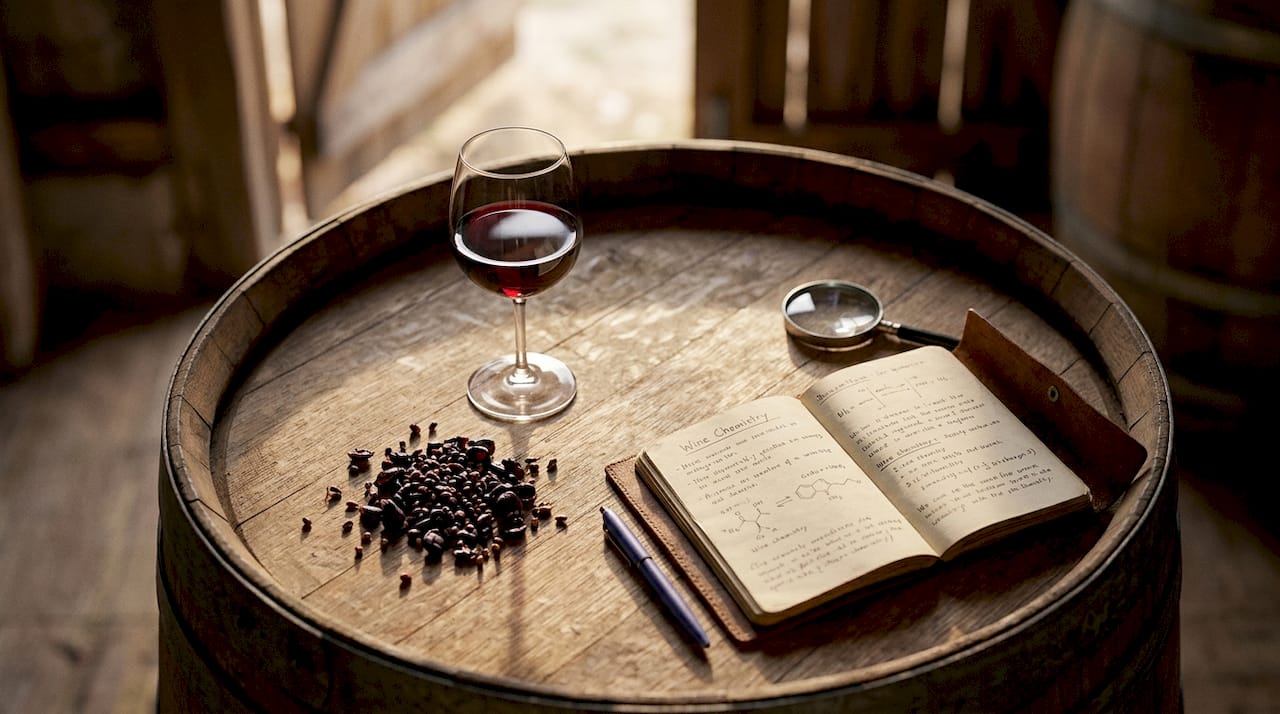
Tannins are phenolic compounds found primarily in grape skins, seeds, and stems. In a young red wine, they exist as short, aggressive molecules that bind to proteins in your mouth and create that drying, astringent sensation. Over time, tannins polymerise into longer chains, softening harsh flavours and eventually precipitating out of solution as sediment. That sediment is not a flaw. It is physical evidence that the wine has undergone genuine structural change.
Aroma evolution from primary to tertiary
Primary aromas in young wine are direct fruit and floral notes: blackcurrant in Cabernet Sauvignon, citrus in Riesling, cherry in Pinot Noir. As wines mature, these compounds react with oxygen and each other to form secondary and then tertiary aromas. Tertiary aromas include leather, tobacco, dried fruit, earth, and truffle. These are the characteristics that make aged wine so compelling to the discerning palate. The transformation is irreversible, which is precisely why timing matters.
Micro-oxygenation through the cork
Natural cork is not airtight. The cork allows minute oxygen ingress measured in milligrams per year, and that slow, steady exposure is what drives maturation in bottle. Oxygen exposure is actually multi-phase: an initial burst occurs after bottling, then declines as cork compounds consume available oxygen, then resumes as a slow, steady ingress over years. This is why most wine experiences a period of bottle shock after bottling, a temporary flavour disruption that settles within weeks to months.
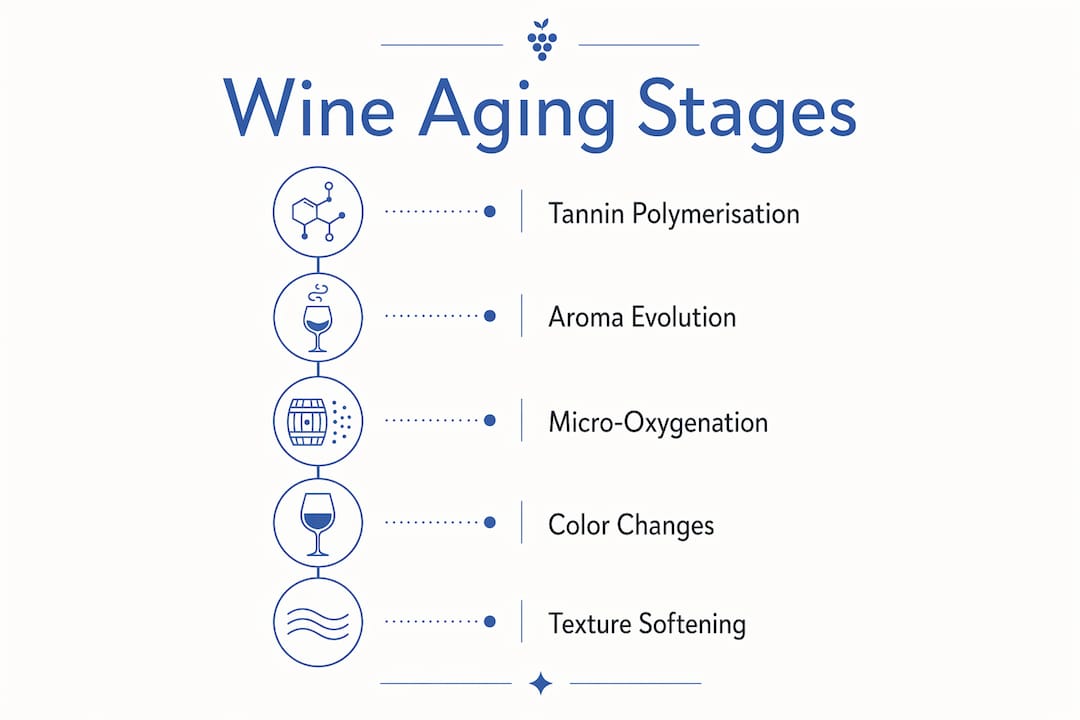
Colour also transforms during aging. Red wines shift from deep purple toward garnet and eventually brick red as anthocyanin pigments polymerise and precipitate. White wines move in the opposite direction, deepening from pale straw toward gold and amber as oxidative reactions concentrate colour compounds. These colour shifts are reliable visual cues for assessing a wine’s stage of development.
Pro Tip: Tilt your glass against a white surface in natural light. A brick-red rim on a red wine signals advanced age, while a golden hue in a white wine suggests significant bottle development. Use colour as your first diagnostic before you even bring the glass to your nose.
Which wines have the potential to age well?
Wines with strong balance between acidity, tannin, alcohol, and body age more gracefully, while lighter wines reach their peak earlier. This structural balance acts as a scaffold. Without it, the wine simply deteriorates rather than evolves. The four key structural components to assess are:
- Tannin: High tannin wines like Nebbiolo, Cabernet Sauvignon, and Mourvèdre have the raw material for long-term polymerisation and complexity development.
- Acidity: Acidity preserves freshness and acts as a natural antimicrobial. High-acid varieties like Riesling, Chenin Blanc, and Sangiovese age particularly well.
- Residual sugar: Sweet wines, including Sauternes and late-harvest Rieslings, use sugar as a preservative, enabling decades of development.
- Fruit concentration: Wines from exceptional vintages with concentrated fruit can sustain the loss of primary character over time without becoming hollow.
Grape variety, vintage quality, and viticultural practices all influence aging potential. A Bordeaux from a cool, difficult vintage may peak in five years, while one from a great vintage may need twenty. The myth that all expensive wine improves with age is simply wrong. Price reflects quality at release, not aging potential. A well-structured $40 Barossa Grenache may outlast a poorly structured $200 bottle from a lesser vintage.
White wines age differently from reds. They lack tannin as a structural driver, so acidity and sugar carry the load. Aged white Burgundy develops a nutty richness and buttery smoothness that is entirely distinct from its fresh, mineral youth. Understanding these differences helps you make better decisions about which bottles to hold and which to open tonight. For a deeper appreciation of how vintage variation shapes aging, the interplay between climate and structure is worth studying closely.
What are the best aging conditions for wine?
Storage conditions are not secondary considerations. They are the difference between a wine that fulfils its potential and one that quietly deteriorates. Experts recommend a stable storage temperature of 50–60°F (10–15.5°C) to slow and control the chemical reactions that drive aging. Stability matters as much as the target temperature itself.
The ideal storage environment requires attention to five factors:
- Temperature stability: Rapid temperature fluctuations damage wine by causing expansion and contraction that compromises cork seals and accelerates oxidation. A cellar that holds a consistent 13°C is superior to one that swings between 10°C and 18°C seasonally.
- Humidity: Aim for 60–70% relative humidity. Too dry, and corks shrink and allow excess oxygen ingress. Too humid, and labels deteriorate and mould forms on capsules, though the wine itself remains unaffected.
- Light exclusion: Light exposure causes ‘light strike’ reactions that lead to premature oxidation and flavour deterioration. Store bottles in darkness or use UV-filtering glass in any display cabinet.
- Vibration minimisation: Constant vibration disrupts the slow chemical reactions occurring in bottle and may disturb sediment prematurely. Keep wine away from appliances, foot traffic, and mechanical systems.
- Bottle orientation: Store bottles horizontally to keep the cork in contact with wine. A dry cork shrinks, admits excess oxygen, and ruins the wine.
For enthusiasts without a dedicated cellar, a temperature-controlled wine cabinet is a sound investment. A north-facing interior cupboard away from the kitchen and laundry is a reasonable short-term solution. The principles of managing a fine wine cellar apply whether you store six bottles or six hundred.
Pro Tip: If you are comparing natural cork to screwcap closures, understand that screwcaps transmit virtually no oxygen, making them excellent for wines intended for early consumption but limiting for wines designed for long-term bottle development. The closure choice is a deliberate winemaking decision, not a quality indicator.
When should you open an aged wine?
Opening wines within the middle 60% of their estimated aging window balances complexity and fruit retention for the best enjoyment. Open too early, and the wine is still tight and primary. Open too late, and the fruit has faded, leaving only structure and oxidative notes without the complexity to support them.
Recognising peak maturity requires reading several sensory cues simultaneously:
- Colour: A red wine at peak shows garnet to brick-red hues with an orange rim. A white wine at peak shows deep gold with an amber edge.
- Aroma: Primary fruit aromas have largely given way to tertiary complexity. Leather, dried fruit, earth, and spice dominate, with fruit still present but integrated rather than dominant.
- Taste: Tannins feel silky rather than grippy. Acidity is present but not sharp. The finish is long and layered, with flavours that evolve in the glass over several minutes.
- Sediment: Significant sediment in a red wine signals advanced polymerisation. Stand the bottle upright for 24 hours before opening, then decant slowly over a light source to separate sediment cleanly.
- Cork condition: When you draw the cork, smell it immediately. A clean, wine-soaked cork is a positive sign. A musty or vinegar-like cork signals potential faults before you pour.
The risk of opening too late is real and irreversible. Unlike opening too early, where you can simply recork and wait, an over-aged wine cannot be restored. The adage that ‘there are no good old vintages, only good old bottles’ captures this precisely. Storage history determines outcome more than vintage reputation alone. For wines you are uncertain about, open a single bottle from a case as a test pour before committing the rest of the collection.
Aging also intersects with how you serve and pair wine. A well-aged red with tertiary complexity pairs differently from its younger counterpart, and understanding that evolution enriches the entire tasting experience. Exploring wine pairing with tasting courses deepens your appreciation of how maturation reshapes a wine’s affinity with food.
Key takeaways
Wine aging is a precise chemical process driven by tannin polymerisation, micro-oxygenation, and aroma evolution, and only wines with strong structural balance between acidity, tannin, and fruit concentration will genuinely benefit from extended cellaring.
| Point | Details |
|---|---|
| Aging changes wine, not always improves it | Only about 1% of wine improves significantly after 5–10 years; most is best consumed young. |
| Tannin polymerisation drives texture change | Tannins soften and form sediment over time, transforming harsh grip into silky mouthfeel. |
| Storage stability is non-negotiable | A consistent 10–15.5°C with low light and minimal vibration protects the aging process. |
| Open within the middle aging window | Consuming wine in the middle 60% of its estimated window balances fruit and complexity. |
| Structural balance predicts aging potential | High acidity, tannin, and fruit concentration are the markers of a wine built to age. |
Aptent’s perspective on aging myths and cellar discipline
The most persistent misconception in wine collecting is that time is always an ally. Aging changes wine. It does not universally improve it. Aptent has observed this repeatedly when working with collectors who have held bottles well past their window, expecting revelation and finding only fatigue. The wine had changed, certainly. But it had not become more of what it once was. It had become something else entirely, and not always something worth waiting for.
The second most common mistake is inconsistent storage. Enthusiasts invest in exceptional bottles and then store them in a kitchen cupboard that swings between 15°C in winter and 28°C in summer. Artificial aging methods fail to replicate the complex aromatics developed through traditional bottle aging because they disrupt the phenolic redox pathways that create genuine tertiary character. No shortcut replicates the slow, patient chemistry of a well-stored bottle. The same principle applies across aged beverages, as anyone who has studied gin aging and flavour will recognise.
Aptent’s counsel is straightforward: buy with structure in mind, store with discipline, and open with intention. Keep a cellar record. Note the vintage, the producer, the estimated window, and the storage conditions. Taste one bottle from each case at the midpoint of the window and let that inform when you open the rest. Patience is not passive. It is an active, informed practice that rewards those who understand what they are waiting for.
— Aptent
Fine wines worth cellaring, curated by Aptent
Aptent’s collection is built around wines that reward patience. Every bottle in the Grand Cru selection is sourced from producers whose viticultural practices and winemaking philosophy produce wines with the structural integrity to develop genuine complexity over time.
For those beginning or refining a collection, Aptent offers cellar accessories designed to support proper storage, alongside personalised guidance on which wines to hold and which to open now. The Aptent team works directly with collectors and hosts to match wines to occasions, timelines, and palates. Explore the full range at Aptent Gourmet and contact the team for a curated recommendation tailored to your cellar goals.
FAQ
What does wine aging actually do to a wine?
Wine aging transforms a wine’s flavour, aroma, and texture through tannin polymerisation, micro-oxygenation, and aroma compound evolution. These changes create tertiary complexity including leather, dried fruit, and earth notes that are absent in young wine.
Does all wine improve with age?
No. Approximately 90% of wine is intended for consumption within one year of production, and only about 1% improves significantly after 5–10 years. Aging potential depends on structural qualities like acidity, tannin, and fruit concentration.
What is the ideal temperature for aging wine?
A stable temperature of 10–15.5°C is the accepted standard for wine storage. Consistency matters more than the precise figure, as rapid temperature fluctuations compromise cork integrity and accelerate oxidation.
How do I know when an aged wine is ready to drink?
Look for a garnet to brick-red colour in reds, tertiary aromas like leather and dried fruit, and silky tannins on the palate. Opening within the middle 60% of a wine’s estimated aging window gives the best balance of complexity and fruit.
Does the type of closure affect how a wine ages?
Natural cork allows minute oxygen ingress measured in milligrams per year, which drives bottle maturation. Screwcaps transmit virtually no oxygen, making them suitable for wines designed for early consumption but limiting for wines intended for long-term cellaring.


