
What is cold smoking food, and how does it work?
Cold smoking is the process of flavouring and lightly drying food with smoke at temperatures low enough that the food never actually cooks. It relies on wood smoke moving across raw ingredients, usually below 27–30°C, so texture and colour change while the food stays essentially raw at the finish. This is why cold smoking is almost never used alone: it depends on curing, brining or refrigeration to keep food safe, since smoke at these low temperatures does nothing to eliminate bacteria.
For anyone new to the craft, three things matter before you light anything:
- Cold smoking flavours and lightly dries food rather than cooking it.
- The smoke stays cool enough that the food remains raw throughout.
- Curing or refrigeration is not optional. It is what keeps the process safe.
Key Takeaways
Cold smoking flavours food below 27–30°C without cooking it, and safety depends entirely on curing, pellicle formation and chamber temperature control, not the smoke itself.
| Point | Details |
|---|---|
| Definition | Cold smoking flavours and lightly dries raw food using smoke below roughly 27–30°C. |
| Cure before smoking | Brining or dry-curing lowers water activity and does the food-safety work smoke cannot. |
| Form a pellicle | Air-drying meat or fish before smoking helps smoke stick and improves texture. |
| Watch the timing | Cheese needs 1–4 hours, fish 2–6 hours, larger cured sides up to 18–24 hours or more. |
| Prefer a finished spread | Aptent’s curated caviar, wine and accessory range suits those who’d rather host than smoke at home. |
Table of Contents
- What is the difference between cold, warm and hot smoking?
- Which foods work best for cold smoking?
- How do you keep cold-smoked food safe to eat?
- What equipment do you actually need to cold smoke at home?
- How long should you cold smoke different foods?
- How do you troubleshoot a cold smoking session?
- Sources
What is the difference between cold, warm and hot smoking?
Temperature is the whole story here. Cold smoking sits below roughly 27–30°C, warm smoking runs somewhere between 30°C and 65°C, and hot smoking climbs past 65°C, often up towards 120°C or higher. Only hot smoking actually cooks food through heat; the other two methods are about flavour, colour and texture, not doneness.
- Cold smoking (below ~27–30°C): flavours raw food without cooking it; used for cheese, cured salmon, bacon before cooking, butter and nuts.
- Warm smoking (roughly 30–65°C): partially cooks while adding smoke flavour; common for some sausages and smaller cuts.
- Hot smoking (above ~65°C): cooks the food fully, similar to a low, slow barbecue; used for ribs, brisket and whole birds.
The safety consequences follow directly from temperature. Hot smoking’s heat does double duty, flavouring and killing pathogens at once. Cold smoking gets none of that protection, which is why curing has to do the heavy lifting instead.
Which foods work best for cold smoking?
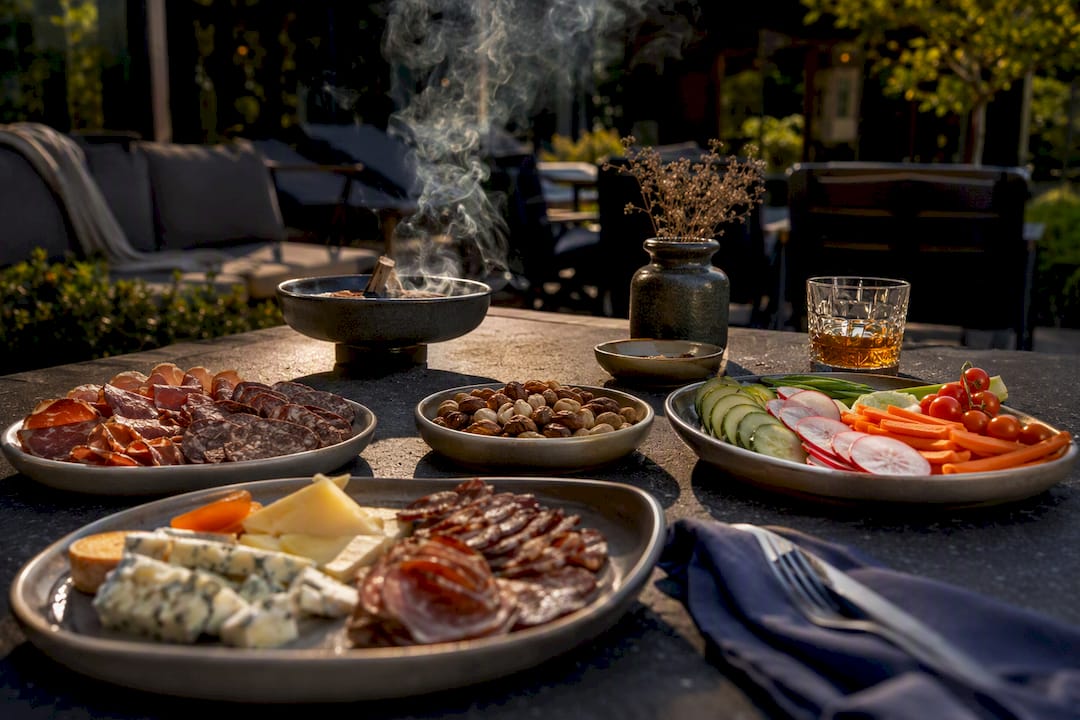
Cold smoking suits foods with either a naturally low moisture content or a preserving step already built in. Cheese takes smoke beautifully and needs nothing further, ready to eat once it has rested and mellowed. Salmon and other fish, once cured into something like lox or traditional smoked salmon, are also eaten without cooking, though some fish gets cold-smoked as a flavour step before it is cooked later.
Bacon is the classic exception: cold smoking flavours it, but it still needs pan-frying or grilling before serving. Butter, nuts and some vegetables round out the list nicely, absorbing smoke without any structural change that would demand further cooking. A smoked cheese board with smoked butter and toasted nuts makes an easy first project, and smoked salmon pairs naturally with citrus, dill or something a little more indulgent.
- Cheese, ready to eat once rested.
- Cured salmon or lox, eaten raw after curing.
- Bacon and ham, smoked but still needing to be cooked.
- Butter, nuts and select vegetables, eaten as-is.
How do you keep cold-smoked food safe to eat?
Safety in cold smoking comes down to preparation, not the smoke itself. Follow these steps in order, and do not skip any of them.
- Cure or brine first. A dry cure (salt, sugar, sometimes nitrates) or a wet brine draws out moisture and lowers water activity, making the surface far less hospitable to bacteria. This step exists because smoking alone does not reliably kill pathogens; the cure is doing the food-safety work, and the smoke is doing the flavour work.
- Rinse, then air-dry to form a pellicle. A pellicle is the thin, tacky protein layer that forms on the surface of fish or meat once it dries in open air, usually for one to a few hours in the fridge. It matters because smoke adheres far better to a tacky surface than a wet one, and it is what gives cold-smoked salmon that glossy, slightly firm exterior.
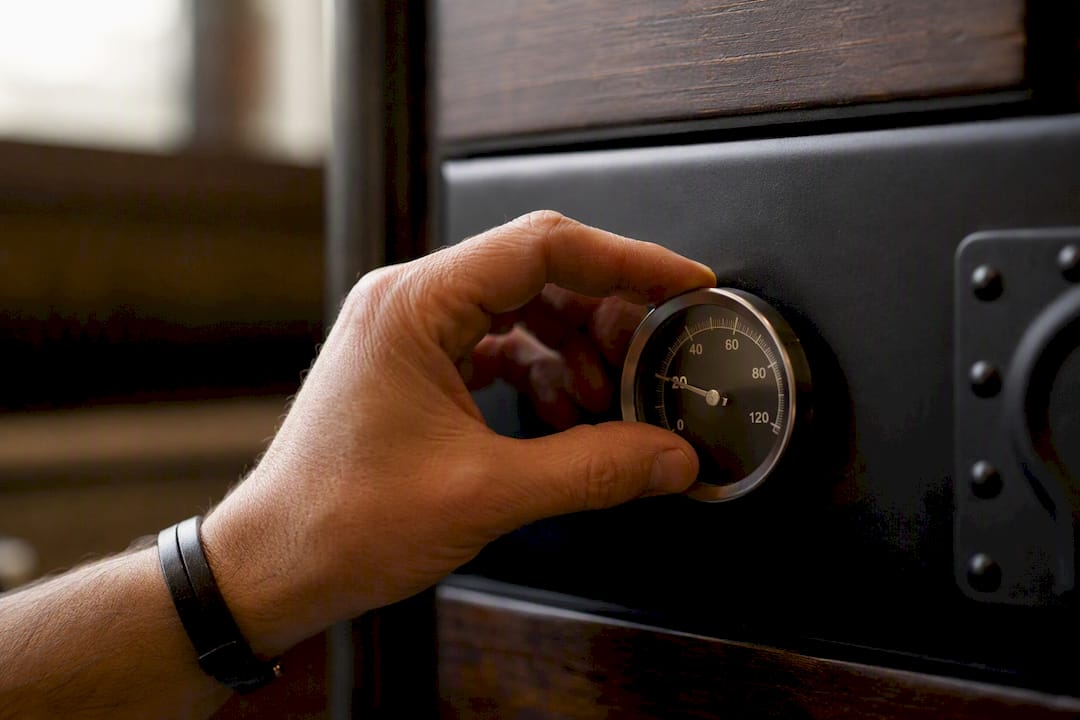
- Hold the chamber temperature down. Home setups generally aim for 10–21°C, and going much higher risks pushing the food into the bacterial danger zone if the cure has not fully done its job.
- Refrigerate promptly and consume within a realistic window. Cured, cold-smoked fish and meats still carry more risk than a fully cooked product. Commercial processors work to validated time, temperature and salt-level parameters for exactly this reason.
Many home cold-smoking failures trace back to skipping or rushing the cure stage, based on the consistent emphasis curing guides place on it as the make-or-break step. Once smoked, most cold-smoked items should live in the fridge and be treated similarly to other deli-style cured products, with cheese generally lasting longest and fish the shortest window.
Pro Tip: Smoke in the coolest part of the day, early morning is ideal, and check your chamber thermometer every 30 minutes for the first session until you know how your setup behaves.
What equipment do you actually need to cold smoke at home?
You do not need a dedicated smokehouse to get good results, but you do need to keep the fire away from the food. A few approaches dominate:
- Separate smoke generators (mazes, tube smokers, or pellet-fed cold smoke generators) sit outside or beside the main chamber and feed cool smoke in through a hose or duct, keeping heat and food entirely apart.
- Electric cold-smoke units built for the job, which regulate airflow and smoke density without any live flame near the food.
- DIY chip-tray or cardboard-box rigs, which work but demand constant vigilance because heat transfer is easier to get wrong without dedicated separation.
Fruitwoods like apple and cherry give a milder, slightly sweet smoke that suits cheese and fish. Hardwoods such as oak and hickory bring a stronger, more savoury profile better matched to bacon and ham. Avoid softwoods like pine; their resin content produces harsh, bitter smoke.
Pro Tip: A cardboard box with a hose running in from a separate smoke source costs almost nothing and works surprisingly well for a first attempt, just keep an eye on the internal temperature so it never creeps up.
How long should you cold smoke different foods?
Timing depends heavily on the food’s size, moisture content and how intense you want the smoke flavour to be. Humidity and ambient air temperature both shift these numbers. A cold, dry day gives you more control than a warm, humid one, and colder months are generally easier for home cooks precisely because the ambient temperature helps rather than fights you.
| Food | Target chamber temperature | Typical time range |
|---|---|---|
| Cheese | 10–21°C | 1–4 hours |
| Small fish fillets | 10–21°C | 2–6 hours |
| Larger cured sides (salmon, ham) | Below 27–30°C | Up to 18–24 hours or more |
Judge readiness by colour and aroma rather than the clock alone. Cheese should show a light golden tint at the rind; fish should smell smoky rather than acrid. Stop as soon as the smoke smell reaches the intensity you actually want, since it only builds from there.
How do you troubleshoot a cold smoking session?
Most problems trace back to temperature control or airflow. If your chamber keeps creeping too warm, move your smoke generator further from the food chamber or smoke during cooler hours. Greasy, bitter smoke usually means the wood is smouldering too hot rather than smoking cleanly, so reduce the fuel or improve ventilation. Weak flavour after a full session often means the smoke path is too short, or airflow is too aggressive and clearing the smoke out before it settles on the food.
- Run short, one to two hour test batches before committing a whole side of salmon.
- Clean racks and drip trays after every session to stop old grease from tainting new smoke.
- Check drainage so moisture does not pool and turn stale.
- If the chamber won’t stay below 27–30°C no matter what you try, switch that item to hot smoking and cook it properly instead.
Pro Tip: Keep a simple log of wood, time and chamber temperature for each session, it turns trial and error into a repeatable method within two or three attempts.
A note from APTENT. Gourmet on smoke, texture and delicate foods
Smoke rewards patience the same way a great caviar or cellared wine does: the best results come from restraint, not intensity. We think about smoked textures the way we think about pairing any delicate product, gently, with provenance in mind. If you’re weighing up how smoke might sit alongside something as sensitive as raw versus pasteurised caviar, start with a safety-first mindset and work from there.
— APTENT
Prefer a curated smoky spread without the equipment?
If reading through pellicles, chamber temperatures and smoke generators has you leaning towards a hands-off evening instead, Aptent gives you the finished experience without the DIY setup. Rather than tending a smoker for eighteen hours, you can build a table around our curated caviar and accessory range that pairs naturally with smoky flavours, think a chilled Oscietre caviar service alongside smoked salmon, or serving accessories that do justice to a proper cheese and charcuterie spread.

Aptent isn’t a substitute for the safety steps above if you do choose to smoke at home; curing and temperature control still matter regardless of what’s on the table beside it. But if you’d rather host something polished for a celebration, our gourmet event service pairs wine and caviar into a private tasting built around your evening. For meal-prep ideas that pair well with a smoked spread, this holiday meal-prep guide is worth a look too. Browse the current Baeri and Oscietre selections and get a quote for your next gathering.
Sources
- Cold smoking — Wikipedia
- What Is a Cold Smoker? And Which One You Should Get? | Epicurious
- Cold Smoking at Home: Complete Guide


