
How luxury food gifts are preserved and shipped in Australia
Luxury food gifts are preserved and shipped through an end-to-end cold chain that keeps potentially hazardous items at 5°C or colder, in compliance with FSANZ Standard 3.2.2, while validated insulated packaging and express courier services protect heat-sensitive products such as fine wine, caviar, and artisan chocolate from order to doorstep. For discerning buyers and corporate clients, understanding how food gifts are preserved and shipped is the difference between a gift that arrives in pristine condition and one that disappoints.
At Aptent, every luxury order moves through a structured preservation and logistics protocol:
- Refrigerated storage at the facility maintains caviar, chilled cheeses, and champagne at the correct temperature before dispatch.
- Insulated packaging with thermal liners, gel packs, or phase-change materials keeps the cold chain intact during transit.
- Temperature monitoring via data loggers and time-temperature indicators (TTIs) validates safety for higher-risk shipments.
- Express, tracked, signature-on-delivery courier services reduce last-mile exposure, the weakest link in any cold chain according to the AFGC Australian Cold Chain Guidelines.
Key takeaways
Luxury food gifts preserved and shipped correctly arrive in the same condition they left the facility — and that outcome depends on validated cold-chain management, not optimism.
| Point | Details |
|---|---|
| Legal temperature threshold | FSANZ Standard 3.2.2 requires potentially hazardous foods to be kept at 5°C or colder during transport |
| Thermal layering reduces heat exposure | Seasonal packaging trials show thermal layering can reduce internal parcel temperature by 10–15°C. |
| Last mile is the highest-risk stage | AFGC guidelines identify last-mile handover as the most common cold-chain weak link; direct-to-hand delivery mitigates this. |
| Thawed ice packs are not definitive | FSANZ guidance confirms that a thawed ice pack alone does not prove spoilage; validated transit records are the standard. |
| Aptent’s corporate gifting | Aptent offers temperature logging, express dispatch, and direct-to-hand delivery for corporate and high-value gift orders. |
Table of Contents
- How are luxury food gifts preserved and shipped by Aptent?
- Product-specific preservation: what changes by gift category?
- What packaging materials keep luxury gifts safe in transit?
- How does temperature monitoring and regulatory compliance work?
- Why the last mile is where luxury gifts are most at risk
- What should recipients do when a luxury food gift arrives?
- A note from Aptent on why these standards matter
- Aptent’s gifting services for corporate and high-value orders
- Sources
How are luxury food gifts preserved and shipped by Aptent?
Aptent’s fulfilment process begins the moment an order is confirmed. Orders are processed and packed within a defined window, with dispatch cut-offs designed to avoid weekend dwell times at courier depots — a detail that matters enormously for perishable luxury items. Caviar and chilled cheeses are held in refrigerated storage until the final packing stage, where each item is pre-conditioned to its optimal transit temperature before being sealed.
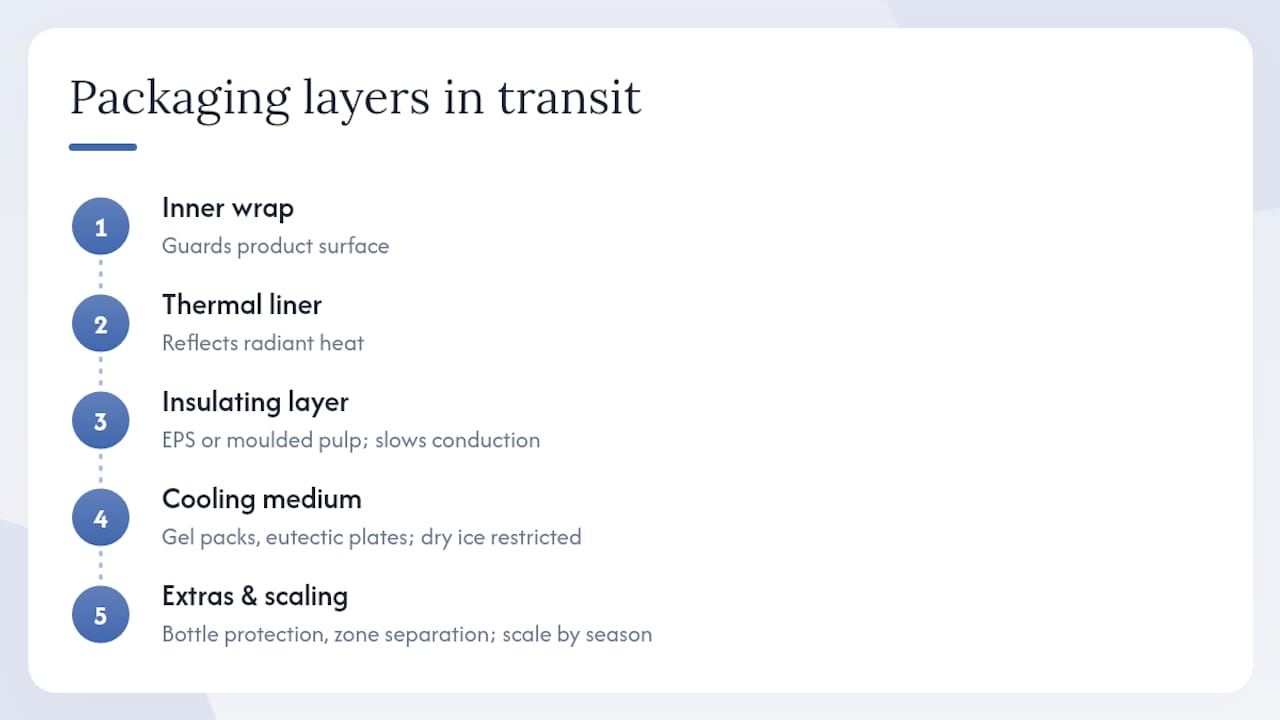
The packaging protocol layers an inner protective wrap around each product, followed by a thermal liner, an insulating layer, and the chosen cooling medium — gel packs for most chilled items, eutectic phase-change materials for longer transit windows. The outer box is rigid and, where fragility demands it, a box-in-box configuration is used. Australia Post’s packaging guidance recommends this box-in-box approach with cushioning for both perishable and fragile items, and Aptent’s protocol reflects that standard.
For higher-value or higher-risk shipments, data loggers travel with the parcel, recording internal temperature at set intervals throughout transit. TTIs provide a visual confirmation at the point of delivery. Every shipment is tracked, and direct-to-hand or signature-on-delivery is the default for luxury orders, ensuring the cold chain is not broken by a parcel left on a doorstep in the summer heat.
Pro Tip: When placing a corporate order, request temperature logging as part of your fulfilment brief. Aptent can accommodate this for large or time-sensitive gifting programmes, providing a record you can share with procurement or compliance teams.
Product-specific preservation: what changes by gift category?
Preservation methods for food gifts are not uniform — each product category carries its own thermal sensitivity and regulatory obligation.
Caviar is among the most demanding. As a potentially hazardous food under FSANZ Standard 3.2.2, it must be kept at 5°C or colder throughout transport unless a validated alternative system is in place. Aptent’s Baeri Signature Caviar and Oscietre selections are packed with gel packs calibrated for the expected transit window, and dispatch is timed to avoid multi-day delays.
Chilled cheeses follow the same 5°C threshold, though certain aged varieties benefit from slight ventilation within the pack to prevent moisture build-up. Transit windows are kept short, and express services are the default.
Fine wine and champagne present a different challenge: heat shock rather than microbial risk. DHL’s guidance on exporting wine from Australia confirms that even brief exposure above approximately 25°C can alter a vintage’s chemical balance, damaging flavour and compromising bottle seals. Aptent’s vintage champagne selections are wrapped in protective bottle sleeves, packed with shock-absorbing inserts, and routed through temperature-stable nodes. For guidance on ideal service temperatures after delivery, Aptent’s wine temperature guide is a practical reference.
Chocolates and truffles are highly sensitive to ambient heat. In Australian summers, this means express-only dispatch, additional ice packs, and seasonal packaging adjustments. A case study published on the Australia Post business blog found that thermal layering alone can reduce internal parcel temperature by 10–15°C, a meaningful buffer when ambient temperatures exceed 30°C.
Shelf-stable luxury items — fine preserves, dried truffles, premium pantry goods — require secure outer packaging and humidity control where relevant, but rely less on active cooling. The focus shifts to fragility protection and presentation integrity.
What packaging materials keep luxury gifts safe in transit?
The layering strategy used for luxury food gifts is deliberate and sequential. An inner protective wrap guards the product surface; a thermal liner reflects radiant heat; an insulating layer (typically expanded polystyrene or a moulded pulp alternative) slows conductive heat transfer; and the cooling medium — gel packs, eutectic plates, or dry ice for frozen shipments — maintains the target temperature band.
Dry ice is used selectively. It achieves temperatures far below those needed for most chilled gifts, and its use in postal and courier networks is subject to quantity and labelling restrictions. For the vast majority of luxury gift shipments, calibrated gel packs or phase-change materials offer a more controlled and compliant solution.
Seasonal variation shapes every packaging decision. A winter dispatch from Sydney to Melbourne requires far less cooling medium than a summer shipment to Brisbane or Perth. Retailers who ship luxury perishables year-round adjust their thermal design by season and destination, scaling insulation and cooling volume to match the worst-case ambient temperature the parcel is likely to encounter. Specialist freight providers, as Avion Australia describes, extend this principle to international shipments using reefer containers and temperature-controlled unit load devices.
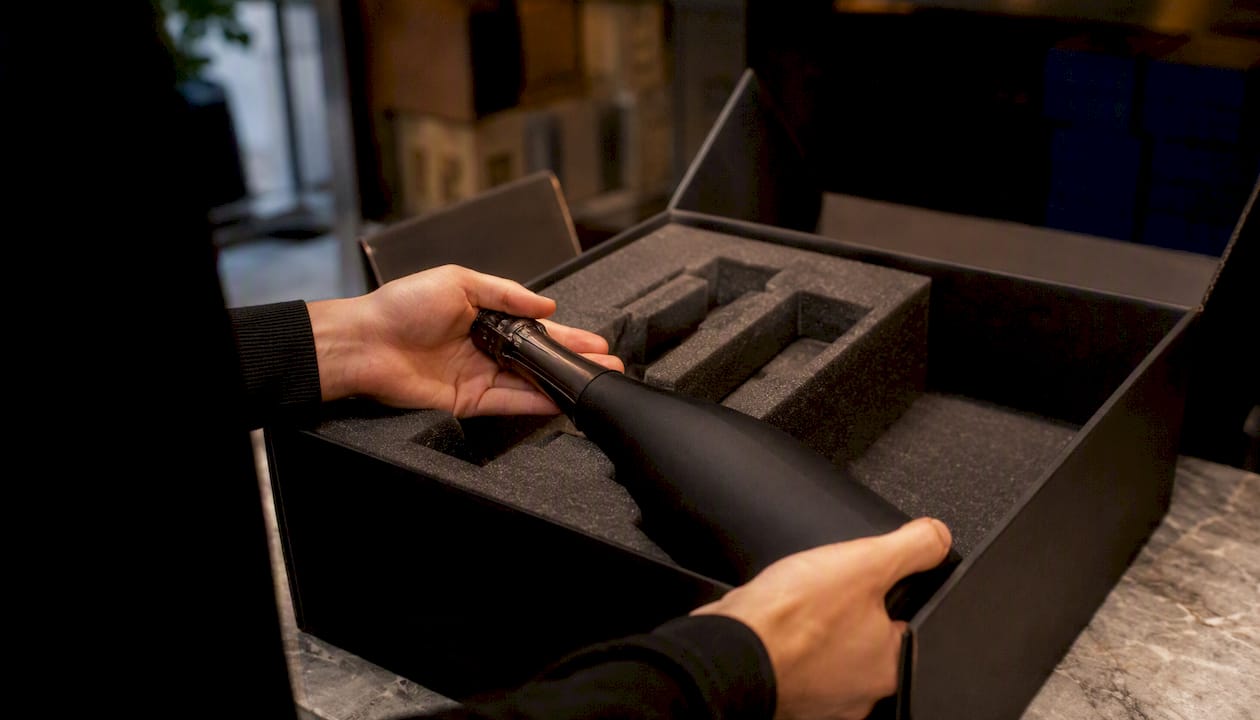
Fragility protection for bottles adds another layer: individual bottle sleeves, cardboard dividers, and foam inserts prevent movement and absorb shock during handling. For mixed hampers containing both chilled and ambient items, the packaging architecture separates temperature zones within the same outer box.
Pro Tip: Ask your retailer whether their insulated liners are reusable or biodegradable. Aptent considers sustainability trade-offs in packaging selection, balancing product safety with reduced environmental impact — a consideration that resonates with many corporate gifting programmes.
How does temperature monitoring and regulatory compliance work?
FSANZ Standard 3.2.2 sets the legal baseline: potentially hazardous food must be kept at 5°C or colder (or 60°C or hotter for hot food) during transport, unless a food business can demonstrate safety through a validated alternative system. This is not a guideline — it is a legal requirement under Australian food law, and it applies to every business transporting products such as caviar, fresh cheese, or prepared foods.
Validated systems go beyond simply packing with ice. They involve documented evidence that the packaging configuration, cooling medium, and transit time together keep food within safe temperature ranges for the entire journey. Data loggers record temperature at intervals throughout transit; TTIs change colour or state when a threshold is breached. FSANZ’s temperature control factsheet is explicit that a thawed ice pack alone is not definitive evidence of spoilage — what matters is whether the food itself exceeded hazardous temperature ranges for a dangerous duration. Retailers using validated systems can demonstrate this with records an authorised officer could review.
When a validation record indicates a breach, professional retailers follow a clear escalation protocol: the affected shipment is quarantined, the recipient is contacted, and a refund or re-shipment is arranged. This is not an exceptional circumstance — it is a planned contingency that separates a compliant luxury retailer from one operating on goodwill alone.
Why the last mile is where luxury gifts are most at risk
Express and temperature-controlled courier services are the standard for luxury perishables, but the last mile — the final leg from a local depot to the recipient’s door — remains the point of greatest vulnerability. The AFGC Cold Chain Guidelines identify last-mile handover as a common weak link, particularly when parcels are left unattended or held at a depot overnight.
Direct-to-hand delivery with signature confirmation eliminates the most common failure mode: a chilled parcel sitting in the sun. Timed delivery windows, where the recipient nominates a preferred time, reduce the probability of a missed delivery. Route optimisation — planning dispatch to avoid heat-intensive transit hubs or long dwell times at sorting facilities — is standard practice among professional shippers, as DHL’s logistics guidance confirms for wine and other heat-sensitive freight.
Service level agreements with couriers specify maximum transit times and handling conditions. Tracked shipments with real-time notifications give both the retailer and the recipient visibility over the parcel’s progress. For corporate orders with fixed event dates, this tracking capability is not a convenience — it is a risk management tool.
Insurance and surcharges are a practical reality for temperature-controlled or timed deliveries. Express services, weekend delivery, and direct-to-hand options carry premium pricing, but for a gift of genuine value, the cost of a failed delivery far exceeds any logistics surcharge.
What should recipients do when a luxury food gift arrives?
The recipient’s actions in the first minutes after delivery are as important as everything that preceded them. Chilled items — caviar, cheese, prepared foods — should be transferred to refrigeration immediately. Wine and champagne should be stored upright in a cool, dark place away from direct light; Aptent’s guide to storing fine wine covers the specifics in detail.
If the outer packaging shows visible damage, transit times appear unusually long, or a TTI indicator has changed state, the recipient should photograph the parcel before opening it and contact the retailer promptly. A thawed ice pack is worth noting but, as FSANZ guidance makes clear, it is not alone sufficient to determine whether the food is safe or spoiled — the retailer’s validated transit data provides the definitive answer.
Replacement and refund policies vary by retailer, but a reputable luxury supplier will have a documented contingency process. Aptent’s expectation is that any concern is raised within 24 hours of delivery, supported by photographic evidence where possible, so that a resolution — re-shipment, replacement, or refund — can be arranged without delay.
A note from Aptent on why these standards matter
The technical rigour behind cold-chain logistics can seem remote from the experience of receiving a beautifully presented gift. Yet every validated temperature record, every calibrated gel pack, and every direct-to-hand delivery instruction exists to protect something that cannot be recovered once lost: the flavour, texture, and presentation of a product sourced from some of the world’s most prestigious producers.
For high-net-worth clients and corporate event planners, the assurance that a shipment of Oscietre caviar or a case of vintage champagne has been handled with the same care as it was selected is not a secondary consideration. It is the entire point. Aptent’s approach to preservation and shipping is built on that understanding — not merely to meet FSANZ requirements, but to honour the integrity of every product in its curated collection.
Clients with specific requirements — temperature logging for compliance documentation, timed delivery for event schedules, or bespoke packaging for branded corporate gifting — are encouraged to discuss these needs at the time of ordering.
Aptent’s gifting services for corporate and high-value orders

For corporate clients and event planners who require more than a standard online order, Aptent’s gifting services are designed around the specific demands of high-value, time-sensitive delivery. Curated hampers, event supply for private tastings, and bespoke corporate gifting programmes are all available, with express dispatch, temperature logging on request, and direct-to-hand delivery as standard options for luxury perishables.
Large orders and gourmet events benefit from dedicated lead-time planning — typically a minimum of five business days for bespoke configurations — ensuring packaging, courier booking, and recipient scheduling align precisely. For procurement teams requiring compliance documentation, temperature records from data-logged shipments can be provided on request.
To place a corporate order or discuss bespoke event logistics, contact Aptent directly through the gifting page. The collection of signature caviars and fine wines is available year-round, with seasonal packaging adjustments applied automatically to protect quality in every Australian climate.
Sources
The following authoritative sources underpin the guidance in this article and are available for independent verification:
- Transporting food safely | Food Standards Australia New Zealand
- FOOD SAFETY PRACTICES AND GENERAL REQUIREMENTS
- Cold chain guidance and Australian Cold Chain Guidelines | AFGC
- Exporting wine from Australia | DHL Discover
- Packaging guidelines for food and fragile items | Australia Post
- Safely transporting perishable delicacies worldwide - Avion Australia


