
How gourmet corporate gifting works: a practical guide
Corporate gourmet gifting is a targeted relationship channel that transforms a routine business touchpoint into a memorable, brand-positive experience for clients and staff alike. At its core, the practice pairs curated, premium food and beverage selections with deliberate personalisation, reliable fulfilment, and thoughtful follow-up to produce measurable commercial outcomes: stronger retention, warmer referrals, and a brand perception that lingers long after the last morsel is savoured.
Before any hamper is assembled or caviar tin is sealed, a well-run programme requires five operational decisions:
- Define your goals: retention, acquisition, employee recognition, or event engagement.
- Identify your recipient segments and the triggers that warrant a gift (contract renewal, project completion, onboarding, milestone anniversary).
- Set per-recipient budget tiers aligned to relationship value and occasion.
- Shortlist providers who can demonstrate Australian-wide fulfilment, allergen labelling, and bespoke curation capability.
- Confirm lead times early, particularly for chilled or imported luxury items, and build in buffer for regional deliveries.
Table of Contents
- How gourmet gifting works as a corporate business tool
- What does the end-to-end planning process look like?
- How do you choose the right gift and the right provider?
- Timing, delivery, and Australian logistical considerations
- What should you budget for a corporate gourmet gifting programme?
- How do you measure ROI from gourmet gifting?
- How Aptent runs a corporate gourmet gifting programme
- Key takeaways
- Why curated gourmet gifting outperforms generic swag
- Aptent’s corporate gifting programme: enquire today
- Useful sources for further reading
How gourmet gifting works as a corporate business tool
The commercial case for gourmet gifting rests on a simple truth: consumable gifts are used immediately, shared readily, and remembered viscerally in a way that a branded pen or a generic tote bag never will be. Consumable gifts rank consistently higher in recipient appreciation than branded non-consumables, prompting immediate use and social sharing that extends the brand moment well beyond the recipient themselves.
For client-facing teams, the primary outcomes are retention and referral uplift. A well-timed gift at contract renewal signals that the relationship is valued, not taken for granted. For HR and people teams, gourmet recognition gifts tied to milestones or project completions reinforce employer brand and reduce the quiet attrition that follows periods of sustained effort. At events, a curated food experience creates a shared sensory memory that elevates both attendance and post-event sentiment.
The distinction between gourmet gifting and generic swag lies in emotional immediacy. A tin of hand-selected Oscietre caviar or a curated selection of single-origin fine wines carries an implicit message about the recipient’s worth that no logo-printed item can replicate. The unboxing experience itself, when packaging is considered and presentation is refined, amplifies perceived value and deepens brand association.
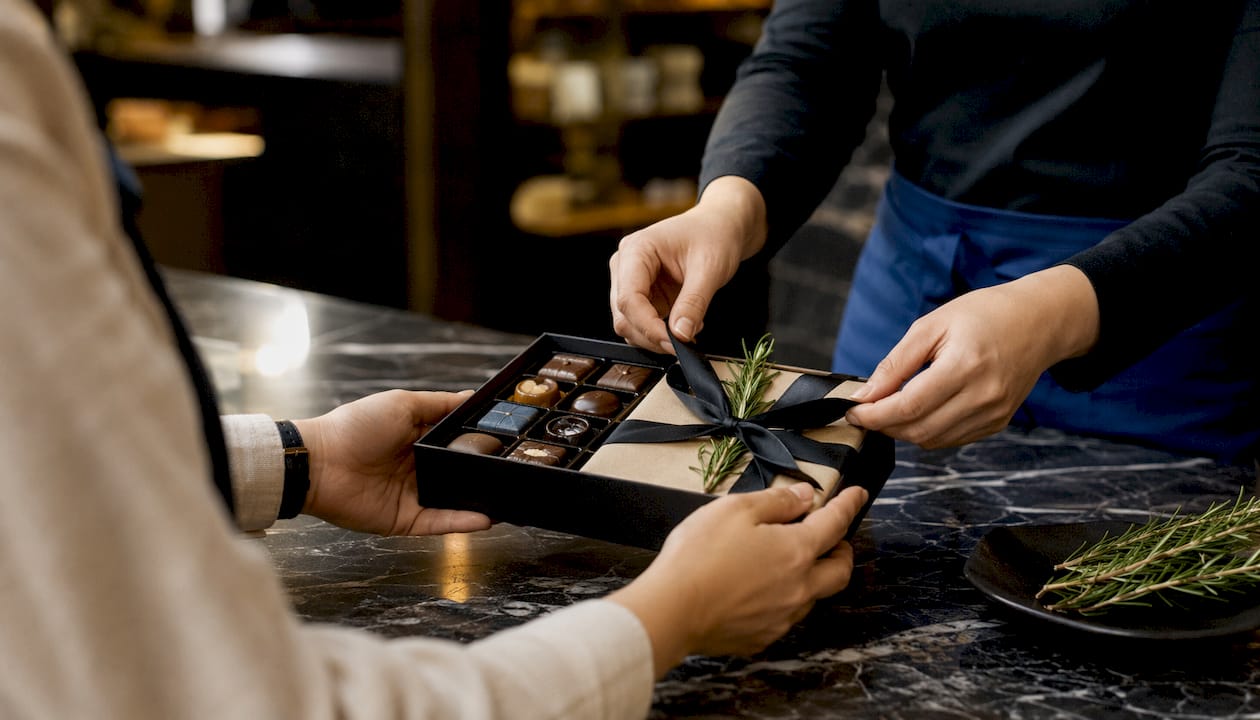
Pro Tip: To make a corporate gift feel retail rather than promotional, remove overt logo placement from the product itself and confine branding to the outer packaging or an elegantly printed card insert. The gift then feels like a considered personal choice, not a marketing exercise.
What does the end-to-end planning process look like?
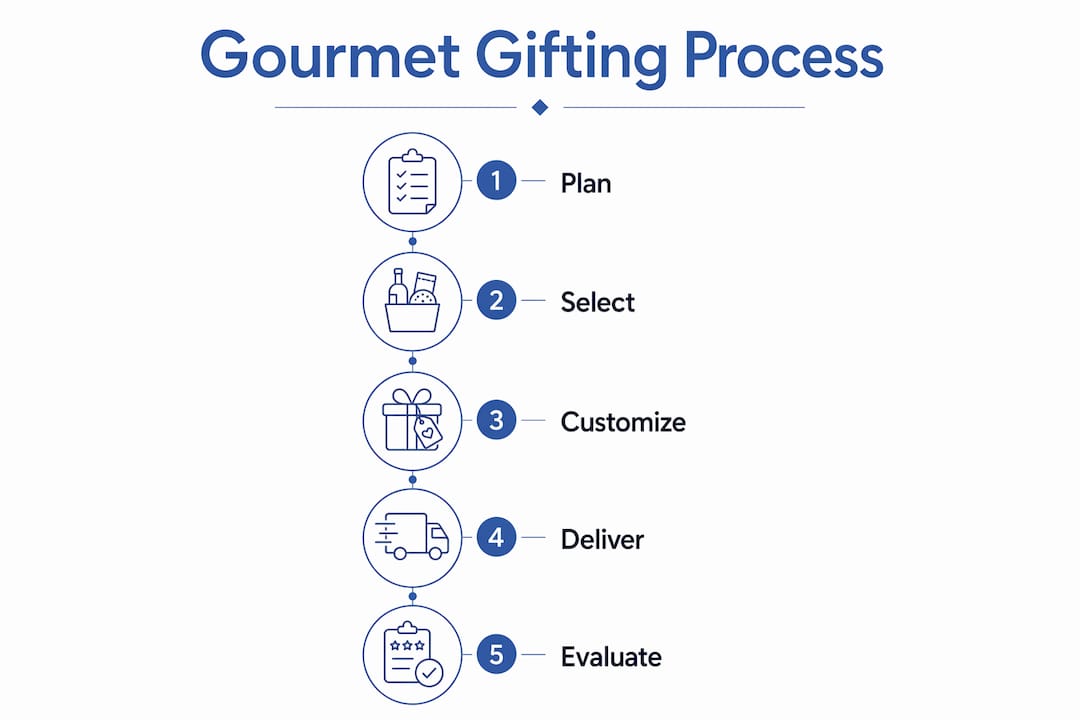
A strategic corporate gifting programme maps who you gift, what you gift, when you gift, and why, turning what might otherwise be ad hoc generosity into a repeatable, optimisable channel. The following stages represent the standard workflow from brief to follow-up.
- Brief: Define the occasion, recipient segment, budget band, and any dietary or cultural considerations. Specify whether branding is required and at what level of prominence.
- Curate: Select products appropriate to the occasion and recipient profile. For high-value clients, this may mean bespoke selection; for broader employee programmes, a pre-built tier with personalised card inserts often suffices.
- Internal approvals: Confirm the programme against your organisation’s gift policy, any applicable fringe benefits tax (FBT) thresholds, and procurement sign-off requirements.
- Procurement and customisation: Place orders with sufficient lead time. Confirm allergen labelling, packaging specifications, and any printed collateral with your provider.
- Fulfilment: Coordinate delivery addresses, confirm recipient preferences where possible, and choose between direct-to-recipient dispatch and bulk delivery to a central office.
- Tracking and follow-up: Log what was sent, to whom, and when. Schedule a follow-up touchpoint (a brief survey, an account manager check-in, or a CRM note) within two weeks of delivery.
Typical lead times vary considerably by product type. Off-the-shelf hampers from established Australian suppliers can often be dispatched within three to five business days. Semi-custom programmes, where standard products are repackaged with bespoke inserts or branded outer boxes, generally require two to three weeks. Fully bespoke programmes, incorporating imported fine goods, custom printed packaging, and multi-address fulfilment, warrant a minimum of four to six weeks from brief to delivery.
How do you choose the right gift and the right provider?
Selecting a gourmet gifting provider is as consequential as selecting the products themselves. Consolidating curation, personalisation, and direct shipping under one supplier reduces coordination overhead and produces a more consistent recipient experience, which matters when you are sending to dozens or hundreds of addresses simultaneously.
Ask prospective providers these questions before committing:
- Can you deliver Australia-wide, including to regional postcodes?
- Do all products carry full allergen and dietary labelling?
- How do you handle recipient address data, and what is your privacy and data security policy?
- What is your minimum order quantity for bespoke or semi-custom programmes?
- Are there hidden fees for gift messaging, special packaging, or multi-address dispatch?
Red flags worth walking away from: no allergen labelling on food products, opaque fulfilment processes with no tracking visibility, poor or unconfirmed regional coverage, and pricing that excludes freight until checkout.
| Budget band | Typical contents | Best suited for |
|---|---|---|
| Under $50 | Artisan preserves, single-origin chocolate, premium tea or coffee selection | Broad employee recognition, event attendee gifts |
| $50–$150 | Curated hamper with fine pantry goods, small-format wine or sparkling, branded card | Client thank-you, staff milestone, seasonal gifting |
| $150–$250 | Premium hamper with fine wine, artisan charcuterie, imported specialty items, bespoke packaging | Key account retention, VIP client gifts, executive recognition |
| — | Bespoke luxury selection: caviar, prestige wine, fine chocolate, fully branded presentation | Ultra-premium client gifting, high-net-worth relationships, boutique events |
When selecting gourmet hampers for corporate use, match the gift’s value and formality to the recipient’s role and the occasion. Premium relationships typically warrant a per-recipient budget of $150–$250 or higher.
Timing, delivery, and Australian logistical considerations
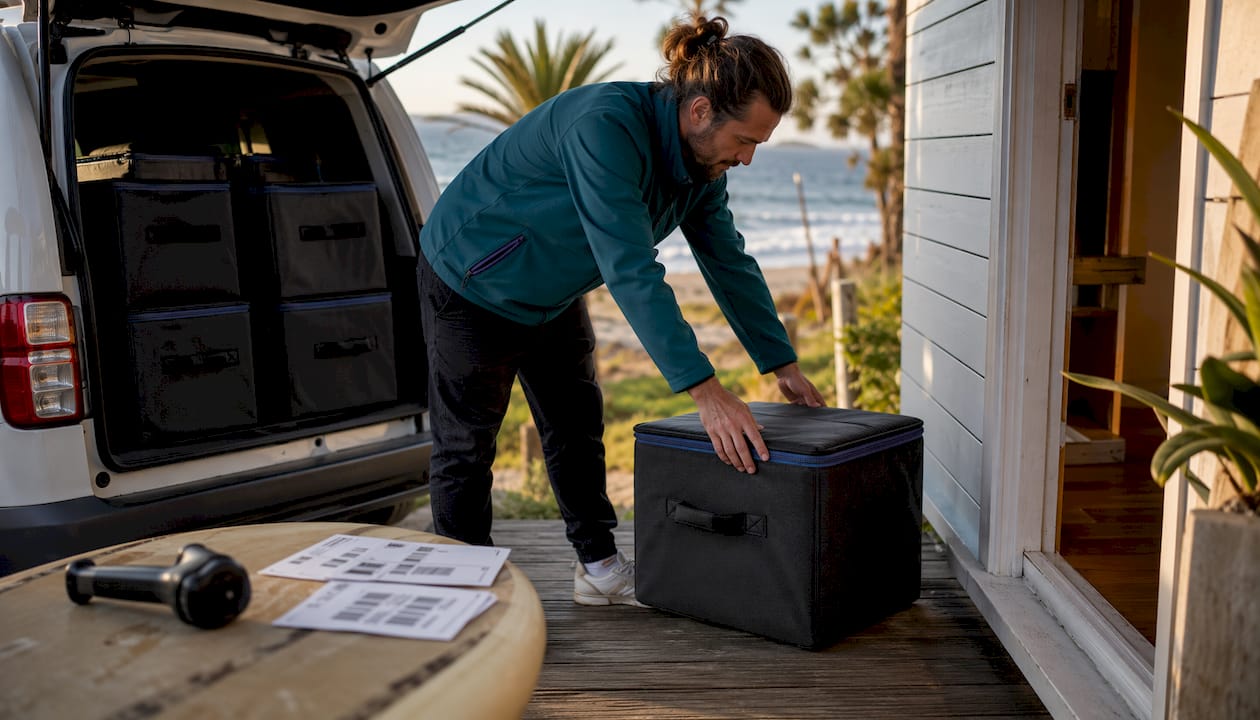
Australia’s geography introduces logistical complexity that many gifting programmes underestimate. Metro deliveries to Sydney, Melbourne, Brisbane, and Perth are generally straightforward, but regional transit times require additional buffer beyond standard metro estimates, and chilled or perishable luxury items demand temperature-controlled handling throughout the chain.
| Product type | Metro lead time | Regional lead time | Special handling |
|---|---|---|---|
| Pre-built shelf-stable hampers | standard metro lead time | longer regional lead time | Standard courier |
| Chilled items (caviar, fresh produce) | express metro lead time | express regional lead time | Temperature-controlled, insulated packaging |
| Bespoke / semi-custom programmes | several weeks metro lead time | longer regional lead time | Confirm regional courier availability at brief stage |
| Imported fine goods (wine, specialty items) | multiple weeks metro lead time | extended regional lead time | Customs clearance, alcohol licensing compliance |
Delivery models worth considering:
- Direct-to-recipient dispatch: the provider ships individually addressed parcels directly to each recipient’s home or office. Preferred for remote teams and personalised programmes.
- Bulk delivery to a central office: a single pallet or consolidated shipment arrives at your premises for internal distribution. Lower freight cost per unit, but requires internal logistics capacity.
- Hybrid drop-ship networks: the provider maintains regional fulfilment nodes, reducing transit times and perishable risk for geographically dispersed recipient lists.
Pro Tip: For regional Australian deliveries involving chilled or perishable luxury items, always run a pilot batch of five to ten addresses before scaling nationally. Regional courier networks vary significantly in cold-chain capability, and a single failed delivery to a valued client is far more costly than the time spent testing.
What should you budget for a corporate gourmet gifting programme?
Budget planning for gourmet gifting works best when structured around per-segment tiers rather than a single flat figure. Practical guides recommend setting separate budgets for client gifting, employee recognition, and event-based gifting, as the appropriate spend per recipient differs meaningfully across these categories.
| Band | Per-recipient spend | Key cost drivers | Typical use case |
|---|---|---|---|
| Entry | Under $50 | Shelf-stable products, standard packaging | Broad staff recognition, event gifts |
| Mid-tier | $50–$150 | Fine pantry goods, small-format wine, branded insert | Client thank-you, seasonal programmes |
| Premium | $150–$250 | Imported specialty items, prestige wine, bespoke packaging | Key account retention, VIP clients |
| Ultra-premium | Above $250 | Caviar, prestige wine, fully bespoke presentation | High-net-worth relationships, boutique events |
Beyond the product cost itself, the principal cost drivers are: the provenance and rarity of ingredients (imported fine goods carry a significant premium over domestic equivalents), the degree of customisation in packaging and printed collateral, freight and insurance for high-value or perishable items, and any minimum order quantities imposed by the provider.
Pro Tip: When running a programme across 50 or more recipients, negotiate a volume pricing agreement with your provider before the first order is placed. Many boutique suppliers will offer preferential per-unit pricing and waive minimum order fees in exchange for a committed annual volume, which also simplifies procurement approvals.
How do you measure ROI from gourmet gifting?
The most defensible way to demonstrate return on a gifting programme is to map gifts to CRM lifecycle triggers and track the commercial outcomes that follow. Trigger-based gifting, where sends are automated around contract renewals, project completions, or client milestones, creates a repeatable channel that can be measured against the same KPIs as any other retention or acquisition activity.
Practical KPIs to track across a 3–6 month measurement window:
- Renewal rate among gifted accounts versus a comparable non-gifted cohort.
- Referral volume attributed to gifted relationships (tracked via CRM source field).
- Net Promoter Score or CSAT changes for gifted client segments.
- Deal velocity: time from proposal to close for accounts that received a gift at a key stage.
- Event attendance lift when gifting is used as a pre-event engagement mechanism.
- Unwrapping or response rate where digital confirmation or a follow-up survey is used.
A simple measurement cadence: send a brief two-question survey to recipients two weeks post-delivery, conduct account manager check-ins at the 30-day mark, and run a CRM attribution lookback at 90 days to assess any commercial movement. The goal is not to prove that a single gift closed a deal, but to demonstrate that gifted relationships behave differently from ungifted ones across a portfolio.
How Aptent runs a corporate gourmet gifting programme
Aptent’s approach to corporate gifting begins with a discovery conversation, during which the team maps recipient segments, occasion triggers, dietary requirements, and branding preferences before a single product is selected. From there, the process moves through curation, where products are drawn from Aptent’s collection of prestige producers, to sample approval, production, distribution, and a structured follow-up to confirm delivery and recipient satisfaction.
Allergen and dietary information is provided for all products, and Australian provenance is prioritised wherever the product category allows. For imported fine goods, including the caviar selections that represent the pinnacle of Aptent’s range, full provenance documentation is available on request.
| Package tier | Contents | Ideal occasion |
|---|---|---|
| Signature Selection | Curated fine pantry goods, artisan preserves, premium chocolate, branded card insert | Client thank-you, staff recognition, seasonal gifting |
| Prestige Collection | Fine wine or sparkling, imported specialty items, artisan charcuterie, bespoke outer packaging | Key account retention, VIP client gifts, executive milestones |
| Boutique Luxury | Caviar (Baeri or Oscietre), prestige wine, fine chocolate, fully bespoke presentation with personalised collateral | Ultra-premium client gifting, high-net-worth relationships, boutique events |
Aptent’s gourmet curation approach draws on relationships with prestigious producers to deliver selections that feel genuinely retail in quality and presentation, not promotional. For corporate buyers uncertain about wine selection, Aptent’s wine gifting guide provides practical guidance on matching varietals to occasions and navigating alcohol gifting etiquette.
For organisations managing recipient data across multiple addresses, Aptent handles address collection and data security as part of the fulfilment workflow, in line with Australian Privacy Act obligations. Recipient information is used solely for the purpose of delivering the programme and is not retained beyond the agreed fulfilment period.
Key takeaways
Corporate gourmet gifting works when it is built around defined segments, lifecycle triggers, realistic budgets, and a provider capable of delivering consistent quality to every recipient, whether they are in Sydney’s CBD or a regional Queensland office.
| Point | Details |
|---|---|
| Define triggers, not just occasions | Map gifts to lifecycle events (renewals, milestones, project completions) for measurable commercial outcomes. |
| Budget by segment | Set separate per-recipient tiers for clients, employees, and events; premium relationships typically warrant a per-recipient budget of $150–$250 or higher. |
| Prioritise allergen labelling | Confirm full dietary and allergen information before committing to any provider, particularly for food and beverage gifts. |
| Build in regional lead time | Allow 5–8 business days for regional Australian deliveries; run a pilot batch before scaling nationally with perishable items. |
| Aptent as boutique partner | Aptent offers bespoke curation, prestige provenance, and national fulfilment for corporate programmes from Signature to Boutique Luxury tier. |
Why curated gourmet gifting outperforms generic swag
The conventional wisdom in corporate gifting still leans heavily on logo placement: the assumption that visibility equals value. That framing misses what actually creates a lasting commercial relationship. A recipient who unwraps a beautifully presented tin of Oscietre caviar or a curated selection of prestige wines does not think about your brand’s marketing budget. They think about the person who chose it for them, and that attribution is far more powerful than any printed logo.
Generic branded merchandise communicates effort at the procurement level. A curated gourmet gift communicates effort at the relationship level, and recipients feel the difference immediately. The food gifting advantage is not simply that food gets consumed rather than discarded; it is that the act of eating is inherently social and sensory, creating a shared memory that a USB drive or a branded notebook never will.
Timing and presentation amplify this further. A gift that arrives before the December rush, when a client’s desk is not yet buried under competing hampers, carries a disproportionate share of attention and gratitude. The same product, delivered a week later in a plain brown box, produces a fraction of the goodwill. Curation, presentation, and timing are the three variables that separate a gifting programme that moves the needle from one that merely ticks a box.
Aptent’s corporate gifting programme: enquire today
For Australian corporate buyers seeking a gifting partner who combines prestige provenance with bespoke curation and national fulfilment, Aptent offers a dedicated corporate programme designed for discerning decision-makers.
Aptent’s corporate gifting service covers everything from a single ultra-premium client gift to a fully managed programme across hundreds of recipients. The range includes selections built around Baeri Signature Caviar and Oscietre Signature Caviar, prestige wines, and curated fine food collections, all sourced from prestigious producers and presented with the refinement that high-value relationships deserve. Three differentiators set Aptent apart: verified provenance documentation for all fine goods, fully bespoke curation tailored to recipient profiles and dietary requirements, and Australia-wide fulfilment with temperature-controlled handling for perishable luxury items.
To discuss a programme, visit gourmet.aptent.com.au or submit a corporate enquiry through the gifting page to arrange a consultation with the Aptent team.
Useful sources for further reading
- Why more companies are choosing food gifts over traditional corporate swag — AZ Big Media: covers the commercial case for consumable gifting and the role of packaging and presentation in perceived value.
- Corporate gifting strategy guide: how to build a programme that actually works — Success Knocks: a practical framework for building trigger-based gifting programmes with measurable KPIs.
- The Ultimate Guide to Corporate Gift Giving: Ideas, Etiquette and Best Practices — Shop Creative Gifts: covers timing, compliance, budget guidance, and gift selection by recipient type.
- How to choose gourmet hampers for corporate gifting — The Hamper Boutique (AU): Australian-specific guidance on hamper selection, provenance, and corporate programme considerations.
- Corporate gifting: what you should know — Hampers with Bite (AU): practical overview of Australian corporate gifting etiquette, FBT considerations, and fulfilment options.


