
Types of wine programme structures for luxury venues
The six principal types of wine programme structures are region-led, style-led, price-ladder, by-the-glass, collector/vertical, and hybrid formats. For a tasting-menu restaurant, a region-led or hybrid structure signals classical authority and supports course-by-course pairing. A boutique event or private cellar dinner calls for a collector or vertical programme, where depth and provenance are the centrepiece. Hotel restaurants and high-volume luxury venues typically perform best with a price-ladder structure that guides guests from accessible entry pours to prestige selections. Three operational factors ultimately decide which format is viable: covers and service velocity, cellar capacity, and the skill level of front-of-house staff.
- Region-led: Old World/New World architecture; best for tasting menus and fine-dining rooms where provenance is the story.
- Style-led: Organises by texture and flavour profile; ideal for accessible luxury and food-pairing flexibility.
- Price-ladder: Entry, mid, and prestige tiers; suited to hotel restaurants and high-cover luxury venues.
- By-the-glass (BTG): 2–12 core SKUs for most operations; requires preservation technology at the prestige end.
- Collector/vertical: Deep, producer-focused; reserved for private dining rooms and cellar dinners.
- Hybrid: Combines region-led main list with a style-led or BTG section; the most common format in contemporary luxury venues.
Table of Contents
- What are the main types of wine programme structures?
- How do you choose the right structure for your venue or event?
- What do operations actually look like for each programme format?
- Actionable templates for luxury events: budgets, bottle counts and timelines
- How often should you refresh a luxury wine programme?
- Common mistakes that undermine high-end wine programmes
- What legal and regulatory requirements apply to wine programmes in Australia?
- How to integrate Australian and international wines in a programme
- Key takeaways
- The architecture of a programme is a statement of intent
- Curated wine and event support from Aptent
- Selected sources and further reading
What are the main types of wine programme structures?
List architecture signals a venue’s identity: organising by Old World region communicates classical prestige, while style-led lists prioritise guest accessibility. Understanding each format in depth is what separates a programme that merely lists bottles from one that drives revenue and guest delight.
Region-led programmes divide the list by geography, typically Old World (Burgundy, Barossa, Rioja) then New World (Yarra Valley, Marlborough, Napa). The signal is unmistakable: this venue takes provenance seriously. The trade-off is that guests unfamiliar with appellations can feel lost without a well-trained sommelier to guide them.
Style-led or texture-led programmes group wines by character — crisp whites, full-bodied reds, oxidative styles — rather than origin. Accessibility is the primary virtue, and food-pairing flexibility is exceptional. The limitation is that connoisseurs may find the format reductive, and it can obscure the prestige of individual producers.
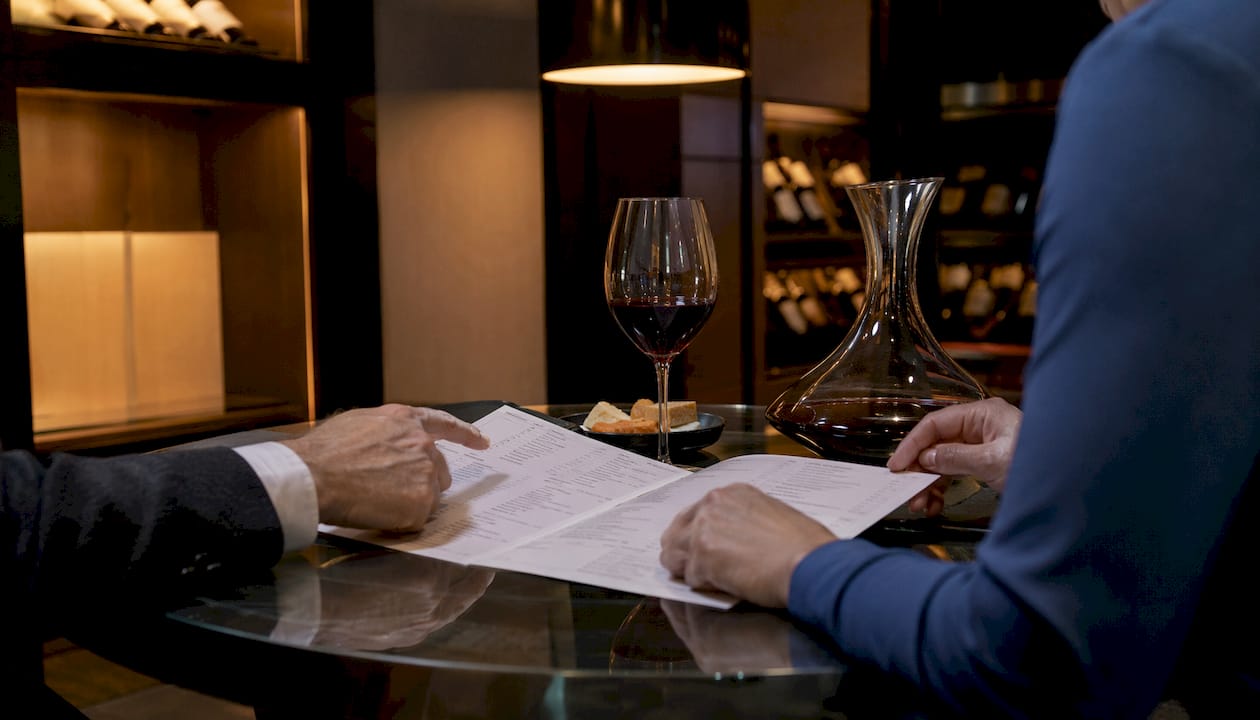
Price-ladder structures organise the list into entry, mid, and prestige tiers. The highest-priced bottle on a well-calibrated list should sit at roughly three times the price of the lowest, creating a manageable range for both guest choice and revenue expectations. This architecture is particularly effective in hotel restaurants where guests arrive with varying budgets and expectations.
By-the-glass programmes are the most operationally demanding format relative to their apparent simplicity. BTG programmes perform best with a limited core of wines; beyond a certain number, profitability tends to fall unless argon-gas or automated dispensing systems are in place. Advanced preservation systems can significantly extend opened-wine life, which transforms the economics of offering prestige pours by the glass.
Collector and vertical programmes are the province of private dining rooms and cellar dinner experiences. Depth is the point: multiple vintages of a single producer, rare back-vintages, and library releases. The operational cost is significant — bonded storage, specialist insurance, and meticulous inventory control are non-negotiable.
Hybrid programmes blend approaches, typically a region-led main list paired with a style-led BTG section. This is the format most commonly found in contemporary Australian luxury venues because it serves both the connoisseur and the guest who simply wants a well-matched glass without a geography lesson.
How do you choose the right structure for your venue or event?
Match structure to concept, capacity, and commercial goals — in that order. A programme that looks magnificent on paper but exceeds cellar or staff capacity will cost more than it earns.
- Define your concept first. A tasting-menu restaurant demands a programme that supports course-by-course pairing; a cocktail reception needs a tight, accessible BTG selection. The concept is the non-negotiable anchor.
- Audit your covers and velocity. High-cover venues need structures that move stock efficiently; intimate venues can sustain depth without spoilage risk.
- Assess cellar capacity honestly. A deep programme of 200-plus labels requires markedly different storage, inventory systems, and staff protocols than a 50-label list.
- Profile your guests. Corporate entertainment buyers respond to recognisable prestige labels; private collectors want rarity and provenance. Know which guest you are designing for.
- Set price expectations with finance. Pricing benchmarks cluster around 2.5–3.5x wholesale for bottle sales, with BTG carrying higher effective margins. Agree the margin framework before committing to a format.
- Ask procurement about allocation access. Prestige and collector programmes depend on reliable access to allocated wines; confirm supplier relationships before building a list around them.
- Evaluate staff capability. A region-led or collector programme is only as good as the team’s ability to articulate it. Staff training and salesmanship are as critical as selection for profitability.
For a sit-down gala, a hybrid structure with a curated BTG section and a prestige-tier bottle list is the most operationally resilient choice, often enhanced by custom chocolate invitation or menu services tailored for luxury corporate events. For a private cellar dinner, a vertical or collector programme is the natural fit, provided storage and procurement are secured well in advance.
What do operations actually look like for each programme format?
Depth versus breadth is the central tension. A shallow programme of under 50 labels demands tight curation and high turnover; every bottle must earn its place. A programme of 200-plus labels requires bonded storage, a robust POS coding system, FIFO rotation, temperature-controlled zones, and loss-prevention protocols. Misalignment between label count and operational capacity is a leading cause of cost leakage through breakage, spoilage, and theft.
Pricing should follow a category-aware ladder rather than a blanket markup. Pricing ladders offer accessible entry points and prestige pours; operators deliberately accept lower margins on some prestige selections to drive guest delight and repeat business. The 2.5–3.5x wholesale benchmark applies to bottle sales; BTG margins are typically higher to account for preservation and wastage costs.
Staff training is where programmes succeed or fail in practice. A wine programme is an integrated system where every bottle serves a purpose, and communicating that purpose to the floor team is central to revenue capture. Descriptive language on the list and in verbal recommendations can measurably increase BTG sales.
Pro Tip: Before committing to a programme format, run a one-page operational readiness check: storage capacity confirmed, POS codes mapped, supplier allocations secured, and a training session scheduled. Programmes that skip this step rarely perform to their commercial potential.
Operational checklist for readiness:
- Cellar or cool-room capacity mapped against projected label count
- POS codes assigned and tested for all SKUs
- Supplier allocation agreements confirmed in writing
- Preservation technology installed for BTG prestige pours
- Staff training plan scheduled before launch, not after
- Fine wine storage protocols documented and assigned to a responsible team member
Actionable templates for luxury events: budgets, bottle counts and timelines
For a plated tasting dinner of 30 guests with a matched wine per course, plan for 1.5–2 bottles per selection, allowing for spillage, tasting, and staff samples. Confirm allocations 6–8 weeks out; final delivery should be chill-checked and insured for high-value bottles.
| Event type | Guests | BTG SKUs | Bottles per selection | Procurement lead time |
|---|---|---|---|---|
| Intimate cellar dinner | 12 | — | 1–2 | 6–8 weeks |
| Private paired dinner | 30 | 2–4 | 1.5–2 | 6–8 weeks |
| Gala reception | 100 | 4–8 | 3–5 | 8 weeks |
Budget guidance by event tier:
| Spend band | Typical margin expectation | Programme character |
|---|---|---|
| Entry luxury | higher margins on BTG | Style-led, 4–6 BTG SKUs |
| Mid prestige | 2.5–3.5x wholesale benchmark on bottle sales | Hybrid, 8–12 BTG SKUs |
| Ultra-high-net-worth | Margin secondary to guest experience | Collector/vertical, full bottle service |
Procurement timeline (T-minus 8 weeks to day-of):
- T-8 weeks: Confirm programme structure, finalise label selection, lodge allocation requests with suppliers.
- T-6 weeks: Receive allocation confirmations; arrange temperature-controlled delivery and insurance for high-value bottles.
- T-4 weeks: Conduct staff tasting and briefing; finalise list descriptions and menu pairing notes.
- T-2 weeks: Verify cellar storage conditions; complete POS coding and pricing checks.
- T-1 week: Final delivery check, chill verification, and service notes distributed to floor team.
- Day of event: Pre-service tasting confirmation; preservation systems activated for any BTG pours.
For tasting course pairings, supplier authenticity, temperature-controlled shipping, and insurance are non-negotiable for bottles above a certain value. Always request provenance documentation for allocated and back-vintage selections.
How often should you refresh a luxury wine programme?
Restaurants commonly rotate lists every 3–6 months; wine bars rotate more frequently, aligning cadence with sales velocity and storage constraints. For luxury venues, the most effective approach is incremental: swap one or two selections at a time so regulars encounter freshness and service staff retain confidence with new bottles.
Recommended refresh cadence:
- BTG section: Rotate 1–2 wines monthly, prioritising slow-moving SKUs first.
- Main list: Seasonal updates every 3–6 months; introduce new producers gradually.
- Prestige and collector tier: Biannual review aligned with vintage releases and allocation cycles.
KPIs worth tracking: turnover by label, gross profit percentage, covers per service, BTG velocity, guest satisfaction scores, and allocation fulfilment rates. A simple review routine — monthly sales review, quarterly cellar audit, biannual concept alignment with the chef and events team — keeps the programme commercially sharp without operational disruption.
Common mistakes that undermine high-end wine programmes
The most damaging error is misalignment between label count and operational capacity. Attempting a 200-plus label programme without the cellar processes, trained staff, and inventory systems to support it creates financial leakage that compounds quietly until it becomes a crisis.
- Full-list overhauls: Replacing the entire list at once disorients regular guests and overwhelms staff. Incremental rotation is always preferable.
- Poor BTG preservation: Without dispensing technology, opening prestige bottles for BTG service generates significant waste. The economics only work when preservation systems are in place.
- Blanket markup reliance: Applying a uniform margin across all categories ignores the commercial logic of pricing ladders. Prestige pours can carry lower margins when they drive covers and repeat visits.
- Neglecting list descriptions: Menu language is a selling tool. Descriptive, sensory copy on the list and in staff briefings measurably lifts BTG sales.
Pro Tip: When a BTG wine is moving slowly, resist the temptation to discount it. Instead, brief the floor team with a specific food-pairing recommendation and update the list description. A well-articulated story sells wine; a price cut signals doubt.
Before/after fix for the most common pitfall: if a programme is haemorrhaging margin on slow-moving BTG pours, install a preservation system, reduce the BTG count to the 6–8 strongest performers, and retrain staff on the revised selection. The improvement in GP and guest satisfaction is typically immediate.
What legal and regulatory requirements apply to wine programmes in Australia?
Wine programmes in Australia operate within a framework governed by state and territory liquor licensing authorities, with the Australian Competition and Consumer Commission (ACCC) setting overarching standards for pricing transparency and consumer protection. Every venue serving wine must hold a current liquor licence appropriate to its service type — on-premises, restaurant, or function licence — and must comply with the Responsible Service of Alcohol (RSA) obligations mandated in each jurisdiction.
Labelling requirements under Food Standards Australia New Zealand (FSANZ) apply to any wine served or sold, including mandatory allergen declarations for sulphites above a specified threshold. For events held at private venues or off-site locations, a temporary liquor licence or an extension of an existing licence is typically required; lead times vary by state, so applications should be lodged at least four to six weeks before the event date. Venues importing wines directly must also comply with Australian Border Force import requirements and the Australian Grape and Wine Authority (AGWA) labelling standards, which govern geographic indication claims and vintage declarations.
This article provides general information only. For advice specific to your venue’s licence category and jurisdiction, consult your state liquor authority or a qualified licensing solicitor.
How to integrate Australian and international wines in a programme
The most compelling luxury programmes in Australia treat local and international selections as complementary rather than competing narratives. A region-led structure is ideally suited to this integration: an Australian chapter anchored by Barossa Shiraz, Clare Valley Riesling, and Yarra Valley Pinot Noir sits naturally alongside Old World counterparts, allowing guests to draw their own comparisons.
For a hybrid programme, the BTG section is an excellent vehicle for showcasing new-generation Australian producers alongside established international names, offering guests discovery without requiring them to commit to a full bottle. Collector and vertical programmes benefit from a deliberate Australian anchor — a vertical of Penfolds Grange or Henschke Hill of Grace, for instance, carries the same prestige currency internationally as a Burgundy Grand Cru, and resonates with both domestic and international guests at a luxury event.
Procurement of premium Australian allocations often requires direct winery relationships or access through specialist merchants; lead times for allocated wines from producers such as Giaconda, Bass Phillip, or Wendouree can extend to 12 months or more. Building those relationships before designing the programme, rather than after, is the discipline that separates aspirational lists from ones that actually deliver on their promise.
Key takeaways
The most effective wine programme structure for a luxury venue or event is the one that aligns concept, cellar capacity, and staff capability before a single label is selected.
| Point | Details |
|---|---|
| Choose structure by concept first | Match region-led, style-led, price-ladder, or collector formats to your venue concept before considering label count. |
| Validate operational capacity | A programme of 200-plus labels requires cellar infrastructure, POS systems, and staff protocols that a 50-label list does not. |
| Set a category-aware pricing ladder | Apply 2.5–3.5x wholesale benchmarks for bottles; accept variable margins on prestige pours to drive guest experience. |
| Refresh incrementally | Rotate 1–2 BTG selections monthly and update the main list seasonally; full overhauls disorient staff and guests alike. |
| Aptent for curated event sourcing | Aptent provides curated wine and caviar procurement, allocation access, and bespoke event support for luxury occasions across Australia. |
The architecture of a programme is a statement of intent
The conventional wisdom in hospitality is that a great wine programme is primarily about selection. It is not. Selection is the visible surface; the architecture underneath — how wines are grouped, priced, refreshed, and communicated — is what determines whether a programme generates revenue, builds loyalty, and reflects the venue’s identity with any consistency.
What tends to be underestimated is the cost of misalignment. A collector programme at a venue without the cellar infrastructure or the sommelier team to support it does not merely underperform; it actively erodes the guest experience it was designed to create. Conversely, a style-led list at a venue whose guests are serious collectors signals a mismatch that no amount of prestige labels can correct.
The programmes that endure are the ones built around honest self-assessment: what the venue can actually deliver, night after night, at the standard the guest expects. That discipline, more than any particular format, is what separates a wine programme of genuine distinction from one that merely aspires to it.
Curated wine and event support from Aptent
For luxury events where the wine programme must be as considered as the menu itself, Aptent offers curated sourcing, allocation access, and end-to-end event beverage support across Australia. Whether the occasion calls for a vertical of prestige Australian reds, a champagne reception anchored by vintage cuvées, or a caviar and wine pairing that becomes the centrepiece of the evening, Aptent’s relationships with prestigious producers mean that rare and allocated selections are genuinely within reach.
Aptent also supplies signature caviar and premium accessories that complement any wine programme, from intimate cellar dinners to gala receptions of 100 or more guests. To discuss procurement, event structure, or a bespoke pairing programme for your next occasion, visit the Aptent gourmet events page and submit an enquiry — the team will respond with a tailored proposal.
Selected sources and further reading
For readers who want to go deeper on specific aspects of wine programme design, the following sources offer authoritative guidance across operational, commercial, and event-planning dimensions.
- How to design a smart wine programme for your restaurant — Wine & Spirit IQ. Best for understanding list architecture, identity signals, and the relationship between pricing range and guest perception. Useful across programme design and operational sections.
- How to optimise your by-the-glass wine list — SevenFifty Daily. The definitive operational reference for BTG selection, pricing ladders, and incremental rotation strategy. Essential reading for venues with active BTG programmes.
- Wine programme development: from concept to execution — Sommelier Authority. Covers the five operational pillars (architecture, procurement, inventory, pricing, training) and the depth-versus-breadth trade-off in detail. Best for managers building or rebuilding a programme from the ground up.
- How to run a successful wine programme — Wine Emotion USA. Focused on BTG preservation technology, dispensing systems, and the economics of offering prestige pours by the glass. Particularly relevant for venues considering argon-gas or automated dispensing investment.
- Your wine by-the-glass programme: selections, pricing and merchandising — Sommelier Business. Covers merchandising tactics, descriptive language, and the measurable impact of menu presentation on BTG sales. Best for front-of-house training and list-copy development.
- Aptent gourmet events — Aptent. The primary resource for bespoke event wine and caviar procurement in Australia, including curated pairing programmes and allocation access for luxury occasions.
- Pairing wine with tasting courses: 2026 guide — Aptent. Practical guidance on matching programme architecture to a tasting-menu concept; useful for event planners and fine-dining operators.
- What is a wine cellar dinner: the complete guide — Aptent. Detailed reference for collector and vertical programme formats, including service considerations and guest experience design for private cellar events.


