
Why wine list curation matters for luxury events
A curated wine list is simultaneously a brand statement and a measurable commercial instrument. When composed with editorial precision, it raises guest satisfaction, lifts average spend, and transforms an event from pleasant to genuinely memorable. The significance of wine selection extends far beyond the cellar: it shapes how guests perceive your venue or occasion before a single glass is poured.
Three things a well-curated list delivers immediately:
- Guest experience and storytelling: A list that reflects the event’s concept and kitchen philosophy creates a coherent narrative, one that guests sense even when they cannot articulate it.
- Financial impact: By-the-glass (BTG) programmes and a tiered pricing architecture directly influence sales mix and contribution margin across every service.
- Operational clarity: A focused, purposefully edited selection simplifies inventory control, reduces spoilage, and gives floor staff a confident upselling framework.
Table of Contents
- Why wine list curation matters for brand identity and revenue
- Curation versus procurement: understanding the difference
- How to design a curated wine list that fits your venue or event
- How to measure success and set realistic timelines
- Cost considerations and budgeting for a premium wine list in Australia
- Common mistakes and red flags that ruin a curated wine list
- How Aptent Gourmet approaches curation for high-net-worth events
- Key takeaways
- The case for conviction in curation
- Aptent Gourmet: curated wine programmes for discerning events
- Useful sources and further reading
Why wine list curation matters for brand identity and revenue
A curated wine list functions as what industry practitioners describe as a “silent handshake” — a signal of brand identity and guest intent that precedes any conversation with staff. Guests read a list the way they read a room: they are looking for coherence, confidence, and a sense that someone with genuine taste made deliberate choices on their behalf.
The commercial case is equally persuasive. Research into upscale restaurant wine programmes consistently identifies the wine list as a strategic instrument for improving customer satisfaction and loyalty, increasing perceived venue value, and contributing materially to financial performance. Wine sales can represent a significant portion of turnover in upscale establishments, making the composition of the list a genuine revenue decision, not merely an aesthetic one.
BTG programmes are the most immediate margin lever available. Professional practice guidance recommends BTG pricing structured so that the first one or two pours recover the bottle’s wholesale cost, effectively making every subsequent pour near-pure margin. For private events, a well-rotated BTG selection also encourages experimentation and increases per-head spend without requiring guests to commit to a full bottle.
Pro Tip: Position one or two prestige bottles at the upper end of your list with a declining-multiplier markup rather than a flat percentage. This reduces perceived sticker shock and makes the prestige tier feel attainable, which stimulates sales without compromising the list’s aspirational character.
Curation versus procurement: understanding the difference
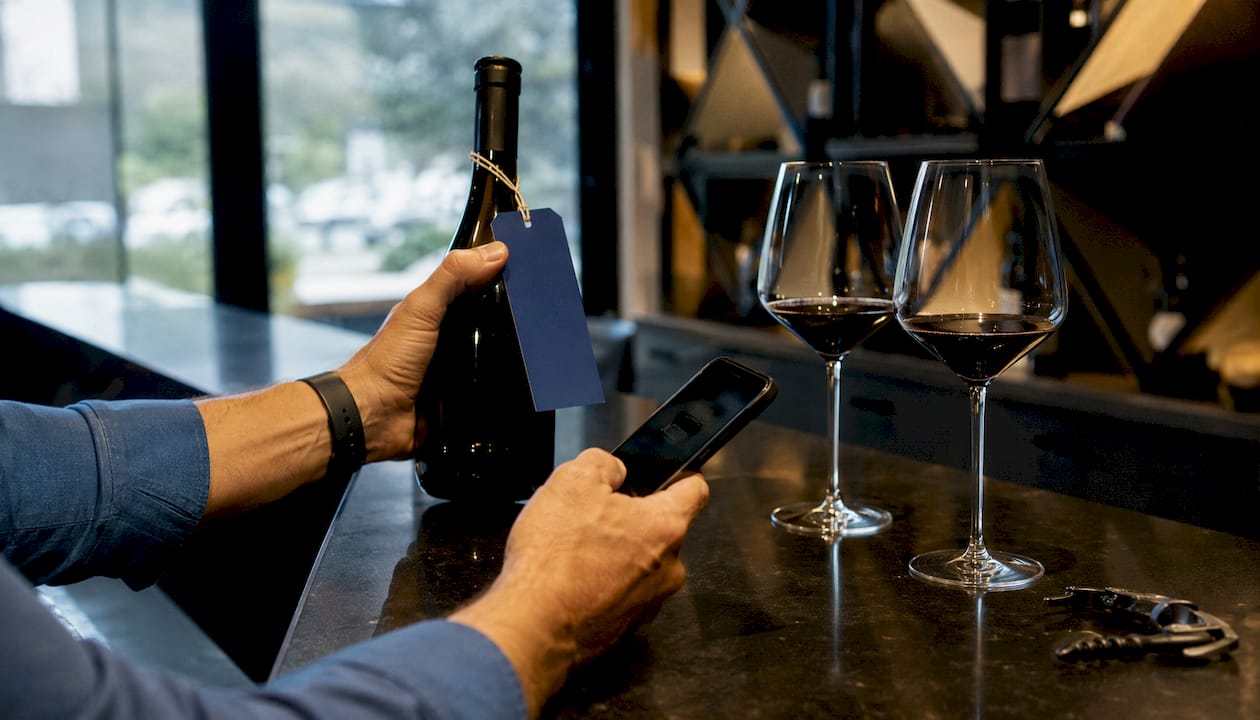
These two functions are frequently conflated, and the confusion costs programmes dearly. Curation is an editorial and aesthetic exercise aligned to concept, guest demographic, and kitchen direction. Procurement is an operational discipline concerned with volume, supplier contracts, allocation timelines, and logistics. Both are required; neither substitutes for the other.
| Function | Curation | Procurement |
|---|---|---|
| Primary skill | Editorial judgement, palate, storytelling | Negotiation, logistics, supplier management |
| Key deliverables | List concept, pairing rationale, BTG rotation | Purchase orders, allocation access, cellar stock |
| Decision authority | Which labels appear and why | How many cases, at what cost, from whom |
| KPIs | Guest satisfaction, spend mix, list coherence | Cost per case, stock turnover, wastage rate |
| Who typically leads | Sommelier or wine director | Beverage manager or purchasing officer |
For premium events in Australia, distributor allocation timelines add a layer of complexity that Les meilleurs vins corses explain in detail, and procurement must manage proactively. Sought-after Australian and imported labels often require forward commitments of three to six months, meaning the curator’s selections must be confirmed well ahead of the event calendar.
How to design a curated wine list that fits your venue or event
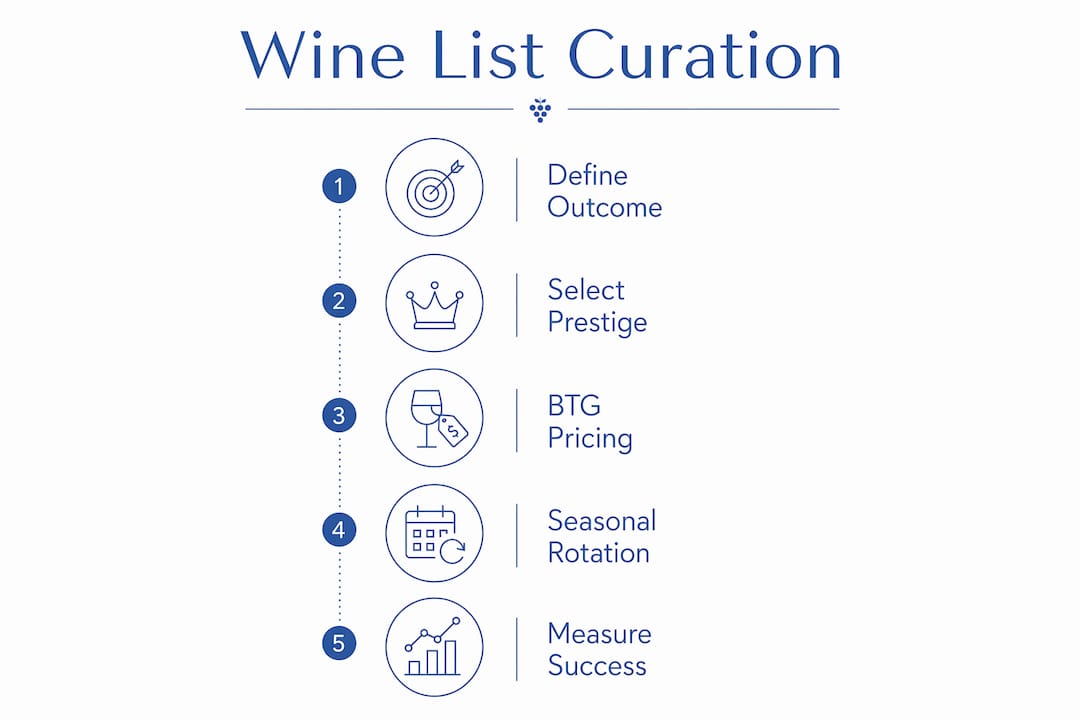
Begin with a single written sentence that defines the programme’s primary outcome. For a luxury private tasting, that sentence might read: “Every guest leaves with a discovery they did not expect and a memory they will describe to others.” For a gala dinner, it might be: “The wine programme reinforces the prestige of the occasion and encourages guests to order a second bottle.” This sentence becomes the north star for every selection decision that follows.
A practical framework for Australian luxury events and venues:
- Concept audit: Review the event theme, kitchen direction, and guest profile before selecting a single label.
- Guest profile mapping: Match list organisation to guest literacy. Variety-first structures suit less wine-literate guests; geography or depth-first structures suit enthusiasts.
- Menu pairing alignment: Pair broad menu types to style axes: high-acidity whites with seafood and charcuterie, structured tannins with red meat, textural whites with umami-rich dishes, and residual sweetness with spiced or dessert courses. For detailed pairing frameworks, Aptent’s wine pairing guide for events offers a practical host-focused checklist.
- Depth versus breadth: A focused list of 60–80 labels with clear editorial logic consistently outperforms sprawling, unfocused selections in both guest satisfaction and operational efficiency.
- BTG programme design: Build the BTG selection first; it drives the most immediate margin and gives floor staff their primary upselling tool.
- Pricing architecture: Structure three tiers — entry, mid, and prestige — using a declining-multiplier approach on high-end bottles rather than a flat percentage markup across the board.
- Distributor and importer considerations: In Australia, confirm allocation availability before finalising selections, particularly for prestige-tier imports and small-production domestic labels.
How to measure success and set realistic timelines
Define your KPIs before the programme launches, not after. The following table outlines the core metrics for a premium event or venue wine programme:
| KPI | Definition | Target range (premium context) |
|---|---|---|
| BTG revenue share | BTG sales as a percentage of total wine revenue | 30% |
| Average bottle spend | Mean spend per bottle ordered | Tracks upward over 90 days |
| Inventory turnover | Times stock is sold and replaced per period | 4–6x per year for bottled; higher for BTG |
| Contribution margin | Revenue minus cost of goods per category | Above category average for prestige tier |
Realistic timeline expectations, drawn from practitioner research:
- 30 days: Baseline data established; staff familiar with the list; early BTG sales patterns visible.
- 90 days: Sales mix stabilising; leading indicators (BTG share, average spend) showing directional movement.
- 6 months: Guest feedback patterns emerging; list adjustments made based on actual ordering behaviour.
- 12–18 months: Compounding advantage from diagnostic-driven structural work becomes measurable; this is when durable programme differentiation appears.
Pro Tip: Watch BTG revenue share and average bottle spend as your leading indicators. Do not scale the programme or make major list changes until contribution margin confirms the trajectory — that is the lagging indicator that validates the leading ones.
A living list is also an operational discipline. Seasonal BTG rotation with a stable bottled core over multiple months is the standard operational compromise for premium venues, balancing freshness with inventory predictability.
Cost considerations and budgeting for a premium wine list in Australia
Set-up and ongoing costs to plan for:
- Opening inventory: Capital commitment for bottled stock across all three tiers, including allocation deposits for prestige labels.
- Cellar equipment: Temperature and humidity control; proper fine wine storage is non-negotiable for premium programmes.
- BTG tooling: Preservation systems (Coravin or equivalent) to protect open bottles and reduce spoilage.
- Ongoing stock carrying: Working capital tied up in inventory; plan for a minimum 90-day runway before the list reaches full operational rhythm.
- Tasting and selection: Curator time, sample costs, and staff training sessions.
- Menu reprints or digital updates: Budget for regular list revisions; digital formats reduce this cost substantially.
- Spoilage allowance: Particularly relevant for BTG programmes; factor 3–5% wastage into margin calculations.
Budgeting steps for private events versus venue programmes:
- Establish cover count and expected wine attachment rate (the proportion of guests who order wine).
- Set a wine spend target aligned to the event’s prestige tier.
- Back-calculate opening inventory requirements from cover count and turnover expectations.
- Confirm distributor allocation lead times and adjust capital deployment accordingly.
- Reserve a contingency of 10–15% for vintage substitutions and allocation shortfalls, which are common in the Australian premium import market.
Common mistakes and red flags that ruin a curated wine list
The most expensive errors are also the most avoidable:
- Over-long lists: A list of 200 labels signals indecision, not abundance. Guests feel overwhelmed, and stock management becomes a liability.
- Poor BTG rotation: A stale BTG selection undermines the list’s credibility and leaves margin on the table.
- Flat-percentage markups on prestige bottles: This approach prices premium labels out of reach and suppresses the very sales that define a luxury programme.
- Ignoring the kitchen: A wine list that does not reflect the menu’s flavour architecture fails its most fundamental purpose. The chef–sommelier conversation is where coherent lists are born.
- Distributor dependency without allocation planning: Relying on a single distributor’s available stock, rather than securing allocations in advance, produces a list that looks like everyone else’s.
Red flags when hiring a curator or reviewing a supplier proposal:
- No written primary outcome sentence before selection work begins.
- No measurement plan or defined KPIs.
- Inconsistent pairing rationale across the list.
- Prestige labels selected for name recognition rather than menu alignment.
- No plan for BTG rotation or seasonal adjustment.
How Aptent Gourmet approaches curation for high-net-worth events
The challenge Aptent addresses is one that many luxury event hosts encounter: a desire for a wine programme that feels genuinely distinctive rather than assembled from a distributor’s standard portfolio. The primary outcome Aptent sets for each engagement is precise: every selection should reinforce the occasion’s prestige and create at least one moment of genuine discovery for guests.
For a private tasting, Aptent’s selection might span a focused vertical of a single prestige Australian producer alongside two or three benchmark European counterparts, chosen to illuminate a stylistic conversation rather than simply cover categories. For a gala dinner, the approach shifts toward a tiered programme: an approachable entry-level pour for arrival, a mid-tier selection matched to the main courses, and a prestige bottle reserved for a keynote moment in the meal. Aptent’s wine vertical tasting guide outlines how these formats are structured for maximum guest impact.
The client process follows a clear sequence: diagnostic conversation to establish concept, guest profile, and primary outcome; selection and sourcing, including allocation confirmation with Australian distributors and importers; service training for event staff; and a post-event measurement review against the agreed KPIs. The timeline from brief to event-ready programme typically spans six to ten weeks for a first engagement.
Pro Tip: When briefing any curator, provide the single-sentence primary outcome, your cover count, the menu direction, your budget band, and your event date. Those five elements allow a skilled curator to return a coherent proposal rather than a generic list.
Key takeaways
A curated wine list is a strategic brand and revenue instrument: when built with editorial precision and measured against clear KPIs, it raises guest satisfaction, lifts average spend, and creates durable differentiation for luxury venues and private events.
| Point | Details |
|---|---|
| Start with a primary outcome | Write one sentence defining what the programme must achieve before selecting a single label. |
| BTG is your primary margin lever | Structure BTG pricing so the first two pours recover wholesale cost; rotate seasonally to maintain freshness. |
| Edit ruthlessly | A focused list of 60–80 labels with clear logic outperforms a sprawling one in both guest experience and operational efficiency. |
| Measure at 90 days and 12–18 months | Leading indicators (BTG share, average spend) show direction early; contribution margin confirms whether to scale. |
| Aptent Gourmet for luxury events | Aptent delivers diagnostic-first curation, prestige sourcing, and staff training for high-net-worth private events across Australia. |
The case for conviction in curation
There is a tendency in luxury hospitality to treat the wine list as a finishing detail, something assembled after the menu, the venue, and the guest list are confirmed. That instinct inverts the actual hierarchy of impact. A wine programme designed with genuine editorial conviction, one that reflects a clear point of view about what the occasion demands, does something no other element of an event can replicate: it gives guests a reason to linger, to converse, and to return. The lists that guests remember are never the longest or the most expensive. They are the ones that felt considered, as though someone understood exactly who was in the room and what they deserved to drink. That quality of attention is not incidental to the Aptent approach; it is the whole premise.
Aptent Gourmet: curated wine programmes for discerning events
For hosts and venues who want a wine programme that reflects genuine refinement rather than default selection, Aptent Gourmet’s event curation service offers a complete solution: diagnostic briefing, prestige sourcing, BTG programme design, and staff training, all delivered with the discretion and precision that high-net-worth occasions demand. Aptent sources rare and allocated labels that do not appear on standard distributor lists, and pairs them with luxury accompaniments including signature caviar for occasions where the full sensory experience matters.
To brief Aptent for your next event, prepare five things: your single-sentence primary outcome, your cover count, your menu direction, your budget band, and your event date. With those in hand, visit gourmet.aptent.com.au to begin the conversation.
Useful sources and further reading
The following sources informed this article. Australian-context sources are noted where applicable.
- The Wine List Design By Upscale Restaurants — Academic research on wine list strategy in upscale restaurants; general industry practice applicable to the Australian premium market.
- Wine list development: how sommeliers build and curate lists — Sommelier Authority; professional guidance on editorial curation, BTG economics, and list organisation. General industry practice.
- Building a restaurant wine list: Sommelier best practices — Sommelier Authority; pricing architecture and seasonal maintenance guidance. General industry practice.
- Wine list curation for restaurants: building a programme that sells — Piedmont Avenue Consulting; practitioner research on diagnostic-first approaches and timeline expectations. General industry practice.
- How Restaurants Really Build a Wine List — The Grape Gazette; industry feature on brand voice and the chef–sommelier relationship. General industry practice.
- Why Wine Lists Are the Unsung Heroes of the Restaurant World — All Around the Food; accessible overview of wine list impact on dining experience and brand identity. General industry practice.
- Why So Many Wine Lists Look the Same — Uncorked; analysis of differentiation failure and the value of intentional curation. General industry practice.
- Aptent Gourmet — wine pairing for events — Australian context; host-focused pairing and service guidance for premium events.
- Aptent Gourmet — fine wine storage guide — Australian context; practical cellar and storage guidance for premium programmes.


