
What is a wine cellar dinner: the complete guide
A wine cellar dinner is a fine dining event held inside a climate-controlled subterranean space maintained at 13–15.5°C and 60–70% humidity, where each course is paired with specific wines drawn directly from the surrounding collection. The format is known formally as a cave à manger in French wine culture, though “wine cellar dinner” is the term most widely used in English-speaking markets. What separates this experience from a standard restaurant meal is not simply the setting. The architecture, the curated wine selection, the structured pairing progression, and the deliberate intimacy of the space combine to create something far more immersive than a meal with a wine list attached.
How does the wine cellar dining experience shape the senses?
The cellar environment does something no conventional dining room can replicate. Guests sit physically inside the wine collection, surrounded by bottles that represent years or decades of careful ageing. Modern cellar architecture has shifted from purely functional bottle storage to sculptural, guest-facing design, where the wine list becomes the room itself. That transformation is not decorative. It changes how guests relate to what they are drinking.
Temperature and humidity control serve a dual purpose. The same conditions that preserve wine at peak quality also create a cool, stable atmosphere that feels removed from the outside world. Stone and tile surfaces, common in traditional cellars, reduce ambient noise by absorbing and diffusing sound rather than reflecting it. This acoustic quality deepens the sense of enclosure and focus.
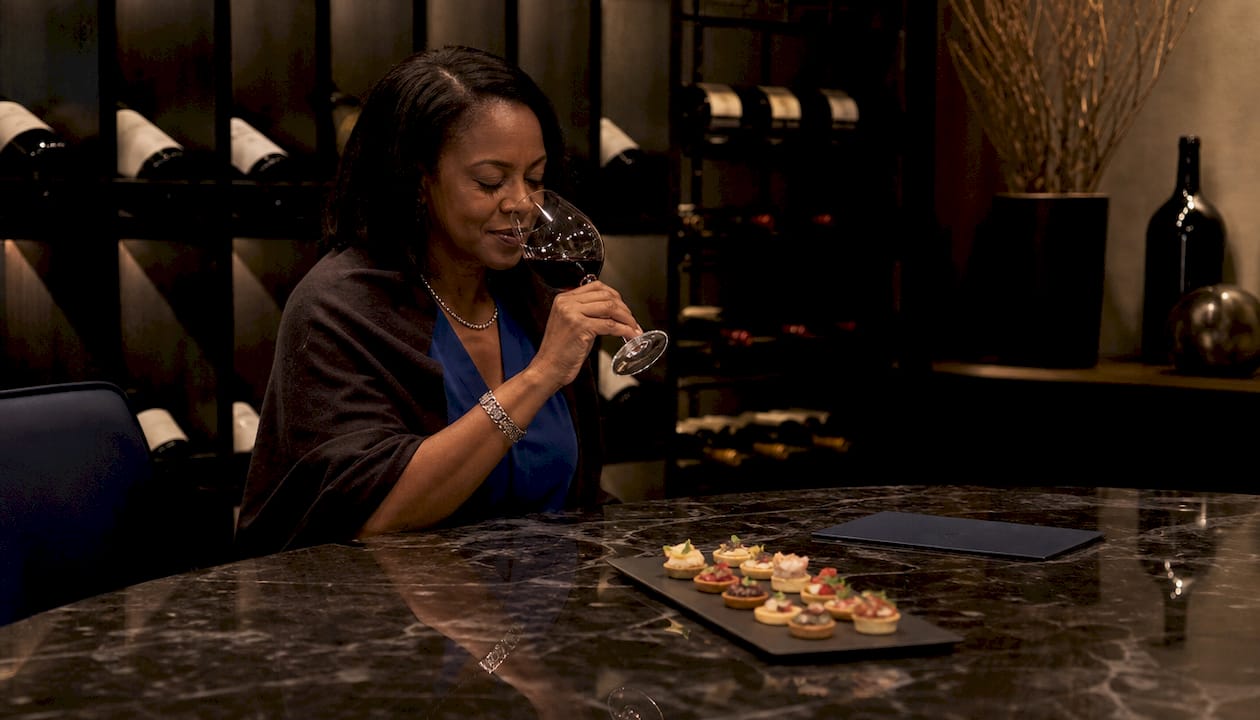
Lighting in a well-designed cellar is deliberately warm and low. Ultraviolet light degrades wine over time, so cellar lighting avoids UV sources entirely. The result is a candlelit or amber-toned atmosphere that feels intimate rather than theatrical.
Small guest groups of 4–10 people are standard for cellar dinners, and this is not merely a matter of space. Stone and tile surfaces can cause reverberation that makes conversation difficult at larger tables. Keeping numbers low preserves both the acoustic comfort and the quality of conversation.
Key sensory elements that define the wine cellar dining experience:
- Temperature: A steady 13–15.5°C keeps guests comfortable and wines at optimal serving readiness.
- Acoustics: Stone surfaces absorb sound at small group sizes, creating a hushed, focused atmosphere.
- Lighting: Warm, UV-free light protects the collection and sets an intimate tone.
- Visual immersion: Surrounding bottle displays transform the room into a living catalogue of the cellar’s collection.
- Intimacy: Limited seating encourages genuine conversation between guests and hosts.
Pro Tip: If you are visiting a cellar dinner venue for the first time, arrive a few minutes early. Walking the cellar before other guests arrive gives you a rare moment to absorb the collection without distraction, and often prompts the sommelier to share details about the bottles that do not appear on the menu.
What does a typical wine cellar dinner menu involve?
The menu structure is the technical backbone of the wine cellar dining experience. A well-planned cellar dinner spans 3–5 courses, with each course anchored by a specific wine or flight chosen to complement the dish’s flavour profile. The progression follows a clear logic: lighter wines open the evening, bolder and more complex bottles arrive with the main courses, and sweeter or fortified wines close the meal. This arc mirrors the way the palate builds tolerance and sensitivity across an evening.
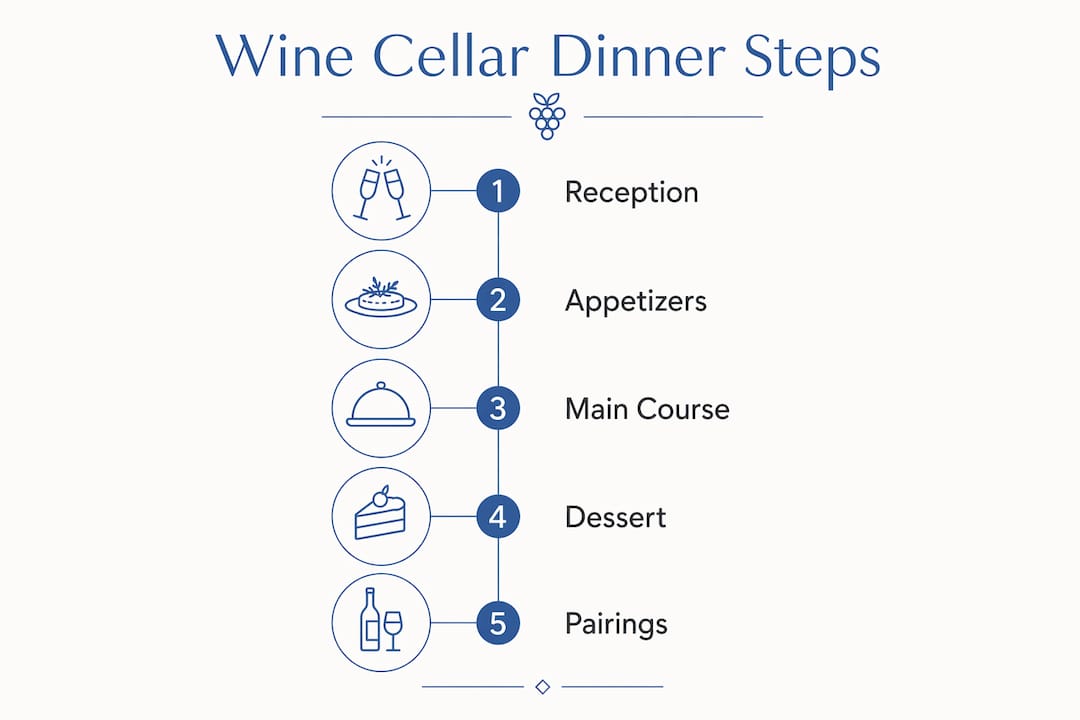
Wine selection follows a pairing rationale that a chef and sommelier develop together. A delicate seafood entrée might be paired with a crisp Chablis or a fine Riesling. A slow-braised lamb shoulder calls for a structured red, perhaps a Barossa Valley Shiraz or a Burgundy Pinot Noir. Dessert courses often feature Sauternes, late-harvest Riesling, or a vintage Port. The pairing of each course with a specific bottle is never incidental. It is the defining act of the entire evening.
Pour sizes at cellar dinners are deliberately restrained. A standard pour of approximately 75ml per course allows guests to experience the full flavour diversity of the selection without overconsumption. That restraint is intentional. The goal is appreciation and progression, not volume.
A typical 4-course wine cellar dinner might be structured as follows:
- Amuse-bouche or canapé: Served with a sparkling wine or Champagne to cleanse the palate and set the tone.
- First course (entrée): A light dish such as oysters, cured salmon, or a delicate terrine, paired with a crisp white wine.
- Main course: A richer protein preparation paired with a full-bodied red or an aged white Burgundy.
- Dessert or cheese: Paired with a sweet wine, fortified wine, or a late-harvest selection that echoes the dish’s sweetness or salinity.
| Course | Typical dish style | Wine style |
|---|---|---|
| Sparkling reception | Canapés, oysters | Champagne, Crémant, Prosecco |
| Entrée | Seafood, cured meats | Crisp white, Riesling, Chablis |
| Main | Lamb, beef, duck | Shiraz, Pinot Noir, aged Bordeaux |
| Dessert or cheese | Tart, blue cheese, soufflé | Sauternes, Port, late-harvest Riesling |
Premium pricing at cellar dinners reflects the rarity of the wines served, the coordination required between kitchen and cellar, and the exclusivity of the format. Guests are not paying for a meal with wine. They are paying for access to a curated collection and the expertise to present it well. For a deeper look at how rare vintages are selected and presented in this context, the distinction between a cellar dinner and a standard degustation becomes immediately clear.
Pro Tip: Ask the sommelier before the evening begins whether any of the wines will be decanted. Knowing this in advance helps you pace your arrival at the table and gives you the chance to observe the decanting process, which is itself an education in how oxygen transforms a wine’s character.
Who attends wine cellar dinners and what do they gain?
Wine cellar dinners attract a specific kind of guest: one who is curious, knowledgeable, and seeking access that goes beyond a standard cellar-door tasting or restaurant meal. Wine dinners create rare access to winemakers and deepen guest understanding in ways that a tasting flight at a bar simply cannot. The format places guests in direct conversation with the people who made the wine, often across a table of no more than ten people.
Winemakers and producers use these dinners to build direct relationships with their most engaged audience. A producer presenting a vertical tasting of their estate’s Shiraz across five vintages is not simply pouring wine. They are telling the story of their land, their decisions, and the years that shaped each bottle. That narrative dimension transforms the evening from a meal into a form of connoisseurship.
Restaurants and private venues use cellar dinners to create a category of experience that sits above their standard offering. The format generates revenue from otherwise underutilised cellar space, builds loyalty among high-value guests, and creates word-of-mouth that no marketing budget reliably produces.
The social dynamics of a cellar dinner are worth noting separately. The small group size, the shared focus on wine and food, and the physical enclosure of the cellar create conditions for genuine conversation. Guests who arrive as strangers often leave with a shared vocabulary and a common reference point. That social dimension is part of what makes the format so enduring.
Benefits guests consistently draw from the wine cellar dining experience:
- Educational access: Direct dialogue with winemakers or sommeliers provides context unavailable in any book or tasting note.
- Sensory training: Tasting wines in a structured progression sharpens the palate in ways that isolated tastings do not.
- Rare access: Many bottles poured at cellar dinners are not available through retail channels.
- Social intimacy: Small group formats create genuine connection between guests and hosts.
- Appreciation of craft: Proximity to the collection and the people behind it deepens respect for the winemaking process.
How can you host your own wine cellar dinner?
Hosting a wine cellar dinner at home is achievable without a subterranean stone vault. The defining qualities of the experience are replicable with careful planning and the right selection of wines. The goal is to recreate the conditions of immersion, progression, and intimacy, not to replicate a restaurant.
-
Choose the right space. A temperature-controlled wine room, a cool basement, or even a well-insulated dining room set to approximately 16–18°C works well. The space should feel enclosed and quiet. Remove visual clutter and let the wine collection, however modest, become part of the décor.
-
Plan your menu around the wine, not the other way around. Select your bottles first, then build each course to complement them. A structured pairing approach that moves from light to bold and dry to sweet gives the evening a clear arc that guests will feel even if they cannot articulate it.
-
Prepare wines in advance. Reds should reach approximately 16°C before service, which means removing them from storage temperature well before guests arrive. Whites and sparkling wines should be chilled but not over-chilled. A wine served at the wrong temperature loses much of its character.
-
Time your pours carefully. Wine should be poured no more than 10 minutes before food arrives to preserve temperature and freshness. Pouring too early allows the wine to warm or oxidise before it reaches the guest’s palate.
-
Keep the guest list small. Four to eight guests is the ideal range for a home cellar dinner. Larger groups fragment conversation and make it difficult to maintain the pacing and atmosphere that define the format.
-
Consider a theme. A single producer’s vertical tasting, a regional focus such as Burgundy or the Barossa Valley, or a food-and-wine pairing theme such as French classics or coastal Australian cuisine all give the evening a coherent identity. Themes also make wine selection far easier. For guidance on wine event pacing, a structured approach to timing and sequencing makes a measurable difference to how guests experience the evening.
Pro Tip: Print a simple card for each place setting that lists the wine name, vintage, and producer alongside the course it accompanies. Guests refer to these throughout the evening, and they become a keepsake that extends the memory of the dinner well beyond the last pour.
Key takeaways
A wine cellar dinner is defined by the integration of climate-controlled environment, structured multi-course pairing, and deliberate intimacy, making it the most immersive format available for serious wine and food appreciation.
| Point | Details |
|---|---|
| Environment is foundational | Cellar conditions of 13–15.5°C and 60–70% humidity preserve wine and shape the entire sensory experience. |
| Menu follows a progression | Three to five courses move from light to bold and dry to sweet, with 75ml pours per course for pacing. |
| Small groups are deliberate | Four to ten guests optimise acoustics, conversation quality, and the intimacy that defines the format. |
| Winemaker access adds depth | Direct dialogue with producers transforms a dinner into an educational and personal encounter with the wine. |
| Home hosting is achievable | Careful temperature preparation, structured pairing, and themed selection replicate the cellar dinner experience without a professional venue. |
Aptent’s perspective on what makes these evenings irreplaceable
The most common misconception about wine cellar dinners is that the wine is the point. It is not. The wine is the medium. What a well-executed cellar dinner actually delivers is a sustained, structured encounter with the craft of winemaking, the intelligence of pairing, and the particular pleasure of a small group of people sharing something rare together.
What strikes me most, having been present at many such evenings, is how the physical environment does the work that no amount of explanation can. Sitting inside a collection of bottles, in a cool and quiet room, with a glass of something genuinely exceptional in front of you, changes the way you listen. Guests who would normally talk through a wine presentation find themselves leaning forward. The cellar creates attention.
The pacing is where most home hosts underestimate the format. A cellar dinner is not a dinner party with better wine. The timing of each pour, the temperature of each bottle, and the length of each course all require the same deliberate care that a sommelier brings to a professional service. When that care is present, guests feel it without knowing why. When it is absent, the evening feels like a meal with too many glasses.
For anyone approaching their first cellar dinner as a guest, the advice is simple: resist the urge to evaluate and simply experience. The education arrives on its own, course by course, pour by pour. The appreciation for winemaking craftsmanship that emerges from a single well-run cellar dinner often exceeds what years of casual wine drinking produce.
— Aptent
Curated wines and gourmet experiences from Aptent
For those who want to bring the wine cellar dining experience to their own table, Aptent offers a curated selection of Grand Cru wines and rare vintages sourced from prestigious producers across France, Australia, and beyond. Each bottle in the collection is selected for its quality, provenance, and suitability for the kind of thoughtful pairing that defines a cellar dinner at its finest.
Aptent also offers gourmet gift cards and a range of dining accessories to support the home host, alongside curated gourmet events designed for discerning guests who seek the full cellar dinner experience in a boutique setting. For those ready to explore the full collection, the Aptent Gourmet landing page is the natural starting point.
FAQ
What is a wine cellar dinner?
A wine cellar dinner is a fine dining event held inside a climate-controlled cellar, where each course is paired with specific wines from the surrounding collection. The format combines structured multi-course menus, expert wine pairing, and an intimate setting to create an immersive experience.
How many courses does a wine cellar dinner typically include?
A wine cellar dinner typically spans 3–5 courses, each paired with a specific wine progressing from light and dry to bold and sweet. Standard pour sizes of approximately 75ml per course allow guests to experience the full range without overconsumption.
What temperature should a wine cellar dinner be held at?
Cellar dinner environments are maintained at 13–15.5°C with 60–70% humidity to preserve wine quality and ensure guest comfort. Red wines served during the dinner should reach approximately 16°C before service to preserve their flavour structure.
How many guests should attend a wine cellar dinner?
Groups of 4–10 guests are considered optimal for a wine cellar dinner. This range manages the acoustic challenges of stone and tile surfaces while preserving the intimacy and conversation quality that define the format.
Can you host a wine cellar dinner at home without a cellar?
A home wine cellar dinner is achievable in any cool, quiet, enclosed space set to approximately 16–18°C. The key requirements are a structured pairing menu, properly prepared wines, small guest numbers, and careful timing of pours.


