
Rare vintage wine dinner examples: the connoisseur's guide
Rare vintage wine dinners are exclusive, multi-course events built around historic wines served at their peak, paired with gourmet cuisine and guided by expert storytelling. The industry term for the structured format is a “vertical tasting dinner,” where multiple vintages from a single producer are presented course by course, often with the winemaker or a master sommelier narrating each pour. These events sit at the intersection of cultural heritage and culinary theatre, offering connoisseurs access to wines that are simply not available through private retail channels. For anyone serious about luxury wine dining experiences, understanding what separates a great event from a merely expensive one is the first step toward finding or hosting something genuinely memorable.
1. What are the best rare vintage wine dinner examples?
The finest rare vintage wine dinner examples share three qualities: historic bottles with verified provenance, a curated menu designed around the wines rather than alongside them, and an expert host who transforms each pour into a narrative. Events typically feature 4–9 courses guided by winery principals or sommeliers, making the educational dimension as important as the sensory one.
Château Ausone multi-vintage Bordeaux dinner
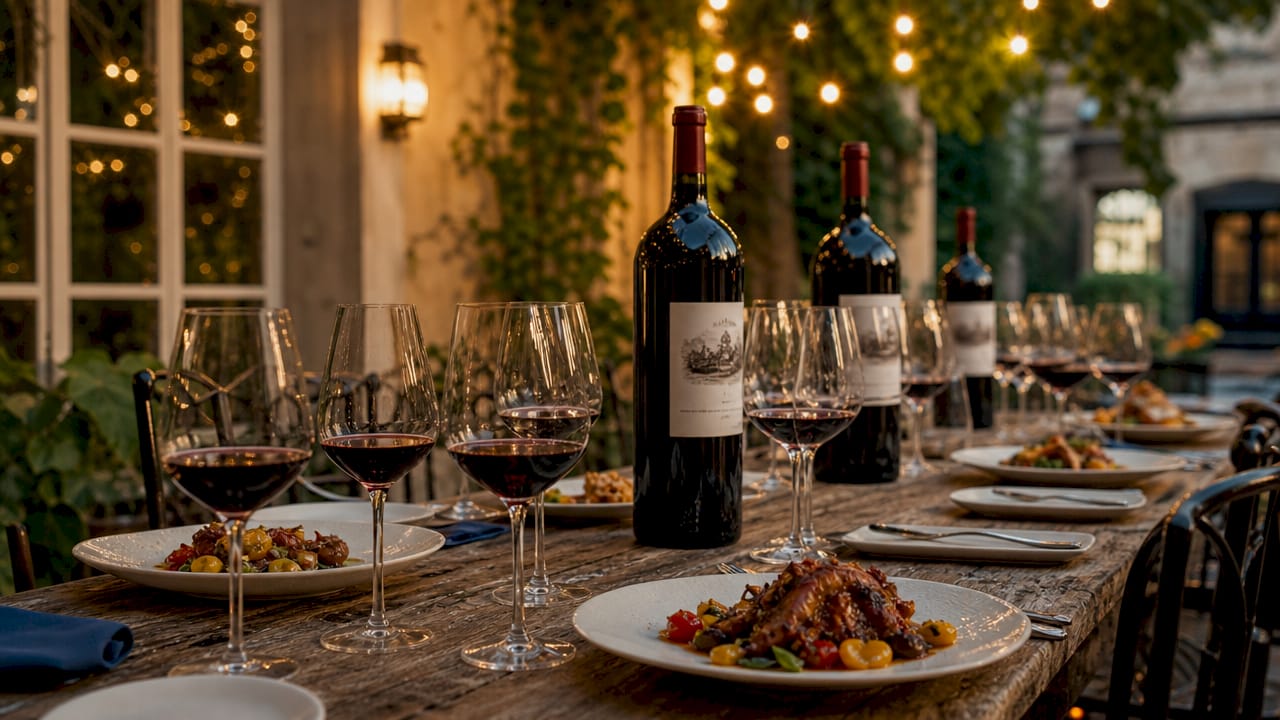
A Château Ausone dinner is among the most coveted gourmet wine dinner examples in the world. The format presents three to five vintages of this Saint-Émilion premier grand cru classé A wine across matched courses, with each dish designed to mirror the wine’s evolving character from youth to full maturity. A typical menu might open with a delicate langoustine bisque alongside a younger vintage, progressing toward a slow-braised short rib paired with a wine from a celebrated year such as 2000 or 2005. The winemaker’s presence transforms the tasting into a conversation about terroir, harvest conditions, and the philosophy of minimal intervention.
Domaine de Montille Burgundy vertical with magnums
Domaine de Montille in Burgundy is celebrated for its Pinot Noir purity, and vertical tasting dinners built around its Volnay and Pommard cuvées are among the most intellectually rewarding exclusive wine dinner ideas available. Rare dinners of this style frequently feature large-format magnum bottles, which age more slowly and preserve greater complexity than standard 750ml formats. Guests experience the same vineyard expressed across a decade or more of vintages, with each magnum poured tableside by the domaine’s own sommelier. The contrast between a 2008 and a 2015 from the same parcel is revelatory in a way that no single-bottle tasting can replicate.
English vineyard nine-course storytelling dinner
A growing category of vintage wine dinner themes centres on English sparkling wine, with producers such as Nyetimber and Gusbourne hosting nine-course dinners that weave the history of English viticulture into every dish. These events are structured as narrative experiences, with each course introduced by the head winemaker explaining the climatic story behind that particular vintage. The food leans into regional British produce: aged cheddar soufflé, smoked eel, and heritage-breed game birds that complement the wine’s characteristic high acidity and fine mousse. The rarity here is not just the wine but the format itself, which treats English terroir with the same reverence traditionally reserved for Champagne.
Modern Italian vintage wines with Mediterranean contrasts
Italian producers such as Donnafugata have pioneered a format pairing their library dessert wines, most notably Ben Ryé Passito di Pantelleria, with savoury and contrasting dishes rather than sweet ones. Contrast pairings such as aged Champagne with truffle risotto or dessert wines with caper pâté represent a deliberate departure from convention. Two vintages of Ben Ryé served side by side with a plate of bottarga, capers, and aged pecorino demonstrate how salinity and oxidative richness in the food can amplify the wine’s honeyed complexity. This format is one of the most thought-provoking classic wine dinner menus available to connoisseurs willing to challenge their assumptions.
Ultra-premium library vintage dinner with large-format verticals
The most rarefied category involves library wines, bottles held back by the winery for decades and released only at private events. Rare vintages served at these dinners are often unavailable to private consumers through any retail channel. A dinner of this type might present a 1990, 2000, and 2010 Pétrus in jeroboam format, with each wine decanted hours in advance and served alongside dishes that have been aged or fermented themselves, such as dry-aged beef or miso-cured duck. The price point for events of this calibre reflects the scarcity involved, with premium rare vintage wine dinners ranging from $150 to $1,750 or more per person, with full pre-payment required at booking.
2. How do rare vintage wine dinners use innovative food pairings?
The most memorable unique vintage wine pairings move well beyond the textbook rule of matching weight with weight. Culinary directors observe that rare vintage wines hold up to bold, complex food pairings contrary to the popular belief that old wines demand delicate dishes.
The shift toward contrast pairing is the defining trend in luxury wine dining experiences right now. Rather than echoing the wine’s flavour profile in the food, the best chefs use the dish to create productive tension. A 20-year-old Sauternes paired with a plate of aged Comté and walnuts works because the cheese’s savoury depth pulls the wine’s sweetness into focus. Similarly, a mature white Burgundy alongside a dish of lightly smoked salmon and crème fraîche uses the food’s fat to soften the wine’s acidity while amplifying its mineral character.
Texture is as important as flavour in these pairings. A silky, aged Barolo demands a dish with structural resistance, such as a braised oxtail or a dense mushroom ragù, so that neither the wine nor the food collapses against the other. Regional produce also plays a significant role: pairing a wine with ingredients from its own geography creates a coherence that guests feel intuitively, even without being told the connection.
Pro Tip: When pairing a dessert wine with a savoury course, choose a dish with at least one salty or bitter element. The contrast sharpens the wine’s fruit and prevents the pairing from reading as cloying.
For connoisseurs hosting their own events, the pairing wine with tasting courses guide from Aptent provides a practical framework for sequencing dishes and wines across a multi-course format.
3. What organisational features define a successful rare wine tasting event?
The logistics of a rare wine tasting event are as consequential as the wine selection itself. Getting the operational details wrong can ruin bottles that have been ageing for decades.
Expert hosts are non-negotiable. Sommeliers say storytelling is integral to the rare wine dinner experience, connecting guests emotionally to the winemaker’s legacy. A host who can explain why the 1996 vintage in Champagne produced wines of extraordinary tension, or why a particular Barolo from 2001 shows more tar and roses than the 2000, transforms a dinner into an education.
Provenance management protects the investment. Careful storage is essential to avoid faults like oxidation or cork taint in old wines served at these dinners. Every bottle should arrive with a documented temperature and humidity history. Organisers who source wines from auction without provenance records are taking a risk that no amount of culinary skill can recover from.
Serving order shapes the entire experience. Experts prefer palate-cleansing sequences using high-acid whites to reset taste buds between heavy reds. A well-constructed sequence might open with a vintage Blanc de Blancs Champagne, move through aged white Burgundy, then introduce the first red only at the fourth course. This approach preserves palate sensitivity for the wines that matter most.
Pre-payment policies reflect the real cost of exclusivity. Most events at the premium end of the market require full payment at booking, a practice that reflects both the cost of sourcing rare bottles and the need to manage seat numbers precisely. Organisers who allow last-minute cancellations risk financial exposure that makes the event unviable.
Pro Tip: Decant old red wines at least two hours before service, and taste a small sample immediately after opening. If the wine shows signs of reduction, gentle aeration will resolve it. If it shows oxidation, no amount of time will help.
4. How do these dinners deliver value beyond the wine itself?
The value of a great rare wine dinner extends well beyond what is in the glass. Rare dinners provide access to a producer’s legacy that no tasting note or wine critic score can replicate.
The cultural weight of drinking a wine from a significant historical year, a 1945 Mouton Rothschild, a 1961 Pétrus, or a 1990 Romanée-Conti, connects the guest to events and decisions made by people who are no longer alive. That connection is not sentimental. It is a form of direct access to agricultural and human history that no museum can offer. Rare wine dinners build trust between winery and guests by sharing private library stock, and that act of generosity creates a relationship that transcends commerce.
“The wine is the text, but the story is the meaning. Without the narrative, you are just drinking an expensive liquid.” — a sentiment shared widely among master sommeliers who host vertical tasting dinners.
Sharing these wines with a small group of like-minded connoisseurs adds another dimension. The collective experience of tasting the same wine simultaneously, comparing impressions, and debating whether the 2010 or the 2015 is the finer vintage, creates a social bond that is specific to this format. No other dining experience produces quite the same quality of conversation. For connoisseurs who want to understand how these events are structured before attending one, the wine pairing and events guide from Aptent offers a detailed host’s perspective.
Key takeaways
The finest rare vintage wine dinners combine verified provenance, expert-led storytelling, contrast-driven food pairings, and carefully sequenced service to create experiences that no single bottle tasted alone can match.
| Point | Details |
|---|---|
| Vertical tasting format | Presenting multiple vintages from one producer across matched courses is the defining structure of premium wine dinners. |
| Contrast pairings outperform classic matches | Pairing aged dessert wines with salty or savoury dishes creates complexity that sweet-with-sweet pairings cannot achieve. |
| Provenance is the foundation | Documented storage history for every bottle is non-negotiable; oxidised or corked wines cannot be recovered at the table. |
| Magnums age better | Large-format bottles preserve complexity and freshness, making them the preferred choice for vertical tasting dinners. |
| Storytelling is the differentiator | Expert hosts who connect guests to the winemaker’s legacy transform a dinner into a cultural and sensory education. |
Aptent’s perspective on what makes these dinners unforgettable
The single most common mistake connoisseurs make when attending or hosting a rare wine dinner is treating the wine as the centrepiece and the food as decoration. The dinners that stay with you for years are the ones where the chef and the sommelier have genuinely collaborated, where the dish was conceived in response to the wine rather than assembled around it.
Innovative pairings are not a gimmick. When a savoury, umami-rich dish meets a wine of great age and complexity, both are changed by the encounter. That is the point. The best vintage wine dinner themes are built on this principle of productive tension, not comfortable agreement.
For connoisseurs considering their first event at the $500 to $1,000 per person level, the advice is straightforward: prioritise the host over the wine list. A brilliant sommelier with a good cellar will deliver a more memorable evening than a mediocre host with extraordinary bottles. The wine speaks for itself only when someone in the room knows how to listen.
Budget for the unexpected. Rare bottles sometimes disappoint, and the best events build redundancy into the programme by sourcing two bottles of each wine and opening the second only if the first is flawed. That level of preparation is the mark of a serious organiser, and it is worth asking about before you book.
— Aptent
Aptent Gourmet’s curated rare wine collection
Aptent sources its wines directly from prestigious producers, with a focus on verified provenance and cellar-ready condition. For connoisseurs ready to experience or host a luxury wine dinner, the grand cru and rare cuvée collection offers some of the finest library-quality bottles available in Australia.
Aptent also curates exclusive gourmet events for high net worth individuals and corporate clients, pairing rare wines with chef-designed menus in intimate settings. For those who prefer to gift the experience, a gourmet gift card provides access to the full Aptent collection, including vintage Champagne, grand cru Burgundy, and premium caviar. Every product is sourced with the same rigour that the finest wine dinners demand.
FAQ
What is a rare vintage wine dinner?
A rare vintage wine dinner is a structured, multi-course event presenting historic wines at their peak, guided by a sommelier or winemaker. Events typically feature 4–9 courses paired with gourmet dishes designed to complement or contrast each wine.
How much does a rare vintage wine dinner cost?
Premium events range from $150 to $1,750 or more per person, with full pre-payment required at most exclusive venues. The cost reflects the rarity of the bottles, the expertise of the host, and the quality of the accompanying cuisine.
Why are magnums used at vintage wine dinners?
Magnums age more slowly and preserve greater complexity than standard bottles, making them the preferred format for vertical tasting dinners where wine condition is paramount.
What food pairings work best with aged vintage wines?
Contrast pairings, such as aged dessert wines with caper pâté or savoury dishes, outperform traditional sweet-with-sweet matches by amplifying the wine’s complexity. Salty, umami-rich, and textured dishes are the most effective partners for wines of great age.
How do I find or book a rare wine tasting event in Australia?
Specialist gourmet retailers such as Aptent curate boutique wine dinner events for private clients and corporate groups, with access to library wines not available through standard retail. Contacting the producer directly or working with a curated gourmet platform is the most reliable path to verified, high-quality events.


