
Seasonal luxury ingredient calendar for Australian event planners
A seasonal luxury ingredient calendar maps hyper-seasonal availability windows to concrete planning actions, giving you the ordering lead times, storage requirements and contingency options you need before a single invitation is sent. The most time-critical item on any Australian luxury menu is Tuber magnatum, the white winter truffle, whose harvest window runs October to December in the Northern Hemisphere, arriving in Australia at peak season June to August via air freight. For the most delicate goods, a 24–48 hour transit window from harvest to delivery is the accepted standard in perishable luxury logistics.
Three immediate actions to take this week:
- Confirm your event date and guest count, then cross-reference the season table below to identify which hero ingredient is at peak availability.
- Contact Aptent for a seasonal availability check, specifying your event date, style (intimate tasting or large-format dinner) and preferred hero ingredient.
- For imported items such as white truffle or premium caviar, initiate biosecurity paperwork and cold-chain logistics several weeks before service.
Table of Contents
- What is in season when? Australia’s luxury ingredient calendar
- How event planners convert the calendar into tasting menus
- How does Aptent source and vet seasonal luxury ingredients?
- Four seasonal tasting menus with pairing notes
- Practical checklist for booking hyper-seasonal luxury ingredients
- Key takeaways
- Why provenance is the real luxury, not rarity
- Aptent’s curated supply and boutique event services
- Useful sources and further reading
What is in season when? Australia’s luxury ingredient calendar
The table below maps the four Australian seasons to their highest-impact luxury ingredients. Availability windows reflect biological variability and regional climate differences; treat them as planning guides, not guarantees. Imported items are subject to Australian biosecurity requirements, and availability may shift by two to four weeks depending on harvest conditions in the country of origin.
| Season | Months | Hero Ingredients | Notes |
|---|---|---|---|
| Spring | September–November | Light caviar courses, wild herbs, heirloom rice, specialty citrus (Meyer lemon, finger lime) | Finger limes peak mid-October in Queensland; heirloom rice harvest typically begins in spring in northern NSW |
| Summer | December–February | Seasonal crustacea (Moreton Bay bug, spanner crab), bottarga, fresh burrata, tropical citrus accents | Moreton Bay bugs peak December–January; bottarga is generally available year-round but is considered freshest in summer |
| Autumn | March–May | Black autumn truffle (Tuber aestivum), preserved fruits, aged butter, wild mushrooms (pine mushroom, slippery jack) | Victorian and WA pine mushrooms peak April–May; black summer truffle season closes by late autumn |
| Winter | June–August | White winter truffle (Tuber magnatum, imported), black winter truffle (Tuber melanosporum, Australian-grown), premium caviar, vintage Champagne pairings, hoshigaki | Australian black winter truffle peaks in mid to late winter in the Manjimup and Canberra regions |
Regional variability is real and consequential. Western Australia’s Manjimup region produces black winter truffles in conditions that can shift the peak by two to three weeks relative to the Canberra district. Queensland’s subtropical climate accelerates finger lime maturity by four to six weeks compared with southern NSW. Building a two-week buffer into your ordering timeline accounts for most of this variability without compromising the menu concept.
Pro Tip: For white winter truffle and fresh caviar, request harvest-day delivery confirmation from your supplier in writing. A 24-hour delay at any point in the cold chain degrades both aroma and texture beyond recovery.
How event planners convert the calendar into tasting menus
The calendar’s real power lies in its ability to anchor a menu’s sensory narrative before a single dish is designed. Each Australian season carries a distinct flavour mood: spring offers lift and renewal, summer delivers vivid freshness and contrast, autumn deepens into roasted warmth, and winter concentrates flavour into density and opulence. Matching your hero ingredient to that mood produces a tasting arc that feels inevitable rather than assembled.
A practical planning sequence for private events:
- Six to twelve months out: Establish the event concept and identify the season’s hero ingredient. For cultivated rarities such as Australian black truffle, allocations are negotiated this far in advance via established supplier relationships.
- Three to six months out: Confirm harvest windows with your supplier and place an options order. Allocated seasonal runs for premium caviar and vintage Champagne close early.
- Four to six weeks out: Initiate biosecurity documentation for any imported item and confirm cold-chain logistics with your freight partner.
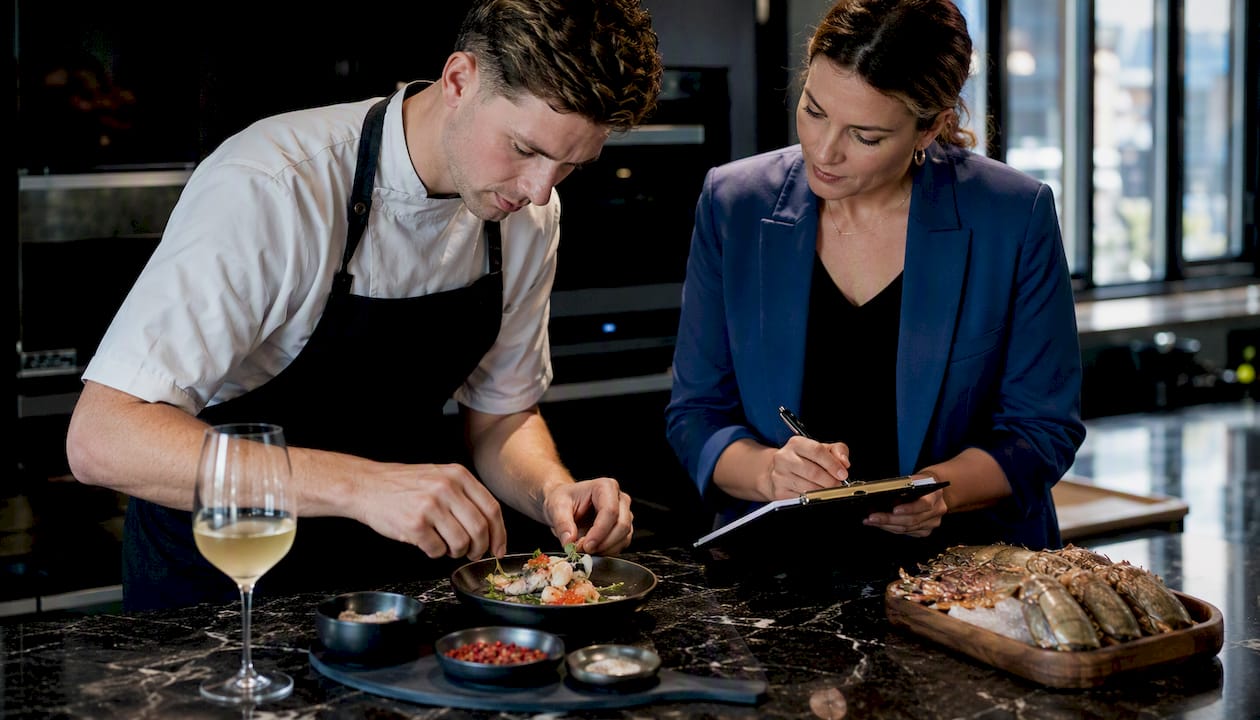
- One to two weeks out: Conduct a scaled service simulation with the actual ingredient batch, validating texture, seasoning response and plating timing before the event.
- a tight window of a few days out: Confirm harvest-day dispatch for ultra-perishable items and brief your service team on on-site handling protocols.
The service simulation step is the one most planners skip and most regret. Professional ingredient selection evaluates naturalistic quality and functional performance under service conditions, not just sensory appeal at the point of purchase. A truffle that performs beautifully in a cold kitchen may lose half its aromatic intensity under event-scale heat and movement.
Pro Tip: Run a mini-trial with a small quantity of the actual batch, plated and served under conditions that replicate your event. This is the single most reliable way to avoid a last-minute substitution.
How does Aptent source and vet seasonal luxury ingredients?
Provenance and traceability are not optional extras for ultra-high-net-worth clients; they are primary purchase drivers. Aptent’s sourcing process begins with producer-level relationships, not wholesale catalogues, which means each ingredient arrives with a provenance dossier covering harvest region, harvest date, production technique and, where applicable, third-party certification.
What to request from any luxury ingredient supplier before confirming an order:
- Harvest region and specific producer name (GPS coordinates for ultra-premium batches)
- Harvest or production date and expected shelf life under correct storage
- Cold-chain handling record from origin to your delivery address
- Relevant certifications: Marine Stewardship Council (MSC) for seafood, Regenerative Organic Certified™ (ROC™) for produce, or direct artisan relationship documentation where formal certification is not applicable
Sustainability concerns are reshaping what counts as luxury. Over-foraging and air-freight carbon footprints have driven a meaningful shift toward hyper-local and cultivated alternatives, and Aptent’s curation reflects that shift. Australian-grown black truffle from Manjimup, for instance, carries a fraction of the transit footprint of its European counterpart while delivering comparable aromatic depth during peak winter season.
Four seasonal tasting menus with pairing notes
These blueprints are designed to be adapted, not followed verbatim. Each centres on one hero ingredient, supported by a short course sequence and wine or Champagne pairing guidance.
Spring: lift and renewal
| Course | Ingredient | Pairing |
|---|---|---|
| Amuse | Finger lime pearls on cultured cream | Blanc de Blancs Champagne |
| First | Heirloom rice congee, wild herb oil | Aged Chablis Premier Cru |
| Second | Light caviar service (30g Baeri) | Vintage Champagne |
| Dessert | Meyer lemon tart, finger lime gel | Late-harvest Riesling |
Portion guidance: caviar courses served in modest portions suitable for tasting formats.
Summer: freshness and contrast
The hero here is seasonal crustacea, ideally Moreton Bay bug, paired with bottarga’s salty, umami counterpoint to create vivid contrast without heaviness. A light tropical citrus dressing ties the arc together. Pair with a mineral-driven Vermentino or a young vintage Blanc de Blancs.
Autumn: roasted depth
Black autumn truffle (Tuber aestivum) shaved over aged butter pasta, followed by a pine mushroom and preserved fig course, delivers the season’s characteristic warmth. Hoshigaki, with its concentrated sweetness, makes an elegant pre-dessert. Pair with a Burgundy-style Pinot Noir or a structured Chardonnay. Portion guidance: small quantities of truffle per guest suffice for tasting courses.
Winter: concentration and opulence
White winter truffle (Tuber magnatum) finishing over slow-cooked veal or aged risotto is the pinnacle of the winter menu. Pair the caviar course with Aptent’s vintage Champagne for a pairing that balances the truffle’s intensity with fine bead and autolytic depth. A high-quality fortified wine, such as a vintage Tawny, closes the sequence with appropriate density.
Practical checklist for booking hyper-seasonal luxury ingredients
- Establish your event date and season before any supplier conversation. The season determines which ingredients are biologically available and which require import logistics.
- Book cultivated rarities 6–12 months out. Australian black truffle allocations and premium caviar reserves are negotiated this far in advance through established broker relationships.
- Place options orders for allocated seasonal runs 3–6 months out. Vintage Champagne and aged caviar formats are subject to limited annual production.
- Initiate biosecurity and import documentation 4–6 weeks out for any ingredient crossing an Australian border. The Australian Department of Agriculture, Fisheries and Forestry governs import permits; confirm requirements for your specific items.
- Confirm cold-chain logistics 2–4 weeks out. Specify temperature range (0–4°C for fresh caviar and truffle), packaging type and delivery window.
- Store fragile items correctly on arrival. Fresh truffle: wrapped in paper, stored in an airtight container with dry rice or paper towel, 2–4°C, used within five to seven days. Fresh caviar: unopened at 0–2°C, consumed within the supplier’s stated window.
- Prepare contingency substitutes by category. If white truffle is unavailable, Australian black winter truffle is the closest sensory substitute. If fresh caviar is delayed, a cultivated alternative maintains the course’s integrity.
- Insure high-value shipments. For orders exceeding a material threshold, specialist perishable goods insurance covers transit loss and temperature excursion.
Key takeaways
A seasonal luxury ingredient calendar is most valuable when it drives booking decisions, not just menu inspiration — the rarest items require commitments made months before the event date.
| Point | Details |
|---|---|
| White truffle window is narrow | Tuber magnatum peaks June–August in Australia; secure allocations at least 4–6 months in advance. |
| Lead times vary by category | Cultivated rarities need 6–12 months; allocated seasonal runs need 3–6 months; fresh harvest logistics need a tight window of a few days. |
| Provenance dossiers matter | Request harvest region, harvest date, producer name and relevant certification before confirming any order. |
| Service simulation prevents failure | Chef-test the actual ingredient batch under event conditions before the event date to validate texture and plating. |
| Aptent is the specialist partner | Contact Aptent with your event date, guest count and hero ingredient to receive a seasonal availability check and curated supply options. |
Why provenance is the real luxury, not rarity
The conventional wisdom holds that luxury ingredients derive their value from scarcity. That framing is increasingly incomplete. The most memorable private tastings Aptent has observed are not those built around the most expensive item on the table, but those where every ingredient arrives with a story the host can share with their guests: the Manjimup truffle harvested three days prior, the caviar drawn from a producer whose methods have remained unchanged for a generation. Provenance, told well, is the experience. Rarity is merely the entry condition.
Sustainability reinforces this. Cultivated proteins and controlled-environment agriculture are producing luxury-grade flavours with a fraction of the ecological cost of wild-harvested equivalents. Choosing these options is not a compromise; for a discerning guest who understands the food system, it is a mark of sophistication. The seasonal luxury ingredient calendar, used well, is as much an ethical document as a logistical one.
Aptent’s curated supply and boutique event services
For planners and private hosts who want the assurance of chef-tested ingredients and end-to-end cold-chain management, Aptent offers a level of curation that goes well beyond standard gourmet retail. The offering spans curated ingredient supply for private events, boutique tasting event design and execution, bespoke seasonal menus, and the accessories that complete the service, from caviar spoons to truffle slicers available through the Laval collection.
For caviar, Aptent’s Baeri and Oscietre Signature ranges are available in formats from 30g to 250g, suited to intimate tastings through to large-format dinners. Vintage Champagne pairings are available to complement any caviar course. Lead times for allocated items are finite; the earlier an enquiry is placed, the greater the selection available. To begin, visit Aptent’s gourmet events page and submit an enquiry with your event date, guest numbers and preferred seasonal hero ingredient.
Useful sources and further reading
Aptent’s own editorial resources offer the deepest pairing and event-planning guidance for Australian hosts:
- Why wine pairing elevates events — a host’s guide to building a pairing narrative across courses
- Pairing caviar with Champagne — expert guidance on matching caviar grades to Champagne styles
- How caviar pairing menus work — tasting formats, service flow and portion guidance
- Types of caviar tasting events — event format options from intimate flights to large-format dinners
For provenance verification and sustainability context, The Chef Agency’s guidance on sourcing for ultra-exclusive clients and Luuxly’s overview of ethical rare ingredient sourcing offer authoritative external perspectives on what to request from suppliers and how to evaluate their claims.


