
What is an amuse-bouche? Definition, origin and etiquette
An amuse-bouche (pronounced /əˌmjuːz ˈbuːʃ/, or simply ah-myooz boosh) is a single, bite-sized hors d’oeuvre offered complimentary by the chef at the start of a meal, before any ordered course arrives. The term is pure French: amuser means “to amuse” and bouche means “mouth,” giving the literal translation “mouth amuser” — a name that captures both the playfulness and the purpose of the gesture. You do not order it, you do not pay for it separately, and the entire table receives the same morsel at the same time.
Table of Contents
- How restaurants serve an amuse-bouche
- How an amuse-bouche differs from hors d’oeuvres, canapés and starters
- Alternate names, plural forms and how to say them correctly
- How Australians encounter amuse-bouches
- Why chefs value the amuse-bouche: creativity and physiology
- Key takeaways
- The amuse-bouche as a philosophy of refinement
- Curate your own amuse-bouche experience with Aptent
- Useful sources
How restaurants serve an amuse-bouche
The amuse-bouche arrives after you are seated but before any ordered course, typically within minutes of the first drinks being poured. It is chef-selected for the entire table, meaning every guest receives the same preparation simultaneously — a logistical feat that requires dedicated kitchen prep stations and precise timing.
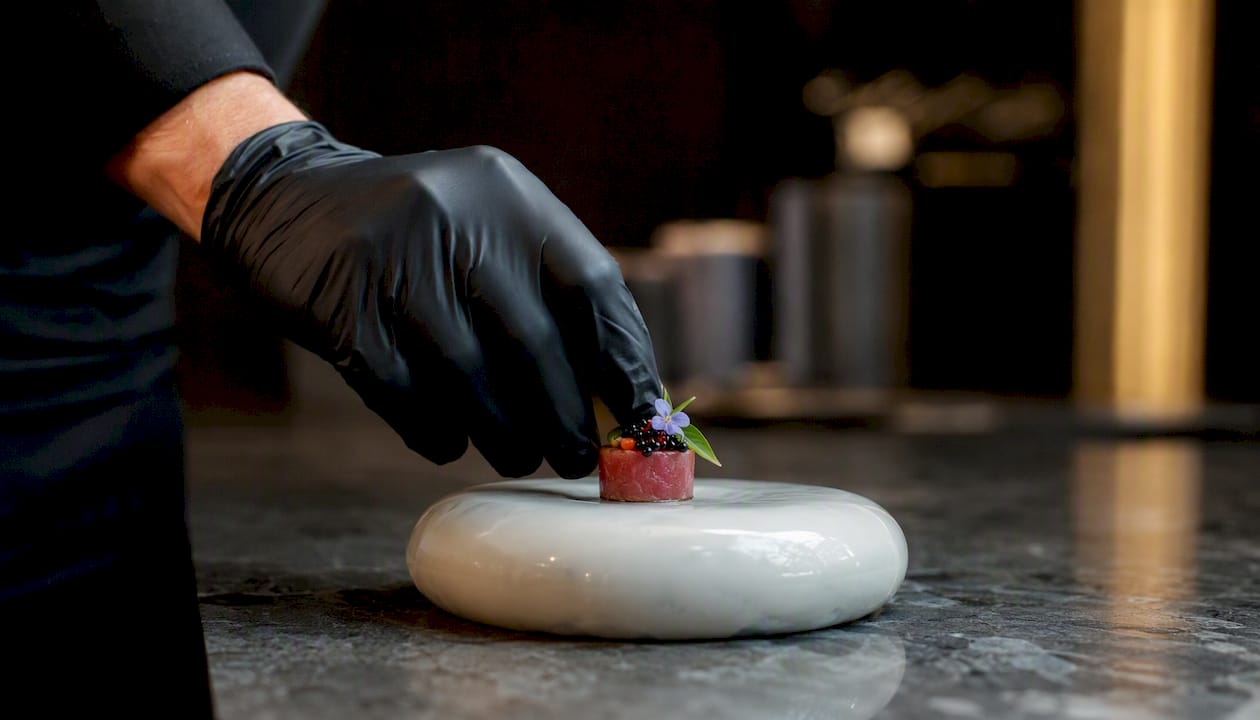
Portion sizes are deliberately restrained: most are one to two bites. On extended tasting menus, however, a sequence of six or seven distinct amuse-bouches may open the meal, each arriving in succession to build anticipation.
Presentation is part of the theatre:
- Demitasse cups or shot glasses for warm broths and velouté
- Japanese ceramic spoons or slate tiles for mousses and gels
- Foraged leaves, river stones, or custom-cast vessels for avant-garde plating
- Miniature brioche or blini bases for cured fish or caviar preparations
Pro Tip: If the amuse-bouche arrives on a spoon balanced across a small bowl, pick up the spoon and consume the entire portion in one movement — the chef has calibrated the flavour to land as a single, complete impression.
How an amuse-bouche differs from hors d’oeuvres, canapés and starters
The clearest distinction is one of agency. An amuse-bouche is chosen by the chef, offered without charge, and served to every diner at the table without any input from the guest. A starter or appetiser, by contrast, is selected and ordered by the diner from the menu and billed accordingly.
| Term | Who chooses it | Charged? | Occasion | Size |
|---|---|---|---|---|
| Amuse-bouche | Chef | No | Fine dining, tasting menus | one to two bites |
| Hors d’oeuvre | Diner (or host) | Usually yes | Pre-dinner receptions | Varies |
| Canapé | Host or caterer | Included in event cost | Cocktail parties, receptions | one to two bites |
| Starter / appetiser | Diner | Yes | Any restaurant | Full small plate |
Canapés occupy a middle ground: they are bite-sized and often passed on trays at receptions, but they are chosen by the host or caterer rather than a chef expressing a culinary vision. The amuse-bouche, by contrast, is an act of authorship — a declaration of the kitchen’s sensibility before the meal proper begins.
Alternate names, plural forms and how to say them correctly
The term appears in several forms across menus and culinary writing:
- Amuse-bouche — (singular): the standard menu and editorial form.
Pronunciation note: the Oxford Advanced Learner’s Dictionary gives the IPA as /əˌmjuːz ˈbuːʃ/. In a dining context, a confident ah-myooz boosh is entirely appropriate and will be understood by any sommelier or maître d’.
How Australians encounter amuse-bouches
In Australia, the amuse-bouche is most reliably found at restaurants offering structured tasting menus, particularly in Sydney, Melbourne, Brisbane, and Perth’s inner-city fine-dining precincts. Establishments operating in the tradition of Michelin-style hospitality — even where the Michelin Guide itself does not operate — routinely open their tasting sequences with one or more complimentary bites.
Private tasting events and corporate dining experiences are another context where the amuse-bouche appears with regularity, often paired with a Champagne Brut Rosé or a delicate blanc de blancs to set the register for the evening.
When booking a tasting menu in Australia, it is worth confirming whether the restaurant includes an amuse-bouche sequence, as some venues list it separately in their menu descriptions. Communicating dietary restrictions at the time of reservation — rather than on arrival — gives the kitchen sufficient notice to prepare an alternative without disrupting the synchronised service that the course demands.
Why chefs value the amuse-bouche: creativity and physiology
Fine-dining chefs regard the amuse-bouche as what the Michelin Guide describes as a “gastronomic sketch pad” — a low-stakes canvas for testing avant-garde techniques and flavour pairings that may not yet belong on the set menu. Because every guest receives the same preparation, the kitchen can assess a new technique under real service conditions without the commercial risk of featuring it as a paid course.
There is also a measurable physiological dimension. Small, flavour-packed bites stimulate saliva production and sharpen appetite, performing both a physiological and psychological role in preparing the palate for the courses that follow. The intensity of flavour in a single spoonful of, say, a smoked eel mousse or a truffle consommé triggers the digestive system’s anticipatory response in a way that a bread roll simply cannot.
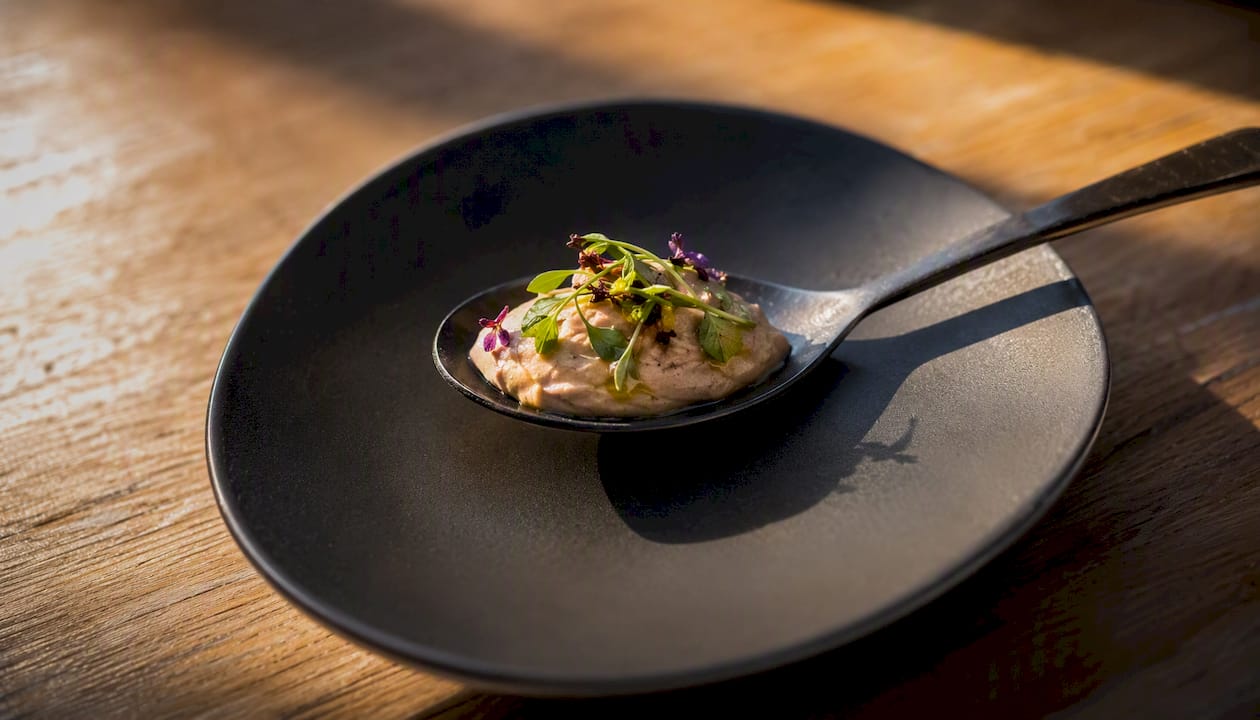
Operationally, the amuse-bouche demands considerable kitchen discipline. A dedicated prep station, specialised serving ware, and a precisely timed pass ensure that every guest at every table receives a fresh, correctly tempered morsel at the same moment — a choreography that reveals as much about a kitchen’s rigour as the food itself does.
Pro Tip: When an amuse-bouche features an unusual technique — a gel, a foam, or a temperature contrast — it often signals that the chef is trialling something new. Pay attention: you may be tasting a dish that will appear on next season’s menu.
Key takeaways
An amuse-bouche is a complimentary, chef-selected, single-bite hors d’oeuvre that opens a fine-dining meal to prepare the palate and reveal the kitchen’s culinary character.
| Point | Details |
|---|---|
| Definition and origin | A complimentary, chef-selected bite rooted in 1970s French nouvelle cuisine, literally meaning “mouth amuser.” |
| Portion and service | Typically one to two bites; tasting menus may open with sequences of six or seven amuse-bouches, served synchronised to all guests. |
| Distinct from starters | Unlike appetisers, the amuse-bouche is not ordered or charged — the chef chooses it for every diner. |
| Eating etiquette | Consume in one or two bites as served; alert staff to dietary needs at booking, not at the table. |
| Aptent’s connection | Aptent curates premium caviar and champagne suited to amuse-bouche presentations and private tasting events in Australia. |
The amuse-bouche as a philosophy of refinement
At Aptent, the amuse-bouche represents something beyond a culinary formality. It embodies the conviction that the finest dining experiences are built from a succession of considered, precise moments — each one a deliberate expression of craft and hospitality. A single bite of impeccably sourced caviar on a warm blini, paired with a well-chosen champagne, carries the same communicative power as an entire tasting menu: it tells you, without words, that every detail has been attended to. That philosophy of curated refinement is precisely what guides Aptent’s selection of gourmet products and private event experiences.
Curate your own amuse-bouche experience with Aptent
For those who wish to recreate the elegance of a fine-dining opening at home or at a private gathering, Aptent offers a curated selection of the ingredients that define the form at its most distinguished.
The Baeri Signature Caviar and Oscietre Signature Caviar — sourced from prestigious producers and delivered to your door — provide the kind of ingredient that transforms a simple blini or potato crisp into a genuine amuse-bouche. Paired with a bottle from Aptent’s champagne collection, the result is an opening gesture of real distinction. For those seeking a fully orchestrated experience, Aptent’s private gourmet events bring a bespoke tasting sequence to your venue, with every detail — from serving ware to wine pairing — arranged with care. View the full collection at Aptent Gourmet and enquire about availability for your next occasion.
Useful sources
| Source | What it contributes |
|---|---|
| Michelin Guide — Kitchen Language: What is Amuse Bouche? | Definition, nouvelle cuisine history, chef perspective, portion sizes, and the physiological role of palate stimulation. |
| Wikipedia — Amuse-bouche | Concise definition, chef-selected and complimentary nature, operational logistics, and the amuse-gueule linguistic note. |
| Oxford Advanced Learner’s Dictionary | IPA pronunciation (/əˌmjuːz ˈbuːʃ/) and literal translation “mouth amuser.” |
| Cambridge Dictionary | Short definition, plural forms (amuse-bouches), and usage notes. |
| Tasting Table — Amuse-bouches vs appetisers | Editorial distinction between amuse-bouche and other small bites, emphasising chef-driven versus diner-ordered. |
| Chef Q Trainer — 10 Types of Amuse-Bouche | Practical examples, format categories, and portion-size guidance (35–50 g). |
| Collins Dictionary — Amuse-bouche | Authoritative short definition corroborating other major dictionaries. |


