
Why food authenticity matters for guests: a host's guide
Food authenticity is the single most powerful lever a host can pull to build guest trust, justify a price premium, and earn the repeat visits that sustain a reputation. When guests sense that what they are eating is genuinely what it claims to be, their satisfaction deepens, their willingness to pay rises, and the experience becomes memorable rather than merely pleasant.
Three actions to take immediately:
- Verify provenance claims on your highest-value ingredients before your next service, starting with olive oil, seafood, and any labelled regional cheese or spice.
- Equip every front-of-house staff member with a brief provenance script they can deliver naturally when a guest asks about a dish.
- Display origin information on the menu itself, even a single line such as “Tasmanian Atlantic salmon, sourced from [producer]” signals transparency before a word is spoken.
The sections below unpack the evidence behind these actions, the cues guests actually notice, the legal framework that governs authenticity claims in Australia, and a nine-step operational checklist you can put to work immediately.
Key takeaways
Perceived authenticity is the most reliable driver of guest trust, price premium, and repeat visits in both luxury and everyday dining contexts.
| Point | Details |
|---|---|
| Authenticity drives commercial outcomes | Guests rate authentic restaurants higher and spend more, making provenance investment a revenue driver. |
| Multiple cues work together | Origin labelling, producer stories, traditional technique, and staff storytelling each reinforce authenticity perception. |
| Fraud risk is concentrated | Olive oil, seafood, dairy, spices, and honey are the highest-risk categories requiring active verification. |
| Australian law sets a clear standard | FSANZ labelling rules and Australian Consumer Law prohibit misleading provenance claims, even unintentional ones. |
| Aptent curates verified provenance | Aptent’s luxury gourmet collection and private event services provide traceable, documented provenance for discerning hosts. |
Table of Contents
- Why food authenticity matters to guests: the evidence
- How authenticity shapes guest satisfaction, loyalty and price perception
- What cues do guests actually use to judge authenticity?
- What are the risks when authenticity claims fall short?
- How is food authenticity actually verified?
- How do Australian rules govern food authenticity claims?
- What does the research say about authenticity and guest response?
- A nine-step checklist for hosts to signal and verify authenticity
- Authenticity as a long-term business strategy
- Curated provenance, delivered for your next event
- Sources
Why food authenticity matters to guests: the evidence
Food authenticity, as a concept studied across hospitality and gastronomy research, is the perceived degree to which a food product or dining experience is genuine, unaltered, and true to its claimed origin, method, and character. For guests, it operates as a form of trust currency: when authenticity is present and visible, it raises perceived quality; when it is absent or doubted, the entire experience deflates.
Authenticity as scholars define it is a multi-dimensional construct. Research in gastronomy and tourism identifies four practical dimensions that hosts need to hold in mind simultaneously. The first is provenance: where an ingredient was grown, raised, or caught, and by whom. The second is production method: whether traditional, artisanal, or certified techniques were used. The third is ingredient integrity: that the product is what it claims to be, free from substitution or adulteration. The fourth is sensory and cultural cues: the flavours, textures, presentation, and storytelling that connect a dish to a place or tradition.
These dimensions rarely operate in isolation. A Comté cheese served at a luxury dinner, for instance, draws its authenticity from all four at once: its Appellation d’Origine Protégée status (provenance), the traditional copper vat affinage (production method), the absence of any non-milk additives (ingredient integrity), and the nutty, crystalline character that guests recognise as distinctively Comté (sensory cue). When a host presents that cheese with a brief note on its origin and ageing, the guest’s perception of value rises before the first taste.
How authenticity shapes guest satisfaction, loyalty and price perception
Perceived authenticity consistently increases guest satisfaction, willingness to pay, and the likelihood of a return visit. Empirical findings from Stanford GSB show that consumers often give higher ratings to restaurants they consider authentic, and that authenticity cues can outrank other quality signals in guest judgements. This is not a marginal effect: for discerning guests at premium events, authenticity can be the deciding factor between a good experience and an exceptional one.
Research classifying consumer authenticity judgements into multiple cue groups confirms that guests do not evaluate authenticity as a single impression. They weigh connections to history and place, conformity to category knowledge (does this dish behave the way a genuine version of it should?), deliberate and credible deviation, and inherent quality characteristics. Hosts who understand this framework can design experiences that satisfy several cue groups at once, rather than relying on a single provenance claim.
“Perceived local food authenticity influences perceived restaurant quality, place attachment and tourist satisfaction” — a 2026 study on authenticity and sustainable tourism linking authenticity directly to loyalty outcomes.
The commercial logic is clear. Guests who feel they have encountered something genuinely rare and traceable spend more, return more often, and generate the kind of word-of-mouth that no advertising budget can replicate. Research on online restaurant reviews finds that provenance stories, unique naming, and rare ingredients function as authenticity cues that measurably increase purchase intention. For hosts operating in luxury and events contexts, these are not decorative details: they are commercial assets.
The business-impact case, distilled:
- Trust: Guests who believe provenance claims are accurate extend trust to the entire experience, including service and pricing.
- Perceived quality: Authenticity cues raise quality perceptions independently of the food’s objective characteristics.
- Memorability: A dish anchored to a specific place or producer is far more likely to be recalled and recounted than a generic equivalent.
- Repeat visits and loyalty: Authenticity links to place attachment and destination loyalty, meaning guests return not just for the food but for the feeling of connection it creates.
What cues do guests actually use to judge authenticity?
Guests form authenticity judgements rapidly and often unconsciously, drawing on a cluster of visible and sensory signals. Hospitality research identifies several cue groups that hosts can actively manage.
Origin labelling and geographic specificity
A menu that names a region, producer, or certification (“Périgord black truffle,” “King Island dairy,” “MSC-certified barramundi”) signals that the host has thought carefully about sourcing. Vague descriptors like “imported cheese” or “fresh fish” carry almost no authenticity weight.
Ingredient specificity and rarity
Naming a specific variety, grade, or species raises perceived authenticity considerably. Stories about unique naming and rare ingredients have been shown to increase authenticity perceptions and purchase intention in hospitality settings. A rare vintage wine described with its appellation and vintage year reads as authentic; the same wine described only as “red” does not.
Producer stories and provenance narratives
A brief story about who grew, caught, or aged an ingredient transforms a commodity into a character. This does not require a paragraph on the menu: a single sentence connecting an ingredient to a named farm or artisan is enough to shift perception.

Traditional technique as a visible signal
When a preparation method is itself part of the authenticity claim, naming it matters. “Slow-fermented sourdough,” “hand-rolled pasta,” or “aged in French oak for 18 months” each invoke a tradition that guests can verify through taste. Classical French culinary techniques, for instance, carry immediate credibility with guests who recognise them.
Sensory markers and congruence
Guests cross-check authenticity claims against what they taste, smell, and see. A caviar described as “buttery and briny with a clean finish” had better deliver exactly that. Sensory incongruence, where the product does not match its description, is one of the fastest routes to lost trust.
Staff storytelling and confident delivery
A server who can speak knowledgeably about an ingredient’s origin, without reading from a card, elevates the entire experience. Research on authenticity dimensions confirms that guests use staff confidence and specificity as authenticity proxies.
Menu language and visual cues
Provenance statements, producer logos, and certification marks on menus function as physical evidence of authenticity claims. Even a small “Certified Australian” or PDO symbol carries weight with guests who recognise it.
Luxury example: At a private caviar tasting, presenting Oscietre Signature Caviar with a card naming the sturgeon species, farm location, and harvest season, alongside tasting notes describing its nutty richness and golden hue, satisfies provenance, ingredient specificity, sensory congruence, and producer story cues simultaneously.
Casual example: A neighbourhood bistro listing “Gippsland grass-fed beef, sourced from [farm name]” on a burger menu achieves the same multi-cue effect at a fraction of the complexity.
Pro Tip: Draft a 30-word server script for each hero ingredient: “[Ingredient] comes from [producer/region], where it is [brief method]. It has [one sensory note].” Rehearse it until it sounds conversational, not recited.
What are the risks when authenticity claims fall short?
The consequences of weak, misleading, or fraudulent authenticity claims fall into three categories: reputational damage, regulatory and legal exposure, and, in cases involving adulterants, direct health and safety risk.
Reputational damage is the fastest to materialise. A single social media post from a guest who discovers that the “hand-dived scallops” were farmed, or that the “extra virgin olive oil” was blended with refined oil, can reach thousands of potential customers within hours. Industry guidance from USP is explicit: protecting brand reputation through verified origin testing is a strategic business requirement, not merely a technical control.
The business consequences of inauthenticity include:
- Negative reviews and public reputational damage that persists in search results long after the incident.
- Loss of loyal customers who feel deceived, with no straightforward path to recovery.
- Regulatory fines and enforcement action under Australian Consumer Law for misleading representations.
- Supplier termination if a host is found to have passed on fraudulent claims without due diligence.
- Insurance complications and recall costs if a mislabelled product causes an adverse reaction.
“Food fraud is not a niche concern. Olive oil, seafood, dairy, spices, honey, and saffron are repeatedly flagged in international databases as the commodity groups most vulnerable to adulteration and mislabelling” — a finding consistent across multiple authentication studies and comprehensive reviews of food authentication methods.
The fraud-vulnerable categories every host should prioritise:
- Olive oil: Frequently diluted with cheaper oils or mislabelled as extra virgin when it does not meet the standard.
- Seafood: Species substitution is widespread; cheaper fish are regularly sold under premium names.
- Dairy and cheese: Protected designation cheeses (Parmigiano-Reggiano, Roquefort) are commonly imitated with inferior products carrying similar names.
- Spices: Saffron, paprika, and turmeric are among the most adulterated commodities globally, often cut with cheaper colourants.
- Honey: Blending with sugar syrups and mislabelling geographic origin are persistent problems.
Even unintentional mislabelling carries legal risk. A host who relies on a supplier’s claim without verification, and then passes that claim to guests, may still face enforcement action if the claim proves false. The standard of care under Australian Consumer Law does not distinguish between deliberate fraud and negligent misrepresentation.
How is food authenticity actually verified?
Verification ranges from straightforward provenance documentation and supplier audits to sophisticated laboratory techniques, and the appropriate level of scrutiny depends on the ingredient’s value, fraud risk, and the strength of the claim being made.
For most hosts, the verification hierarchy looks like this: start with supplier documentation, escalate to third-party certification, and reserve laboratory testing for high-value or high-risk ingredients where provenance is material to price or safety.
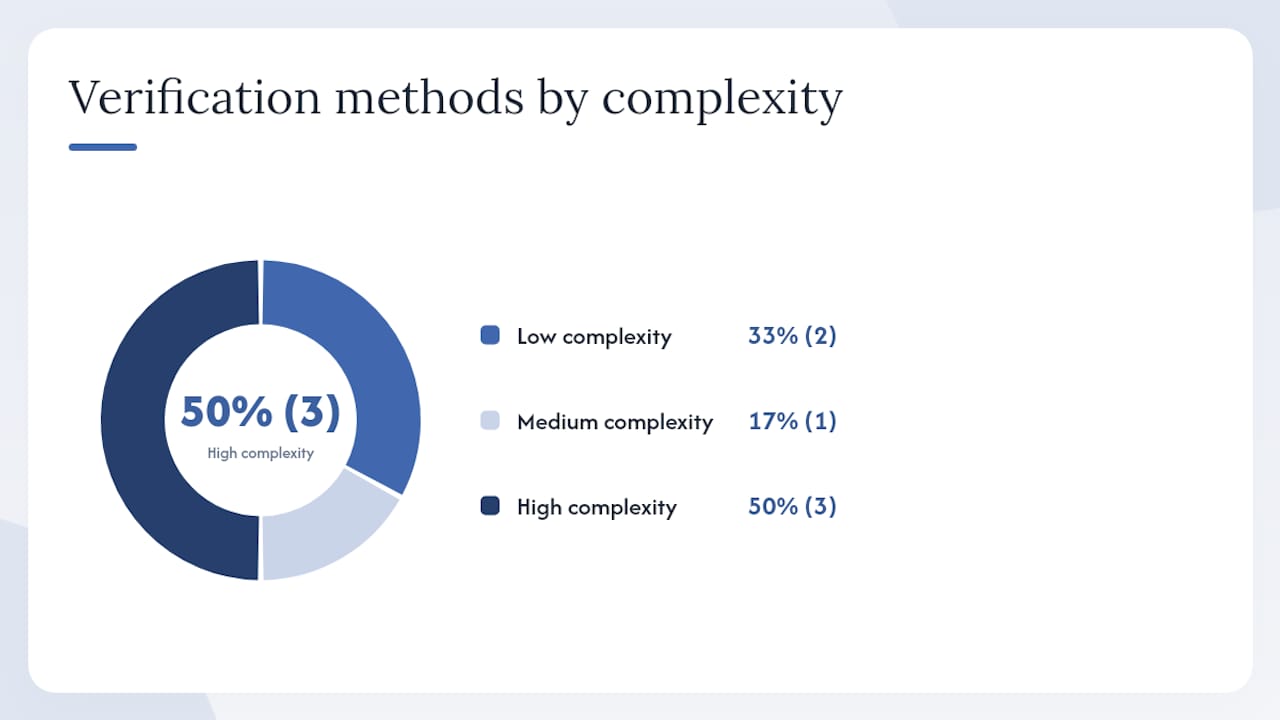
| Method | What it verifies | Complexity | When to use |
|---|---|---|---|
| Supplier audit and documentation | Chain of custody, certificates of origin, production records | Low | Routine sourcing for all ingredients |
| Third-party certification and labels | Compliance with a named standard (PDO, MSC, organic, Halal) | Low | When a certification claim is made to guests |
| Rapid on-site screening (near-infrared, colourimetry) | Broad anomaly detection, adulteration screening | Medium | High-risk commodities: olive oil, spices, honey |
| DNA analysis | Species identification, variety verification | High | Seafood species claims, meat provenance, truffle authenticity |
| Isotope ratio analysis | Geographic origin verification | High | Premium wines, olive oil, honey, dairy |
| Spectroscopy and metabolomics | Composition profiling, adulteration detection | High | Legal-grade verification for premium or safety-critical products |
A comprehensive review of food authentication techniques confirms that DNA analysis, isotope ratios, spectroscopy, and metabolomics each verify different aspects of a food’s identity, and that the choice of method depends on what claim is being tested. A 2024 review in Comprehensive Reviews in Food Science and Food Safety adds that these techniques are growing in importance precisely because mislabelling is so prevalent in high-value commodity groups.
Pro Tip: Escalate from supplier paperwork to laboratory testing when three conditions align: the ingredient commands a significant price premium, it appears on a fraud-vulnerable list (olive oil, seafood, saffron, honey), and you are making a specific provenance claim to guests. One targeted test per season on your highest-risk ingredient is a proportionate and defensible practice.
How do Australian rules govern food authenticity claims?
In Australia, authenticity claims are governed by a framework of food standards, consumer law, and industry-specific schemes that hosts must understand before making any provenance representation to guests.
Food Standards Australia New Zealand (FSANZ) sets the mandatory labelling requirements that underpin authenticity claims, including country-of-origin labelling for most food categories sold at retail. The Australian Consumer Law (ACL), administered by the ACCC, prohibits misleading or deceptive conduct in trade, which extends to false or unsubstantiated provenance claims made verbally, on menus, or in marketing materials. Wine Australia administers the Geographical Indications system for Australian wine, which legally protects regional designations such as Barossa Valley, Coonawarra, and Margaret River.
Practical compliance checks before making any authenticity claim:
- Use the exact country-of-origin wording required by FSANZ standards; “Product of Australia” and “Made in Australia” carry different legal meanings and are not interchangeable.
- Confirm that any third-party certification mark displayed (organic, MSC, Halal, PDO) is current and applies to the specific batch or product being served.
- Avoid ambiguous descriptors such as “artisan,” “traditional,” or “authentic” unless you can substantiate the claim with documentation; the ACCC has taken action against businesses for unsubstantiated quality and origin claims.
- For imported premium products (French champagne, Italian truffles, Spanish saffron), verify that the supplier’s documentation matches the product’s claimed designation of origin.
- Maintain a supplier file with certificates, invoices, and any relevant third-party audit reports; this is your primary defence in any compliance inquiry.
Provenance schemes and labels that Australian guests recognise and value include the Australian Made, Australian Grown logo, FSANZ country-of-origin labels, Certified Australian Angus Beef, and the Marine Stewardship Council (MSC) certification for seafood. For wine, displaying a Wine Australia Geographical Indication on the label or menu carries immediate credibility with knowledgeable guests.
What does the research say about authenticity and guest response?
Across academic and industry studies, the consistent finding is that perceived authenticity increases guest satisfaction, willingness to pay, and loyalty, and that these effects are strongest when multiple authenticity cues are present simultaneously.
Research on how consumers perceive authenticity in restaurants demonstrates that provenance stories, rare ingredient naming, and origin specificity each independently raise authenticity perceptions and purchase intention. The effect is amplified when staff can articulate the story confidently. Stanford GSB research adds that authenticity can function as a strategic differentiator, with authentic restaurants consistently outperforming less authentic competitors on guest ratings.
The 2026 sustainable tourism study linking perceived local food authenticity to restaurant quality perceptions, place attachment, and tourist satisfaction is particularly relevant for event hosts and destination dining experiences: authenticity does not merely improve a single visit, it creates the emotional connection that brings guests back and generates referrals. The role of local cuisine in building that connection is well-documented in food tourism research, where authentic regional dishes consistently rank among the most memorable elements of a travel experience.
For practitioners, the implication is direct: investment in provenance verification, staff training, and menu transparency is not a cost centre. It is a revenue driver with measurable effects on guest satisfaction scores, average spend, and return visit rates. Gastronomy trends in 2026 confirm that provenance transparency and ingredient traceability are now among the top priorities for discerning diners, making authenticity investment more commercially urgent than ever.
A nine-step checklist for hosts to signal and verify authenticity
This checklist translates the article’s principles into an operational sequence, moving from sourcing and verification through to guest-facing communication.
-
Audit your highest-risk ingredients. Identify every product on your menu that carries a provenance claim or commands a premium price. Olive oil, seafood, aged cheeses, spices, honey, and premium wines are the priority categories.
-
Request certificates and documentation from suppliers. For each high-risk ingredient, obtain a certificate of origin, a third-party certification document, or a supplier audit report. File these and review them at each reorder.
-
Cross-check labelling against FSANZ and ACL requirements. Confirm that country-of-origin wording on menus and packaging meets the legal standard, and that any certification marks displayed are current.
-
Draft a 25–40 word provenance script for each hero ingredient. Write it in plain, conversational language and give it to every front-of-house team member. See the template below.
-
Update your menu to include origin information. Add at minimum the country or region of origin and the producer name for your premium ingredients. A well-curated wine list with appellation and vintage details is one of the most effective authenticity signals in a luxury setting.
-
Train staff to deliver provenance scripts naturally. Run a brief rehearsal before each service. Staff who sound confident and specific are themselves an authenticity cue for guests.
-
Use visual cues on the table or at the pass. Producer cards, certification logos, and origin maps placed near a dish or at the table reinforce menu claims without requiring a verbal exchange.
-
Schedule periodic spot-testing for your highest-risk commodities. One targeted laboratory test per season on olive oil, saffron, or your premium seafood is a proportionate investment that protects both guests and reputation. Align this with seasonal sourcing planning to catch substitutions at the point of supply change.
-
Communicate transparently when substitutions occur. If a supplier cannot deliver the named product and a substitute is used, update the menu and brief staff. Guests who are told honestly about a change respond far better than guests who discover a discrepancy themselves.
Pro Tip: Keep your provenance scripts to one sentence per ingredient. The format “This [ingredient] comes from [producer/region], where it is [brief method]. It has [one sensory note]” takes under 20 seconds to deliver and answers the three questions guests most commonly ask.
Server script template: “Our [ingredient] comes from [producer name] in [region/country], where it is [production method, e.g. hand-harvested / aged for 18 months / sustainably caught]. You’ll notice [one sensory characteristic, e.g. its clean, briny finish / its deep amber colour].”
Authenticity as a long-term business strategy
At Aptent, authenticity is not a marketing position: it is the operational foundation on which every sourcing decision, supplier relationship, and guest experience is built. The evidence assembled here makes the commercial case plainly. Guests who encounter verified, well-communicated provenance spend more, return more often, and speak about the experience in ways that attract the next generation of discerning clientele.
In luxury and events contexts, this logic is even more acute. A guest who has paid for a rare caviar tasting or a curated wine dinner is not simply purchasing food: they are purchasing the assurance that what they are experiencing is genuinely what it claims to be. When that assurance is delivered through traceable sourcing, knowledgeable staff, and transparent menu language, the experience transcends the meal itself and becomes a memory worth sharing. The hosts and restaurateurs who invest in provenance verification and authenticity communication today are building the reputations that will define their businesses for the next decade.
Curated provenance, delivered for your next event
For hosts who want the assurance of verified provenance without the burden of managing supplier audits and certification checks across dozens of ingredients, Aptent offers a curated selection of luxury gourmet products sourced directly from prestigious producers, each chosen for the integrity of its origin and the refinement of its character.
Whether you are planning a private tasting, a corporate dinner, or a boutique event for discerning guests, Aptent’s Baeri Signature Caviar and Oscietre Signature Caviar arrive with full provenance documentation, ready to serve with confidence. Every product in the collection has been selected with the same rigour this article recommends: verified origin, traceable supply chain, and sensory character that speaks for itself. Explore the full collection and private event services at Aptent Gourmet, and contact the team to discuss a bespoke tasting experience tailored to your guests.
Sources
The following authorities and studies provide the deepest detail for hosts seeking compliance guidance or academic grounding for authenticity investment decisions.
Food Standards Australia New Zealand (FSANZ) — www.foodstandards.gov.au. The primary regulatory body for food labelling in Australia, including country-of-origin requirements. Relevant to Section 7.
Australian Competition and Consumer Commission (ACCC) — www.accc.gov.au. Administers the Australian Consumer Law and has published guidance on misleading food claims. Relevant to Sections 5 and 7.
Wine Australia — www.wineaustralia.com. Administers Geographical Indications for Australian wine and provides labelling guidance for wine provenance claims. Relevant to Section 7.
Food authentication and origin testing: review (PMC/NCBI) — pmc.ncbi.nlm.nih.gov/articles/PMC10314130. Comprehensive technical review of DNA, isotope, spectroscopy, and metabolomics methods. Relevant to Section 6.
Food authentication and contamination: Comprehensive review (2024, IFT) — ift.onlinelibrary.wiley.com. Covers mislabelling detection and the growing importance of authentication for producers and hosts. Relevant to Sections 5 and 6.
USP Leader’s guide to food authenticity and fraud mitigation — usp.org. Industry whitepaper on vulnerability assessments and supplier accountability. Relevant to Sections 5 and 9.
Special issue: Food identity, authenticity and fraud (Foods, MDPI) — mdpi.com. Covers fraud-prone commodity groups and emerging fingerprint methods. Relevant to Section 5.
Authenticity, restaurant quality and place attachment (Sustainable Tourism, 2026) — ideas.repec.org. Links perceived food authenticity to satisfaction and loyalty outcomes. Relevant to Sections 3 and 8.
- Food authentication and origin testing: review (PMC / NCBI)
- Food authentication and contamination are significant concerns: Comprehensive review (2024, Comprehensive Reviews in Food Science and Food Safety)
- Leader’s guide to food authenticity and fraud mitigation (USP whitepaper)
- Special issue: Food identity, authenticity and fraud (Foods, MDPI)
- How consumers perceive authenticity in restaurants: A study of online reviews (International Journal of Hospitality Management)
- Glenn Carroll: How important is authenticity? (Stanford GSB insight)
- How consumers form authenticity perceptions in restaurants (International Journal of Hospitality Management DOI)
- Authenticity, restaurant quality and place attachment (Sustainable Tourism research, 2026)


