
Members-only dining explained: what it means in Australia
Members-only dining restricts access to a venue’s dining facilities to enrolled members and their approved guests, replacing the open-reservation model of a public restaurant with a credentialled, recurring relationship between diner and venue. The experience is defined by four elements worth understanding before you pursue access or membership:
- Access model: entry by membership card, nomination, or invitation, rather than a public booking
- Membership cost or criteria: initiation fees, annual dues, or subscription charges that vary widely by venue type
- Guest rules: limits on how many guests a member may bring, host-responsibility obligations, and visitor sign-in requirements
- Booking priority: members receive reservation preference, often with dedicated windows unavailable to the general public
This article covers what members-only dining means in practical terms, how memberships are structured in Australia, which venues operate this way, and how to gain access whether or not you hold a membership.
Key takeaways
Members-only dining restricts access to enrolled members and their approved guests, replacing open reservations with a credentialled, relationship-driven hospitality model that rewards frequency and community.
| Point | Details |
|---|---|
| Core definition | Access is restricted to enrolled members and approved guests; no public walk-in or open booking. |
| Guest rules | Members host guests within set limits (typically 2–4 per visit) and bear responsibility for their conduct. |
| Fee structure | Costs range from near-nil at RSLs to high initiation fees at private city clubs; annual dues apply at most venues. |
| How to join | Research the club, secure a referee if required, prepare documents, apply, and pay initiation fees upon acceptance. |
| Aptent alternative | Aptent’s private gourmet events deliver tailored tasting experiences per occasion, with no membership commitment required. |
Table of Contents
- What does members-only dining mean, and how does it differ from a public restaurant?
- How memberships are structured: applications, fees and timelines
- Why do venues adopt a members-only model?
- What types of members-only dining venues exist in Australia?
- What should you expect when visiting as a member or guest?
- How do you join a members-only restaurant or gain guest access?
- How membership changes the dining experience: research and practitioner insights
- Is a members-only dining club worth it for most diners?
- Private gourmet experiences without the membership commitment
- Sources
What does members-only dining mean, and how does it differ from a public restaurant?
Members-only dining is a hospitality model in which a venue reserves its dining facilities for a defined group of enrolled members and their authorised guests. The restriction is not merely about exclusivity for its own sake; it reshapes the entire service relationship. Rather than accommodating any diner who books a table, the kitchen and floor staff serve a known, recurring audience whose preferences, dietary requirements, and expectations are already on file.
Three distinct formats operate under this umbrella in Australia. Private members’ clubs restrict access entirely, with no public dining option at any time. Members’ rooms inside larger public venues operate alongside publicly accessible areas, with a dedicated section reserved for members on event days or by prior arrangement. Subscription or invite-only dining collectives charge a recurring fee for access to curated seatings, often at rotating venues, with guest tickets available in limited numbers per event.
The practical differences from a standard public restaurant are considerable:
| Dimension | Members-only dining | Public restaurant |
|---|---|---|
| Access model | Membership card, nomination, or invitation | Open reservation or walk-in |
| Booking process | Priority windows for members; some venues require no booking at all | Competitive booking via phone, app, or third-party platform |
| Service customisation | Preferences recorded; menus tailored to known guests | Standard menu; dietary notes taken per visit |
| Typical cost structure | Initiation fee plus annual dues or subscription, then per-visit spend | Per-visit spend only |
A dining room is likely to be members-only when the venue operates under a club licence rather than a standard restaurant licence, when it is embedded within a sporting or racing club whose membership structure governs all facilities, or when a private investor model funds the space specifically to serve a closed group.
How memberships are structured: applications, fees and timelines
The path to membership varies considerably depending on the venue’s prestige, its commercial model, and how tightly it manages its member community. Most Australian clubs use one of four entry routes: a direct application (common at RSLs and sporting clubs), a nomination or referral system requiring an existing member to sponsor the applicant, a formal invitation from the venue or a founding member, or an open subscription model where anyone may pay to join.
Application and review process
The typical sequence runs: research and identify the club, obtain an application form or online portal access, submit personal details and referee contacts, attend an interview or informal meeting with the membership committee, receive a decision, pay the initiation fee, and receive a membership card or online account. At prestigious city clubs such as The Australian Club in Sydney or The Melbourne Club, the nomination process can take months and requires multiple existing members to vouch for the applicant’s character and professional standing.
Cost shapes across Australian venue types
Fees vary enormously. The table below illustrates typical ranges by venue category; these are indicative examples, not guaranteed prices, and individual clubs set their own schedules.
Bon Appétit’s reporting on private-club dining documents examples of high initiation fees and annual dues at some establishments, and raises the question of whether those costs consistently deliver superior value for the average diner.
Documents commonly requested during application
Preparing these in advance accelerates the process considerably:
- Government-issued photo ID
- Contact details for two or more member referees
- Proof of professional or business affiliation (for corporate or city-club applications)
- A brief personal statement or letter of introduction
- Payment details for the initiation fee upon acceptance
Why do venues adopt a members-only model?
The commercial and hospitality logic behind members-only dining is more nuanced than simple exclusivity. For members, the primary benefits are guaranteed access, personalised service, and a curated community of like-minded diners. Reservation priority alone has real value at venues where public bookings fill weeks in advance. Beyond that, staff who know a member’s wine preferences, dietary restrictions, and preferred table position deliver a qualitatively different experience from the attentive-but-impersonal service of a public restaurant.

For operators, the model solves several persistent hospitality problems at once. Predictable membership revenue smooths cash flow across slow periods. A smaller, known service volume allows tighter inventory control and reduces food waste. Perhaps most significantly, it creates the conditions for genuine culinary ambition.
Operationally, the benefits compound. Menu planning becomes more precise when the kitchen serves a known audience. Seasonal ingredients can be ordered with confidence rather than guesswork. Events and themed dinners can be calibrated to the membership’s demonstrated preferences rather than designed for an anonymous public. The result, as Fine Dining Lovers reports, is that membership reshapes hospitality into a relationship-driven model where kitchens can experiment while maintaining consistency for the dishes members have come to expect.
What types of members-only dining venues exist in Australia?
Australia’s members-only dining scene spans a wide spectrum, from community RSL clubs to some of the country’s most storied private institutions. Understanding the format helps you identify which type suits your interests and budget.
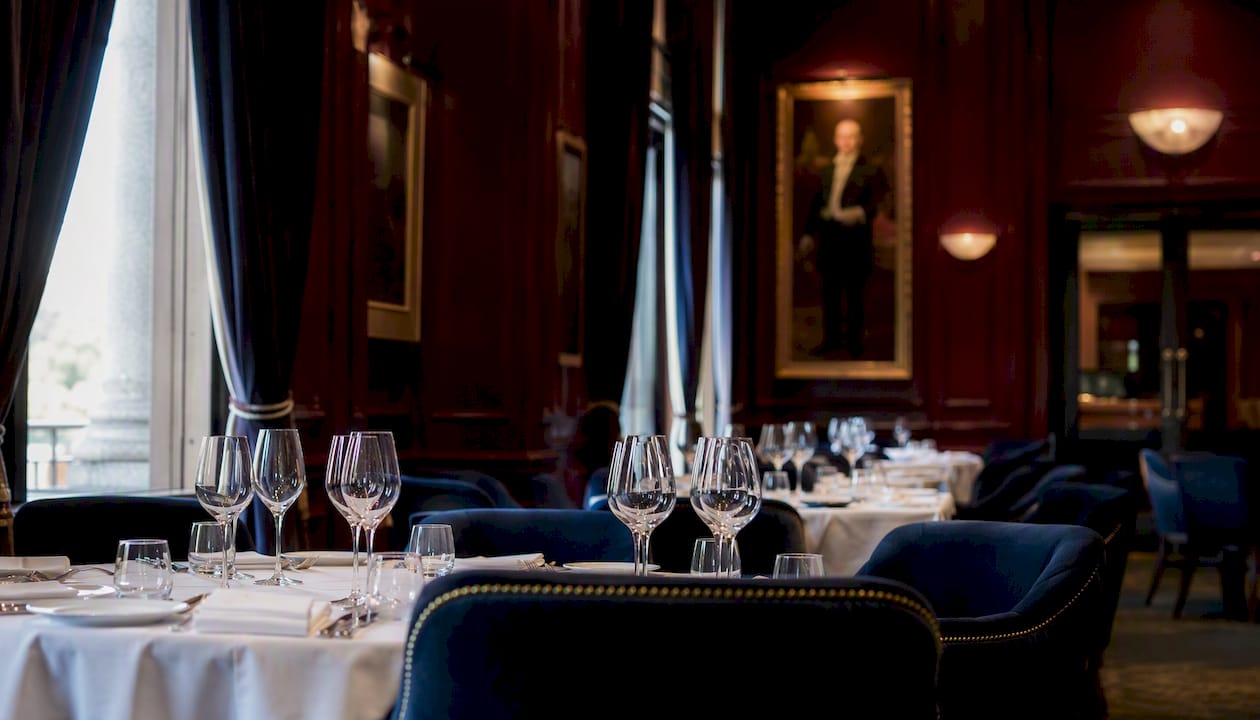
Sporting club members’ dining rooms
The Melbourne Cricket Club’s Members’ Dining Room at the MCG is one of Australia’s most recognised examples of this format. Access is restricted to MCC members and their approved guests, with club-managed guest allowances and booking controls governing match-day dining. The MCC waitlist for full membership has historically spanned years, making this a long-term aspiration for many Melbourne cricket enthusiasts. Accor Stadium in Sydney operates a comparable members’ dining arrangement tied to its membership structure.
Racing club members’ dining
Moonee Valley Racing Club’s exclusive members’ dining rooms are reserved for members and their guests on race meeting days, illustrating the event-specific guest model common to racing clubs. Access is tied directly to race-day attendance, and the dining experience is designed to complement the occasion rather than operate as a standalone restaurant.
RSL and legacy community clubs
Local RSL clubs across Australia operate members’ bars and dining rooms under a community-club model. Entry requirements are minimal, fees are modest, and the atmosphere is decidedly less formal than a private city club. These venues represent the most accessible form of members-only dining in the country, with open applications and no nomination requirements at most locations.
Private city clubs
The Australian Club in Sydney and The Melbourne Club represent Australia’s most formal private-dining tradition. Both operate on a nomination and invitation model, with membership committees that assess applicants against criteria of professional standing and personal character. Dining facilities are available exclusively to members and their guests, with no public access at any time.
Subscription and invite-only dining collectives
A newer format, popularised internationally by groups such as the Tasting Collective (which had grown to nearly 15,000 members across 18 US cities since its 2016 launch), operates on a subscription model where members pay a recurring fee for access to curated seatings at rotating venues. Guest tickets are typically available in limited numbers per event.
For official membership rules, the most reliable starting point is always the venue’s own membership page. Guest allowances, nomination requirements, and fee schedules are published there and updated when policies change.
What should you expect when visiting as a member or guest?
The experience of dining in a members-only space differs from a public restaurant in ways that go beyond the locked door at the entrance. Understanding the conventions before you arrive prevents friction and allows you to focus on the meal itself.
Guest rules and host responsibility
A member who brings a guest assumes formal responsibility for that guest’s conduct throughout the visit. Most venues impose a guest limit, typically two to four guests per member per visit, though some private clubs restrict guests to specific days or require advance approval. Visitor sign-in is standard, and some venues require guests to present photo ID. Dress codes are enforced at the door, not merely suggested, and the member is expected to brief their guest beforehand.
Booking and cancellation
Members generally enjoy a priority reservation window that opens before any public or general booking period. Cancellation policies at private clubs tend to be stricter than at public restaurants; late cancellations or no-shows often incur a fee, and repeated offences can affect membership standing. Some venues close their dining rooms entirely for private events or member-only functions, so checking the calendar before booking is prudent.
Service, menus, and dietary planning
Private-dining practitioners describe pre-event planning that begins days before the service, recording dietary restrictions, the purpose of the dinner, and the preferred flow of the evening. At the most attentive venues, this level of preparation is standard for every booking, not just large private functions. Tasting menus are common, and corkage policies vary; some clubs permit members to bring their own wine from a personal cellar, while others operate a house-list-only policy. Understanding how to curate a gourmet experience at this level requires the same attention to detail whether you are a member or a host.
Pro Tip: Before attending as a guest, ask your host three specific questions: what is the dress code, is there a guest sign-in requirement, and are there any menu restrictions or pre-orders required. Arriving prepared reflects well on both you and your host.
How do you join a members-only restaurant or gain guest access?
Whether you want full membership or simply a single evening in a members-only space, the routes are more varied than most people realise.
Step-by-step path to membership
- Research clubs that match your interests, location, and budget; review their official membership pages for fee schedules and nomination requirements.
- Identify whether the club requires a referee or nominator, and approach an existing member you know well enough to ask.
- Prepare your application documents: photo ID, referee contacts, professional details, and a personal statement where required.
- Submit your application and, if invited, attend a membership committee interview or informal meeting.
- Upon acceptance, pay the initiation fee and complete any induction requirements.
- Receive your membership card or online account credentials and make your first booking.
Ways to gain access without membership
Not every visit to a members-only dining room requires a membership card. Several legitimate routes exist:
- Be hosted by a member: the simplest and most common route; a member invites you as their guest within the venue’s guest-limit policy.
- Corporate or event booking: some venues allow businesses to book private dining rooms for corporate functions, even when the host is not a personal member.
- Trial or guest nights: certain clubs run open evenings or prospective-member events specifically designed to introduce the venue to potential applicants.
- Reciprocal access: members of affiliated clubs in other cities or countries may be granted temporary access under a reciprocal agreement.
- Sponsored invitation from venue partners: some venues extend invitations through partner organisations or event sponsors for specific occasions.
For planning the music and atmosphere at a private event held in a members’ space, seamless music planning guidance can help hosts create a cohesive evening from arrival through to dessert.
When approaching a potential host, be direct and specific: mention the occasion, confirm you understand the guest rules, and offer to cover your share of any per-head costs. For corporate bookings, contact the venue’s events or functions team directly rather than the general membership office.
How membership changes the dining experience: research and practitioner insights
The qualitative shift that members-only dining produces is well-documented in hospitality journalism and practitioner commentary. The core insight, repeated across multiple sources, is that membership converts dining from a transaction into an ongoing relationship.
Fine Dining Lovers reports that chefs and operators describe this relationship as enabling genuine menu trust: repeat visits allow kitchens to introduce more experimental dishes while maintaining consistency for the favourites members have come to rely on. The same reporting frames modern private dining as “hospitality’s equivalent of bespoke tailoring,” with no template and intense attention to individual detail.
Food & Wine reports a resurgence of membership and private-club dining among younger, affluent diners who seek curated, community-driven experiences rather than the tourist-facing offerings of high-profile public restaurants. The appeal is less about locked doors and more about belonging to a group with shared culinary values.
The scale of subscription-based models illustrates the demand clearly. The Tasting Collective, a US-based membership dining group, had grown to nearly 15,000 members across 18 cities since its 2016 launch, operating on a model that combines member-only seatings with a limited number of ticketed guest places per event. Some venues within this model run a single service per day to a closed group of up to 15 guests, eliminating the noise and pace of a full public service entirely.
The tension the model creates is worth acknowledging. Bon Appétit has documented the cost question directly, noting that high initiation fees and annual dues at some private clubs raise a legitimate question about value for the diner who visits infrequently. Exclusivity is a selling point, but it carries a cost that only makes sense above a certain frequency of use.
Is a members-only dining club worth it for most diners?
Membership is worth pursuing when three conditions align: you dine at the venue type frequently enough to amortise the fees, you value the community or networking dimension as much as the food, and you have a specific social or professional use case that benefits from a private, consistent setting. For someone who entertains clients regularly, attends race days seasonally, or simply prizes the frictionless indulgence of a room that already knows your preferences, the annual dues pay for themselves in convenience and experience quality.
The calculus shifts when dining is occasional. A $3,000 initiation fee at a private city club, followed by $2,000 in annual dues, represents a significant commitment for someone who might visit four times a year. At that frequency, the per-visit cost of membership alone exceeds what a well-chosen public restaurant would charge for an equivalent meal.
The more interesting question is what membership actually buys beyond access. The answer, consistently, is relationship. Staff who remember your wine preferences, a kitchen that adjusts its menu to your dietary history, a room where the conversation is not competing with a full public service — these are the genuine luxuries, and they are difficult to replicate on a one-off basis. For diners who want that quality of experience without the long-term commitment, Aptent’s private gourmet events offer a per-occasion alternative worth considering.
Private gourmet experiences without the membership commitment
For those drawn to the refinement of members-only dining but not ready to commit to initiation fees and annual dues, Aptent’s private gourmet events offer a compelling per-occasion alternative. There is no initiation fee, no annual obligation, and no waitlist; you select a date, curate the experience with Aptent’s team, and arrive to a tailored wine and caviar tasting designed around your guests and occasion.
The distinction from club membership is honest and worth stating plainly: a private event with Aptent does not give you the ongoing community, the reserved table on match day, or the accumulated service relationship that a long-standing membership builds. What it does offer is the same level of personalised attention, sourced from prestigious producers, for a single evening of genuine opulence. For corporate entertaining, milestone celebrations, or gifting a curated experience, the gifting collection extends that sensibility to occasions where a membership card would be beside the point. Browse Aptent’s private event options and enquire directly to arrange a bespoke tasting for your next occasion.
Sources
Official club and venue membership pages are the most reliable source for current guest allowances, fee schedules, and nomination requirements. Policies change, and third-party summaries often lag behind updates.
Authoritative starting points for Australian venues:
- Members’ Dining Room | MCC
- Exclusive Members’ Dining - Moonee Valley Racing Club
- The new luxury of being a regular | Fine Dining Lovers
- Are private restaurants worth the cost of admission? | Bon Appétit
When reviewing an official membership page, look specifically for: the guest allowance per visit, whether nomination or referral is required, the published fee schedule, event-only closure dates, and any reciprocal access arrangements with affiliated clubs. For RSL and community sporting clubs, the local branch website is the definitive source, as national bodies do not govern individual club dining policies.
Recommended
- Building a premium wine list: the definitive guide – APTENT. GOURMET
- Premium truffle varieties explained: the chef’s guide – APTENT. GOURMET
- Seasonal luxury ingredient calendar for Australian event planners – APTENT. GOURMET
- What is an amuse-bouche? Definition, origin and etiquette – APTENT. GOURMET


