
Why aged cheese tastes stronger: the science explained
Aged cheese tastes stronger because two parallel biochemical processes, proteolysis and lipolysis, steadily dismantle proteins and fats into hundreds of new flavour-active molecules, while moisture loss concentrates everything that remains. The result is a transformation far more sophisticated than simple maturation.
The four principal mechanisms at work:
- Proteolysis breaks casein proteins into free amino acids, including glutamate, which drives the deep savoury quality known as umami.
- Lipolysis converts milk fat into short-chain fatty acids and their downstream derivatives, producing pungent, fruity and nutty aroma compounds.
- Moisture loss concentrates flavour solids and fats, intensifying every note already present while hardening texture.
- Microbial activity from starter cultures, non-starter bacteria, yeasts and moulds generates volatile compounds that define each cheese’s characteristic aromatic signature.
Together, these forces explain why a wheel of Parmigiano-Reggiano aged for a long period registers an almost crystalline intensity that a fresh curd could never approach. The Foods 2022 review of flavour development in cheese identifies proteolysis and lipolysis as the primary ripening events, with downstream catabolism producing the acids, ketones, esters and sulphur compounds responsible for mature sensory profiles.
Key takeaways
Aged cheese tastes stronger because proteolysis and lipolysis generate hundreds of new flavour-active molecules while moisture loss concentrates every compound already present.
| Point | Details |
|---|---|
| Proteolysis drives umami | Protein breakdown releases free glutamate, the primary source of savoury depth in long-aged hard cheeses. |
| Lipolysis creates aroma | Short-chain fatty acids and their derivatives produce the pungent, fruity and nutty notes that define mature cheese character. |
| Moisture loss concentrates flavour | Water loss intensifies all flavour compounds and produces the firmer, crumblier texture associated with stronger perceived intensity. |
| Crystals signal extended ageing | Tyrosine and calcium lactate crystals in the paste are reliable markers of prolonged proteolysis and concentrated flavour. |
| Ageing can overshoot | Excessive accumulation of volatiles and free amino acids can tip a cheese into off-flavour territory; peak quality is a judgement, not just a timeline. |
Table of Contents
- Why aged cheese tastes stronger: proteolysis and the rise of umami
- How fat breakdown makes aged cheese smell and taste bolder
- How moisture loss concentrates flavour and changes texture
- Which microbes steer flavour in different aged cheeses
- What you actually smell in aged cheese: the volatile compounds
- How time, temperature, humidity and salt steer flavour development
- Why Parmigiano, cheddar, Gouda and blue cheeses taste so much stronger
- What peer-reviewed research shows about flavour change over time
- Aptent’s perspective on tasting and pairing stronger aged cheeses
- Sources
Why aged cheese tastes stronger: proteolysis and the rise of umami
Proteolysis is the enzymatic cleavage of casein, the dominant milk protein, into progressively smaller peptides and ultimately into free amino acids. Rennet, native milk enzymes and microbial proteases all contribute, and their combined action accelerates as ripening extends.
The most consequential product of this breakdown is free glutamate. Glutamate is the amino acid most directly associated with umami, the fifth taste descriptor characterised by a deep, mouth-coating savouriness. As cheese ages, glutamate accumulates in measurable quantities; research into umami in aged hard cheeses confirms that long-aged hard cheeses register notably higher free glutamate levels than their fresh counterparts, and that nucleotides present in the curd can amplify the umami signal synergistically.
Beyond glutamate, proteolysis feeds a secondary set of reactions known as amino acid catabolism. Branched-chain amino acids such as leucine, isoleucine and valine are converted via the Ehrlich pathway into aldehydes, alcohols and short-chain acids, each carrying its own aromatic signature. Model studies confirm that these precursor amino acids increase with ripening time, meaning the pool of aroma-active compounds grows progressively richer the longer a cheese matures. A 12-month cheddar and a 24-month cheddar share the same origin; the difference in sharpness is largely a story of how far this cascade has advanced.
How fat breakdown makes aged cheese smell and taste bolder
Lipolysis is the enzymatic hydrolysis of triglycerides, the dominant form of fat in milk, into free fatty acids (FFAs) and glycerol. Lipases derived from rennet, milk itself and microbial populations all participate, and their activity compounds with time.
Short-chain FFAs are the most sensorially potent products of this process:
- Butanoic acid (C4) delivers the sharp, slightly rancid note that defines aged cheddar’s bite.
- Hexanoic acid (C6) contributes sweaty, goat-like character, prominent in washed-rind and raw-milk styles.
- Octanoic acid (C8) adds a waxy, mushroom-like quality that underpins many aged semi-hard cheeses.
These FFAs do not stop there. Secondary reactions convert them into esters (fruity, floral), methyl ketones (blue, camphor-like) and lactones (buttery, coconut-like), each adding another layer to the aromatic architecture. Studies on volatile compounds during ripening link increases in these short-chain FFAs directly to the buttery, sweaty and goat-like descriptors that tasters reach for when describing a mature cheese. The sensory vocabulary of aged cheese, from the nutty richness of a long-aged Gouda to the pungent assertiveness of a ripe Époisses, is largely written in the language of lipolysis.
How moisture loss concentrates flavour and changes texture
Water is not a passive bystander in a maturing wheel; its gradual departure is one of the most powerful flavour-intensifying forces in the entire ageing process. As moisture evaporates through the rind, the ratio of flavour-active solids and fats to total mass increases, effectively concentrating every compound already present. Research on cheese ageing and moisture effects demonstrates that this concentration correlates directly with firmer, crumblier textures and stronger perceived flavour intensity.
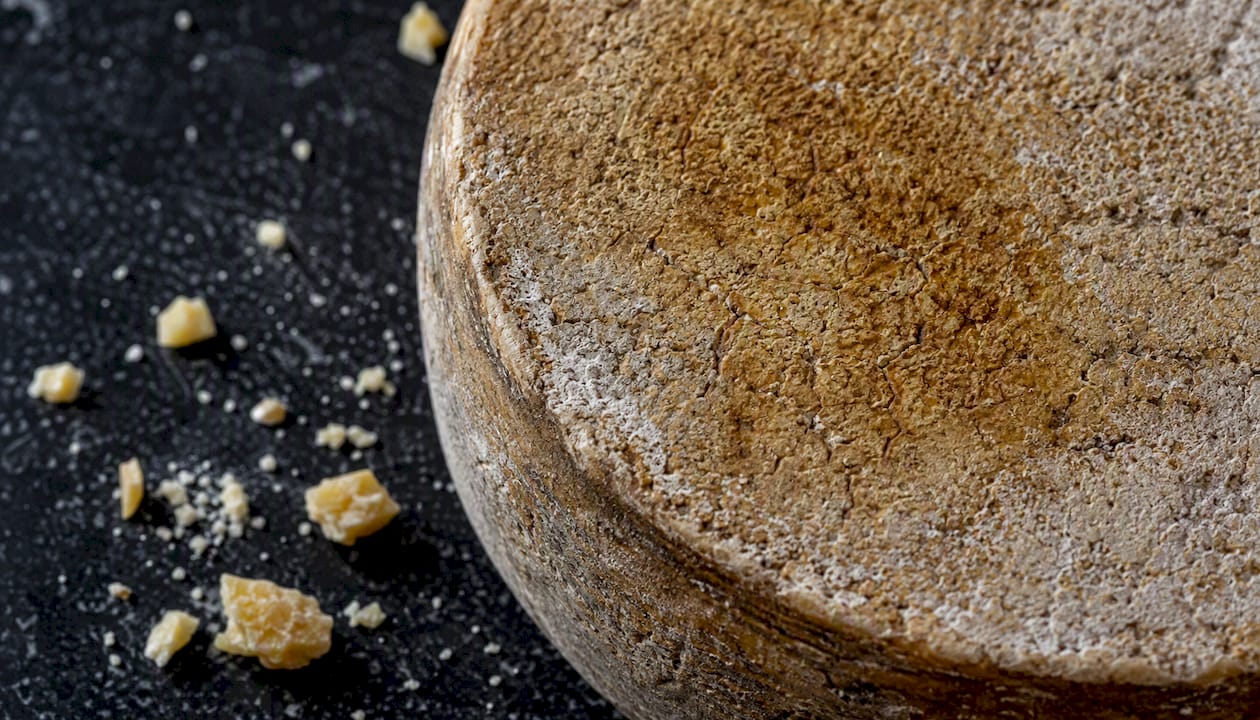
Texture itself changes how flavour is experienced. A drier, harder cheese fractures into shards rather than melting smoothly, exposing more surface area to saliva and releasing volatile compounds more abruptly. The result is a more immediate, assertive flavour hit compared with the gentle, creamy release of a young cheese.
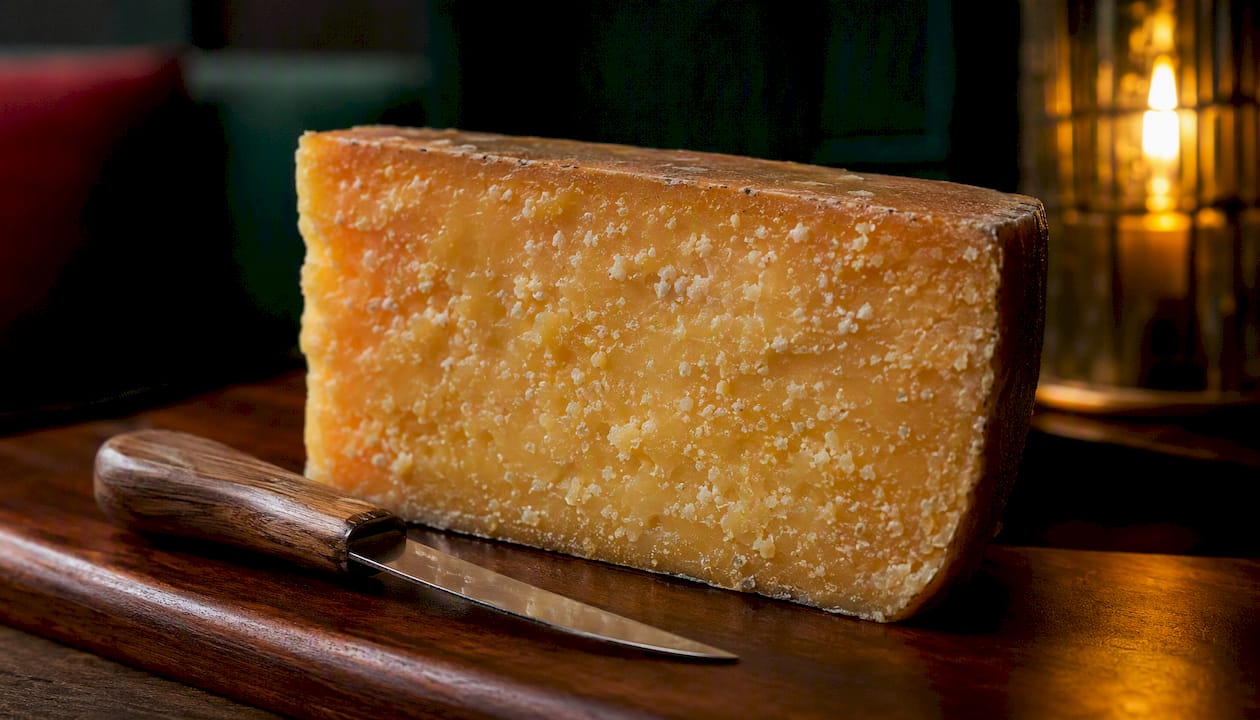
Perhaps the most elegant marker of extended ageing is the formation of crystals within the paste. Calcium lactate and tyrosine crystals both arise as direct consequences of long proteolysis and lactic acid interactions. Tyrosine, an amino acid released by protein breakdown, accumulates until it precipitates as white, slightly crunchy specks throughout the interior.
Pro Tip: When selecting an aged hard cheese, look for a dry, slightly rough rind and visible white crystals in the paste. Both are reliable indicators of extended maturation and the concentrated, savoury intensity that comes with it.
Which microbes steer flavour in different aged cheeses
The microbial community inside and on a maturing wheel is not random; it is a succession shaped by milk type, cheesemaking technique and the conditions of the cave or cellar. Each class of microorganism contributes distinct enzymatic activity and metabolic products.
- Starter lactic acid bacteria (LAB) acidify the curd early and produce initial proteolytic enzymes; their autolysis later in ripening releases intracellular enzymes that continue breaking down proteins long after the cells themselves have died.
- Non-starter LAB (NSLAB) dominate the interior microflora of many hard cheeses after the first weeks, driving secondary proteolysis and contributing to the characteristic sharpness of aged cheddar and similar styles.
- Yeasts deacidify rind surfaces, creating conditions hospitable to more complex bacterial communities, and produce esters and alcohols that add fruity and floral notes.
- Penicillium roqueforti (blue cheeses) generates methyl ketones and secondary alcohols through rapid lipolysis, producing the spicy, piquant intensity that defines Roquefort and Gorgonzola.
- Brevibacterium linens and related rind bacteria (washed-rind styles) produce sulphur compounds and branched-chain aldehydes responsible for the meaty, savoury and sometimes ammoniac aromas of cheeses such as Munster and Taleggio.
Autolysis of microbial cells is a particularly important late-stage driver of complexity. As starter bacteria die and lyse, they release intracellular proteases and lipases into the curd matrix, extending the biochemical transformation well beyond the active growth phase. Milk type shapes this entire succession: raw milk carries a richer indigenous microflora than pasteurised milk, which is one reason raw-milk aged cheeses often display greater aromatic complexity.
What you actually smell in aged cheese: the volatile compounds
The aroma of a mature cheese is a mosaic of volatile molecules, each present at concentrations that may be vanishingly small yet sensorially decisive. The concept of odour threshold explains this apparent paradox: some compounds trigger olfactory receptors at concentrations measured in parts per billion, so even trace quantities register as powerful aromas.
The main volatile families and their sensory signatures:
| Compound family | Key examples | Sensory impression | Example cheese |
|---|---|---|---|
| Short-chain free fatty acids | Butanoic, hexanoic acid | Cheesy, pungent, sweaty | Aged cheddar, goat styles |
| Methyl ketones | 2-heptanone, 2-nonanone | Blue, fruity, camphor-like | Roquefort, Gorgonzola |
| Esters | Ethyl butanoate, ethyl hexanoate | Fruity, floral, sweet | Long-aged Gouda, Gruyère |
| Sulphur compounds | Methanethiol, dimethyl sulphide | Eggy, meaty, savoury | Washed-rind, raw-milk styles |
| Lactones | Delta-decalactone | Buttery, coconut, creamy | Aged Gouda, Comté |
Many of these volatiles are produced secondarily from the amino acids and fatty acids generated by proteolysis and lipolysis, confirming that the primary biochemical events cascade into an ever-expanding aromatic repertoire. Extended ripening studies report that the total volatile fraction rises measurably across long ripening periods, with short-chain FFAs contributing markedly to aroma intensity without producing off-flavours in well-managed ageing.
How time, temperature, humidity and salt steer flavour development
The biochemical reactions described above do not proceed at a fixed rate; affineurs and cheesemakers manipulate environmental conditions to accelerate, slow or redirect them with considerable precision.
Temperature is the primary lever. Higher temperatures generally accelerate enzyme activity and microbial metabolism, compressing the timeline to peak flavour. The risk is proportional: too warm, and undesirable bacteria proliferate or proteolysis overshoots into bitter peptides. Affineurs typically work within a range of approximately 10–15°C for most hard and semi-hard styles, adjusting within that band to steer intensity.
Humidity governs the rate of moisture loss and the viability of rind flora. A cave held at high relative humidity slows evaporation, preserving a supple paste and allowing surface moulds or bacteria to thrive. Lower humidity accelerates drying, concentrating flavour more rapidly but risking excessive hardening or cracking.
Salt plays a dual role. Applied as a brine or dry rub, it draws moisture from the surface, forms the rind and moderates microbial growth throughout the paste. Higher salt concentrations slow proteolysis and lipolysis, which is why heavily salted cheeses often develop more slowly and with different flavour profiles than lightly salted ones.
Pro Tip: When tasting a range of aged cheeses, ask the producer or retailer about the affinage conditions. A cheese aged in a natural cave at consistent humidity will often show more nuanced complexity than one matured in a controlled industrial environment, because the cave’s indigenous microflora contribute additional enzymatic diversity.
- Flipping wheels regularly ensures even moisture loss and consistent rind development on all surfaces.
- Washing rinds with brine, wine or spirits introduces specific microorganisms and controls surface pH.
- Monitoring room variation within a cellar allows affineurs to position wheels in warmer or cooler zones to fine-tune the pace of maturation.
Why Parmigiano, cheddar, Gouda and blue cheeses taste so much stronger
The mechanisms above combine differently in each cheese style, producing recognisable and distinct expressions of intensity.
Parmigiano-Reggiano is perhaps the most instructive example. Aged for a minimum of 12 months and often 24–36 months or beyond, it undergoes extensive proteolysis that generates exceptionally high free glutamate levels, producing the concentrated umami depth that makes even a small shard taste profoundly savoury. The tyrosine crystals scattered through the paste are a direct record of this prolonged protein breakdown.
Aged cheddar derives its sharpness from a combination of moisture loss, extensive NSLAB-driven proteolysis and the accumulation of butanoic acid from lipolysis. The granular, slightly crumbly texture at 18 months or more is both a textural cue and a flavour delivery mechanism, releasing volatile acids sharply as the cheese fractures against the palate.
Long-aged Gouda, particularly wheels matured beyond 18 months, develops a character quite unlike its younger counterpart. Lipolysis and amino acid catabolism generate caramel and toffee notes alongside fruity esters and a pronounced nuttiness, while the paste becomes dense and almost brittle with tyrosine crystals throughout.
Blue cheeses owe their piquant, spicy intensity primarily to Penicillium roqueforti, which drives rapid lipolysis through the channels pierced into the paste. The methyl ketones produced, particularly 2-heptanone and 2-nonanone, are the dominant aroma compounds and register at very low odour thresholds, explaining why even a small amount of blue cheese commands the palate.
Washed-rind cheeses such as Munster or Époisses derive their assertive, meaty and sometimes ammoniac character from Brevibacterium linens and related bacteria cultivated on the rind through repeated washing. The sulphur compounds these bacteria produce are among the most potent aroma molecules in any food.
What peer-reviewed research shows about flavour change over time
The scientific literature on cheese ripening consistently confirms that the biochemical changes described above are measurable, progressive and cumulative. Free amino acid concentrations rise throughout extended ripening, and the pool of volatile compounds expands in both diversity and total quantity.
Textural evolution follows a related trajectory. The most rapid physical changes in hard cheeses tend to occur in the early months of ripening, as moisture loss and initial proteolysis restructure the curd matrix. Biochemical transformation, however, continues more gradually well beyond that point; in some extra-hard styles, measurable changes in volatile composition and amino acid profiles persist across multi-year ageing windows. The extended ripening study (PMC7143483) documents precisely this pattern, showing that the total volatile fraction and short-chain free fatty acids continue to rise across long ripening periods without generating off-flavours in well-managed wheels.
Over-ageing is a genuine risk. Excessive accumulation of free amino acids and volatile compounds can tip a cheese from complex to unpleasant, producing bitter peptides or ammoniac notes that overwhelm the palate. The decision to release a wheel for sale is therefore a quality judgement, not simply a function of time elapsed.
Aptent’s perspective on tasting and pairing stronger aged cheeses
At Aptent, the appreciation of aged cheese sits naturally alongside the broader philosophy of curated, sensory-led luxury. A truly mature hard cheese, whether a crystalline shard of Parmigiano or a wedge of extra-aged Gouda, rewards the same attentiveness that one brings to a great vintage wine. The science of why aged cheese tastes stronger is, in the end, an argument for patience and discernment.
For tasting, serve aged hard cheeses at room temperature, allowing at least 30 minutes out of the refrigerator so that volatile compounds can express themselves fully. Break or shave rather than slice where possible; the irregular surface releases aroma more generously than a clean cut. A neutral palate cleanser between samples, plain water or a thin slice of apple, prevents the cumulative intensity of successive strong cheeses from masking subtler notes.
Pairing aged cheeses with wine follows a logic similar to the biochemistry itself. The elevated glutamate in a long-aged Parmigiano finds a natural counterpart in the savoury, mineral character of a well-aged Barolo or a structured Burgundy. Aged cheddar’s butanoic acid sharpness is softened by the residual sweetness of a late-harvest Riesling or a tawny port. For blue cheeses, the classic pairing with Sauternes works because the wine’s sweetness and acidity temper the methyl ketone intensity without suppressing it entirely. Aptent’s gourmet cheese and wine pairing guide explores these complementary relationships in greater depth.
The most important principle is balance. Ageing can overshoot, and maximum strength is not the same as maximum pleasure. The finest aged cheeses offer complexity alongside intensity, a quality that distinguishes a 36-month Parmigiano from a wheel that has simply been forgotten in a cellar. Seek that balance, and the experience of a great aged cheese becomes something close to the refined indulgence that Aptent curates across its entire gourmet collection, available through Aptent Gourmet.

Sources
For those who wish to explore the science of cheese ripening beyond this article, the following sources offer credible, accessible depth.
- Amino acid catabolism and aroma compound formation (PMC11100003)
- Foods 2022 review of flavour development in cheese (Foods 11:188)
- Cheese aging and moisture effects (Elsevier)
- Why Some Cheeses Have an Umami Taste (& Savoury Flavour)


