
One Champagne Pairing Chart for Snacks, Mains and Dessert
For most meals, a Brut non-vintage is the safest and most versatile choice, offering enough acidity and dosage balance to flatter everything from oysters to roast chicken. The chart below matches specific dishes to Blanc de Blancs, Blanc de Noirs, rosé, Extra Brut or Demi-Sec, so you can move past guesswork and let structure, not habit, guide the bottle you open. Aptent built this guide from that same principle: acidity and dosage do the heavy lifting.
TL;DR:
- Non-vintage Brut is the most versatile choice, balancing acidity and dosage for a wide range of dishes from seafood to fried foods.
- Blanc de Blancs pairs best with delicate raw dishes like oysters and sashimi due to its lean, mineral profile, while Blanc de Noirs and rosé suit richer poultry and mushroom dishes.
- Proper pairing depends on matching the wine’s structure—acidity, dosage, and lees ageing—with the dish’s weight, flavor, and umami content.
- Dessert pairings should consider the wine’s sweetness level, with Demi-Sec matching fruity and nutty desserts, while hot spice and heat generally do not complement Champagne.
- Cheese pairings are improved when matching the wine’s age and richness to the cheese’s fat and intensity, with aged cheeses fitting vintage styles and soft cheeses fitting high-acid brut.
Table of Contents
- Champagne food pairing chart: what to pour with what
- How champagne style changes the right pairing
- What should you pour with each course?
- Building a champagne-friendly cheeseboard
- Getting dessert pairings right
- Common champagne pairing mistakes to avoid
- What our tasting notes reveal about signature pairings
- Seasonal and regional pairing ideas worth trying
- Pairing champagne with vegetarian and vegan dishes
- Why I keep coming back to the humble Brut NV
- Where to find these pairings, ready to pour
- Sources
Champagne food pairing chart: what to pour with what
Every recommendation below rests on the same logic wine buyers use at the table: match the wine’s acidity, dosage and texture to the weight of the dish, not just its flavour. This is the quickest way to use a champagne food pairing chart without memorising dozens of rules.
| Food | Recommended Style | Why It Works |
|---|---|---|
| Oysters | Blanc de Blancs | Lean acidity mirrors brine and mineral notes |
| Caviar | Extra Brut / low-dosage Brut NV | Low sugar lets briny, buttery roe lead |
| Sashimi | Blanc de Blancs | Delicate fruit won’t overpower raw fish |
| Fried chicken | Brut NV | Bubbles and acid cut through the oil |
| Fries | Brut NV | Salt and bubbles are a classic match |
| Popcorn | Brut NV | Toasty, buttery notes echo popcorn’s char |
| Soft cheeses | Brut NV | Mousse cleans creamy, high-fat texture |
| Aged cheeses | Blanc de Noirs (vintage) | Umami depth meets nutty, aged flavours |
| Roast chicken | Blanc de Noirs | Body and red-fruit richness suit poultry |
| Duck | Rosé | Fruit and structure stand up to red meat |
| Mushroom dishes | Blanc de Noirs / vintage | Earthy, autolytic notes meet umami |
| Strawberries/desserts | Demi-Sec or Rosé | Residual sugar matches fruit sweetness |
| Dark chocolate | Demi-Sec | Sweetness balances chocolate’s bitterness |
How champagne style changes the right pairing
A champagne food pairing chart only works if you understand why each row says what it says. The underlying variables are dosage, grape composition, lees ageing and the texture of the bubbles themselves, and pairing success depends on matching that structure to the weight and flavour of the dish.
- Brut NV is the workhorse: enough acidity for seafood, enough autolytic character from lees ageing for pastry and fried food, and enough fruit to avoid tasting severe. A non-vintage Brut is the most flexible bottle on the table for exactly this reason.
- Blanc de Blancs, made entirely from Chardonnay, tends to be leaner and more mineral. It suits shellfish, sashimi and other delicate raw preparations where a fuller wine would overwhelm the dish.
- Blanc de Noirs and rosé carry more body and red or umami-leaning fruit, which is why they outperform paler styles against roast poultry, mushrooms and richer sauces.
- Extra Brut or Brut Nature, with little to no dosage, suit ultra-delicate raw dishes like caviar and the finest sashimi, where sugar would mute the wine.
- Demi-Sec, sitting well above standard dosage, exists almost exclusively for dessert pairing.
Lees ageing adds another layer: longer time on lees builds toasty, nutty, sometimes truffle-like notes that make vintage and aged Champagnes a natural match for umami-rich dishes. See how Blanc de Blancs and Blanc de Noirs diverge in practice.
What should you pour with each course?
Treat Champagne as a wine for the whole meal, not just an aperitif, and the structure of most non-vintage and vintage bottles will carry you from starter to dessert.
- Starters and raw seafood. Oysters, sashimi and caviar call for lean, high-acid styles. Blanc de Blancs or an Extra Brut lets briny, delicate flavours lead rather than compete with fruit or sugar.
- Snacks and fried food. This is where bubbles earn their keep. The fizz and acidity in Brut NV act as a palate cleanser that scrubs through oil and fat, which is exactly why fried chicken, tempura and even a bowl of fries feel so right alongside it.
- Mains. Roast chicken and turkey suit a fuller Blanc de Noirs; mushroom-based dishes reward a vintage wine’s toasty depth; duck or anything with a spiced glaze often does better with rosé, since the added fruit and body match richer, meatier dishes that would flatten a leaner blanc.
- Spice and heat. Champagne isn’t built for fiery food. Mild spice works with rosé or a slightly softer dosage, but very hot dishes will fight any Champagne’s acidity rather than complement it.
A simple three-course pairing: oysters with Blanc de Blancs, roast chicken with Blanc de Noirs, and a fruit tart with Demi-Sec. If you’re planning a larger spread, this festive menu planning guide offers useful course structures to build around.
Building a champagne-friendly cheeseboard
Cheese and Champagne are a famous match, but the pairing only sings when the cheese’s age and fat content are matched deliberately.
- Hard, aged cheeses like Comté or Parmigiano Reggiano want a vintage or lees-aged Champagne, since the wine’s toasty depth meets the cheese’s nutty concentration.
- Triple-cream cheeses (Brie, Saint-André) need a lively, high-acid Brut to cut through their richness rather than a soft, low-acid style that gets lost.
- Smoked fish and charcuterie favour rosé or Pinot-led blends, where the extra body and fruit stand up to smoke and salt.
- For snacks, potato chips, popcorn and gougères all work on the same principle: salt plus bubbles is one of the most reliable combinations in the champagne food pairing repertoire.
Getting dessert pairings right
A bone-dry Brut can taste sharp and sour next to a sweet dessert, because the wine has far less sugar than the dish. Matching sweetness to dosage is the rule that prevents this mismatch: reach for Demi-Sec when the dessert itself is sweet, and consider rosé when the dish leans fruity rather than sugary, since its riper fruit character often bridges the gap more gracefully than a straight Demi-Sec.
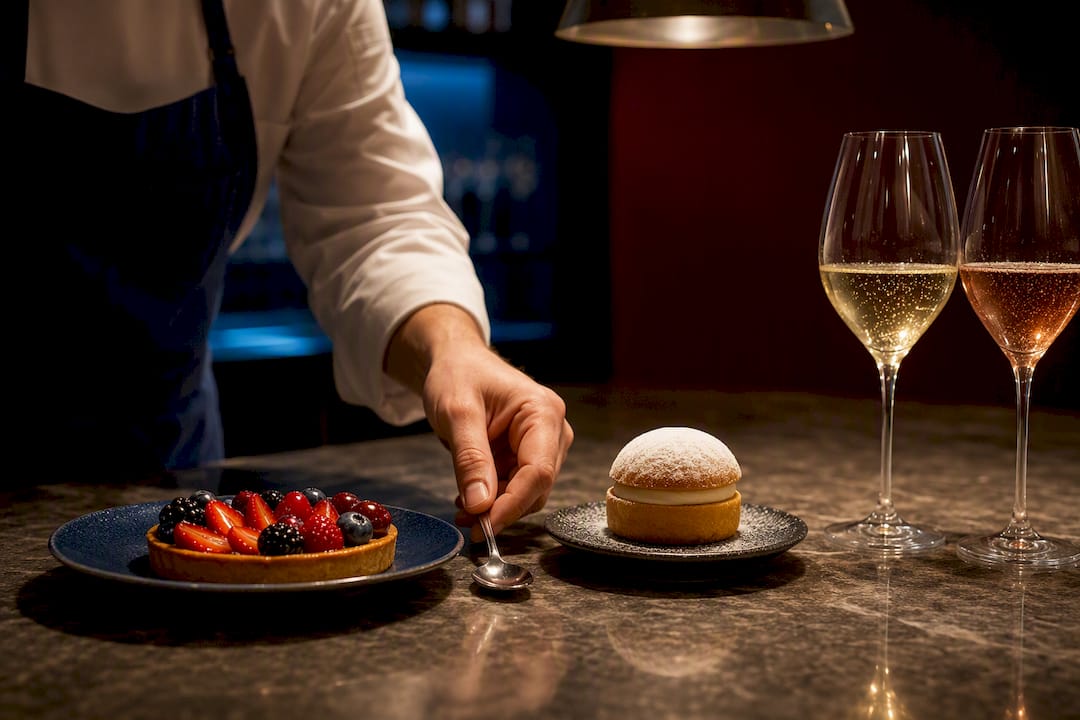
Pro Tip: Restrained fruit tarts, nutty pastries and dark chocolate with a high cocoa percentage are the safest desserts to pair, since their bitterness or subtlety won’t fight the wine’s residual sugar.
Common champagne pairing mistakes to avoid
- Serving a bone-dry Brut with a sweet dessert. The wine will taste sour and thin.
- Over-spicing a dish and expecting any Champagne style to cope with the heat.
- Serving too warm. Champagne should sit around 8 to 10 degrees Celsius; anything warmer dulls the acidity that makes pairings work.
- Use a tulip or white wine glass rather than a narrow flute, which restricts aroma.
- Keep bottles upright and chilled until opening to preserve the mousse and aromatic lift.
What our tasting notes reveal about signature pairings
Aptent’s tasting guides and product notes are built around the same structural principles covered in this chart. For caviar, practitioners tend to favour a textured, low-dosage Champagne with some lees age, giving the wine enough mid-palate weight to meet the richness of roe and garnish rather than an austere prestige cuvée that disappears next to it.
The right Champagne for caviar isn’t the most expensive or the driest. It’s the one with enough textured generosity to meet the roe halfway, without ever dulling its briny clarity.
Three signature pairings worth trying: a lees-aged Brut with caviar and blinis, a Blanc de Noirs with roast duck, and a Demi-Sec with a dark chocolate tart. Aptent’s Cuvée 1887 Brut and its accompanying masterclass notes walk through exactly this kind of pairing logic, alongside a dedicated guide to pairing caviar with Champagne.
Seasonal and regional pairing ideas worth trying
Champagne pairing shifts with the calendar as naturally as any other wine. In warmer months, lean into Blanc de Blancs with chilled seafood, citrus-dressed salads and fresh oysters, where the wine’s brightness matches lighter, acid-driven cooking. Come cooler weather, vintage and Blanc de Noirs styles suit richer braises, root vegetables and game, since their fuller body and toasty depth hold up against slow-cooked, umami-heavy food.
Regional cuisines offer some of the most rewarding matches precisely because they weren’t designed with Champagne in mind. Japanese cuisine, built on delicate, umami-forward dishes like sashimi, tempura and dashi-based broths, pairs naturally with lean Blanc de Blancs or a lightly aged Brut. French regional cooking, from Burgundian mushroom dishes to Alsatian charcuterie, leans toward Blanc de Noirs and rosé for their body and red-fruit character. Even Southeast Asian dishes with restrained heat, think a mild green curry or a lightly spiced satay, can work with rosé’s fruit acting as a buffer against chilli.
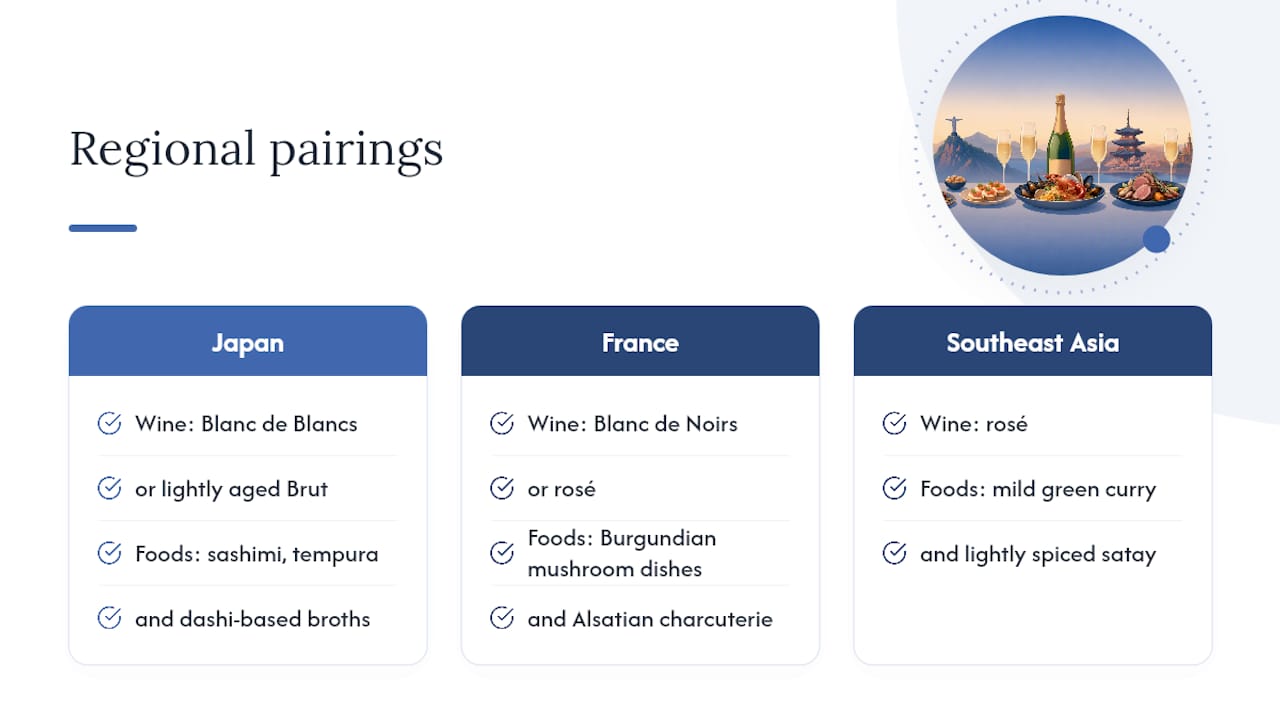
The common thread across every region is the same one running through this entire chart: match acidity and body to the dish’s weight, and let the cuisine’s own seasoning guide the style rather than forcing a single “correct” bottle onto everything on the table.
Pairing champagne with vegetarian and vegan dishes
Champagne pairs with plant-based cooking more naturally than most people expect, because the wine’s acidity and mousse respond to texture and umami rather than animal protein specifically. Mushroom-based dishes, whether a wild mushroom risotto or grilled portobello, sit beautifully with a Blanc de Noirs or lightly aged vintage, since the earthy, umami-rich flavours echo the wine’s own autolytic depth.
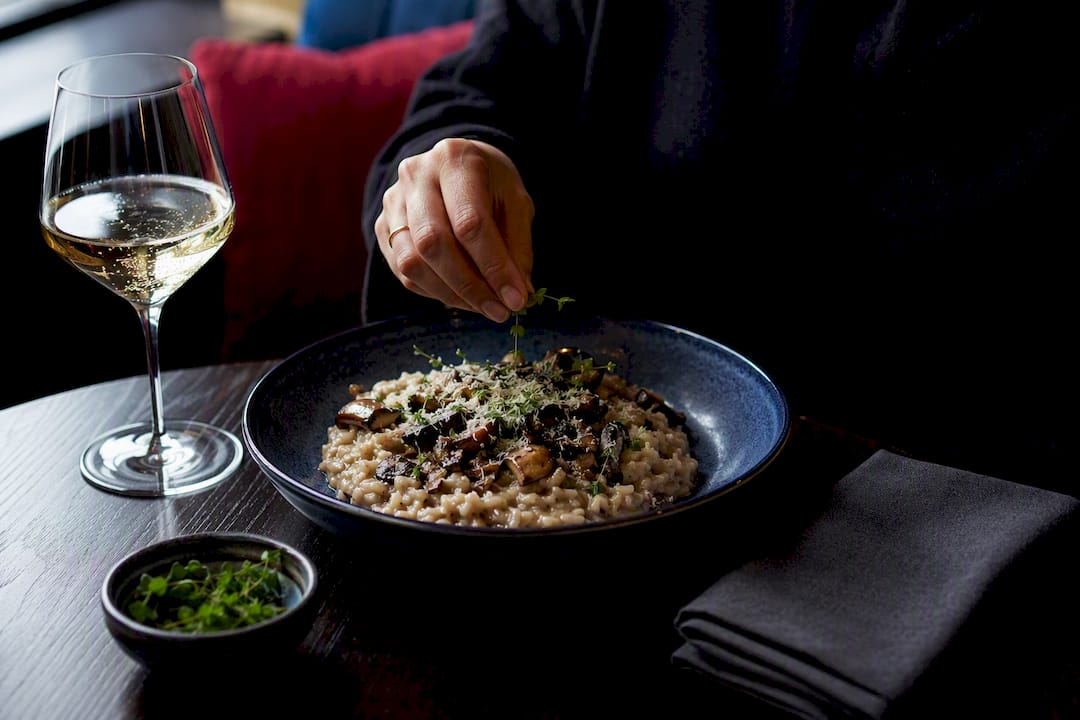
Lighter vegetarian starters, such as goat’s cheese tarts, roasted vegetable canapés or a citrus and fennel salad, favour Blanc de Blancs or a standard Brut NV, where the wine’s acidity lifts rather than competes with the dish. Fried vegetarian snacks, tempura vegetables, falafel or crispy polenta, benefit from exactly the same palate-cleansing effect that makes Champagne so effective with fried chicken.
Vegan dishes built around nuts, legumes or plant-based cheeses tend to have more fat and less sharp acidity than their dairy equivalents, so a Brut NV with good acid backbone generally outperforms a softer, low-acid style. The same rule that governs the entire chart applies here: judge the dish by its weight and richness, not by whether it contains meat or dairy, and the right style becomes obvious.
Why I keep coming back to the humble Brut NV
Champagne doesn’t need a special occasion or a formal menu to earn its place. At one tasting, a glass of Brut NV alongside a bowl of salted popcorn stole the evening from every carefully plated canapé in the room. That’s permission enough to pour it with chips, popcorn or whatever’s actually in your pantry. Use the chart, trust your palate, and experiment.
— APTENT
Where to find these pairings, ready to pour
Aptent gives you the shortcut this entire chart is built to save you from: curated Champagne and caviar pairings, sourced and matched by people who taste this combination for a living, so you’re not guessing which dosage suits which roe. The Aptent Gourmet collection centres on exactly the styles this guide recommends, including the low-dosage, lees-aged character that suits caviar best.
If you want to try the caviar pairing described above, the Baeri Signature Caviar is a natural starting point alongside a textured Brut. For a full private tasting built around courses like the ones in this guide, the Gourmet Events page outlines how Aptent puts together boutique Champagne and caviar experiences for individuals and corporate groups. Browse the collection, pick your pairing, and book a tasting when you’re ready to taste the difference structure makes.
Sources
- Champagne and food: Pairings that pop | Decanter
- Best Champagne Food Pairings, Explained
- The Best Foods to Pair with Champagne
- Champagne food pairing recommendations | WineTraveler


