
Turnkey Luxury Champagne Reception Ideas for Hosts & Corporate Events
Choose a champagne bar for a mingling crowd, a guided tasting flight for an intimate, education-led gathering, or a seated tasting for formal corporate hospitality. The right call rests on three drivers: guest count, the level of interaction you want, and how ambitious your pairings need to be. Aptent Gourmet can source and stage any of these formats as a curated events partner.
TL;DR:
- A Champagne bar suits larger crowds of over 40 guests with self-service stations, while guided tastings are better for small, education-focused groups of 12 to 30.
- Staff-to-guest ratios vary: one pourer per 25 guests at a bar or one server per eight guests at a seated tasting, depending on the format.
- Pairings should match wine structure and texture, with NV brut as a versatile choice, Blanc de Blancs for seafood, and Blanc de Noirs for richer dishes.
- Proper opening and pouring techniques, premium glassware, and controlled serving temperatures significantly enhance the perceived quality of the Champagne experience.
- Sourcing a curated selection from reputable producers, focusing on provenance and vintage, ensures a memorable event within any budget range.
Table of Contents
- High-end reception formats and when to choose each
- Ready pairing combinations and three short sample menus
- Professional service, opening and pouring technique
- Glassware and equipment that read as luxury
- Styling frameworks and sensory choreography for a luxury reception
- A compact planning checklist and event-day timeline
- Creative non-alcoholic options for guests who don’t drink
- Tips for sourcing quality Champagnes within different budget ranges
- How to create engaging guest interactions around the tasting
- What Aptent Gourmet brings to a champagne reception
- Book a curated champagne reception with Aptent Gourmet
- Sources
High-end reception formats and when to choose each
The format sets the entire tempo of your event, so start there before you touch a wine list. Each of these five works for a different guest profile and level of formality.
- Champagne bar: best for 40+ guests who want to move freely; staffed pouring stations let people self-select between two or three styles without holding up a queue.
- Guided tasting flight: suits 12 to 30 guests seated or standing in clusters, walked through three to five pours by a sommelier; ideal when education and storytelling matter as much as the wine.
- Seated tasting: the most formal option, pairing each course with a specific bottle at a set table; works best for corporate hospitality under 40 guests where the wine needs to carry the narrative.
- Canapé reception with pairing stations: a hybrid that puts food and Champagne together at fixed stations, letting guests build their own combinations across a room.
Space dictates staffing. A champagne bar needs at least one pourer per 25 guests to keep queues moving, while a seated tasting needs a server per table of eight. If your venue is compact, a guided flight paces itself naturally and needs less floor space than a roaming canapé reception.
Ready pairing combinations and three short sample menus
Good pairing starts with a simple rule: match intensity, then let texture and contrast do the rest of the work. A delicate Blanc de Blancs disappears next to a heavy sauce; a richer Blanc de Noirs gets bullied by anything too light.
The structure of the Champagne you’re pouring, meaning its acidity, dosage, texture and depth from ageing on lees, decides what belongs on the plate beside it.
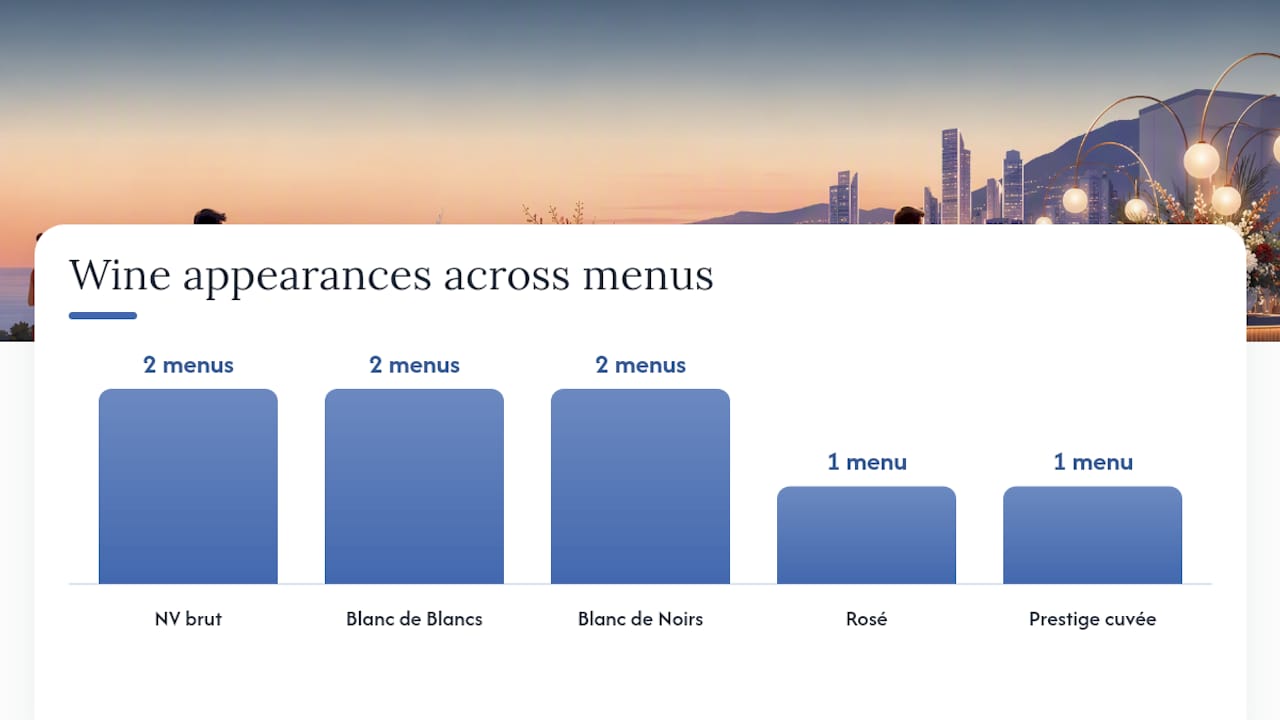
- Non-vintage brut: the workhorse of any reception; flexible enough for canapés, cheese, and light seafood, and the safest single pour if you’re serving one style all evening.
- Blanc de Blancs: its high acidity and citrus lift make it a natural partner for raw seafood, oysters and sashimi.
- Blanc de Noirs: fuller-bodied and better suited to richer dishes such as duck rillettes or mushroom tarts.
- Rosé: its fruit and gentle spice notes work with chilli-touched or berry-accented canapés.
- Prestige or vintage cuvée: reserve for a hero course or a caviar station, where complexity has room to shine.
Fried and crunchy textures are underrated pairing partners. The acidity and bubbles in Champagne refresh the palate against fried food, so tempura prawns or a parmesan crisp often outperform anything delicate.
Sample menu, grazing reception: NV brut throughout, paired with oyster shooters, tempura vegetables and a soft cheese board.
Sample menu, guided tasting flight: Blanc de Blancs with kingfish crudo, Blanc de Noirs with duck rillettes, rosé with berry-glazed lamb skewers.
Sample menu, seated four-course pairing: NV brut as aperitif, Blanc de Blancs with a caviar course, Blanc de Noirs with the main, prestige cuvée with dessert. For fine caviar, a low-dosage, textured Champagne with a generous mousse tends to work better than an austere, bone-dry bottle.
Pro Tip: Brief your caterer on texture, not just flavour. Tell them “crunchy and cold” or “silky and warm” rather than naming a dish, and the pairing logic survives even if the menu changes at the last minute.
Professional service, opening and pouring technique
How Champagne is opened and poured says as much about the event’s quality as the label on the bottle. Guests notice a fumbled cork or an over-poured flute even when they can’t articulate why it feels off.
Open every bottle at a 45-degree angle with a thumb held firmly on the cork once the cage is off, easing it out for a quiet release rather than a theatrical pop. A loud pop looks dramatic but wastes pressure and risks foaming the whole bottle over a guest’s dress.
- Tilt the glass and pour against the interior side, filling to about two-thirds to control foam and show off the bead.
- Serve between 6 and 8°C; anything warmer flattens the aromatics, anything colder mutes them.
- Keep reserve bottles in an ice bucket or a discreet chiller rather than on an open bar top.
A standard 750ml bottle pours approximately six glasses. For a champagne bar, budget roughly one bottle per several guests over two hours; for a seated tasting with multiple pours, plan proportionally more bottles per guest.
Staffing follows the same maths described above: one pourer per 25 guests at a bar, one server per table of eight for a seated event.
Glassware and equipment that read as luxury
The glass shapes the aroma before a single word is spoken about the wine. Tulip glasses, narrower at the rim than a standard white wine glass, concentrate aroma and are the right default for any tasting-led format. Flutes still have their place for spectacle and champagne towers, but they mute the nose compared with a tulip.
- Choose crystal stemware for seated tastings and guided flights, where guests will hold the glass long enough to notice the weight and clarity.
- Machine-made glassware is a reasonable, cost-conscious choice for a champagne bar where turnover is high and breakage is likely.
- Prepare 1.5 glasses per guest to allow for breakage and top-ups, plus a 10% spare stock.
- Use a discreet chiller such as a GRAD-style cooler or classic ice buckets positioned away from the main traffic flow to keep bottles at 6 to 8°C without cluttering the room.
Styling frameworks and sensory choreography for a luxury reception
Two moods cover most briefs Aptent sees. An intimate tasting calls for a muted palette, soft textiles that absorb sound, and enough acoustic control that a sommelier can be heard without a microphone. A glamorous reception leans into black and gold accents, reflective surfaces and dramatic uplighting that catches the bead in every glass.
Moët & Chandon’s pairing philosophy offers a useful design shortcut beyond the plate: a trio formula of a main ingredient, a complementary element, and one contrasting note. Apply the same logic to plating colour, not just flavour: a pale canapé against a dark plate, finished with one vivid garnish, creates the same “dialogue” Moët describes between food and wine.
- Position chillers and food stations along the room’s edges so guests move naturally between pairing points rather than clustering at one table.
- Keep seating for a formal tasting facing the sommelier’s station, not scattered.
- Draw on vibrant plating techniques to make each canapé station feel like a considered scene rather than a buffet line.
Pro Tip: Light glassware from below or the side, never directly overhead. Overhead light kills the visible bead in the glass, which is half the sensory theatre of good Champagne.
A compact planning checklist and event-day timeline
Turning these ideas into a run-sheet is where most receptions succeed or stall. Work backwards from the event date.
- Eight weeks out: confirm format and guest count, place your Champagne order (allow extra lead time for prestige cuvées), and book staff.
- Two weeks out: confirm final menu with your caterer, order caviar and other perishable uplifts, and finalise glassware counts.
- 48 hours out: chill bottles to serving temperature, confirm delivery of caviar and garnish items, brief service staff on pour technique and pacing.
- Event day: walk the floor plan, test chillers are holding 6 to 8°C, and stage backup bottles within easy reach of every station.
For quantity, plan conservatively at one bottle per three guests for a two-hour champagne bar, or generously at one bottle per two guests for a longer seated tasting with multiple pours. The main costs to flag early are a prestige cuvée allocation for a hero course and a caviar uplift, both of which need sourcing lead time rather than a last-minute add.
Creative non-alcoholic options for guests who don’t drink
Non-alcoholic doesn’t have to mean an afterthought soft drink table. A well-made sparkling verjuice, built from unripe grape juice, mimics Champagne’s acidity and works with the same canapé pairings as an NV brut. Alcohol-free sparkling wines have improved substantially and can sit in the same ice bucket as your Champagne, poured into an identical flute so no guest feels singled out.
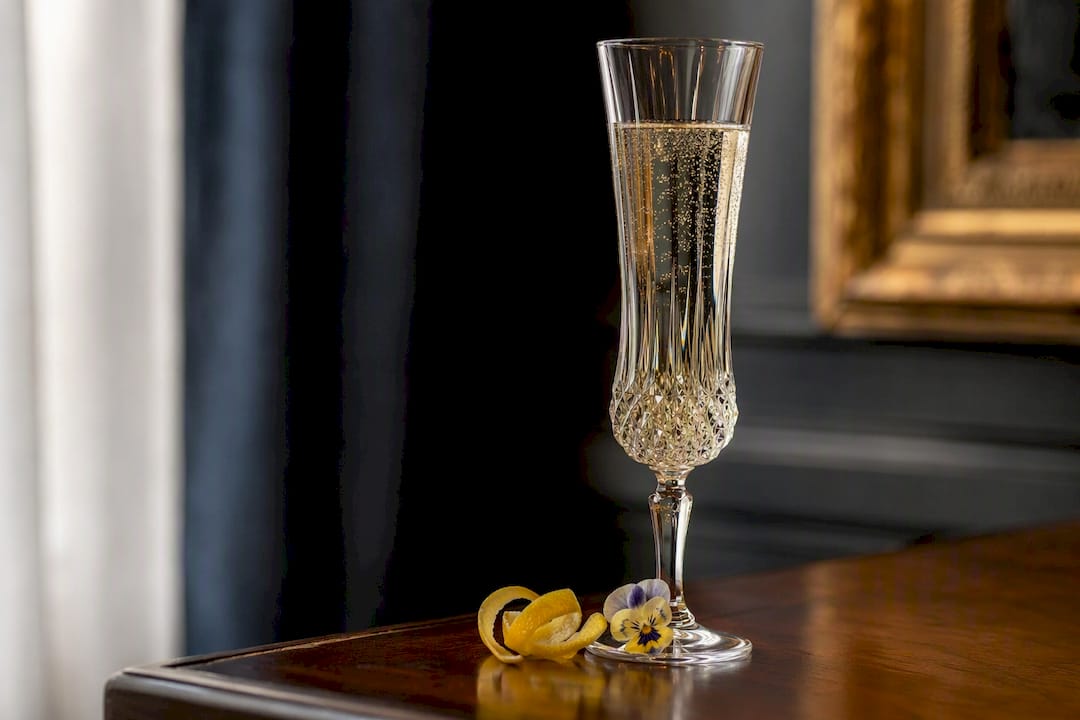
Consider a small “dealcoholised flight” alongside your main tasting: a sparkling verjuice, a botanical tonic with fresh herbs, and a chilled white tea spritz. Serving them in the same glassware and with the same pouring ceremony as the Champagne keeps the experience consistent rather than segregated. Garnish choices matter here too. A twist of citrus peel or a single edible flower elevates a non-alcoholic pour to the same visual standard as the wine beside it.
For a seated tasting, brief your caterer to pair the non-alcoholic flight against the same menu as the Champagne course, matching acidity and texture rather than substituting something sweeter. Guests who don’t drink alcohol are often served the pairing logic last, when it should be built in from the first planning conversation.
Tips for sourcing quality Champagnes within different budget ranges
Budget shapes the reception, but it shouldn’t shape it randomly. At the entry point, a well-chosen NV brut from a respected house delivers most of the sensory experience your guests will register, since non-vintage bruts are usually the most flexible bottles for combining freshness and fruit across a canapé spread.
Mid-range budgets open the door to Blanc de Blancs and Blanc de Noirs, which let you build a genuine tasting narrative across two or three styles rather than pouring one wine all night. This is the range where a guided selection for events pays off, because the difference between a good and a forgettable mid-tier bottle is far larger than at the entry level.
At the top end, reserve prestige and vintage cuvées for a single hero moment, a toast, a caviar course, or a seated tasting’s final pour, rather than spreading the budget thin across the whole evening. One outstanding bottle poured for twenty minutes leaves a stronger impression than an average one poured for three hours.
Whatever the budget, source from a supplier who can speak to provenance and vintage conditions, not just list a price. Corporate clients booking through Aptent Gourmet’s Laval collection get that context built into the order, which matters when a client or board member asks why a particular bottle was chosen.
How to create engaging guest interactions around the tasting
The wine does most of the talking, but a few structured moments turn passive drinking into a memorable event. A blind tasting round, three unlabelled pours guests rank by preference, works well as an icebreaker at a seated tasting and reliably sparks debate at the table.
A “build your own pairing” station lets guests match a canapé to whichever Champagne style they think suits it best, then compare notes with a sommelier on why it worked or didn’t. This suits a canapé reception with pairing stations far better than a rigid seated menu, because it rewards curiosity rather than following instructions.
For corporate events, a short guided comparison between two houses’ NV bruts, poured side by side, gives guests a genuine talking point without requiring wine expertise. Keep any formal tasting notes or scorecards brief. Three or four descriptors per glass are enough; anything longer turns a social moment into homework.
If a champagne tower is part of your styling brief, treat it as a moment rather than the whole evening; a few safety and etiquette basics keep the spectacle from overshadowing the tasting itself.
What Aptent Gourmet brings to a champagne reception
Aptent Gourmet’s curated Champagne collection and caviar range exist for exactly this kind of event, where the wine and the food need to be chosen together, not separately. The Gourmet Events service works with hosts on menu pairing and logistics from the first conversation, matching bottle style to course, format and guest count rather than defaulting to whatever’s easiest to source.
Sourcing details, supplier relationships and specific event case studies will be added here as they become available. What matters for now is the principle: a reception built on genuine pairing logic, not just an open bar, is what separates a memorable event from a forgettable one.
— Aptent
Book a curated champagne reception with Aptent Gourmet
Sourcing prestige bottles, briefing a caterer on pairing logic, and coordinating staff and chillers is a lot to run alongside everything else an event demands. Aptent Gourmet’s Gourmet Events service handles that coordination directly, pairing curated Champagne with fine caviar and matching food to the format you’ve chosen, so you’re not juggling three suppliers to get one cohesive evening.
A prestige cuvée paired against 250g of Baeri signature caviar is the kind of uplift that turns a seated tasting into the moment guests talk about afterwards, and it’s the sort of pairing Aptent sources and briefs as standard, not as an afterthought. If you’d rather gift the experience than run it yourself, a Gourmet Gift Card lets a client or colleague choose their own bottles and accompaniments.
To get started, visit the Gourmet Events page and enquire with your guest count, format preference and date. Aptent will come back with a curated pairing proposal built around your event, not a generic price list.


