
Saffron quality grades checklist: what buyers must check
Judge any lot of saffron against five measurable criteria before it ever reaches your cart or your kitchen: the ISO 3632 numbers for colour, flavour and aroma; the moisture content; the amount of extraneous matter; the visible thread morphology; and a batch-specific certificate of analysis with a lab date. Miss any one of these and you’re buying on trust alone, which in a market this lucrative and this easy to counterfeit, is a costly habit.
Here’s the checklist in full:
- ISO 3632 numbers — crocin (colour), picrocrocin (flavour) and safranal (aroma) values, all measured by UV-Vis spectrophotometry
- Moisture content — should sit below the class-specific ceiling; anything creeping toward 12% signals degradation risk
- Extraneous and foreign matter — floral waste, stems and non-saffron material should be minimal and quantified
- Thread morphology — red-only stigma versus yellow style attached, assessed visually
- Provenance and COA — a batch number, sample date, test date and accredited lab name, not a generic marketing sheet
Red flags worth walking away from: no COA at all, a lot sold only as powder, moisture readings above 12%, an unexpectedly sweet or hay-like smell, or threads that bleed colour into water almost instantly. If a supplier can’t produce a certificate for the exact batch you’re buying, ask for one before you commit, and where the order size warrants it, run a quick screening test yourself before acceptance.
Key Takeaways
Genuine saffron quality control rests on matching ISO 3632 laboratory numbers, not trade names or appearance alone, to a batch-specific certificate before purchase.
| Point | Details |
|---|---|
| ISO numbers over trade names | Crocin, picrocrocin and safranal values from an accredited lab outrank any Super Negin or Negin label. |
| Moisture affects shelf life | Keep moisture below the class ceiling; readings near 12% signal faster degradation of flavour and colour. |
| Run quick checks first | Use the water infusion, rub-and-smell and paper blot tests before committing to lab testing or shipment. |
| Demand a complete COA | Insist on batch number, sample and test dates, ISO/IEC 17025 accreditation, and numeric results with units. |
| Buy from verified batches | Aptent’s saffron range includes batch-specific COAs and storage guidance for every lot sold. |
Table of Contents
- What do saffron quality grades actually mean?
- How do you read ISO 3632 numbers on a lab report?
- What do the traditional trade grade names actually tell you?
- What quick checks can you run before sending saffron to a lab?
- What should a credible saffron lab certificate include?
- What are the most common saffron adulterants?
- What should you put in a saffron purchase order or QA spec?
- Frequently asked questions
- Sources
What do saffron quality grades actually mean?
ISO 3632 categories and trade names are answering two completely different questions, and confusing them is where most buyers get burned. ISO categories, Extra class, Category I, II and III, are chemical definitions set by laboratory measurement. Trade names like Super Negin, Negin, Sargol and Pushal describe what the threads look like: how much red stigma is present versus yellow style, and how the filaments were cut and sorted.
Trade nomenclature is a market convention rather than a regulated standard. It refers primarily to filament appearance and the proportion of yellow style attached, not to the crocin, picrocrocin or safranal content that actually determines flavour and colouring power, as Wikipedia’s saffron entry notes when explaining how these market grades evolved. In practice, a Super Negin lot often does map to Extra class or Category I because all-red, unbroken threads tend to carry higher colouring compounds. But that correlation isn’t a guarantee, and it’s exactly the gap unscrupulous sellers exploit.
| Grading system | What it measures | Who sets it | Reliability for chemical potency |
|---|---|---|---|
| ISO 3632 (Extra, I, II, III) | Crocin, picrocrocin, safranal, moisture, extraneous matter | International standard, lab-verified | High, when tested by an accredited lab |
| Super Negin / Negin | Filament length, colour uniformity, minimal style | Trade convention, regional | Moderate, correlation not causation |
| Sargol / Pushal | Cut style (Sargol), whole stigma with some style (Pushal) | Trade convention, regional | Low to moderate, varies by harvest |
| Bunch / White | Bundled whole stigma with style, pale non-coloured parts | Trade convention | Low, often mixed with lower-value parts |
The most common misleading use of trade names happens when a seller markets threads as “Negin grade” purely on visual sorting, with no chemical testing behind the claim. A lot can look visually flawless, uniform, deep red, long threads, and still fail Category I because of poor drying technique or storage that let the volatile safranal compounds degrade.
Pro Tip: Never accept a trade name as a substitute for a certificate. Ask the supplier directly: “Can you provide the ISO 3632 crocin, picrocrocin and safranal values for this specific batch?” If the answer is vague, that’s your answer.
How do you read ISO 3632 numbers on a lab report?
Four numeric thresholds separate Extra class from Category I, II and III: colouring strength (crocin), flavour strength (picrocrocin), aroma strength (safranal), and moisture content, alongside a limit on extraneous matter. These figures come from Codex and Codex-aligned standards that laboratories use worldwide to classify saffron consistently.
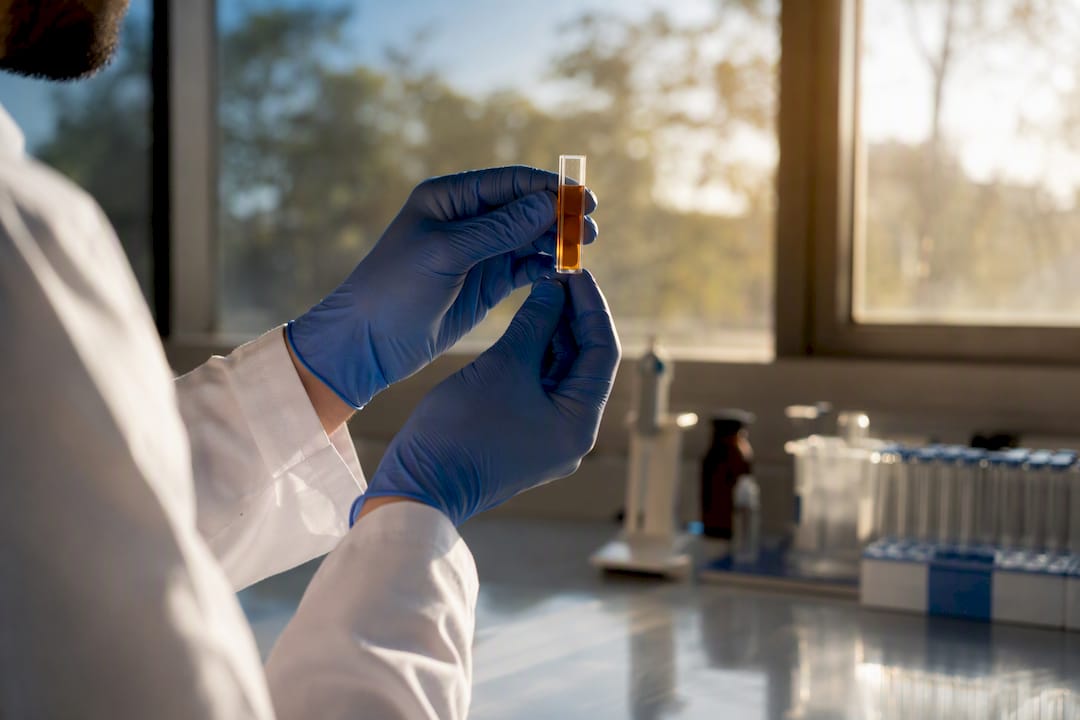
The Codex-style saffron standard sets out the exact thresholds in its Annex tables, and the Codex Standard for Saffron CXS 351-2022 confirms the same classification logic in its Annex I and II. Here’s how the categories break down on crocin, the most commonly quoted figure:
| ISO class | Crocin (A1cm1% at 440nm) minimum | Typical use case |
|---|---|---|
| Extra class | Above 230 | Visual luxury, retail premium, single-origin gifting |
| Category I | Extra class | Premium retail, fine dining kitchens |
| Category II | Category I | Mid-tier retail, quality bulk colouring |
| Category III | Category II | Industrial colouring, food manufacturing |
Picrocrocin, measured at 257nm, and safranal, measured at 330nm, each carry their own class-specific minimums in the same Annex tables, and moisture is capped separately from colouring strength. This matters because moisture and crocin readings interact: a lot can technically clear the crocin threshold on paper while carrying moisture high enough that the compound will degrade within months.
UV-Vis spectrophotometry works by dissolving a precise sample in water and measuring how much light the solution absorbs at each of those three wavelengths. Higher absorbance means more of the relevant compound. A lab technician isn’t eyeballing colour, they’re reading a number against a calibrated curve, which is why the same batch tested at two accredited labs should produce results within a tight margin of each other.
Pro Tip: If a COA shows unusually high crocin alongside high moisture, be sceptical. Moisture above 10 to 12% often means the sample was tested before proper drying stabilised, and the crocin figure may not hold once the product reaches you.
What do the traditional trade grade names actually tell you?
Super Negin, Negin, Sargol, Pushal, Bunch and White each describe a different cut and proportion of the saffron stigma, and each carries a different practical use case. Knowing what you’re actually buying under each name saves you from paying premium prices for bulk-grade material.
- Super Negin — the longest, thickest, most uniform red threads with almost no yellow style; marketed as the top visual tier
- Negin — similar to Super Negin but slightly less uniform in length and colour depth
- Sargol — the tip of the stigma only, cut short, deep red and often very high in colouring strength despite the smaller pieces
- Pushal — whole stigma with a small amount of yellow style still attached, a common everyday-premium grade
- Bunch — stigma bundled with more of the yellow style intact, lower colouring concentration per gram
- White saffron — the pale, non-coloured style portion alone, essentially the by-product with negligible crocin or safranal
Super Negin and Sargol are the two names most likely to correlate with Extra class or Category I results, because both formats minimise the non-coloured style that dilutes chemical concentration. Pushal and Bunch commonly land in Category II territory, still genuine saffron, still useful for cooking, but weaker in colour and aroma per gram. This is where morphology can mislead: a beautifully long Negin thread with visible style attached can test lower than a scrappy-looking Sargol tip, because concentration lives in the red stigma itself, not in thread length. For a household deciding between whole threads for a risotto or paella and a bulk colouring application, matching the trade name to the actual use case, rather than the prettiest packaging, is the smarter buy.
What quick checks can you run before sending saffron to a lab?
Five checks take under fifteen minutes and need nothing more than warm water, a saucer and your own senses. None of them replace laboratory testing, but they catch the obvious fakes before you waste money shipping samples anywhere.
- Visual thread check — genuine threads are trumpet-shaped, deep red, with a slightly frayed end where they were cut from the flower; uniform straight strips of dyed corn silk or paper are common fakes.
- Water infusion test — drop a few threads into warm (not boiling) water and wait 10 to 15 minutes. Genuine saffron releases colour slowly, turning the water a rich gold, while the threads themselves stay red rather than fading to white or orange.
- Rub and smell test — rub a thread between your fingers; real saffron carries a distinctive hay-like, slightly metallic aroma, not an overtly sweet or perfumed scent.
- Paper blot test — press a damp thread onto white paper. Genuine saffron shouldn’t leave a heavy dye stain immediately; excessive bleeding suggests added colourants.
- Flame test (optional, with caution) — a small flame test can show whether a thread singes naturally versus melting or flaring like synthetic material, but this needs a controlled setting and isn’t necessary for routine screening.
These home tests align closely with the methods consumer guides recommend for catching obvious fakes, including the golden-colour-release timing and thread-colour-retention checks described in NDTV Food’s saffron authenticity guide.
For anything beyond a casual household purchase, the Direct Analysis Saffron Chemical Test (DASCT) offers a genuine middle ground. It uses water, methanol, and two acids with a reference colour card to flag fakes within 25 to 30 minutes, without needing a full laboratory setup. Handle the acids with basic lab safety precautions, gloves and ventilation, since this isn’t a kitchen-bench procedure.
Pro Tip: For a bulk lot, test at least five to seven strands pulled from different parts of the bag, not just the top layer. Sellers sometimes place the best-looking threads near the opening.
What should a credible saffron lab certificate include?
A reliable COA answers five questions: which compounds were measured, what method was used, what the numeric results were with units, when the sample was tested, and which lab tested it. Skip any one of these and the certificate is closer to marketing than evidence.
The core laboratory methods each answer a different question. UV-Vis spectrophotometry measures crocin, picrocrocin and safranal against the ISO 3632-2 method and is the workhorse for routine classification. HPLC (high-performance liquid chromatography) separates and quantifies individual compounds with far greater precision, useful when a shipment is disputed or when picking apart subtle adulteration. FT-NIR (Fourier-transform near-infrared spectroscopy) builds a chemical fingerprint of the whole sample rapidly and is increasingly used for large-scale screening. NMR (nuclear magnetic resonance) goes deeper still, profiling the full metabolite makeup, typically reserved for forensic-level authentication disputes. PCR/SCAR molecular testing identifies botanical adulterants at the DNA level when a look-alike plant material is suspected.
| Method | Primary question answered | Typical use case |
|---|---|---|
| UV-Vis spectrophotometry | Crocin, picrocrocin, safranal levels | Routine ISO 3632 classification |
| HPLC | Precise compound separation and quantification | Dispute resolution, precision QA |
| FT-NIR | Rapid chemical fingerprint | Bulk screening, incoming inspection |
| NMR | Full metabolite profile | Forensic authentication |
| PCR/SCAR | Botanical DNA identification | Detecting non-saffron plant adulterants |
The ISO organisation’s own guidance confirms ISO 3632 as the accepted international reference, with ISO 3632-2 defining the laboratory methods labs should follow for consistent results. A trustworthy COA names this method explicitly, alongside the lab’s ISO/IEC 17025 accreditation, a batch number tied to your actual shipment, and both a sample date and a test date. Certificates missing a batch number, quoting results without units, or dated many months before delivery deserve a follow-up call before you sign off on payment.
Reach for HPLC or NMR when a shipment is contested or when the value at stake justifies forensic-level certainty. FT-NIR fingerprinting or DASCT screening suit routine, high-volume incoming checks where speed matters more than absolute precision, as UV-Vis and rapid-test comparisons generally recommend for buyers without in-house lab access.
What are the most common saffron adulterants?
Five substances account for most saffron fraud: dyed safflower or marigold petals, turmeric or paprika powder mixed into ground saffron, synthetic dyes applied to genuine but low-grade threads, extraneous plant matter like corn silk, and sugar or oil coatings added to increase weight.
- Dyed petals or corn silk — visually similar thread shape but no natural trumpet-shaped cut; the water test reveals uneven or overly rapid colour bleed
- Turmeric or paprika powder — common in pre-ground “saffron powder,” detectable because genuine ground saffron is rare and expensive to verify without HPLC
- Synthetic dyes on real threads — low-grade threads dyed to look richer red; the paper blot test often shows dye transfer that pure saffron wouldn’t produce
- Extraneous plant matter — non-saffron stems or petals bulking out the weight; ISO extraneous matter limits exist specifically to catch this
- Sugar or oil coatings — added to increase weight per gram; a sticky residue or unusual shine on threads is the giveaway
PCR/SCAR molecular testing settles disputes over plant-based adulterants definitively, since it reads the DNA rather than relying on appearance or chemistry that clever adulteration can mimic. Escalate to an accredited lab or a regulatory body when you’re dealing with a large shipment of powder, since powder is by far the easiest format to adulterate undetected, or when you suspect deliberate, repeated fraud from a supplier rather than a one-off quality slip.
What should you put in a saffron purchase order or QA spec?
Six elements belong in every saffron contract or purchase order: a batch-specific COA with ISO 3632 results, maximum moisture and extraneous matter limits, a defined sampling plan, agreed corrective actions for failing lots, storage and packing requirements, and full traceability back to farm and transport conditions.
- Require a batch-specific COA naming the exact ISO 3632 crocin, picrocrocin and safranal values, tested by a lab holding ISO/IEC 17025 accreditation.
- Set a maximum moisture threshold (commonly aligned to the relevant ISO class ceiling) and a maximum extraneous matter percentage in the spec itself, not left to verbal agreement.
- Define a sampling plan: for smaller retail-volume orders, testing a handful of representative sub-samples is reasonable; for bulk shipments, larger multi-point sampling across pallets or bags protects against uneven quality within one consignment.
- Agree corrective actions in advance, replacement stock, partial credit, or full rejection, so a failing lot doesn’t become a drawn-out dispute.
- Specify storage and packing requirements, including opaque, airtight packaging and controlled humidity during transport.
- Require traceability documentation linking the batch to a specific farm or cooperative and recording transport conditions from origin to your door.
For acceptance criteria, a sensible baseline is to accept Category I or Extra class for anything sold under a retail premium label, while allowing Category II for bulk colouring applications provided a valid COA still accompanies the shipment. Category III material has legitimate industrial colouring uses but shouldn’t appear in anything marketed as premium culinary saffron.
Sample contract language might read: “Acceptance is conditional on a batch-specific COA confirming ISO 3632 Category I or higher, moisture below the applicable class ceiling, and extraneous matter within Codex limits. Lots failing these criteria are subject to replacement or full credit at buyer’s discretion.” That single clause, backed by the ISO 3632-1:2025 guidance on batch-specific COA requirements, does more to protect a business buyer than any amount of trust in a supplier’s reputation.
Where is ISO 3632 heading next?
Recent peer-reviewed research proposes splitting Category I into premium, superior and high-quality subcategories, giving buyers finer resolution than the current four-tier system allows. A study of 125 Italian saffron samples found that 95% met first-quality criteria, and FT-NIR spectroscopy combined with chemometric modelling classified these subcategories with strong accuracy, reaching 92.75% in calibration and holding around 87% in prediction testing, according to Scientific Reports.
The practical takeaway for buyers is that FT-NIR based screening is edging toward reliability for routine subcategory checks, not just full-batch pass/fail decisions. The caveat: these models need calibration against local growing conditions and harvest years to stay accurate, so a model trained on Italian saffron won’t automatically transfer to Iranian or Kashmiri lots without adjustment.
How does Aptent apply this checklist when sourcing saffron?
Every batch Aptent brings into its saffron range is assessed against this exact framework before it reaches a customer’s door: a request for the batch-specific COA, sampling for independent verification where the order warrants it, and storage controls that protect crocin and safranal levels from the moment threads arrive. We look for the same operational signals this article recommends buyers demand, ISO/IEC 17025 laboratory accreditation, a recent test date rather than a certificate months old, and clear traceability back to the originating farm or cooperative.
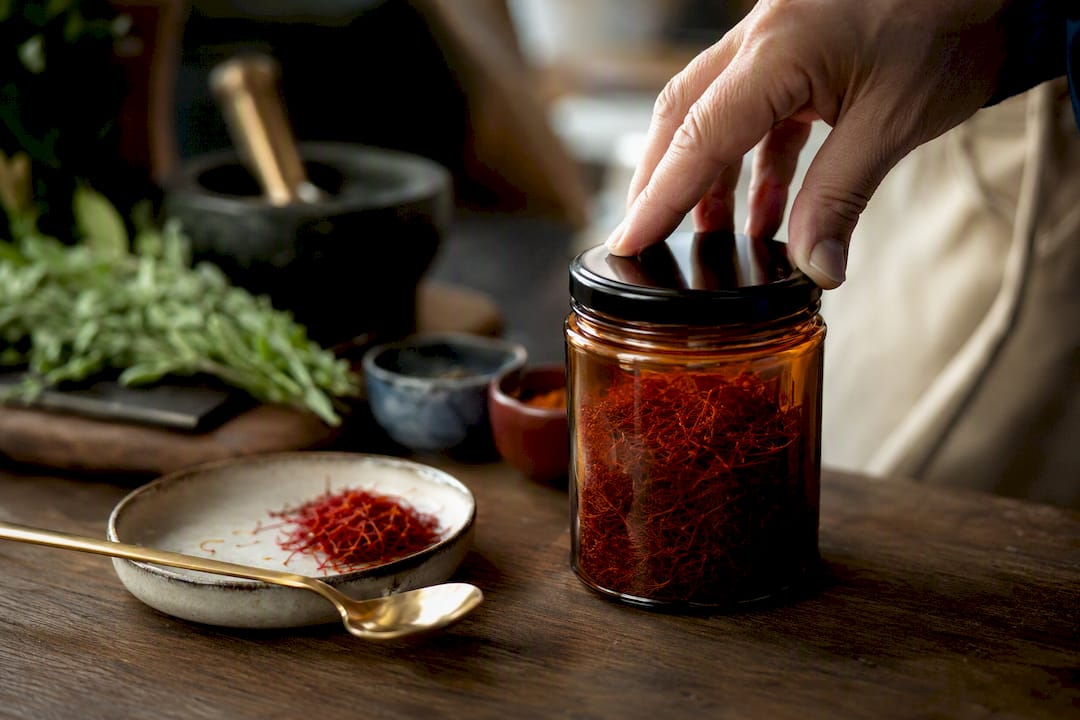
Pro Tip: Even Extra class saffron degrades if stored poorly. Keep threads in an airtight, opaque container away from heat and light, and expect noticeable flavour loss within twelve to eighteen months even under good conditions.
Where can you buy saffron with verified batch documentation?
Aptent stocks saffron sourced and verified against these same ISO 3632 criteria, with batch-specific certificates available for every lot in the range. Every purchase comes with recommended storage guidance to protect colour and aroma over time, and third-party testing can be arranged on request for buyers placing larger or event-scale orders.
If you’ve read this far, you already know that a beautiful thread and a convincing trade name aren’t proof of quality, a lab result is. Whether you’re stocking a private dining event or building out a corporate gift order, the Persane saffron collection gives you documented provenance rather than a marketing claim to take on faith. Browse the 15g format for kitchens ordering in volume, or start with the 5g pack to test a batch before committing further. Request the COA for any lot before you buy, and store it the way this checklist recommends once it arrives.
Frequently asked questions
What is the highest saffron quality grade? Extra class is the top ISO 3632 category, requiring crocin absorbance above 230 at 440nm along with corresponding picrocrocin and safranal minimums. Trade names like Super Negin often correlate with this tier but don’t guarantee it without lab confirmation.
How do I check if saffron is high quality without a lab? Run the water infusion test (threads should release colour slowly over 10 to 15 minutes while staying red), the rub-and-smell test for a hay-like aroma, and the paper blot test to check for dye bleed. These catch obvious fakes but can’t confirm ISO category placement.
Is Sargol saffron better than Negin? Neither is inherently better; they’re different cuts. Sargol is just the stigma tip and often tests high in colouring strength despite its short pieces, while Negin includes longer, more uniform threads. Match the format to your use case and always ask for the COA.
What moisture percentage is acceptable for saffron? Acceptable moisture limits sit below the ISO class-specific ceiling, generally staying well under 12%. Higher moisture accelerates degradation of crocin, picrocrocin and safranal, shortening shelf life even if the initial lab result looked strong.
Do I need a certificate of analysis for a small saffron purchase? For personal cooking use, a reputable retailer’s own quality assurance may be sufficient. For business purchases, events, or bulk orders, a batch-specific COA with ISO 3632 results protects you against costly quality disputes later.
Sources
- Codex-style saffron standard (EU document with table of chemical and physical characteristics)
- ISO news: ISO 3632 and saffron standards — ISO


