
Why texture contrast matters in dishes for lasting satisfaction
Texture contrast matters because it stops the palate from switching off. A dish built from a single texture, however delicious, reads as flat to the brain long before the flavour fades. Contrast (crunch against silk, cold against warm, brittle against yielding) keeps every forkful newly interesting, and that variety is what makes a meal feel indulgent rather than merely edible.
Try these tonight:
- Add one crisp element to something soft (toasted nuts on a purée, crumbled feta on a stew).
- Chill one component of a warm dish (a spoon of crème fraîche on hot soup).
- Cut the same vegetable two ways so raw and cooked sit on the same plate.
Key takeaways
Texture contrast works because the brain processes crunch, creaminess and temperature as part of flavour itself, not as decoration on top of it.
| Point | Details |
|---|---|
| Texture prevents palate fatigue | Repeating one texture through a whole dish reads as flat even when seasoning is perfect. |
| Crunch signals freshness | Crisp, hydrated textures act as a subconscious quality cue before flavour registers. |
| Texture affects perceived fullness | Mouthfeel descriptors change how filling a dish seems, independent of its calorie content. |
| Sequence contrast on the plate | Place crisp elements on top and creamy ones beneath so crunch lands first in the bite. |
| Protect crunch until the last moment | Add fried, toasted or crisp garnishes at the pass, not during prep, to stop them softening. |
For a pairing that leans on textural contrast at its most refined, a glass of Champagne Symposium alongside something creamy and something crisp shows the principle in a single sip and bite. Aptent’s private tasting events are built around exactly this kind of layered sensory experience, pairing fine caviar and rare wine with the same attention to contrast described here, and readers wanting to bring that level of texture to a home table can browse Aptent’s curated gourmet collection directly.
Table of Contents
- Why texture matters: the sensory and emotional case for contrast
- The science: how texture reshapes taste, reward and fullness
- How to add texture contrast: techniques for any dish
- Plating and sequencing: control what the diner tastes first
- Practical examples and quick swaps you can use tonight
- When contrast can go wrong: common mistakes and fixes
- Pro chef tips that make texture reliable
- A dish I couldn’t fix until I stopped thinking about flavour
- Sources
Why texture matters: the sensory and emotional case for contrast
A dish with only one texture, no matter how refined the flavour, exhausts the palate within a few bites. Sensory scientists call this repetition fatigue, and it is the reason a bowl of smooth soup benefits enormously from a scattering of something sharp and dry. Contrast interrupts that fatigue and resets the diner’s attention with every mouthful.
Texture also functions as a proxy for freshness and quality long before flavour registers. A crisp radish or a snap-fresh green bean signals recent harvest and proper hydration, which is why chefs guard crunch so fiercely at the pass. Lose that crunch through overcooking or premature plating, and the dish reads as tired even if the seasoning is perfect.
There is an emotional layer too. Anticipation builds when a diner sees a glossy sauce next to a visibly brittle garnish, because the eye predicts a contrast the mouth is about to confirm. That small moment of surprise, delivered bite after bite, is what people remember about a meal days later, more than any single flavour note.
- Monotextural dishes fatigue the palate faster than textured ones, even at equal seasoning levels.
- Crunch and crispness are read subconsciously as freshness markers.
- Visual textural cues build anticipation before the first bite lands.
Consumer research identifies two distinct diner types worth knowing about: Texture Explorers and Texture Picky eaters, who respond very differently to bold textural variety. Cooking for a mixed table often means offering an obviously textured element on the side rather than folding it through everything, so both camps get what they want.
The science: how texture reshapes taste, reward and fullness
Texture is not a side note to flavour. It is processed as part of flavour itself. Gastrophysics research shows that resistance, crunch and creaminess are integrated directly into how flavour is perceived, not layered on afterwards as a separate sensation. Bite into a stale chip and a fresh one side by side, identical seasoning, and the fresh one will taste noticeably better. That is texture doing flavour’s job.
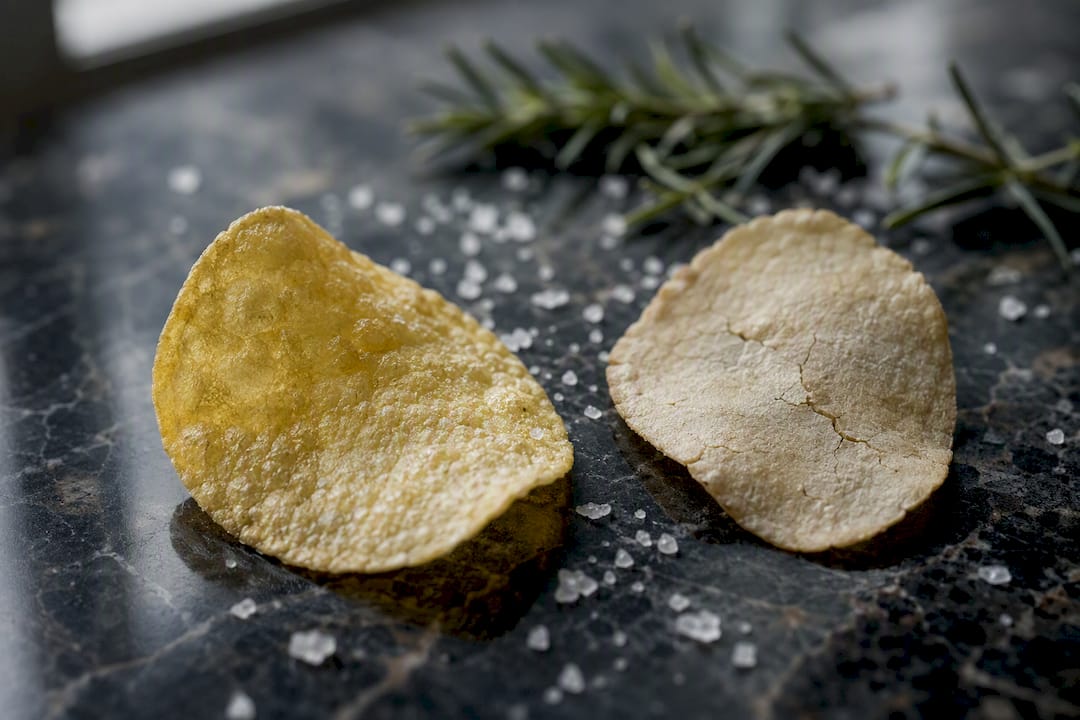
Neuroscience backs this up at the level of brain activity. Neurons in areas that also process taste and reward respond to viscosity and friction, which is part of why a silky sauce feels more indulgent than a thin one carrying the same fat content. Mouthfeel is not decoration. It is wired into the same circuitry that decides whether food tastes good at all.
Texture also shapes how full a dish feels before a single calorie is counted. Behavioural research on appetite shows that mouthfeel descriptors change how filling consumers expect a food to be, and that expectation affects both portion choice and eating rate. A thick, textured soup reads as more satisfying than a thin one of equal volume, purely because of how it moves in the mouth.
What this means at the stove:
- Chasing pure smoothness in every element wastes an easy lever for making a dish feel more substantial.
- A crisp topping can make a lighter main course read as more filling than it actually is.
- Naming textures on a menu or when describing a dish to guests measurably increases how appealing it sounds, a finding borne out by research on sensory descriptors and consumer intentions.
How to add texture contrast: techniques for any dish
Texture is a toolkit, not a single trick. Building contrast reliably means reaching for a specific technique to solve a specific gap: something soft needs something brittle nearby, something rich needs something clean cutting through it. Here are the methods worth having on hand.
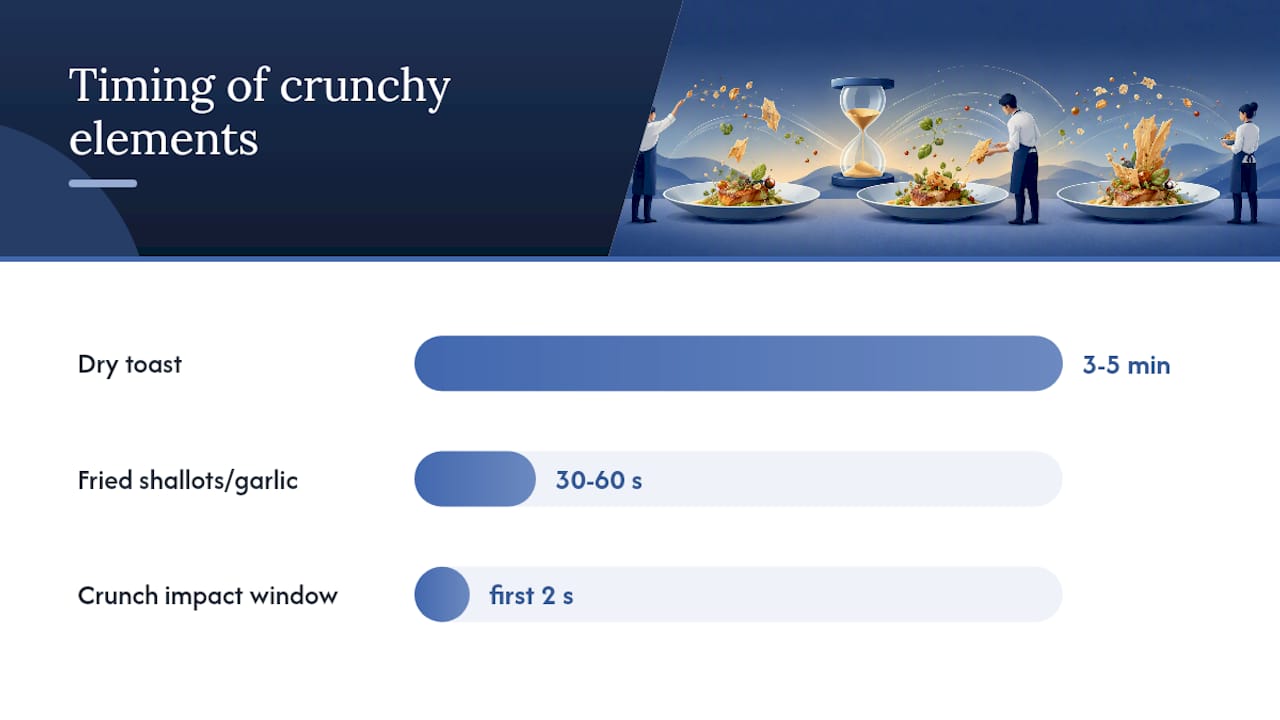
- Toast for crunch and aroma. Dry toast nuts, seeds, or breadcrumbs in a pan for 3 to 5 minutes until golden, stirring constantly so they colour evenly rather than scorch at the edges.
- Fry for shattering crispness. Thinly sliced shallots or garlic fry in hot oil for 30 to 60 seconds, no longer. Pull them the moment they turn pale gold, since they keep colouring after leaving the oil.
- Sear for a contrast shell. A hot pan gives protein or firm vegetables a crisp exterior while the inside stays tender, a technique classical French cooking built entire cuisines around, as explored in Aptent’s guide to classical French technique.
- Emulsify for silkiness. Whisking fat slowly into a base (egg yolk into oil, butter into a pan sauce) builds the kind of glossy, coating richness that plays beautifully against something dry and crisp.
- Chill one element deliberately. A cold quenelle on a hot dish, or a frozen granita shard beside a warm dessert, creates temperature contrast that reads as more dramatic than flavour contrast alone.
- Pickle or acidulate for cut-through. Quick pickled onions or a squeeze of citrus juice slice through richness and reset the palate between bites of something fatty.
- Finish with a powder or dust. A fine dusting of dehydrated mushroom, citrus zest, or toasted spice adds a textural whisper without competing for attention.
Fat distribution changes mouthfeel more than most home cooks realise. Choosing a fattier cut, a different rendering method, or a cooler serving temperature shifts a dish from silky and rich to clean and light, using the same base ingredients. Cutting angle matters just as much: halving berries or bias slicing vegetables so every forkful captures a mix of surfaces is a habit worth building into daily prep, and it is one of the structural techniques chefs use to prevent tasting boredom.
The design rule underneath all of this is simple: contrasting textures should lift each other, not compete. A crisp element needs a soft one to crash against. A rich, fatty element needs something acidic or crunchy to stop it feeling heavy. Pairing two soft, wet components (mash next to gravy next to braised meat) is comfortable but forgettable, because nothing in the bite surprises the mouth.
Pro Tip: Season your crunchy element separately and slightly more assertively than the rest of the dish. It loses potency the moment it meets moisture, so it needs to make its statement in the first two seconds on the tongue.
Plating and sequencing: control what the diner tastes first
Where you place an element on the plate decides what hits the mouth first and how quickly aroma reaches the nose, since a fork angled towards the centre of a plate scoops differently than one dragged across the rim. Professional plating instruction treats this as a primary design tool, not an afterthought, framing contrast in texture, colour and flavour as essential to avoiding tasting boredom.
- Put the crisp element on top, the creamy or saucy element in the centre, and the starch or base beneath. Gravity and cutlery angle mean the crunch lands first.
- Stack components for a cross-section bite (a slice through a layered dish) when you want every mouthful to contain all textures at once, rather than scattering, where a diner might get three soft bites before finding the crunch.
- Use visible cues, a glossy sauce, a shard standing proud of the plate, a scattering of micro-herbs, to signal texture before the fork even arrives. Layering choices change the sequence of chewing and aroma release, so a diner’s first impression sets expectations for the whole plate.
For anyone plating a shared table or an event-style spread, this sequencing logic applies at scale too. Aptent’s notes on multi-sensory dining experiences go further into how sight and aroma prime the palate before the first bite.
Practical examples and quick swaps you can use tonight
Small substitutions do most of the work here, and none require special equipment.
- Add toasted seeds or granola to porridge instead of leaving it smooth.
- Swap a soft top layer for crisped panko on a baked pasta dish.
- Finish creamy soup with a drizzle of chilli oil and crushed nuts.
- Add pickled shallots to a rich braise.
- Use a crumbled biscuit base under mousse instead of serving it alone.
- Add sliced raw fennel or radish to a cooked vegetable side.
- Top mashed potato with crisp fried leeks.
- Serve ice cream with a shard of brittle toffee rather than a soft sauce alone.
- Add a handful of fresh herbs whole, not chopped fine, to a stew just before serving.
- Finish grilled fish with a spoon of cold, herby yoghurt for a hot and cold contrast.
Three micro-recipes to test the principle directly:
- Breakfast: Stir Greek yoghurt with honey, then top with toasted oats, chopped almonds and fresh berries just before eating, never earlier, or the crunch will soften.
- Dinner: Sear a piece of firm fish skin side down until crisp, plate over a silky pea purée, and finish with crisp-fried capers.
- Dessert: Layer a chilled panna cotta with a crushed biscuit crumb and a warm poached fruit compote spooned on just before serving.
Hold crisp garnishes separately in the kitchen and add them at the very last moment. Anything fried or toasted starts absorbing ambient moisture the second it meets a warm or wet surface, and a few minutes of holding time is often the difference between shatter and sog.
When contrast can go wrong: common mistakes and fixes
Crunch added too early softens before the dish reaches the table; add it at the pass, not during prep. Over-saucing drowns crisp elements, so serve extra sauce on the side. Mismatched moisture (a soggy base under a wet filling) fixes itself with a barrier of toasted crumb, a crisp pastry layer, or a thin spread of fat between the two.
Pro chef tips that make texture reliable
- Protect crisp elements until the pass and plate them last, resting them on a rack rather than paper so trapped steam cannot soften them, a habit professional kitchens rely on constantly.
- Pair a warm element with a cold one deliberately. Temperature contrast reads as more dramatic than flavour contrast alone.
- Under-season the soft base slightly and let the crunchy garnish carry more seasoning. It sharpens the contrast diners actually taste.
Pro Tip: Cut a garnish on the bias rather than straight across. It exposes more surface area, so it crisps faster and reads as more textured on the plate.
A dish I couldn’t fix until I stopped thinking about flavour
For years, Aptent’s kitchen team over-seasoned a mushroom risotto that never quite landed, until someone finally added a scattering of crisp fried shallots on top. Nothing about the flavour changed. The dish suddenly worked. Pick one dish tonight and add a single contrasting texture to it. You will taste the difference before you can explain it.
Sources
- Why Texture Is the Flavor You Don’t Mention — Terumi Morita
- Consumer research on texture segments (2026) — Food Quality and Preference (DOI record)
- Neural representation of oral texture and taste — Wiley Online Library
- PMC article on sensory and appetite interactions (PMC2726647)


