
Multi-sensory dining experiences: what curious diners need to know
A multi-sensory dining experience is a curated culinary event that deliberately stimulates sight, sound, smell, touch, and taste in concert to create an immersive narrative, rather than leaving any of those senses to chance. According to research published in the International Journal of Gastronomy and Food Science, this kind of event is defined by its gastromotive design: every sensory element is synchronised with the meal’s pacing to carry the diner through a coherent story. The result is something that sits between theatre and gastronomy, where flavour is only one of several instruments being played at once.
What distinguishes these experiences from an ordinary restaurant meal is intentionality. As a primer on multisensory food interaction published in Frontiers in Computer Science explains, a multisensory experience is formed when the sensory elements of an event have been carefully crafted by someone — that deliberate authorship is what separates it from the incidental sensory noise of everyday dining. For the curious diner, this means you are not simply eating a meal; you are moving through a designed perceptual environment where the lighting, the scent in the air, and the texture of the plate have all been chosen to shape what you taste and remember.
Key takeaways
Multi-sensory dining is defined by deliberate sensory authorship: when sight, sound, smell, touch, and taste are designed in concert, the brain constructs a richer, more emotionally resonant flavour experience than any single sense could produce alone.
| Point | Details |
|---|---|
| Intentional design is the defining quality | A multi-sensory experience is distinguished from ordinary dining by deliberate, authored sensory design across all five senses. |
| Crossmodal perception explains the science | The brain integrates sensory signals simultaneously, so sound, light, and scent measurably alter how flavour registers. |
| Synchronisation is the critical design challenge | Misaligned triggers between service and sensory cues are the most common failure point in immersive dining production. |
| Practical booking requires specific questions | Ask about allergen management, scent sensitivity options, accessibility, and refund policy before confirming any immersive event. |
| Aptent offers private bespoke sensory events | For intimate luxury occasions, Aptent designs curated sensory pairings around prestige caviar and fine wine for small guest lists. |
Table of Contents
- What does a multi-sensory dining experience actually cover?
- How does each sense shape what you taste and remember?
- What technologies and techniques do designers use?
- Why does sensory design actually change the way food tastes?
- Who shaped multi-sensory dining, and where did it begin?
- What should you expect if you attend one?
- Why do people love it — and what are the legitimate criticisms?
- How do designers actually build one of these experiences?
- Where can you find multi-sensory dining in Australia?
- The art of restraint in luxury sensory design
- Aptent’s boutique sensory dining events
- Sources
What does a multi-sensory dining experience actually cover?
The term encompasses a surprisingly wide range of formats, from intimate scent-paired tasting menus to large-scale theatrical productions where projection mapping transforms the walls between courses. What they share is the intentional design of sensory elements beyond taste alone — the deliberate orchestration of the full perceptual environment to heighten enjoyment and create lasting memory.
Common formats include:
- Dark dining and blindfolded tastings, where sight is removed entirely to amplify the remaining senses and induce heightened curiosity.
- Projection-led theatrical dinners, where 360° visuals transform the dining room into a forest, ocean, or abstract dreamscape as each course arrives.
- Scent-paired menus, where aroma diffusers release specific fragrances timed to complement each dish.
- Interactive tasting games, where diners guess ingredients, manipulate textures, or use unconventional utensils as part of the narrative.
- Gastronomic theatre hybrids, such as productions like Sensorium in Milan, which integrate live vocals, spatial sound, and cuisine into a single staged narrative.
The movement draws its intellectual roots from experiential design and modernist cuisine, where chefs began treating the dining room as a total sensory environment rather than a backdrop for plating.
How does each sense shape what you taste and remember?
Sight
Visual design is the first layer a diner encounters, and its influence on flavour perception is well-documented. Lighting colour and intensity alter how sweet or bitter a dish registers; warm amber light tends to make food appear richer, while cool blue light can suppress appetite. Projection mapping takes this further, wrapping the table and walls in moving imagery that shifts the emotional register of each course. A dish served against a visual seascape, for instance, primes the palate for oceanic flavours before the first bite.
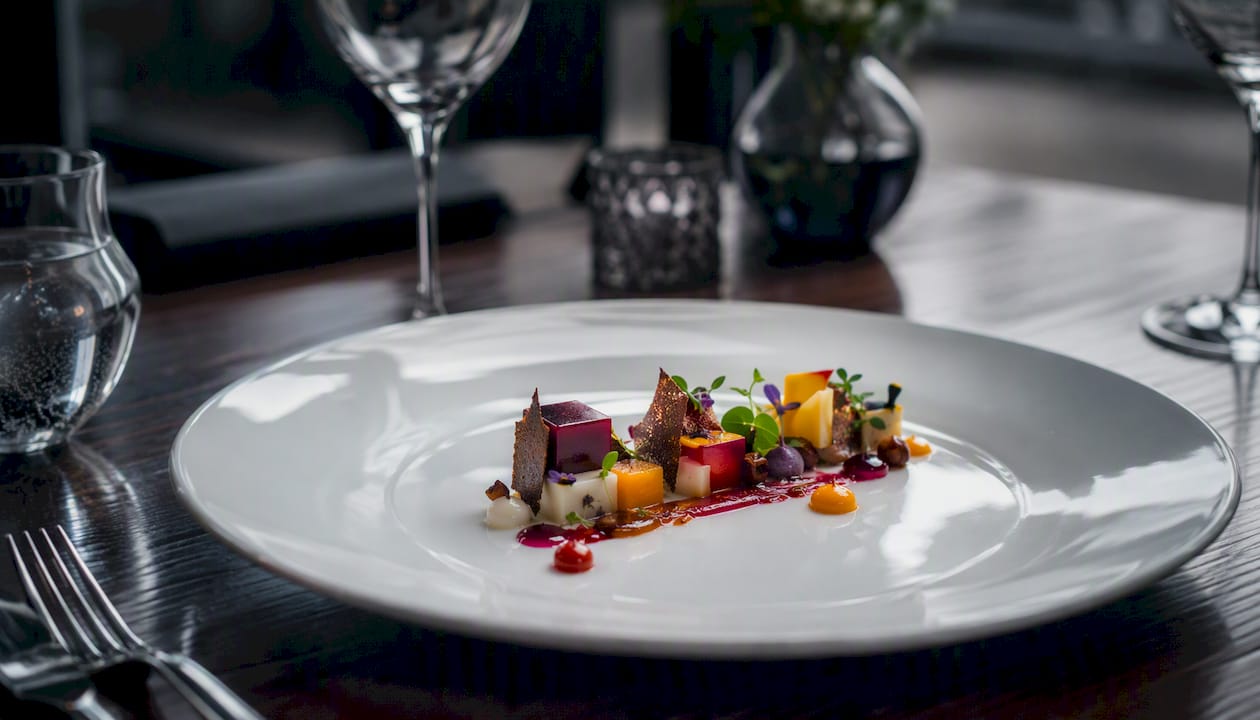
Vibrant and considered food presentation also plays a role: the geometry of a plate, the contrast of colours, and the height of a garnish all communicate quality and narrative before taste enters the picture.
Sound
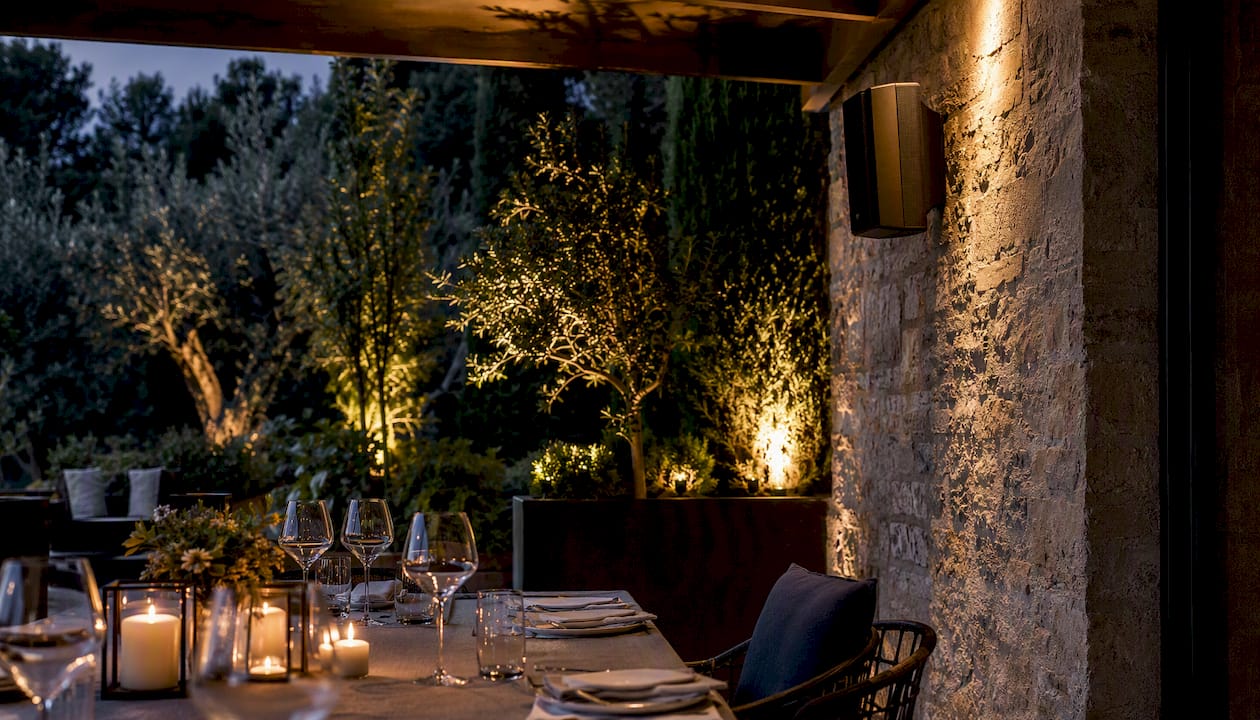
Curated soundscapes do more than set a mood. Research has shown that high-pitched sounds tend to amplify sweetness, while low, resonant tones accentuate bitterness and umami. Spatial audio systems place sound directionally around the table, so a diner might hear waves approaching from the left as a seafood course arrives, or birdsong overhead during a dish inspired by a forest foraging scene. The effect is not merely atmospheric; it measurably shifts flavour perception.
Smell
Aroma is the sense most tightly linked to memory and emotion, which makes it one of the most powerful tools in a designer’s kit. Directional aroma diffusion systems can release a specific scent at a precise moment — petrichor as a rain-themed course is plated, or warm brioche as a dessert approaches — without overwhelming neighbouring tables. Multisensory food experiences research confirms that the deliberate integration of scent with colour and sound creates impressions tied specifically to memory and emotion, making a meal far more likely to be recalled vividly months later.
Touch
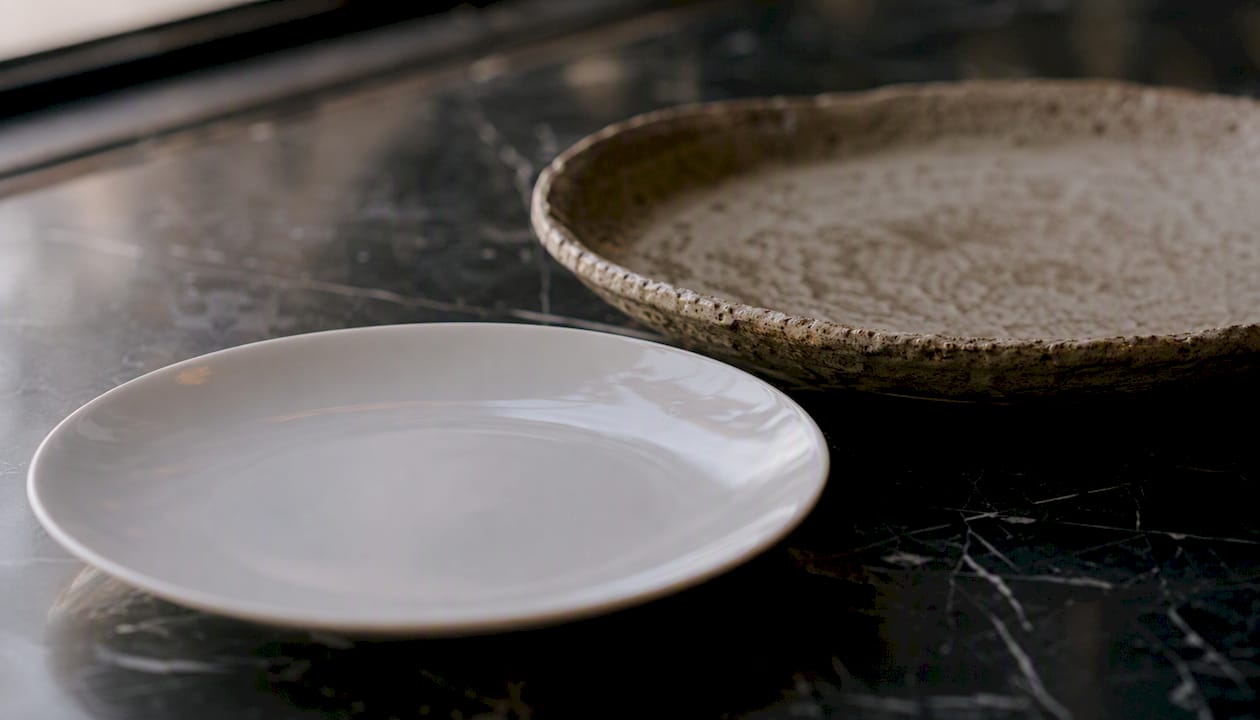
The physical sensation of a plate, a vessel, or a utensil primes expectation before food reaches the mouth. Rough, heavy stoneware signals rusticity and earthiness; cool, smooth porcelain communicates precision and refinement. Temperature contrasts between a chilled serving stone and a warm broth, or the deliberate use of unusual tactile props, add a layer of surprise that keeps diners present and attentive.
Taste and mouthfeel
Taste itself is shaped by everything that precedes it. Texture contrasts within a single dish — a crisp shell giving way to a liquid centre, or a gel that dissolves on contact — create what food scientists call mouthfeel complexity, which extends the duration of flavour perception. Proprioception, the body’s sense of its own position and movement, also plays a subtle role: eating while standing, reclining, or using unfamiliar utensils changes how the brain processes the experience.
Pro Tip: When you sit down at an immersive dinner, pause before the first course and notice what is already happening around you. If the lighting, the ambient sound, and the scent in the room feel purposeful rather than incidental, you are in the presence of deliberate sensory design.
What technologies and techniques do designers use?
The practical toolkit for immersive dining has expanded considerably over the past decade, drawing from theatre production, spatial computing, and food science in equal measure. Common technologies include:
- Projection mapping, which covers surfaces in responsive visuals that shift with each course.
- 360° projection systems, which envelop the entire dining room in a seamless visual environment.
- Spatial and surround audio, including directional speaker arrays that place sound at specific points around the table.
- Aroma diffusion systems, ranging from simple scent diffusers to precision directional units that target individual seats.
- Edible foams, gels, and encapsulations, which use modernist culinary techniques to create unexpected textures and flavour-release moments.
- Augmented and virtual reality overlays, used in some contemporary formats to layer digital imagery onto physical dishes.
- Tactile props and interactive service elements, such as textured vessels, temperature-controlled plates, and ingredient-reveal theatre.
A projection-mapped table, for example, might display a blooming garden that grows across the surface as a spring vegetable course is served, then dissolves into charred earth as a smoked meat course follows. The visual transition reinforces the flavour shift without a word being spoken.
Cost and scale vary considerably. A permanent installation in a dedicated immersive restaurant requires significant capital investment in projection hardware, acoustic treatment, and scent infrastructure. Pop-up formats, by contrast, can achieve a compelling result with portable projectors, a curated playlist, and a skilled perfumer working with the kitchen — making the format accessible to event producers operating at boutique scale.
Why does sensory design actually change the way food tastes?
The scientific explanation lies in crossmodal perception: the brain does not process each sense in isolation but integrates signals from multiple channels simultaneously to construct a unified experience. When sound, sight, and smell all point toward the same flavour profile, the brain amplifies that signal, making the taste register as more intense, more complex, or more emotionally resonant than it would in a neutral environment.
This is the mechanism behind what researchers call crossmodal correspondences: the consistent, predictable relationships between sensory channels that designers exploit deliberately. A high-pitched, bright soundscape genuinely makes a sweet dish taste sweeter. A red plate makes a chocolate dessert taste richer. These are not subjective impressions; they reflect how the brain constructs flavour from converging sensory inputs.
| Sense engaged | Psychological effect | Common design example |
|---|---|---|
| Sight (colour, light) | Alters sweetness, richness, appetite | Warm amber lighting for dessert courses |
| Sound (pitch, rhythm) | Amplifies sweetness or bitterness | High-pitched tones paired with citrus dishes |
| Smell (aroma timing) | Triggers memory and emotional resonance | Petrichor diffused during an earth-themed course |
| Touch (texture, temperature) | Sets expectation, extends flavour duration | Chilled stone vessels for raw seafood |
| Taste (texture contrast) | Creates mouthfeel complexity | Crisp shell with liquid centre |
Memory and emotion amplify the effect further. When a scent or sound evokes a personal memory, the emotional charge of that memory transfers to the food, making the dish feel more meaningful and more delicious than its ingredients alone could account for. This is why the most memorable immersive dinners tend to use narrative arcs — a journey through seasons, a childhood recalled, a landscape traversed — rather than disconnected sensory novelties. The deliberate integration of sensory elements with memory and emotion is what separates a genuinely affecting experience from a technically impressive one.
Research published in the International Journal of Gastronomy and Food Science provides academic grounding for these claims, with case studies linking multisensory technology and brand experience in contemporary dining contexts.
Who shaped multi-sensory dining, and where did it begin?
The intellectual foundations were laid in the early twentieth century, when the Italian Futurists published their Manifesto of Futurist Cooking in 1930, arguing that a meal should engage all the senses simultaneously and that the dining environment was as important as the food itself. That provocation remained largely theoretical until the modernist cuisine movement of the 1990s and 2000s gave chefs the technical tools to act on it.
Ferran Adrià at elBulli in Catalonia pioneered the use of culinary science to subvert expectation: spherification, edible foams, and temperature illusions created dishes that looked like one thing and tasted like another, engaging the diner’s sense of surprise as a sixth instrument. Heston Blumenthal at The Fat Duck in Bray took the concept further by incorporating sound directly into the meal, most famously with his “Sound of the Sea” dish, served with an iPod playing ocean sounds to amplify the seafood flavours.
The academic dimension was formalised through the work of Professor Charles Spence at the University of Oxford, whose research on crossmodal correspondences gave the culinary world a scientific vocabulary for what chefs had been doing intuitively. His collaborations with Blumenthal and others produced some of the most cited work in the field of gastrophysics.
Contemporary practitioners have extended the form into full theatrical production. Sensorium in Milan integrates live performance, spatial audio, and cuisine into a single staged event. Le Cordon Bleu has noted the growing professional interest in these methods, with culinary training programmes increasingly incorporating sensory design principles alongside classical technique. Bangkok-based chef Gaggan Anand, whose restaurant Gaggan has explored the concept of a “sense” menu, uses dishes that subvert expected utensils and appearances to create what he describes as an extra sense of surprise.
What should you expect if you attend one?
The format varies by producer, but most ticketed immersive dining events follow a recognisable arc:
- Arrival and orientation: guests are welcomed, often in a pre-dining space where the sensory environment is already active, establishing the narrative before the first course.
- Opening course with sensory cue: a short dish paired with a specific sound, scent, or visual element that introduces the evening’s theme.
- Progressive courses: each subsequent course advances the narrative, with sensory elements shifting in intensity and character to reflect the story’s development.
- Climax course: typically the most technically ambitious, where projection, sound, and aroma converge at their most intense.
- Finale and resolution: a closing course, often simpler and warmer in tone, that brings the narrative to a satisfying close.
Productions like SVET in Moscow present the entire experience as a two-hour performance without interval, where each course is paired with the show to build a coherent narrative from beginning to end — a useful benchmark for what a fully produced immersive dinner looks and feels like.
Pricing reflects the production investment. Ticketed theatrical dinners in Australia typically sit at a premium above a standard fine-dining set menu, given the cost of technology, performance, and design. Pop-up formats and festival events offer a more accessible entry point. Always check whether the ticket price includes beverages, and whether a service charge is added at the door.
Accessibility and dietary considerations deserve careful attention before booking. Ask organisers directly about: allergen management across all courses; whether scent diffusion can be adjusted or disabled for guests with sensitivities; the level of darkness in dark-dining formats and whether a companion can assist; mobility requirements if the format involves standing, movement, or unconventional seating; and the refund or exchange policy if dietary needs cannot be accommodated.
Why do people love it — and what are the legitimate criticisms?
The appeal of immersive dining is genuine and grounded in how the brain works. When every sense is engaged with intention, flavour perception deepens, emotional resonance increases, and the meal becomes a memory rather than a transaction. Novelty plays a role too: the element of surprise, of not knowing what the next course will look, sound, or smell like, keeps diners in a state of attentive pleasure that a conventional restaurant rarely sustains across two hours.
Storytelling is perhaps the most underrated benefit. A well-designed immersive dinner gives a group of people a shared narrative to discuss, recall, and return to. For corporate events, private celebrations, or any occasion where connection matters, that shared story has social value well beyond the food itself.
The criticisms, however, are worth taking seriously.
Cost is the most common barrier. A fully produced immersive dinner can represent a significant outlay, and the value proposition depends entirely on execution quality. Sensory overload is a real risk when designers prioritise intensity over coherence: too many simultaneous stimuli, or stimuli that conflict rather than converge, produce fatigue rather than pleasure. Reproducibility is another concern — an experience that relies on live performance elements may vary considerably between sittings.
Red flags when booking:
- No clear information about allergen management or scent sensitivity options.
- Vague descriptions of the “immersive” elements with no specifics about technology or format.
- No refund or exchange policy for dietary or accessibility reasons.
- Pricing that seems inconsistent with the described production scale.
- No named chef, creative director, or production company attached to the event.
How do designers actually build one of these experiences?
The creation of a coherent immersive dining experience follows a disciplined sequence, and the most common failures occur when that sequence is compressed or skipped.
- Research and concept development: the design team establishes the narrative theme, identifies the sensory palette (which senses will be engaged, in what sequence, at what intensity), and maps the emotional arc of the evening.
- Menu and sensory brief alignment: the kitchen and the sensory design team work in parallel, ensuring that each dish’s flavour profile is matched by a corresponding sensory environment rather than designed independently.
- Prototype at table scale: a small group of test diners experiences the full sequence before any public run, with particular attention to timing, scent intensity, and the coherence of transitions between courses.
- Scent sensitivity and allergen testing: all aroma elements are reviewed for potential sensitivities, and the kitchen confirms allergen management across every course.
- Technology synchronisation: projection, audio, and aroma systems are rehearsed against the service sequence so that triggers fire at the correct moment relative to plate arrival.
- Pacing refinement: the design team adjusts the duration of each sensory cue based on prototype feedback, ensuring that no single element overstays its welcome.
- Accessibility and safety review: mobility, lighting levels, and emergency egress are confirmed, particularly for dark-dining or movement-based formats.
The primer on multisensory design recommends running small, focused sensory tests — including scent-sensitivity trials and timing rehearsals — before any public event, precisely because the interaction between elements is difficult to predict without a live audience.
Pro Tip: The most common failure point in immersive dining is the gap between plate arrival and sensory trigger. If the projection or scent cue fires ten seconds after the dish lands, the diner has already begun eating in a neutral environment. Rehearse the service sequence with the full technology stack running, not just the kitchen alone, and assign a dedicated trigger operator whose sole role is synchronisation.
Where can you find multi-sensory dining in Australia?
Australia’s immersive dining scene is active and growing, concentrated in Sydney, Melbourne, and Brisbane but extending to festival circuits and regional pop-ups. The most reliable discovery channels are:
Dedicated event platforms such as Eventbrite and Humanitix list ticketed immersive dining events by city, and filtering by “immersive” or “experiential dining” surfaces most of the major productions. Arts and food festivals — including the Melbourne Food and Wine Festival and Vivid Sydney — regularly feature multi-sensory dining commissions as part of their programmes, often pairing local chefs with theatre or installation artists.
Immersive theatre companies that have expanded into dining are worth following directly: their newsletters and social media accounts announce new productions before they appear on general ticketing platforms. Restaurant newsletters from fine-dining venues with a history of experiential programming are similarly useful, as many chefs introduce sensory elements through special-event dinners before committing to a permanent format.
For a broader understanding of how culinary experiences are designed and what to look for when evaluating them, specialist food and travel resources offer useful context alongside event listings.
When booking, ask the organiser: whether scent diffusion can be adjusted; what the accessibility arrangements are for mobility or vision considerations; whether the seating is fixed or flexible; what the refund policy is; and whether dietary requirements can be accommodated across all courses, not just the main. A reputable producer will answer all of these questions clearly and without hesitation.
The art of restraint in luxury sensory design
The most affecting immersive dining experiences Aptent has observed in the luxury private events space share one quality that is rarely discussed in the broader conversation about the format: restraint. A client brief for a private caviar and champagne pairing for twelve guests at a harbourside residence does not call for 360° projection or a surround-sound score. It calls for considered lighting that flatters the pearl lustre of the roe, a single fragrance note that echoes the brine of the sea, and a sequence of courses whose pacing allows conversation to breathe. The sensory design is present and purposeful, but it serves the gathering rather than commanding it.
This is the practical constraint that separates luxury private events from theatrical productions: the guest is not an audience member but a participant, and the experience must feel personal rather than performed. Careful curation of ingredients, atmosphere, and sequence matters more than technical spectacle. When the sensory elements are chosen with that understanding, a private dinner of six courses becomes something a guest recalls with the same vividness as a full theatrical production — not because it overwhelmed the senses, but because it honoured them.
Aptent’s boutique sensory dining events
For those seeking a private, intimate expression of multi-sensory dining rather than a ticketed theatrical production, Aptent offers bespoke gourmet events designed for small, discerning guest lists. Each event is built around a curated selection of rare French wines, champagne, and prestige caviar sourced from distinguished global producers, with sensory pairings developed to complement the character of each product.
The format suits private celebrations, corporate hospitality, and any occasion where the quality of the experience matters as much as the quality of the food. Aptent’s approach draws on deep knowledge of luxury ingredient provenance and the principles of sensory pairing to create evenings that feel considered rather than contrived. To enquire about a private event or to explore the full range of curated products available for a bespoke tasting, visit Aptent Gourmet.
Sources
The following sources informed this article and are recommended for readers who wish to explore the subject further:
- Gastromotive dining: Using experiential multisensory dining to engage customers
- A primer on multisensory experiences and their implications for human‑food interaction
- Multisensory food experiences in Northern Norway (example and review)
- Is multi-sensory experience the future of fine dining?


