
Distillery tour experience: what to expect as a visitor
A distillery tour experience is a guided, behind-the-scenes visit to a working spirits producer that walks you through each stage of production and concludes with a structured tasting of the finished spirit. Most visits typically span from under an hour up to a couple of hours, include multiple pours to sample, and generally require advance booking. Before you arrive, confirm these essentials:
- You are 18 or older and carry a valid photo ID
- You are wearing closed-toe shoes
- Tasting is included in your ticket tier (not all tours include it automatically)
- You have arranged transport home — tasting on site means you should not drive
That is the short answer. What follows is everything you need to choose the right experience, prepare properly, and get the most from every pour.
Key takeaways
A distillery tour experience combines a guided production walkthrough with a structured tasting, and the quality of that experience depends almost entirely on preparation, the right ticket tier, and a plan for getting home safely.
| Point | Details |
|---|---|
| Book the right tier | Confirm whether tasting is included before checkout; standard and premium tiers differ significantly in length and inclusions. |
| Wear closed-toe shoes | Mandatory on production floors; sandals and open heels are refused entry at virtually every venue. |
| Bring photo ID | Required for all alcohol tastings in Australia; 18+ only, no exceptions. |
| Plan transport in advance | Australia’s 0.05 BAC limit means arranging a rideshare or designated driver before you arrive, not after. |
| Ask about accessibility | Heritage buildings vary widely; contact the venue directly if mobility or dietary requirements apply to your group. |
Table of Contents
- What happens on a distillery tour, step by step?
- Which type of distillery experience suits you?
- Practical details: length, cost, booking, and age rules
- What to wear, what to bring, and safety on the production floor
- Tasting etiquette and how to get the most from a guided pour
- Notable Australian distillery experiences worth booking
- Why distillery tours matter: the case for experiential spirits
- COVID-19 and health protocols on distillery tours
- Photography and recording policies during tours
- Food options and pairing suggestions during a distillery visit
- The distillery visit as a curated sensory occasion
- Sources
What happens on a distillery tour, step by step?
A craft distillery tour typically unfolds in three distinct acts: a production walkthrough, a guided tasting, and an opportunity to purchase distillery-exclusive bottles or merchandise. Many craft venues complete all three in 30–45 minutes; larger heritage producers stretch the same arc across 90 minutes or more.
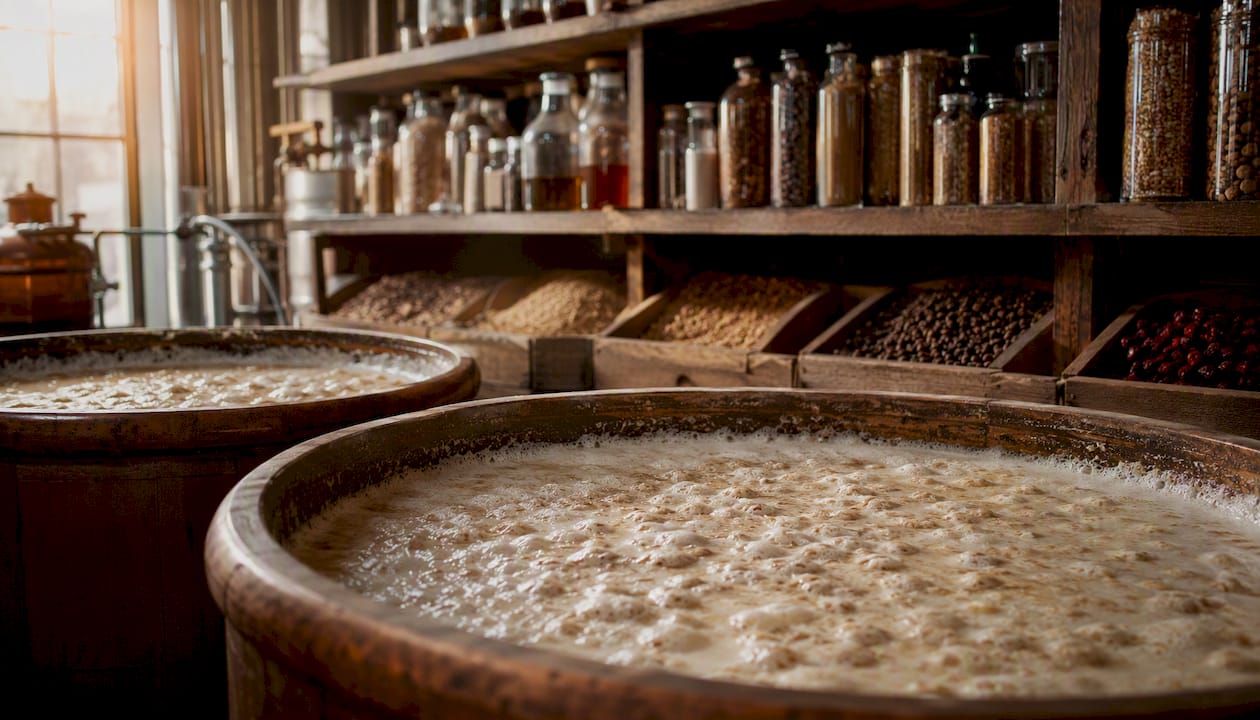
The walkthrough begins at the raw ingredients. Your guide will show you the grain, fruit, or botanicals that define the spirit’s character and explain how sourcing decisions shape flavour before distillation begins. From there, you move through mashing and fermentation, where sugars convert to alcohol in large open vessels that carry a warm, yeasty perfume quite unlike anything you encounter in a bottle. The fermentation stage is often where guides pause longest, because the choices made here, temperature, yeast strain, duration, are invisible in the final product yet decisive for its personality.
Distillation follows, and this is where the theatre of the production floor peaks. Copper pot stills or column stills dominate the room, and a skilled guide will explain the concept of “cuts”: the precise moment a distiller separates the desirable “heart” of a run from the harsher “heads” and “tails.” Understanding cuts transforms how you taste the spirit later, because you begin to appreciate the restraint involved in every bottle.
Ageing and bottling round out the walkthrough. Warehouse or cask rooms tend to be cooler and quieter, suffused with the gentle vanilla and oak notes that escape through barrel staves over years of maturation. The tasting that follows is structured rather than casual: guides typically pour three to five expressions in a deliberate sequence, moving from lighter or younger spirits to richer, more complex aged expressions, often with water and a palate cleanser between pours.
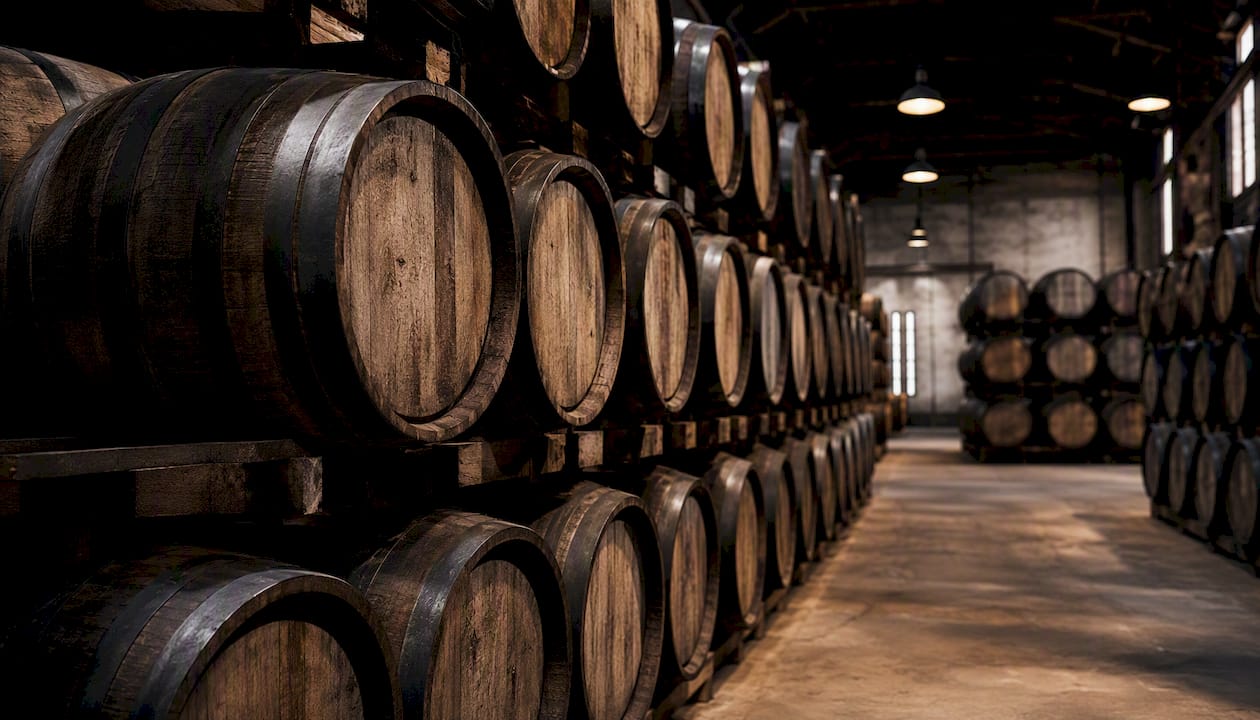
A distillery tour usually covers the history of the business alongside the production stages, so the tasting becomes a sensory summary of everything you have just witnessed.
Which type of distillery experience suits you?
The distillery visit has evolved well beyond a single format. Understanding the tiers helps you match the experience to your curiosity, budget, and group.
Standard tour and tasting is the entry point: a guided production walkthrough followed by three to five pours of core-range expressions. It suits first-time visitors and those who want a solid grounding in how spirits are made without committing to a longer session.
Premium warehouse or cask experiences add access to maturation areas, additional pours from single casks or limited releases, and often a longer session with a senior distiller or brand ambassador. Heritage distilleries commonly run tiered experiences with different lengths, tasting counts, and booking requirements, so premium tickets frequently sell out well ahead of peak periods.
Make-your-own gin or blending classes are hands-on sessions where you select botanicals, adjust ratios, and leave with a personalised bottle. These run two hours or more and appeal to visitors who want active participation rather than observation.
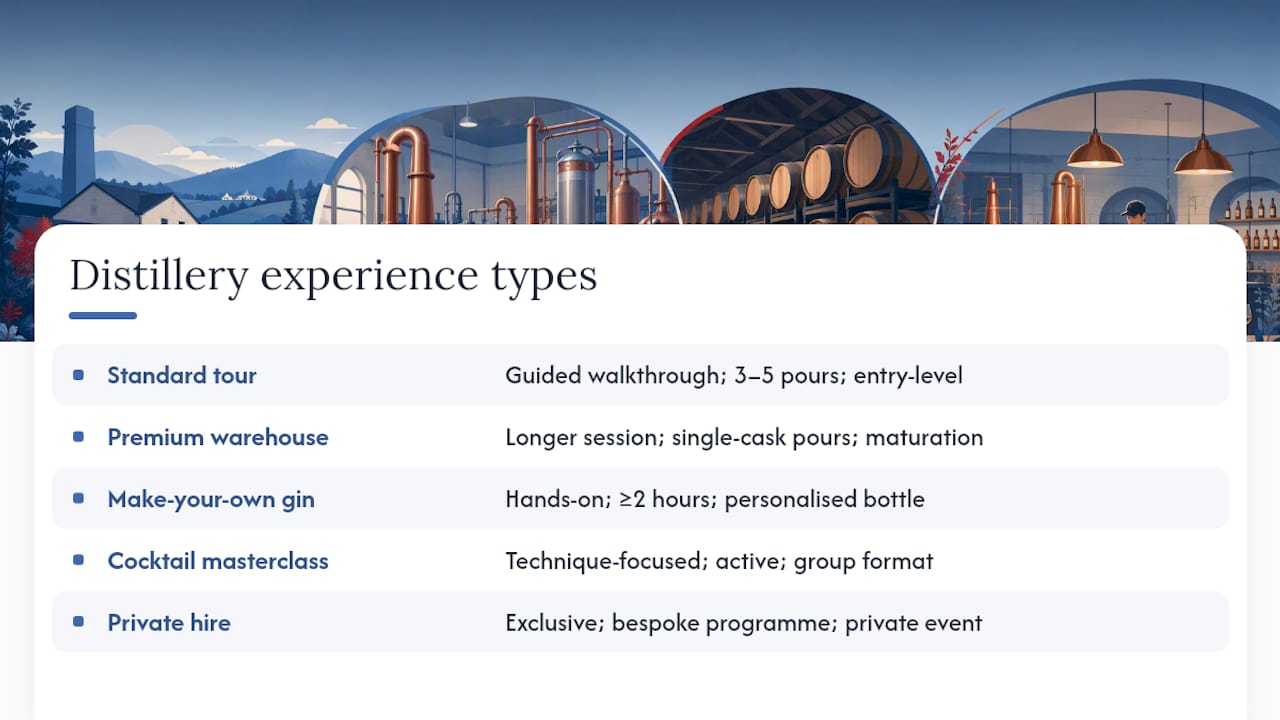
Cocktail masterclasses sit adjacent to blending classes but focus on technique: shaking, stirring, garnishing, and understanding how a spirit’s character interacts with mixers and bitters. They suit groups celebrating a special occasion.
Private and group hire formats allow a venue to be booked exclusively, with a bespoke programme designed around the group’s interests. These are the natural choice for corporate entertaining, milestone birthdays, or any occasion where a curated, uninterrupted experience matters more than cost.
Decision cues worth considering: choose a standard tour if you are new to spirits; step up to a premium or hands-on format if you already have a working vocabulary for flavour; and opt for private hire when the occasion itself is the priority.
Practical details: length, cost, booking, and age rules
Standard tours in Australia typically run 60–90 minutes and are priced in a range that reflects the venue’s scale and inclusions. Smaller craft operations sometimes offer drop-in visits outside peak times, while larger or more celebrated producers operate fully ticketed, reservation-only systems. Standard 60–90 minute tours with 3–5 samples are a common format internationally, and Australian venues follow a broadly similar structure, though pricing varies by distillery and experience tier.
Book online and book early. Popular Australian distilleries, particularly those in tourism-heavy regions like Tasmania or inner Sydney, sell out weeks ahead during summer and long weekends. Many venues differentiate between a “tour-only” and a “tour-and-tasting” ticket, and the distinction matters: arriving expecting a tasting on a tour-only ticket is a disappointment easily avoided by reading the inclusions carefully before checkout.
Age and ID rules are non-negotiable. Alcohol tastings in Australia are restricted to guests aged 18 and over, and venues will ask for government-issued photo ID at check-in. If you are organising a group, confirm the age policy in advance, particularly if any guests are under 25 and may be asked for ID under the Responsible Service of Alcohol framework.
Accessibility varies considerably between venues. Some distilleries occupy heritage industrial buildings with uneven floors and limited lift access; others have invested in purpose-built visitor centres with full accessibility. Contact the venue directly before booking if mobility, hearing, or dietary requirements apply to your group.
What to wear, what to bring, and safety on the production floor
The production floor is an active industrial environment, and the practical requirements reflect that. Closed-toe shoes are non-negotiable, and layered clothing is advisable because distilleries move you between warm still rooms, cool fermentation areas, and cold cask warehouses within a single visit.
- Closed-toe shoes: mandatory at virtually every venue; sandals and open heels are refused entry to production areas
- Layered clothing: a light jacket or overshirt handles the temperature variation between still rooms and barrel stores
- Photo ID: required for all alcohol tastings; bring the original, not a photo on your phone
- Booking confirmation: have it accessible on your device or printed
- Transport plan: arrange a designated driver, rideshare, or taxi before you leave home
Pro Tip: If you are visiting a distillery in a regional area, check whether the venue offers a shuttle partnership with local accommodation or a nearby town. Several Tasmanian and regional Victorian distilleries have arrangements with local operators that make the logistics considerably simpler.
Leave large bags and backpacks in the car where possible. Production areas are often narrow, and guides appreciate guests who can move freely between equipment without catching on machinery or displays.
Tasting etiquette and how to get the most from a guided pour
A guided tasting is a structured sensory experience where following the guide’s sequence of observing, smelling, sipping, and noting nuances yields a deeper appreciation than casual drinking.
- Look: observe colour and viscosity; a deep amber signals extended oak ageing, while a clear spirit is typically unaged or lightly rested
- Nose: hold the glass just below your nostrils and breathe gently; identify one or two dominant aromas before the guide names them, then compare
- Sip: take a small amount, let it coat the palate, and note the arrival, mid-palate, and finish separately
- Note: write down one word per expression; over several pours, patterns emerge that reveal your personal flavour preferences
Ask questions that open up the craft rather than test the guide. Useful ones include: “What drove the decision on the cut point for this expression?”, “Which cask type contributes most to this flavour profile?”, and “Is there a single-cask or limited release not on the standard menu?” These questions signal genuine curiosity and often prompt guides to share details not covered in the scripted walkthrough.
Transport deserves a second mention here. Australia’s legal blood alcohol limit is 0.05, and even a modest tasting session can push a careful driver close to that threshold. Arrange a rideshare, taxi, or designated driver before you arrive, not after the final pour.
Notable Australian distillery experiences worth booking
Australia’s craft spirits scene has matured into one of the most geographically diverse in the Asia-Pacific region, with visitor experiences ranging from coastal gin workshops to remote single-malt warehouses.
Manly Spirits Distilling Co. (Sydney, NSW) offers structured distillery experiences that include production walkthroughs and guided tastings of their coastal gin and whisky range, with the option to explore hands-on gin-making sessions.
Archie Rose Distilling Co. (Rosebery, NSW) is one of Australia’s most awarded craft distilleries, running ticketed tours of its production facility alongside a tasting room that pours across its full spirits portfolio, including white rye, single malt, and seasonal releases.
Starward (Port Melbourne, VIC) focuses exclusively on Australian single malt whisky matured in Australian red wine barrels, and its visitor experience reflects that singular focus, with tastings centred on how local wine-barrel maturation shapes flavour in ways that diverge sharply from Scotch tradition.
Lark Distillery (Hobart, TAS) is widely credited with reviving Tasmanian whisky after decades of dormancy, and its distillery visits carry the weight of that history. Tours include access to production areas and tastings of expressions that have earned international recognition.
Sullivans Cove (Cambridge, TAS) produces one of the world’s most decorated single malts and offers visitor experiences that reflect the precision and patience behind its award-winning releases. Booking well in advance is advisable, particularly for premium or private formats.
For a broader sense of how distillery visits sit within curated culinary experience travel, pairing a distillery tour with a regional food itinerary is an increasingly popular approach across Tasmania and Victoria.
Why distillery tours matter: the case for experiential spirits
Distillery tours have become a significant revenue and brand-building channel for producers of every scale. Tours can increase emotional investment and direct-to-consumer sales by creating authenticity and engagement that no advertising campaign can replicate. When a visitor stands beside a copper still, smells the new-make spirit, and hears a distiller explain why a particular cut was made, the resulting connection to that bottle is visceral rather than transactional.
Distillery tours collapse the distance between brand story and consumer: sensory access to mash, cuts, and casks turns abstract claims into tangible proof, which supports premium pricing and converts first-time visitors into loyal buyers.
The revenue logic is equally compelling. Tours act as immediate cash flow for distilleries and a direct conversion channel to in-house sales; premium ticket formats, including longer tastings and bottle-fill experiences, extract higher margins and can meaningfully improve the viability of smaller producers. A visitor who pays for a premium cask experience and leaves with a distillery-exclusive bottle has contributed to revenue across three separate channels in a single afternoon.
Distilleries are designing visitor experiences with tasting rooms, guided tours, and curated hospitality as deliberate strategic assets, and younger consumers in particular respond to the authenticity and transparency that a well-run tour communicates. The best experiences combine clear education with sensory engagement and genuine human connection: a guide who links process to tasting notes, rather than delivering a dry equipment lecture, is the difference between a visitor who buys one bottle and one who becomes a long-term advocate.
For context on how distillery visits compare to other curated tasting formats, the types of wine tasting experiences guide from Aptent offers a useful parallel framework.
COVID-19 and health protocols on distillery tours
Most Australian distilleries have returned to full-capacity visitor operations, but health and hygiene practices introduced during the pandemic have become permanent features of the visitor experience at many venues. Shared tasting glasses have largely been replaced by individual pours in dedicated glassware, and hand sanitiser stations remain standard at entry points and tasting counters.
If you are visiting with a group and any member has cold or flu symptoms, contact the venue before arrival. Most distilleries retain flexible cancellation or rescheduling policies for health-related reasons, and notifying them in advance is both courteous and practical. Check the venue’s current booking terms when you reserve, as policies vary between operators.
Photography and recording policies during tours
Photography for personal use is generally welcomed at Australian distilleries, and the copper stills, barrel warehouses, and bottling lines make for genuinely striking images. Commercial photography, video production, and drone operation require prior written permission from the venue and are subject to separate agreements.
Some distilleries restrict photography in specific areas for safety or intellectual property reasons, particularly around proprietary still configurations or blending rooms. Your guide will indicate any restricted zones at the start of the tour. As a general courtesy, ask before photographing staff at work, and avoid using flash in areas where it could distract operators working near active equipment.
Food options and pairing suggestions during a distillery visit
Food availability varies considerably between venues. Larger distilleries with purpose-built visitor centres often operate a café or bar menu alongside the tasting room, offering cheese boards, charcuterie, and small plates designed to complement the spirits being poured. Smaller craft operations may offer only light snacks or nothing beyond water and palate cleansers.
Pairing spirits with food follows intuitive principles. A clean, botanical gin pairs elegantly with briny oysters or a light cucumber and herb salad. A peated or heavily sherried whisky finds its counterpart in aged hard cheese or dark chocolate. For a more structured approach to pairing spirits with luxury ingredients, the rare spirit pairings guide from Aptent offers considered suggestions for elevated occasions.
If you are planning a private distillery event and want to incorporate premium food elements, confirm catering options with the venue well in advance. Some distilleries partner with local providores or caterers for private hire formats; others require you to arrange external catering independently.
The distillery visit as a curated sensory occasion
There is a particular quality to the moment when a guide places a dram in front of you and the room goes quiet. The nose of new oak and dried fruit rises before you have taken a sip, and the preceding hour of production floors, fermentation vessels, and copper stills suddenly resolves into a single glass. That sensory compression is what separates a distillery visit from simply buying a bottle at retail: the spirit carries the story of everything you have just witnessed.
For those who appreciate that kind of curated, layered experience, the distillery tour sits naturally alongside other premium tasting occasions. If you are considering a private event that brings the same level of refinement to a different setting, Aptent’s gourmet events service curates bespoke wine and caviar experiences for individuals and corporate groups across Australia, with the same attention to provenance and sensory detail that defines the finest distillery visits.
Sources
- Our Distillery Experiences at Manly Spirits Distilling Co.
- Your Complete Guide to Visiting a Craft Distillery | Smoky Valley Distillery
- The impact of distillery tours on sales and how to leverage them in modern spirits marketing
- Visit the Glenfiddich Distillery


