
Types of wine tasting experiences: a complete guide
What are the main types of wine tasting experiences?
The world of wine tasting is far more structured than a casual glass at dinner. At its core, there are four primary formats that serious enthusiasts encounter: horizontal tastings, vertical tastings, blind tastings, and special or thematic experiences. Each format isolates different variables, revealing distinct facets of a wine’s character, provenance, and evolution.
- Horizontal tasting: Wines of the same vintage from different producers, compared side by side to reveal stylistic and regional differences.
- Vertical tasting: Multiple vintages of the same wine from one producer, tracing how age and seasonal variation shape a single style over time.
- Blind tasting: Bottles and labels concealed to eliminate bias, forcing evaluation through sensory perception alone.
- Special and thematic tastings: Food pairings, barrel sessions, blending seminars, and curated wine tasting events that layer education or entertainment onto the core format.
Sensory appreciation unifies all of these formats. Whether you are comparing two Barossa Shiraz producers side by side or working through a decade of the same Burgundy, the act of seeing, smelling, and tasting with genuine attention is what transforms a pleasant drink into genuine understanding.
Table of Contents
- 1. Horizontal wine tastings: comparing producers within a vintage
- 2. Vertical wine tastings: tracing a wine’s evolution through time
- 3. Blind wine tastings: trusting your senses over the label
- 4. Special and thematic wine tasting experiences
- 5. Wine tasting etiquette and why it matters
- 6. The five S’s: a sensory framework for serious tasting
- 7. Guided vs. self-guided wine tasting experiences
- 8. Regional and terroir-based wine tastings
- 9. Educational wine tasting workshops and classes
- Aptent Gourmet: curated luxury for your next tasting experience
- Key takeaways
1. Horizontal wine tastings: comparing producers within a vintage
Horizontal tastings compare wines of the same vintage from different producers, holding the year constant so that winemaking philosophy and terroir become the only variables under scrutiny. The result is a remarkably efficient way to map the stylistic range within a single appellation or grape variety.
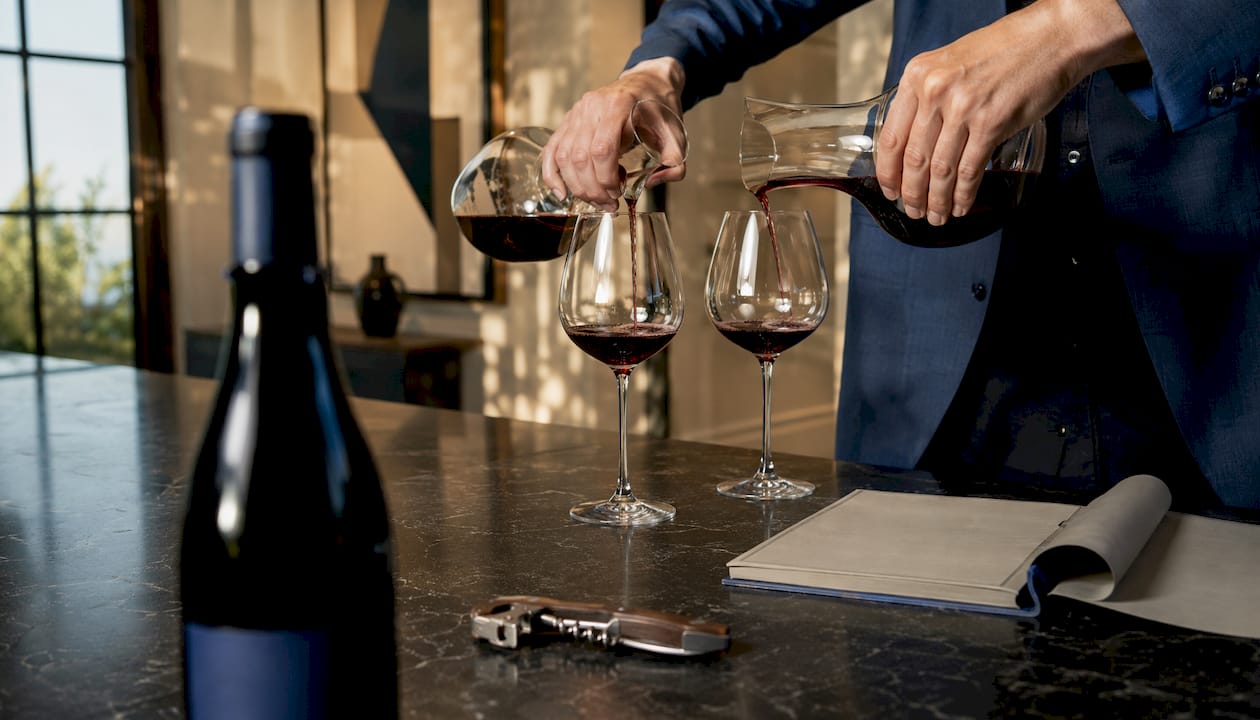
A well-constructed horizontal flight might line up five Clare Valley Rieslings from the same harvest year, each from a different estate. The vintage conditions are identical for all five, so what you taste in the glass reflects the producer’s choices: yield management, fermentation temperature, oak contact, and the particular character of their soil. Those differences, which can be subtle or startling, are precisely what a horizontal tasting is designed to expose.
Sequence matters considerably in this format. Pouring from lightest to heaviest, and from dry to sweet, protects the palate from early overwhelm and keeps each wine’s character legible. Grouping by region is less critical than getting the weight order right.
- Hold vintage constant; vary producer and, optionally, sub-region.
- Pour in ascending order of body and residual sugar.
- Use identical glassware for every pour to eliminate shape as a variable.
- Limit the flight to 3–6 wines to preserve palate sensitivity throughout.
2. Vertical wine tastings: tracing a wine’s evolution through time
Vertical tastings taste different vintages of the same wine from the same producer, making the year the sole variable. The producer’s house style remains constant, which means every shift in aroma, texture, and structure you detect is attributable to the vintage conditions or the wine’s development in bottle.
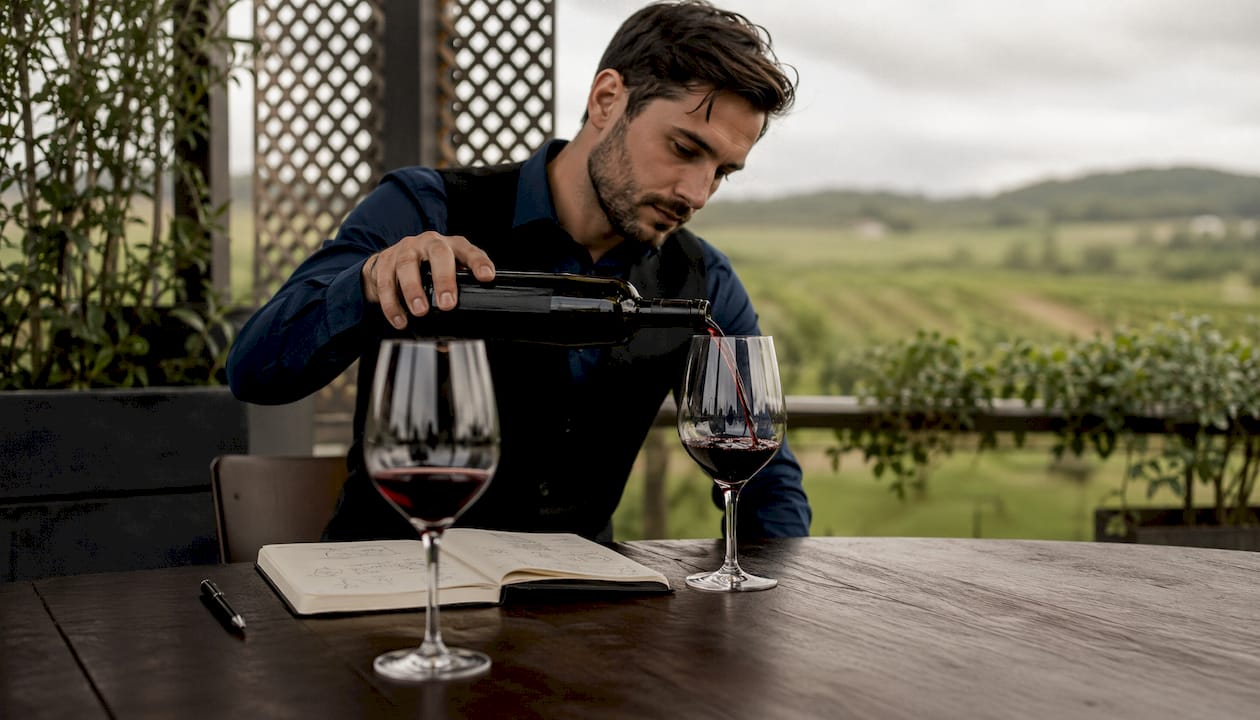
A three-vintage vertical of a single Coonawarra Cabernet Sauvignon, for instance, can reveal how a cool, late-ripening year produces a leaner, more austere wine compared to a warm, generous season. Tasted side by side, those contrasts become visceral rather than theoretical. For collectors, vintage variation is not an abstract concept; it is the lived experience of watching the same wine speak differently across years.
The format also rewards patience in a very particular way. Older vintages in the flight often show tertiary aromas, dried fruit, leather, and earth, that younger wines have not yet developed. That contrast, tasted in sequence, offers a compressed education in how wine ages.
- Fix the producer and wine style; vary only the vintage year.
- Serve from youngest to oldest to appreciate development progressively.
- Note how tannin structure and wine tannins soften with age across the flight.
- Three vintages is sufficient for a meaningful comparison; five or more suits advanced study.
3. Blind wine tastings: trusting your senses over the label
Blind tastings conceal wine labels and origins to eliminate bias, forcing evaluation based purely on sensory perception. The format is the gold standard in professional circles precisely because it removes the most powerful distorting force in wine assessment: prior knowledge of what is in the glass.
The psychology behind blind tasting is well established. Knowing a wine’s prestige or price consistently skews perception, even among experienced tasters. Removing that information levels the field and produces more honest, more reproducible assessments. Professional buyers, sommeliers, and competition judges rely on blind evaluation for exactly this reason.
Pro Tip: True blind tastings require more than a paper bag over the bottle. Standardised glassware and controlled serving temperature are equally critical, since glass shape and wine temperature both reveal origin clues to a trained palate.
- Conceal both the label and the bottle shape where possible.
- Use identical glasses at the same temperature for every wine.
- Write tasting notes before discussing with others to avoid anchoring your perception to someone else’s description.
- Blind tastings train the palate to rely on what is actually there, not on expectation.
4. Special and thematic wine tasting experiences
Beyond the three classical formats, a rich array of special wine tasting experiences adds education, theatre, and sensory depth to the act of tasting. These formats are where wine knowledge meets genuine pleasure, and where the line between learning and indulgence dissolves most agreeably.
Food and wine pairing tastings are among the most popular. At their most refined, they involve a multi-course meal where each dish is constructed around a specific wine, revealing how acidity, tannin, and sweetness interact with fat, salt, and umami. A simpler version pairs a curated cheese and charcuterie selection with a short flight, which suits private wine tastings and intimate gatherings equally well. For deeper reading on how to construct these pairings with precision, Aptent’s guide to pairing wine with tasting courses is worth consulting.
Barrel tastings offer something genuinely rare: the chance to taste a wine mid-development, before the winemaker has made final blending decisions. A guide draws samples directly from barrel using a wine thief, and what you encounter is raw, unfinished, and often revelatory. Blending seminars go a step further, inviting participants to assemble their own cuvée from component varieties, which builds an intuitive understanding of how structure and flavour are constructed.
Many boutique wineries offer library or reserve tastings that are not widely advertised, rewarding the curious enthusiast who asks specifically for them. These sessions typically feature older vintages pulled from the winery’s own cellar, wines that are no longer commercially available and that offer a window into the estate’s history.
- Food and wine pairing tastings, from simple cheese boards to chef-prepared multi-course meals.
- Barrel tastings featuring unfinished wines drawn directly from the cellar.
- Blending seminars where participants construct their own assemblage.
- Library and reserve tastings of aged, limited-release wines.
- Adventure and activity tours combining vineyard walks, cycling, or harvest experiences with tasting.
5. Wine tasting etiquette and why it matters
Etiquette in a tasting context is not mere formality. It exists to protect the quality of the experience for everyone at the table, and to preserve your own palate across what can be a lengthy session.
Professionals use spittoons and moderation to maintain palate sensitivity during extended tastings, and there is no reason an enthusiast should feel self-conscious doing the same. Spitting is not a rejection of the wine; it is a commitment to tasting every wine in the flight with the same clarity you brought to the first. Swallowing everything in a twelve-wine session guarantees that your notes on the final pour are unreliable.
Pro Tip: Avoid wearing strong fragrance to a tasting. Perfume and cologne interfere with the olfactory experience for everyone present, including yourself, and can mask the more delicate aromatic compounds in the wine.
- Swirl gently to release aromatic compounds before nosing the glass.
- Smell before you sip; the nose carries more information than the palate in most wines.
- Sip a small amount and hold it briefly to allow the full flavour profile to develop.
- Use a spittoon without hesitation during longer sessions.
- Keep conversation measured during the nosing phase so others can concentrate.
- Well-curated tastings structured by theme or style enhance learning and memorability far beyond randomly assembled selections.
6. The five S’s: a sensory framework for serious tasting
The five S’s of wine tasting, See, Swirl, Smell, Sip, and Savor, provide a standard sensory evaluation framework taught universally to build structured, objective tasting skills. Working through each step in sequence transforms a casual sip into a disciplined act of analysis.
“During this process, a taster must look for clarity, varietal character, integration, expressiveness, complexity, and connectedness. Thoroughly tasting a wine involves perception of its array of taste and mouthfeel attributes, which involve the combination of textures, flavours, weight, and overall structure.” — Wine Tasting, Wikipedia
- See: Examine colour depth, hue, and clarity. A deep ruby with a garnet rim suggests age in a red; a pale lemon with green tints indicates youth in a white.
- Swirl: Agitate the wine to volatilise aromatic compounds and release esters. Observe the legs on the glass as a rough indicator of alcohol and glycerol content.
- Smell: Nose the glass before any other step. Identify primary aromas (fruit, floral), secondary aromas (fermentation-derived), and tertiary aromas (oak, age). This step carries the most diagnostic information.
- Sip: Take a small amount and draw a little air across the wine to open further aromatic compounds. Assess acidity, tannin, body, and the balance between them.
- Savor: Hold the wine briefly and then allow it to pass slowly through the mouth. Note the finish length and whether the flavours evolve or simply fade.
7. Guided vs. self-guided wine tasting experiences
Guided tastings suit beginners by providing context and explanation, while thematic or blind tastings suit advanced enthusiasts seeking challenge and objective assessment. The distinction is worth understanding before you book any wine tasting event.
A guided tasting places a sommelier or wine educator at the centre of the experience. They sequence the wines, narrate the context, and direct attention to specific characteristics in each pour. For someone building foundational knowledge, this structure is genuinely valuable; it prevents the common mistake of tasting without a framework and leaving with only a vague impression of what was good.
Self-guided or walk-around tastings, common at wine festivals and multi-winery events, offer freedom and variety at the cost of depth. You move at your own pace, choose your own pours, and form your own conclusions without a guide’s intervention. The format rewards those who already have a tasting vocabulary and a clear sense of what they are looking for. Without that foundation, it can feel like sampling without learning.
8. Regional and terroir-based wine tastings
Terroir-based tastings are among the most intellectually rewarding formats available to a serious enthusiast. The concept of terroir, the combined influence of soil, climate, aspect, and human tradition on a wine’s character, is best understood not through description but through direct comparison.
A regional tasting might place a Margaret River Chardonnay alongside a Yarra Valley Chardonnay and a Mornington Peninsula Chardonnay, all from the same vintage. The grape variety is fixed; what changes is the geology, the maritime influence, the diurnal temperature range. Those environmental differences, invisible in the vineyard, become tangible in the glass. This format is the most direct answer to the question of why geography matters in wine.
Thematic tastings organised around a specific appellation or wine region also serve as an accessible entry point into wine tourism. Many Australian wine regions, from the Eden Valley to the Clare Valley, offer curated regional flights at cellar doors that function as a condensed introduction to the area’s signature styles. Pairing these with a wine vertical tasting from a single estate adds a temporal dimension to the geographic one.
9. Educational wine tasting workshops and classes
Structured wine education, whether through a formal course or a single workshop, accelerates palate development in ways that casual tasting rarely achieves. The difference lies in repetition, vocabulary, and deliberate comparison.
Formal programmes such as the Wine & Spirit Education Trust (WSET) qualifications offer a progressive curriculum that moves from foundational grape knowledge through to professional-level blind tasting and production theory. At the workshop level, a single session focused on, say, the structural role of acidity or the difference between old-oak and new-oak influence can reframe how you taste every wine thereafter.
Many Australian wine regions and urban wine bars now offer short-format educational tastings, typically running two to three hours, that combine sensory exercises with producer presentations. These sessions are particularly effective when the wines are selected to illustrate a single concept rather than to showcase a broad range. A flight built around grand cru wines from a single appellation, for instance, teaches more about terroir expression than a mixed-region showcase of equal length. The curation, as always, is what determines the depth of learning.
Aptent Gourmet: curated luxury for your next tasting experience
For those who approach wine tasting as a pursuit of genuine refinement rather than mere recreation, the quality of what is in the glass is the foundation of everything else. Aptent’s collection of fine wines and gourmet provisions is sourced directly from prestigious producers, curated for discerning enthusiasts who understand that a truly memorable tasting begins with exceptional bottles.
Whether you are assembling a private vertical flight, hosting an intimate food and wine pairing evening, or seeking a bespoke boutique event for a select group, Aptent offers both the wines and the expertise to elevate the occasion. The range includes vintage Champagne and rare cuvées suited to the most considered of tasting programmes, alongside premium caviar for those who wish to extend the sensory experience beyond the glass. Aptent also partners with luxury brands to deliver bespoke gourmet events for high-net-worth individuals and corporate hosts seeking something well beyond the standard cellar door visit. Contact Aptent to discuss a curated tasting experience tailored to your collection and your guests.
Key takeaways
The most rewarding wine tasting experiences are those built around a clear format, whether horizontal, vertical, blind, or thematic, because structure is what transforms tasting into genuine learning.
| Point | Details |
|---|---|
| Format determines what you learn | Horizontal tastings reveal producer style; vertical tastings reveal how a wine ages across vintages. |
| Blind tasting removes bias | Concealing labels and using standardised glassware forces evaluation through sensory perception alone. |
| The five S’s structure every session | See, Swirl, Smell, Sip, and Savor provide a universal framework for objective sensory evaluation. |
| Guided tastings suit beginners | A sommelier-led session provides context and vocabulary that self-guided formats cannot replicate for newcomers. |
| Aptent for curated luxury experiences | Aptent sources fine wines and delivers bespoke gourmet events for enthusiasts and private hosts seeking exceptional quality. |


