
Truffles selection and storage: the buyer's guide
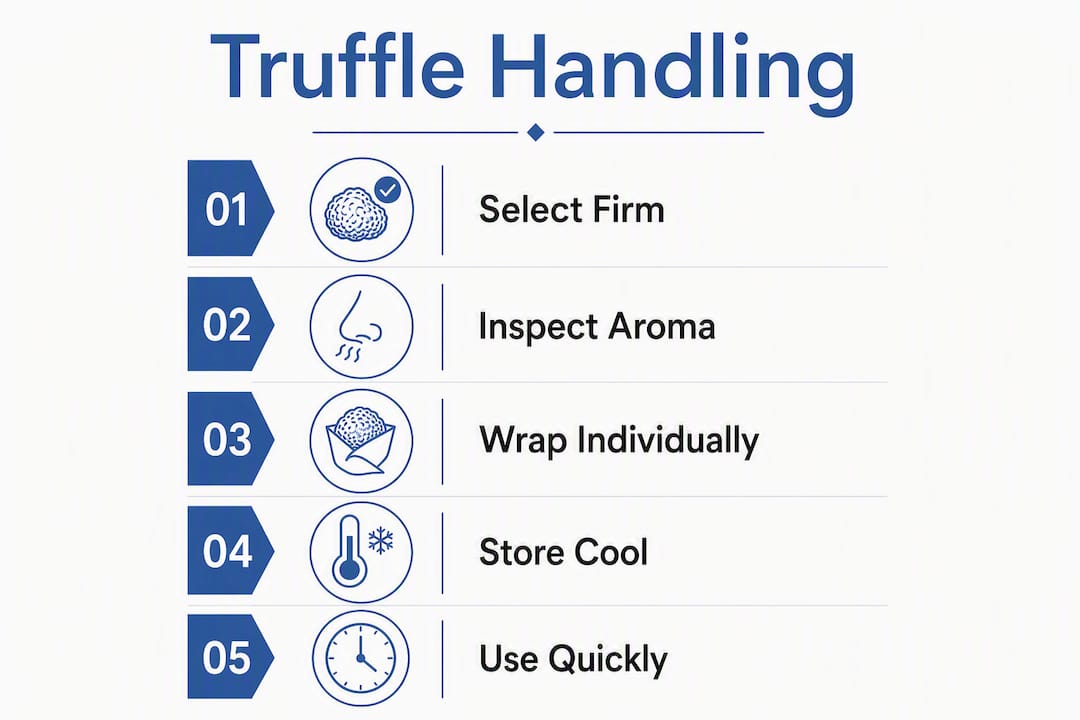
Fresh culinary truffles reward only those who select and store them with precision. Choose specimens that are firm to the touch, free of soft spots, and carry an intense, clean earthy aroma; on receipt, unwrap immediately, brush away loose soil, wrap each truffle individually in a fresh absorbent paper towel, and place in a sealed glass container at 2–4 °C. Change the towel daily.
Quick selection checklist:
- Firm, dense, no sponginess; peridium intact with no visible mould or dark wet patches
- Aroma steady and earthy, never ammonia or sour
Immediate storage action: unwrap from plastic, transfer to glass, refrigerate properly, label with arrival date.
Table of Contents
- Why truffles lose their aroma faster than you expect
- How to inspect and select fresh truffles with confidence
- Short-term storage: the dealer method that actually works
- The egg infusion technique: a culinary trick, not a storage method
- Freezing and longer-term preservation: what actually holds up
- Receiving and transit checklist for hospitality buyers
- Essential tools and accessories for handling and storing truffles
- Service and portioning tactics that maximise flavour
- Key takeaways
- Why Aptent’s curation experience shapes these recommendations
- Aptent’s truffle accessories and event support for Australian buyers
Why truffles lose their aroma faster than you expect
A fresh truffle is a living organism, and its volatile aromatic compounds begin dissipating the moment it leaves the ground. The first 24 hours bring the sharpest aroma loss as surface moisture evaporates and the cell walls begin to soften. By 72 hours without proper storage, the signature earthy intensity has noticeably dulled; by day five to seven, texture turns spongy and microbial activity accelerates.
| Species | Fresh shelf life | Freezable? | Best use window |
|---|---|---|---|
| White Alba (Tuber magnatum) | 3–5 days | No | Raw, immediately |
| Black Périgord (Tuber melanosporum) | 5–7 days | Yes (cooked use) | Raw within 4 days |
| Burgundy / summer | 5–7 days | Yes (cooked use) | Raw within 5 days |
The volatile aromatics that define white Alba are particularly fragile, and its shelf life is only 3–5 days after harvest. Black Périgord carries more resilient sulphur compounds, which is why it tolerates freezing for cooked applications where white Alba does not. When a truffle passes its raw-use window, the practical decision is binary: convert it immediately into truffle butter or brine, or freeze it (species permitting) for cooked dishes later.
How to inspect and select fresh truffles with confidence
The most reliable method for choosing quality specimens is a trained sensory check, and asking vendors about origin, arrival date, and storage history completes the picture. Begin with sight: the peridium (outer skin) should be intact, with no cracking, wet dark patches, or surface mould. A truffle that has begun to shrivel has already lost significant moisture and aroma.
Touch comes next. Firmness and consistent density are primary freshness indicators; any sponginess or give under gentle pressure signals cellular breakdown. Then smell. The aroma should be immediate, steady, and unmistakably earthy. Ammonia or sour notes mean microbial activity is already advanced.
Industry grading focuses on four attributes that directly affect culinary performance: aroma intensity, firmness, interior maturity (the marbling of white veins through dark flesh), and exterior integrity. Two truffles harvested on the same day can receive different grades based on these criteria alone, which is why species is never a sufficient proxy for quality.
For remote approvals, photograph the whole specimen against a neutral surface, then a cross-section if the vendor can provide one. Ask specifically: when did it arrive from the shipper, and how has it been stored since?
Short-term storage: the dealer method that actually works
The working method used by specialist dealers is straightforward and reproducible. Wrap each truffle individually in a fresh absorbent paper towel, place it in a sealed glass jar, and refrigerate at 2–4 °C, replacing the towel daily. Glass preserves aroma; the paper towel manages surface moisture without dehydrating the truffle.
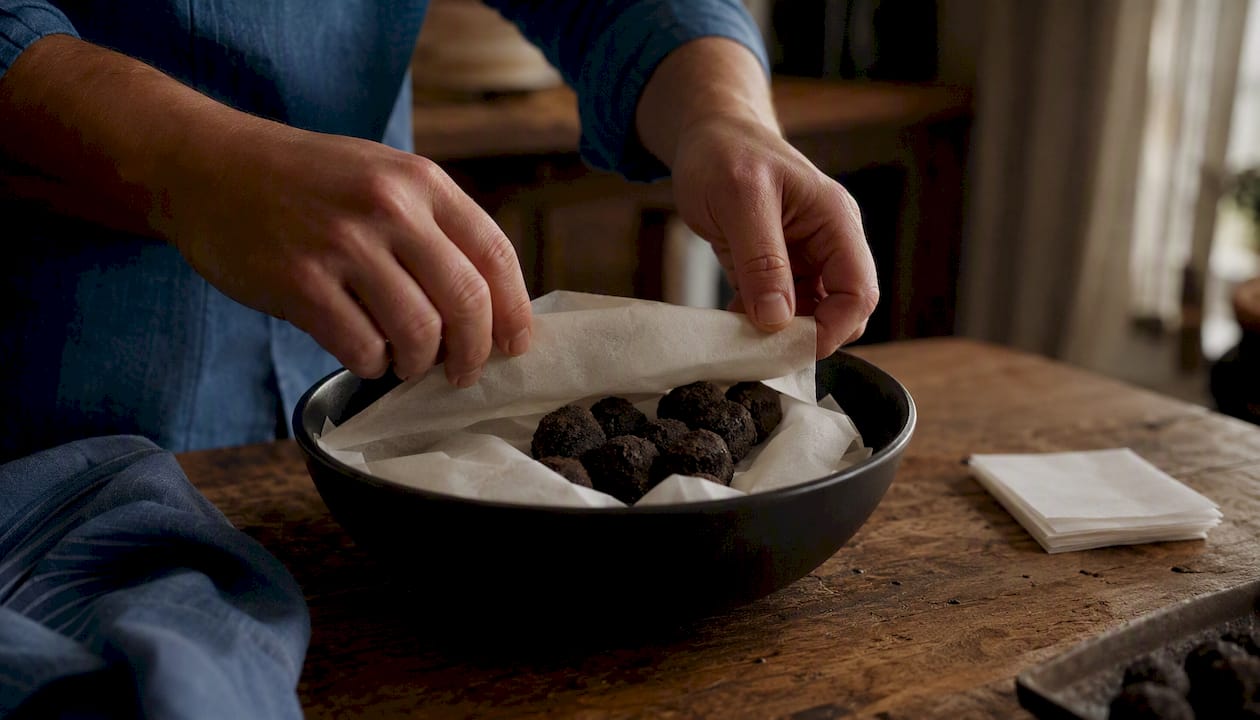
Never wash a truffle before storing it. Soil acts as a protective barrier that slows moisture exchange; clean only immediately before use, with a soft brush. Water in storage accelerates both aroma loss and surface mould. Equally, avoid plastic bags and vacuum sealing: plastic traps moisture and creates an oxygen imbalance that produces a dull, slightly fermented character within 24 hours.
Place the container in the warmest zone of the refrigerator, typically the upper shelf or the door, where temperatures are less cold than the colder rear. Rice is a traditional fallback when daily towel changes are not possible, but it absorbs moisture too aggressively and risks dehydrating the truffle; the paper towel and glass method is superior.
Pro Tip: Designate one staff member to check and replace towels each morning, logging the date and their initials on the container. This single habit prevents the most common cause of avoidable loss in hospitality kitchens: truffles forgotten past their window.
The egg infusion technique: a culinary trick, not a storage method
Storing a fresh truffle in a sealed glass jar alongside unshelled fresh eggs for 24–48 hours transfers volatile aroma through the porous eggshell without meaningfully depleting the truffle itself. The result is eggs with a pronounced truffle character, ideal for breakfast service at tasting events or private dinners. Both white Alba and black Périgord work well for this technique.
The truffle is not harmed and continues its normal storage life in the same jar. Use fresh, refrigerated eggs and follow your kitchen’s HACCP protocols: label the jar with the date, rotate eggs on the same schedule as any perishable, and never use eggs that have been stored at ambient temperature.
Freezing and longer-term preservation: what actually holds up
White Alba should never be frozen. Its aromatic complexity depends on volatile compounds that do not survive freezing, and the texture collapses on thawing. Treat it as a single-use, short-window ingredient and commit to raw service.
Black Périgord, burgundy, and summer truffles tolerate freezing for cooked applications. The correct method: brush clean, wrap in absorbent paper, seal in an airtight glass or rigid freezer-safe container, and freeze whole. Grate directly from frozen into hot cooked dishes; slicing before freezing accelerates aromatic loss and is not recommended.
| Preservation method | Aroma retention | Texture after | Best for |
|---|---|---|---|
| Glass + paper towel (fridge) | Excellent | Unchanged | Raw service, shaving |
| Frozen whole (black/burgundy) | Moderate | Softens on thaw | Sauces, risotto, pasta |
| Truffle butter (5–10% truffle) | Good | N/A | Finishing, canapés |
| Truffle in brine | Reduced | Firmer | Longer shelf life, cooked use |
Truffle butter and brine are practical for hospitality kitchens managing leftover truffle. Butter at 5–10% truffle by weight keeps refrigerated for approximately one month and frozen for approximately three months; brine holds several months refrigerated but with noticeably reduced aroma.
Receiving and transit checklist for hospitality buyers
The quality of a truffle at service is largely determined by what happens in the first hours after it leaves the shipper. Establish a maximum allowable time from the shipper’s harvest timestamp to your refrigerator, and communicate it to your supplier before ordering.
On arrival, check immediately:
- Delivery time and temperature on receipt (insulated packaging with cold packs is the standard for premium shipments)
- Packaging integrity: no broken seals, no pooled moisture inside the box
- Visible condition: no mould, no excessive shrivelling, no off-odour on opening
- Invoice count versus physical count
Once verified, unwrap from any plastic immediately, photograph each specimen against a neutral surface, transfer to glass storage with fresh paper towel, and log arrival date, time, and the name of the person receiving. Any specimen showing ammonia odour or surface mould should be documented and escalated to the supplier before the batch is accepted.
Essential tools and accessories for handling and storing truffles
The right accessories protect both the truffle and the investment. A soft truffle brush is the first requirement: it removes loose soil from the peridium without abrading the surface or introducing moisture. The Aptent truffle brush is designed precisely for this, with bristles firm enough to dislodge soil and gentle enough to leave the peridium intact.
A quality truffle shaver controls the thickness and consistency of each slice, which matters for both presentation and aroma release. Shaving too thick wastes a costly ingredient; too thin and the slice loses structural presence on the plate. The Aptent truffle shaver offers adjustable blade settings suited to both delicate white Alba and the denser black Périgord. For fine finishing, a microplane grates directly from frozen for cooked applications.
Sealed glass storage containers complete the kit. Glass preserves aroma, does not absorb odours, and allows daily visual inspection without disturbing the truffle. Aptent’s sealed storage containers are sized for individual specimens and form the centrepiece of a well-organised event kit alongside the brush and shaver.
Service and portioning tactics that maximise flavour
Remove the truffle from the refrigerator 15–20 minutes before service; a slightly warmer specimen releases volatile aromatics more readily and rewards the table with a more pronounced scent. Shave at the point of service rather than in advance: once sliced, volatile compounds escape rapidly and the portion loses impact within minutes.
Pair truffle with neutral fats and warm dishes. Eggs, fresh pasta, and butter-based sauces act as carriers for the volatile compounds, amplifying rather than competing with the aroma. A light champagne pairing, such as a Grand Cru Brut, complements the earthiness without overwhelming it.
For any truffle that will not be used within the service window, convert small pieces into compound butter rather than returning them to storage as loose slices. Practical kitchens treat leftover truffle as an ingredient to be captured immediately, not stored indefinitely.
Key takeaways
The single most important discipline in truffle handling is speed: select by firmness and scent, transfer to glass at 2–4 °C immediately, and act on any decline before it becomes waste.
| Point | Details |
|---|---|
| Select by firmness and scent | Firm, dense specimens with a steady earthy aroma are the only reliable freshness indicators. |
| Glass and paper towel at 2–4 °C | Wrap individually, seal in glass, refrigerate, and replace the paper towel daily. |
| Never vacuum-seal white Alba | Plastic and vacuum sealing trap moisture and accelerate spoilage within 24 hours. |
| Freeze only for cooked use | Black Périgord and burgundy tolerate freezing whole; white Alba does not survive it. |
| Aptent accessories for event kits | The Aptent truffle brush, shaver, and sealed storage containers are stocked for Australian hospitality buyers. |
Why Aptent’s curation experience shapes these recommendations
Aptent’s approach to luxury gourmet sourcing is built on the same discipline that governs truffle handling: provenance, condition on arrival, and the precision of care between producer and table. The SOPs and storage guidance offered here reflect the standards Aptent applies across its curated range of luxury food products and its private boutique event programme for discerning consumers and high-net-worth clients across Australia.
Aptent’s expertise in handling highly perishable luxury foods informs every recommendation in this guide, from the glass-and-paper-towel method to the species-specific freezing rules. Readers who wish to apply these standards to their own sourcing, event provisioning, or kitchen SOPs are welcome to contact Aptent directly for personalised guidance.
Aptent’s truffle accessories and event support for Australian buyers

For Australian hospitality buyers and discerning consumers who want the full picture, Aptent offers the truffle accessories that make these SOPs practical: the Aptent truffle brush, adjustable truffle shaver, and sealed glass storage containers, all available through the Aptent Gourmet online store with local fulfilment. For event planners, Aptent’s Gourmet Events service provides end-to-end support for private truffle tasting experiences, from curated sourcing to table-side service. Contact Aptent to discuss your next event or place an order for the accessories your kitchen needs.


