
Selecting glassware for fine wine: the collector's guide
The glass you choose is the single most consequential decision you make before a fine wine touches your lips. Selecting glassware for fine wine is not a matter of aesthetics alone. The shape, bowl size, rim thickness, and material of a glass directly govern how aroma compounds reach your nose, how wine flows across your palate, and how temperature holds during a tasting. Get the glass right, and a great wine becomes extraordinary. Get it wrong, and even a celebrated Burgundy can taste flat and muted.
What are the key features of wine glasses that affect tasting quality?
Bowl shape is the most influential physical attribute in any wine glass. A wide, generously curved bowl increases the surface area of wine exposed to air, accelerating aeration and releasing volatile aromatic compounds. A well-proportioned bowl with a tapered opening concentrates those aromas toward the rim, directing them precisely to your nose as you sip. Without that taper, the bouquet dissipates before it reaches you.
Rim thickness shapes the sensory experience in a way most collectors underestimate. A thin, fine rim delivers wine to the tip of the tongue with minimal interruption, allowing the wine’s natural structure to express itself. A thick rim, by contrast, creates a physical barrier that alters the angle and flow of the pour, subtly distorting the perception of acidity and fruit. This is why lead-free crystal commands respect among serious enthusiasts.
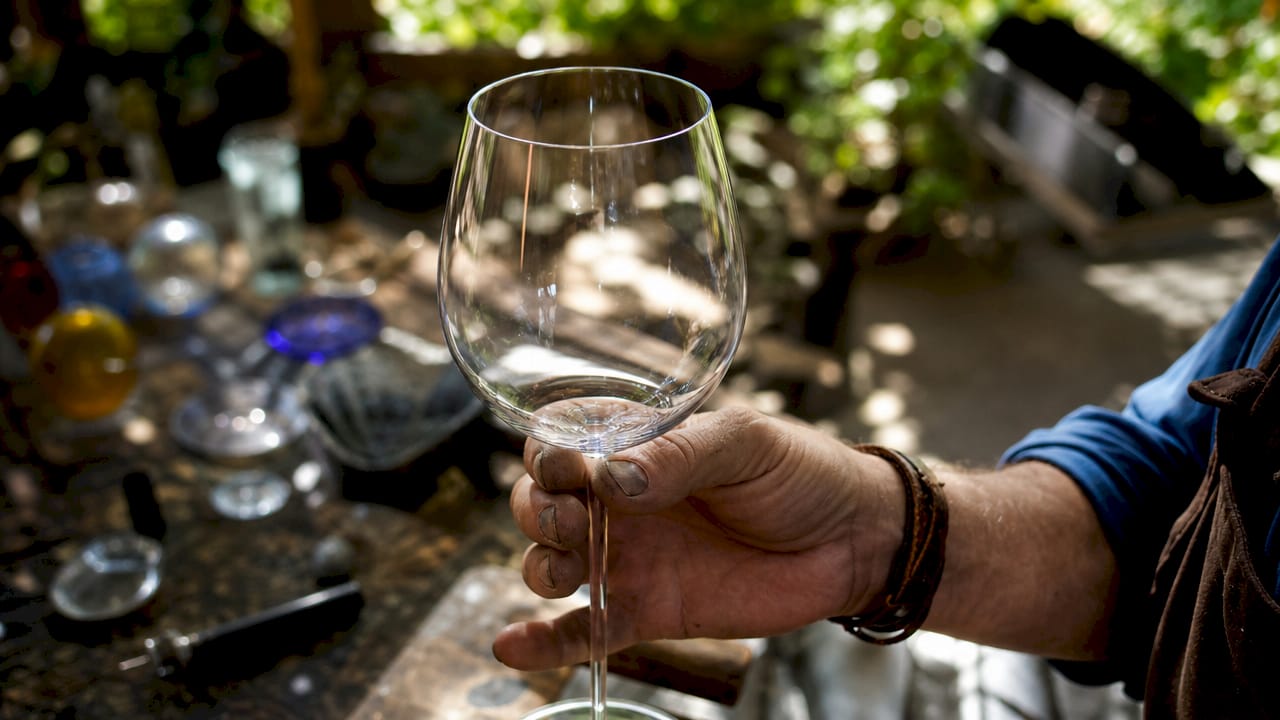
Lead-free crystal is now the norm in premium glassware, combining exceptional clarity and thinness with durability and safety compared to traditional lead crystal. It transmits the colour of wine with fidelity, allows for a finer rim, and resonates with a clean ring when tapped. Standard soda-lime glass is heavier, less clear, and produces a thicker rim, which limits its suitability for fine tasting.
The stem is not merely decorative. Holding a glass by the stem prevents body heat from transferring to the wine, preserving the serving temperature throughout a tasting. Stemless glasses cause rapid heat transfer from the hand, altering serving temperature quickly. They suit casual red wine consumption well, but they are a poor choice for fine tasting where temperature precision matters.
Pro Tip: Reserve stemless glasses for relaxed, informal occasions. For any serious tasting of fine wine, always use a stemmed crystal glass to maintain the wine’s intended serving temperature.
Which glass shapes best suit different wine styles?
The Bordeaux glass is the workhorse of serious red wine collections. Its tall, broad bowl provides ample surface area for full-bodied reds such as Cabernet Sauvignon, Shiraz, and Merlot to breathe, softening tannins and releasing dark fruit aromatics. The Burgundy glass takes a different approach, with a wider, rounder bowl and a narrower mouth designed to concentrate the delicate, complex aromas of Pinot Noir and other lighter reds toward the nose.
Old World wines benefit from narrower, precision-focused glassware, while New World wines perform better in larger-bowl formats that soften intensity and encourage aroma development. A Barossa Valley Shiraz, for instance, opens beautifully in a large Bordeaux bowl, whereas a Côte de Nuits Pinot Noir reveals its full complexity in a wide Burgundy glass. Matching the glass to the wine’s origin and structure is a discipline that rewards attention.
White wine glasses are generally smaller than their red counterparts, preserving cooler temperatures and directing crisper aromatics. A standard white wine glass suits Sauvignon Blanc, Pinot Gris, and Riesling with its narrower bowl and upright taper. Chardonnay, particularly those with oak influence and buttery richness, benefits from a slightly wider bowl that mirrors the Burgundy shape, allowing the wine’s texture and complexity to fully express.
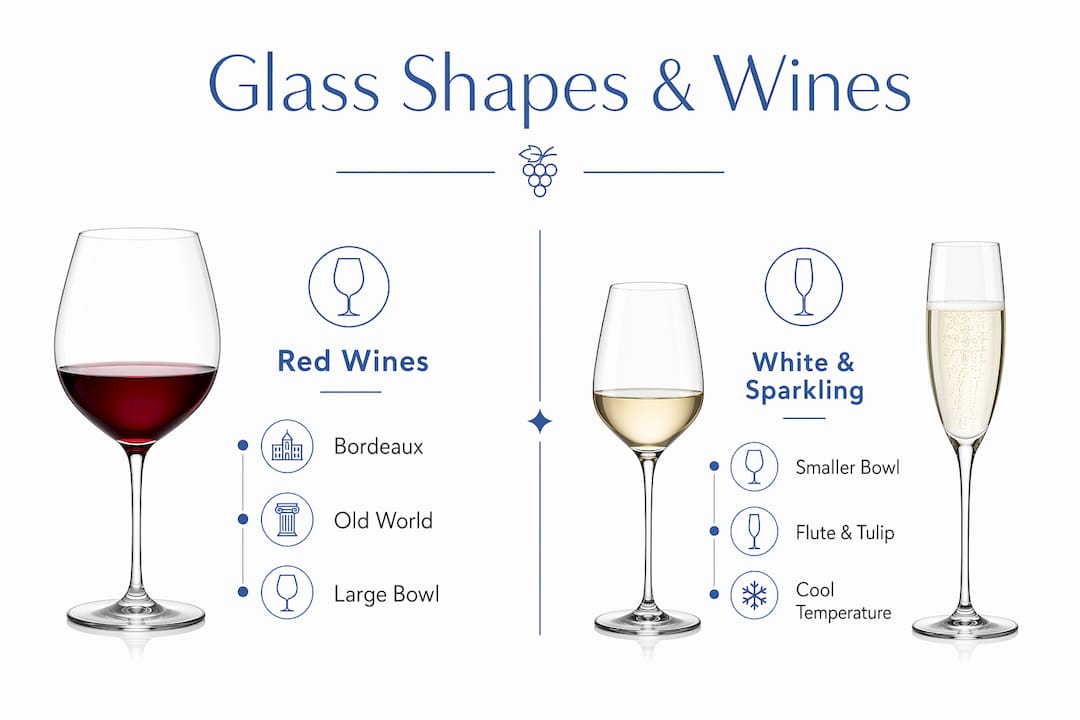
For sparkling wine, the choice between a flute and a tulip glass is consequential. The traditional flute preserves bubbles and presents the wine’s effervescence elegantly, but its narrow opening restricts aroma. The tulip glass, with its slightly wider mid-section and inward taper, retains carbonation while allowing far more aromatic expression. Serious collectors increasingly favour the tulip for vintage Champagne and prestige cuvées.
| Glass type | Ideal wine styles | Key feature |
|---|---|---|
| Bordeaux | Cabernet Sauvignon, Shiraz, Merlot | Tall, broad bowl for aeration |
| Burgundy | Pinot Noir, delicate reds | Wide, round bowl, narrow mouth |
| Standard white | Sauvignon Blanc, Riesling, Pinot Gris | Narrower bowl, upright taper |
| Chardonnay | Oaked whites, full-bodied whites | Wider bowl for texture and complexity |
| Tulip | Champagne, vintage sparkling | Tapered opening for aroma and bubbles |
| Dessert/fortified | Port, Sauternes, Tokaji | Small bowl, small pour, concentrated sweetness |
Dessert and fortified wine glasses are intentionally small. A small bowl and a short pour concentrate the wine’s intense sweetness and alcohol, preventing those elements from overwhelming the palate. Serving a Vintage Port in a standard red wine glass dilutes the experience considerably.
How do you build a practical glassware collection?
Owning just two core styles covers 90% of the potential tasting experience for most collectors. A large red wine glass and a standard white wine glass form the foundation of any well-considered collection. This is not a compromise. It is a philosophy shared by many working professionals in the wine world, who rely on versatility rather than an unwieldy array of grape-specific stems.
The universal wine glass is elegant, versatile, and complements most wines beautifully. Grape-specific marketing from glassware manufacturers is often overstated, and most professionals use a universal glass for daily use due to its practicality. A well-chosen universal glass, used consistently, will serve a collector better than a cabinet full of rarely used specialist stems.
When it comes to price, quality glassware is available across a wide range. Entry-level stems begin at around $6 per stem, while premium artisan crystal can reach $75–$80 per stem, reflecting differences in material, craftsmanship, and the fineness of the rim and bowl. For a serious collector, investing in six to eight quality stems in two or three shapes represents a far better return than purchasing twenty mediocre glasses.
Ultra-lightweight crystal glasses can feel unbalanced during long tastings. Collectors who attend extended vertical tastings or multi-course dinners often prefer glasses with a slightly thicker stem and base for comfort and stability. Elegance and practicality are not mutually exclusive, but fragility has a real cost.
Pro Tip: Start with four to six stems each of a quality large red glass and a standard white glass. Add a tulip for sparkling wine once the foundation is in place. Resist the temptation to purchase grape-specific glasses before you have mastered the essentials.
When building your collection, consider these priorities:
- Invest in lead-free crystal over standard glass for rim fineness and clarity.
- Choose glasses with a balanced weight that feels comfortable after an hour of holding.
- Prioritise stems that are dishwasher-safe if convenience matters to your lifestyle.
- Avoid ultra-thin stems if you host frequently, as breakage during washing is common.
- Select a wine accessories collection that includes decanters and stoppers alongside your glasses.
How should you care for fine wine glassware?
Proper care extends the life of fine crystal and protects the integrity of every wine you serve. Follow these steps to maintain your glassware in peak condition.
- Rinse glasses immediately after use with warm water to prevent wine residue from drying and bonding to the crystal surface.
- Avoid dish soap residue, which can mute wine aroma. Use minimal, fragrance-free detergent if washing by hand, and rinse thoroughly.
- Wash glasses by hand using a soft cloth or microfibre brush. Never use abrasive sponges, which scratch crystal and dull its clarity over time.
- Hold the glass by the bowl during washing, not by the stem. Twisting the stem while applying pressure is the most common cause of breakage.
- Polish glasses while still warm using a lint-free cloth, working in gentle circular motions to maintain clarity and remove water spots.
- Store glasses upright on a clean, dry shelf rather than inverted. Storing inverted traps musty odours inside the bowl, which transfer directly to your wine.
- Replace any glass with a chip or crack immediately. A chipped rim alters the flow of wine and poses a safety risk during use.
Modern lead-free crystal is more durable than its predecessors, and many quality stems are now rated as dishwasher-safe on the top rack at low temperatures. That said, hand washing remains the preferred method for preserving the finest crystal over many years of use. The investment in quality glassware deserves the investment in quality care.
If you are managing a fine wine collection at scale, storing glassware in a dedicated cabinet away from strong odours such as cleaning products or spices is equally important. Crystal is porous enough to absorb ambient aromas, which can subtly compromise the tasting experience.
Key takeaways
The right glass shape, material, and care routine determine how much of a fine wine’s character you actually experience.
| Point | Details |
|---|---|
| Two core glass types cover most needs | A large red glass and a standard white glass cover 90% of fine wine tasting scenarios. |
| Lead-free crystal is the standard | It delivers rim fineness, clarity, and safety that standard glass cannot match. |
| Stemmed glasses preserve temperature | Stemless designs transfer hand heat quickly, making them unsuitable for fine tasting. |
| Universal glasses outperform specialist sets | Grape-specific marketing overstates the need for multiple specialist stems. |
| Care protects your investment | Rinsing immediately, minimal detergent, and upright storage preserve crystal quality and aroma integrity. |
Aptent’s perspective on glassware for the serious collector
The conversation around wine glassware has been distorted by marketing for decades. Walk into any specialist retailer and you will find racks of grape-specific glasses, each promising a transformative experience with a single variety. The reality, in my experience, is far simpler and far more satisfying.
A single, well-proportioned universal glass, held in the hand with the right balance, will reveal more of a great wine than a cabinet full of rarely used specialist stems ever will. Ultra-thin crystal brings elegance but fragility. Collectors who host long tastings consistently return to glasses with a slightly more substantial feel, because comfort over two or three hours matters as much as aesthetics.
The collectors I admire most own fewer glasses than you might expect. They know each stem intimately, they care for them with the same attention they give their cellar, and they resist the temptation to accumulate. Quality over quantity is not a cliché in this context. It is the only philosophy that holds up over time.
If you are selecting wine for your collection, the glassware you choose to serve it in deserves the same level of consideration as the wine itself. The two are inseparable.
— Aptent
Fine wine glassware at Aptent Gourmet
Aptent Gourmet curates a collection of premium gourmet products for collectors and enthusiasts who refuse to compromise on quality.

Whether you are building a foundational collection of fine stems or seeking accessories that complement a serious cellar, the Aptent Gourmet store brings together products sourced from prestigious producers with the discernment that fine wine deserves. For collectors who pair exceptional glassware with equally exceptional wine, the Grand Cru collection presents rare cuvées worthy of your finest crystal. Every selection at Aptent reflects the same philosophy that governs great glassware: nothing superfluous, nothing second-rate, and nothing that does not earn its place at the table.
FAQ
What is the most important feature of a wine glass?
Bowl shape and rim thickness are the most critical features. A tapered bowl concentrates aroma, while a fine rim delivers wine to the palate without distortion.
Do I need different glasses for red and white wine?
Two core glass types cover the vast majority of tasting needs. A large red wine glass and a standard white wine glass together address 90% of fine wine scenarios.
Are stemless wine glasses suitable for fine wine tasting?
Stemless glasses transfer hand heat to the wine quickly, altering serving temperature. They suit casual drinking but are not recommended for serious fine wine tasting.
What material is best for fine wine glasses?
Lead-free crystal is the preferred material. It combines the clarity and thinness of traditional crystal with modern durability and safety standards.
How often should I replace my wine glasses?
Replace any glass that develops a chip or crack immediately. With proper care, quality lead-free crystal can last many years without degrading in performance or appearance.


