
Terroir in wine: the complete guide for enthusiasts
Terroir is the complete set of natural and human factors that give a wine its distinctive character, its irreducible sense of place. The International Organisation of Vine and Wine (OIV) defines vitivinicultural terroir as a concept referring to an area in which collective knowledge of the interactions between the identifiable physical and biological environment and applied viticultural practices develops, providing distinctive characteristics for the products originating from that area. In plain terms, terroir is why a Shiraz from the Barossa Valley tastes nothing like one grown in the Yarra Valley, even when the same grape variety and winemaking technique are applied with equal care.
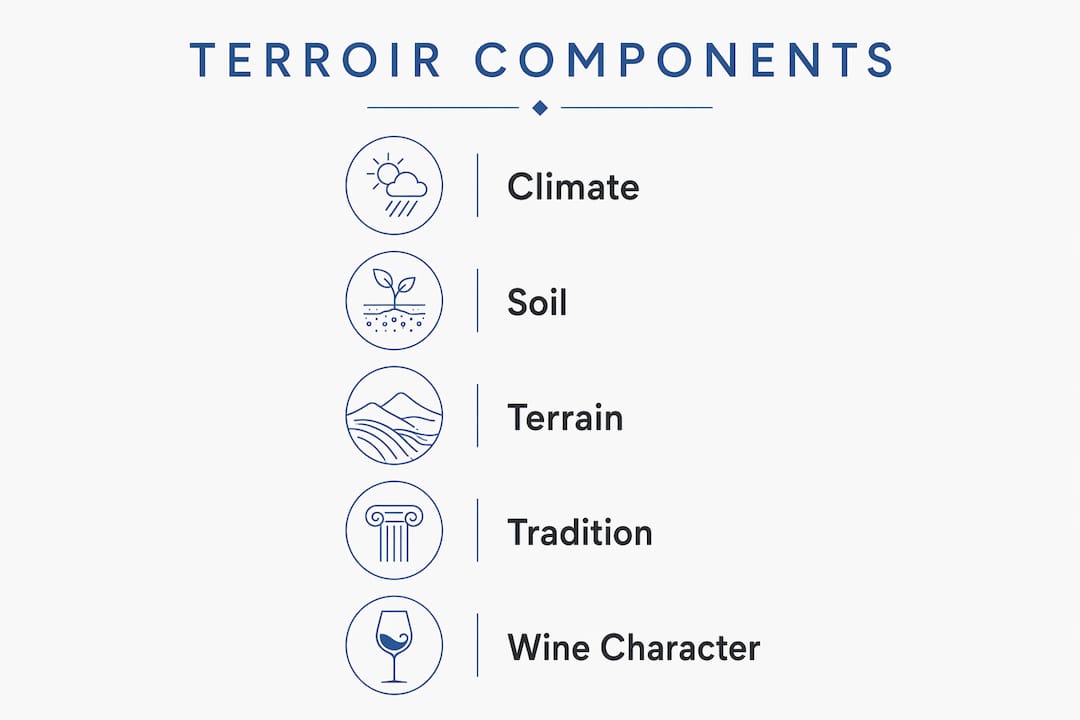
The concept encompasses five interlocking elements:
- Climate at macro, meso, and microscale, governing temperature, rainfall, sunlight, and wind patterns across a region, a vineyard, and individual vine rows
- Soil composition, drainage capacity, heat retention, and nitrogen supply, all of which mediate how the vine accesses water and nutrients
- Topography, including slope, aspect, and elevation, which shape how climate interacts with a specific parcel of land
- Biodiversity, the flora, fauna, and microbial populations living in and around the vineyard, including site-specific yeast strains
- Human tradition, the accumulated viticultural knowledge, grape variety selection, and winemaking practices that a community has refined over generations
Together, these factors create what the OIV calls the “distinctive characteristics” of a wine. No single element dominates in isolation. Terroir is, at its core, an interactive system.
What is terroir in wine, and what are its four key traits?
Climate: the governing force
Climate is the single most powerful driver of terroir expression. It operates at three distinct scales, each influencing the vine differently. The macroclimate describes the broad regional conditions, the Mediterranean warmth of McLaren Vale or the cool maritime influence over Margaret River. The mesoclimate narrows to a specific sub-zone or hillside, where a valley’s cold air drainage or a north-facing slope’s extra sun exposure creates conditions measurably different from the surrounding area. The microclimate operates at the level of individual vine rows or grape clusters, where sunlight exposure and temperature influence the concentration of anthocyanins in grape skins and the development of flavonols, directly shaping a wine’s colour depth and aromatic profile.
Key climatic factors that shape terroir expression include:
- Temperature during the growing season, which controls the rate of sugar accumulation and acid retention in berries
- Diurnal temperature variation (the gap between daytime highs and overnight lows), which preserves aromatic complexity and natural acidity
- Rainfall and humidity, affecting disease pressure and the vine’s water status throughout the season
- Sunlight hours, driving photosynthesis and phenolic ripeness in the grape skins
Pro Tip: When tasting a wine, consider the macroclimate first. A wine from a cool-climate region will almost always show higher acidity and more restrained fruit than one from a warmer zone, regardless of winemaking style.
Soil: more than mineral flavour
Soil’s role in terroir is frequently misunderstood. The popular notion that you can literally taste the minerals from the ground in your glass is scientifically inaccurate. What soil actually does is govern vine physiology: its drainage capacity controls how much water reaches the vine’s roots, its heat retention affects soil temperature and the timing of ripening, and its nitrogen supply regulates vegetative growth and the production of aroma precursors in the fruit.
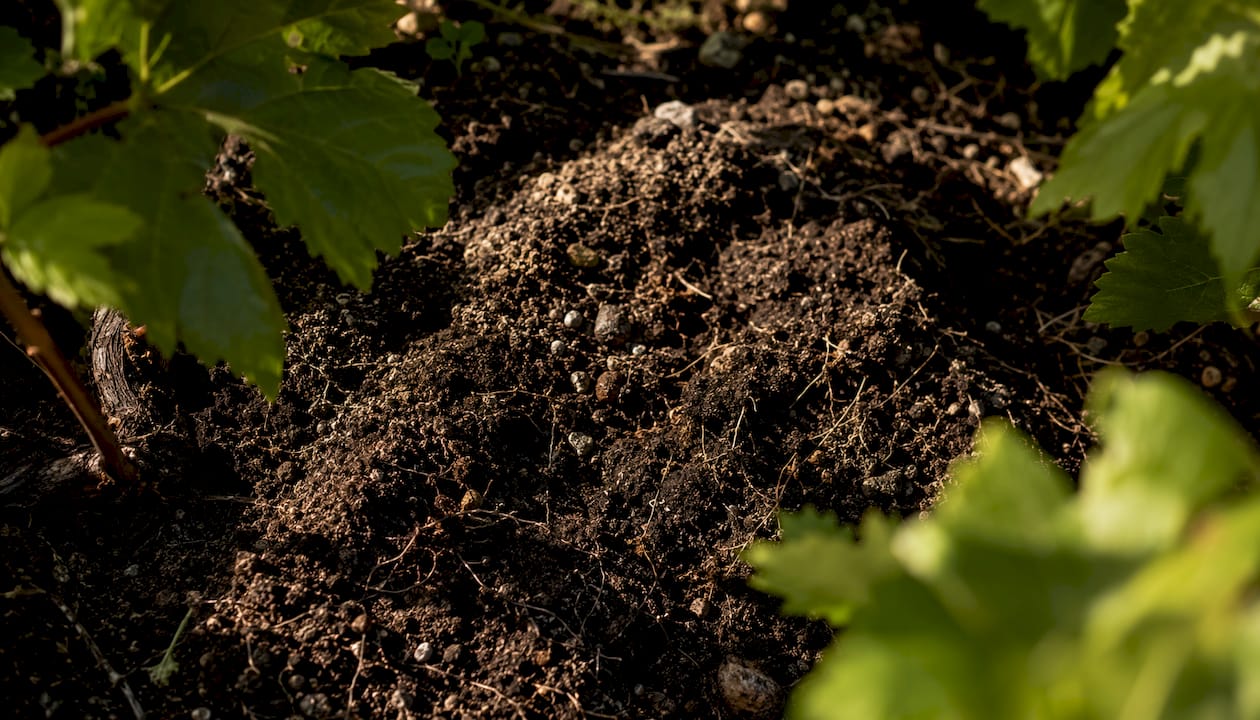
There is no singular best soil for producing great wine. What matters is the interaction between a soil’s properties and the local climate. A free-draining limestone soil in a wet climate may produce the same moderate vine water stress as a clay-rich soil in a drier region. Both can yield wines of exceptional quality, but through entirely different mechanisms.
Critical soil properties in terroir expression:
- Drainage capacity, which determines whether vines experience beneficial water stress or waterlogging
- Heat retention, particularly in stony soils that absorb warmth during the day and radiate it back to the vine at night
- Nitrogen availability, which must be moderated to prevent excessive vegetative growth while still supplying enough for yeast-available nitrogen in the fruit
- Depth and structure, influencing how deeply roots penetrate and how the vine accesses subsoil moisture during dry periods
Terrain: the geometry of place
Topography shapes how climate lands on a vineyard. A north-facing slope in the Southern Hemisphere receives more direct sunlight than a flat site at the same latitude, accelerating ripening and concentrating phenolic compounds. Elevation cools the growing environment, extending the ripening window and preserving aromatic finesse. Valleys channel cold air drainage overnight, amplifying diurnal temperature variation. Bodies of water nearby moderate temperature extremes and raise humidity, which can be a blessing or a challenge depending on the variety grown.
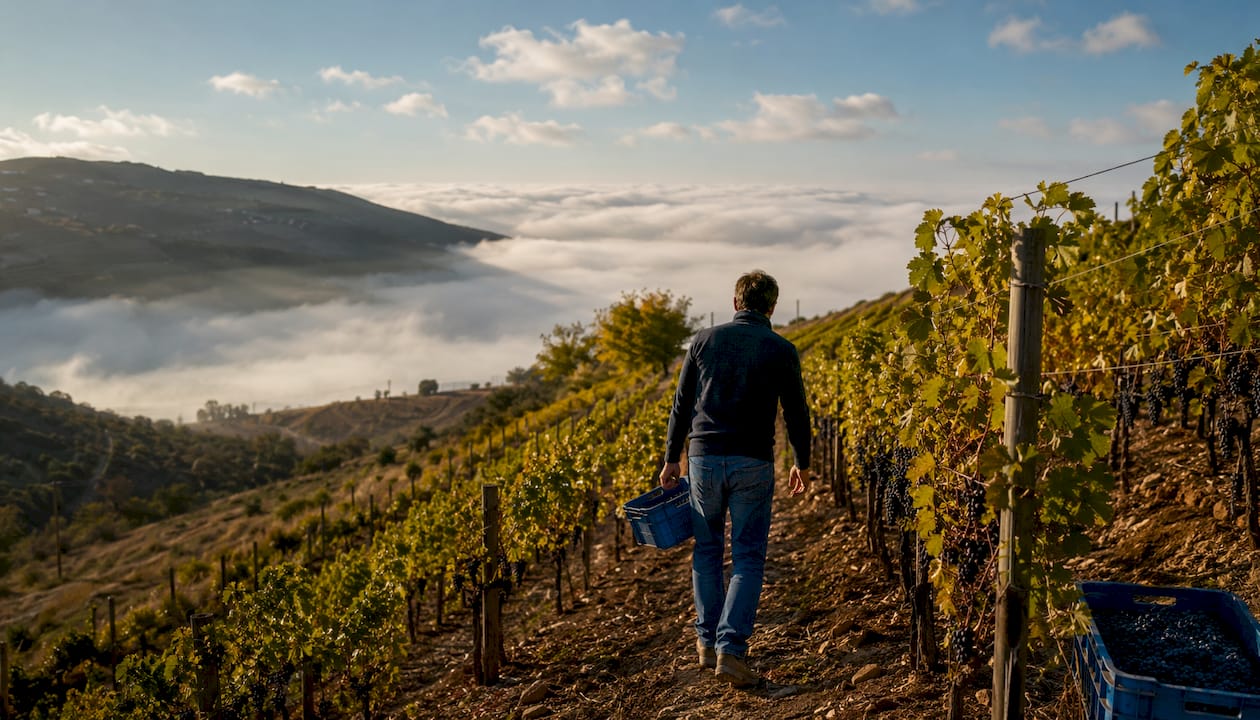
Aspect and slope also affect soil erosion, water runoff, and the depth of topsoil available to the vine’s root system. In Burgundy, the Grand Cru vineyards that monks mapped centuries ago sit on precisely the slopes where these topographic advantages converge most favourably.
Tradition: the human hand
The human element is inseparable from terroir. Viticultural practices including the choice of grape variety, rootstock selection, pruning systems, canopy management, and harvest timing all mediate how the vine expresses its environment. Generations of accumulated knowledge about which varieties thrive in which soils, how to manage water stress in a dry year, and when to pick for optimal aromatic development constitute a living body of expertise that is as much a part of terroir as the geology beneath the vines.
Winemaking decisions, from the use of ambient versus cultured yeast to maceration length and barrel ageing, can either amplify or diminish terroir expression in the finished wine. The most terroir-driven wines are those where the winemaker’s role is to translate the vineyard, not to transform it.
How terroir shapes the taste and aroma of wine
The sensory qualities of a wine, its fruit character, aromatic complexity, texture, and length, are the direct result of grape composition at harvest. Terroir shapes that composition through its influence on vine physiology throughout the growing season. Environmental factors including temperature, solar radiation, water balance, and nitrogen status all affect the accumulation of phenolic compounds, aroma precursors, and organic acids in the berry.
Vine water status is one of the most studied mediators of terroir expression. Moderate water stress, induced by well-drained soils or a dry growing season, limits excessive vegetative growth and concentrates flavour compounds in the fruit. Top-quality terroir expression consistently occurs under conditions of moderated vine vigour, where neither water nor nitrogen is supplied in excess.
The following table summarises how specific terroir components translate into measurable wine characteristics:
| Terroir component | Effect on vine physiology | Resulting wine character |
|---|---|---|
| High diurnal temperature variation | Slows sugar accumulation, retains acidity | Bright acidity, aromatic precision |
| Free-draining stony soil | Induces moderate water stress | Concentrated fruit, firm tannin structure |
| North-facing slope (Southern Hemisphere) | Increases sunlight exposure | Higher flavonol concentration, deeper colour |
| Elevated nitrogen availability | Promotes vegetative growth | Herbaceous notes, diluted fruit |
| Cool mesoclimate | Extends ripening window | Floral aromatics, restrained alcohol |
| Site-specific yeast populations | Influences fermentation dynamics | Distinctive regional aromatic signature |
Wine aromas themselves are classified into three categories, all shaped by terroir. Primary aromas derive directly from the grape and reflect the variety and growing conditions. Secondary aromas develop during fermentation, where site-specific yeast strains contribute a microbially-driven layer of complexity. Tertiary aromas emerge through ageing, though the raw material for their development was established in the vineyard.
Specific flavour and aroma influences tied to terroir components:
- Warm, sunny climates produce riper stone fruit and chocolate notes in red varieties, and tropical fruit characters in whites
- Cool climates with high acidity yield red berry, floral, and citrus profiles with pronounced mineral-like freshness
- Stony, well-drained soils tend to produce wines with firmer tannins and a savoury, earthy quality
- High-altitude sites often deliver wines with pronounced aromatic lift and fine, persistent acidity
- Nitrogen-limited soils can reduce the synthesis of certain aroma compounds, particularly thiols in white wines, making nitrogen management a critical viticultural decision
Understanding vintage variation is the natural extension of understanding terroir: the same site expresses differently each year as climate conditions shift, which is precisely why vertical tastings reveal so much about a wine’s true character.
The science and history behind terroir
From monastery to appellation
The concept of terroir has French origins, with the word appearing as early as the 12th century to designate an agricultural area conferring singular properties to its produce. The most consequential early observers were the Benedictine and Cistercian monks of Burgundy, whose vast landholdings allowed them to conduct systematic, large-scale observation of how different parcels of land produced wines with distinct and repeatable characteristics. The boundaries those monks drew around their finest parcels still define the Grand Cru vineyards of Burgundy today, a remarkable testament to the precision of their empirical method.
The formalisation of terroir into regulatory frameworks came in the 20th century with France’s Appellation d’Origine Contrôlée (AOC) system, which codified the idea that wines from a specific place are irreproducible elsewhere, even with identical grape varieties and techniques. The AOC model has since been adopted across the European Union as the protected designation of origin framework, and its logic underpins wine regulation globally.
Key milestones in terroir understanding
- Ancient Greece: Amphorae were stamped with regional seals, and different areas established reputations for distinct wine qualities, the earliest recorded recognition of place-based wine character
- Medieval Burgundy: Monastic orders mapped vineyard parcels by quality, establishing boundaries that persist as Grand Cru classifications
- 12th century France: The term “terroir” enters written language as a descriptor for agricultural land with distinctive properties
- 20th century: France formalises terroir in the AOC system; the concept expands from soil alone to encompass climate, topography, and human practice
- Late 20th century: Scientific research begins quantifying terroir’s components, with Bordeaux researchers identifying vine water and nitrogen status as primary soil-mediated drivers of wine quality
- 21st century: Microbial terroir emerges as a recognised field, with vineyard-specific yeast and bacterial populations identified as quantifiable contributors to wine character
Terroir as ecosystem, not mysticism
The scientific consensus today frames terroir as an interactive ecosystem rather than a mystical or fixed attribute of the land. No single soil property or climatic parameter determines terroir in isolation. Instead, a unique combination of soil factor values interacts with local climate, grape variety, vintage conditions, canopy management, and winemaker technique to determine a site’s expression.
Common misconceptions about terroir, addressed directly:
- “You can taste the minerals from the soil in the wine.” Mineral ions from soil are not transported intact into the grape and then into the wine. What you perceive as “minerality” is a complex sensory impression arising from vine physiology, fermentation chemistry, and reductive winemaking, not a direct transfer of geological material.
- “Terroir is fixed and unchanging.” Terroir evolves. Climate change is already shifting growing conditions in established wine regions, and viticultural management adapts over time to optimise expression under new conditions.
- “Only Old World regions have terroir.” Every vineyard on earth has terroir. The question is whether the combination of factors at a given site produces wines with distinctive, repeatable character.
Microbial terroir represents one of the most compelling frontiers in wine science. Vineyard-specific yeast and bacterial populations influence fermentation dynamics and contribute aromatic signatures that differ measurably between sites, adding a biological layer of complexity to the concept that earlier definitions did not capture.
Australian terroir: regional character and viticultural identity
Australia’s wine regions span a wide range of climatic and geological conditions, from the cool, maritime influence of Tasmania and the Mornington Peninsula to the sun-drenched ancient soils of the Barossa Valley. This diversity produces terroir expressions as varied as many found in the Old World, shaped by a continent with ancient and weathered soils.
What makes Australian terroir distinctive
Several factors set Australian terroir apart from European counterparts:
- Ancient, low-fertility soils: Much of Australia’s wine country sits on deeply weathered soils with low organic matter and limited nitrogen, naturally moderating vine vigour and concentrating flavour in the fruit
- Extreme climate variability: Australian vintages can swing dramatically between drought years and wet seasons, making vintage variation a more pronounced expression of terroir than in many European regions
- Old vine heritage: The Barossa Valley holds some of the world’s oldest surviving Shiraz and Grenache vines, planted in the 19th century on ungrafted rootstocks, producing wines of extraordinary concentration and complexity from soils the vines have explored for over a century
- Diverse mesoclimates within regions: The Clare Valley and Eden Valley, both cool-climate Riesling strongholds, sit within easy reach of the warm Barossa floor, illustrating how dramatically mesoclimate can shift within a short distance
- Irrigation and water management: Unlike most European appellations, many Australian regions rely on irrigation, which requires careful deficit management to maintain terroir expression, as research in Murray Valley and Grampians vineyards has demonstrated
Regional case studies
Barossa Valley, South Australia: Deep, sandy loam soils over red-brown clay subsoils, combined with a warm continental climate, produce Shiraz of extraordinary richness and depth. The region’s old vine material, some exceeding 150 years of age, draws on deep root systems that access subsoil moisture and mineral reserves unavailable to younger plantings.
Yarra Valley, Victoria: A cool, elevated region with volcanic and sedimentary soils producing Pinot Noir and Chardonnay of genuine finesse. The valley’s pronounced diurnal temperature variation preserves natural acidity and aromatic precision, characteristics that reflect the mesoclimate as much as the soil.
Margaret River, Western Australia: A narrow peninsula with a maritime climate moderated by the Indian and Southern Oceans, producing Cabernet Sauvignon and Chardonnay with a structural elegance and natural balance that the region’s gravelly loam soils and consistent growing conditions make possible year after year.
Clare Valley, South Australia: Elevated limestone and slate soils with cool nights produce Riesling of piercing acidity and citrus precision. The slate soils’ heat retention and the valley’s altitude combine to create a microclimate that extends the ripening window while preserving the variety’s characteristic aromatic lift.
Grape variety and terroir alignment in Australia
Matching grape variety to site is the most consequential viticultural decision a grower makes. Choosing plant material aligned with a site’s soil and climate conditions enhances terroir-driven aromas and the typicity that distinguishes one region’s wines from another’s. Australia’s wine history is, in part, a story of this alignment being discovered and refined over generations.
Shiraz found its spiritual home in the warm, ancient soils of the Barossa and McLaren Vale. Riesling revealed its finest Australian expression in the cool, elevated valleys of Clare and Eden. Pinot Noir, notoriously demanding in its site requirements, achieves its most compelling results in the cool, maritime-influenced regions of the Mornington Peninsula, Yarra Valley, and Tasmania. These are not arbitrary associations. They reflect decades of observation, the same empirical tradition that Burgundian monks practised centuries earlier, now applied to a young wine country still discovering the full depth of its terroir.
A vertical tasting across multiple vintages from a single Australian producer is one of the most illuminating ways to observe terroir at work, revealing how a site’s fixed characteristics persist through the variable conditions of each growing season.
| Australian region | Key soil type | Dominant climate | Signature varieties |
|---|---|---|---|
| Barossa Valley | Sandy loam over clay | Warm continental | Shiraz, Grenache |
| Yarra Valley | Volcanic and sedimentary | Cool, elevated | Pinot Noir, Chardonnay |
| Margaret River | Gravelly loam | Maritime, temperate | Cabernet Sauvignon, Chardonnay |
| Clare Valley | Limestone and slate | Cool, elevated | Riesling |
| Mornington Peninsula | Red volcanic clay | Cool maritime | Pinot Noir, Pinot Gris |
| McLaren Vale | Clay over limestone | Warm Mediterranean | Shiraz, Grenache |
Key takeaways
Terroir is a dynamic, multifactorial interaction of climate, soil, topography, biodiversity, and human viticultural tradition that gives every wine its irreducible sense of place.
| Point | Details |
|---|---|
| OIV definition is the benchmark | The International Organisation of Vine and Wine defines terroir as the interaction of physical, biological, and human factors producing distinctive wine characteristics. |
| Soil acts through vine physiology | Soil influences wine character via drainage, heat retention, and nitrogen supply, not through direct mineral transfer into the grape. |
| Climate operates at three scales | Macroclimate, mesoclimate, and microclimate each shape grape composition differently, from regional fruit style to individual vine-row phenolic development. |
| Human tradition is part of terroir | Grape variety selection, canopy management, and generational viticultural knowledge are inseparable components of terroir expression. |
| Australia’s terroir is genuinely distinctive | Ancient low-fertility soils, extreme vintage variability, and old vine heritage give Australian terroir a character that no other wine-producing country replicates. |
Discover terroir-expressive wines and gourmet pairings with Aptent
For those who appreciate wine as an expression of place, the finest terroir-driven bottles deserve equally considered companions at the table. Aptent’s curated collection of Grand Cru wines and rare cuvées brings together some of the world’s most eloquent expressions of terroir, selected from prestigious producers whose commitment to site-specific viticulture is uncompromising. Each bottle in the collection tells the story of its origin with the clarity that only genuine terroir expression can provide.
Paired with Aptent’s selection of signature caviars, these wines find a companion of equal refinement. The Baeri Signature Caviar offers a buttery richness and delicate salinity that harmonises beautifully with the mineral-inflected whites and structured reds that terroir-focused winemaking produces. Whether you are curating a private dinner or selecting a gift of genuine distinction, Aptent’s expertise in both fine wine and luxury gourmet produce ensures an experience of considered, unhurried pleasure.
Explore the full collection at Aptent Gourmet and discover how the finest expressions of terroir translate from vineyard to table.


