
Champagne vs Prosecco differences: what to buy and serve
Champagne is a protected French AOC wine made by bottle fermentation (méthode traditionnelle), while Prosecco is an Italian DOC/DOCG sparkling wine produced primarily by the Charmat tank method — and that single distinction in origin and production drives virtually every difference in flavour, texture, and price you will encounter as an Australian buyer.
For a formal celebration or a tasting-forward moment where complexity and prestige matter, Champagne is the considered choice. For an aperitif, a casual spritz, or a cocktail base where freshness and approachability are the priority, a quality Prosecco performs beautifully and at a fraction of the price. Aptent recommends understanding both styles before committing to either, because the right bottle depends entirely on the occasion, the menu, and the impression you wish to create.
- Origin: Champagne AOC is restricted to the Champagne region of France; Prosecco DOC/DOCG is produced in Veneto and Friuli-Venezia Giulia in northeastern Italy.
- Production: Méthode traditionnelle (bottle fermentation) for Champagne; Charmat/Martinotti tank method for most Prosecco.
- Flavour: Champagne delivers autolytic complexity (toast, brioche, almond); Prosecco offers primary fruit and floral aromatics (pear, apple, white flowers).
- Price in Australia: Entry-level Champagne typically sits at a higher price point than entry-level Prosecco, reflecting labour-intensive production and appellation scarcity.
- Best use: Champagne for prestige occasions and food pairings requiring structure; Prosecco for aperitifs, casual entertaining, and cocktails.
Table of Contents
- How Champagne and Prosecco are made, and why it matters for your glass
- Where each wine comes from and the naming rules that protect them
- The grapes behind each style and what they tell you about the wine
- How Champagne and Prosecco taste, and what the label sweetness terms mean
- Quality tiers and ageing potential compared
- What Australian buyers can expect to pay, and why
- Food pairings and occasions: when to choose Champagne, when to choose Prosecco
- A practical checklist for choosing the right bottle for your event
- Aptent’s perspective: when we choose Champagne and when we choose Prosecco
- Key takeaways
- Aptent’s approach to sparkling wine curation
- Aptent’s curated Champagne selection for discerning Australian buyers
- Useful sources
How Champagne and Prosecco are made, and why it matters for your glass
The production method is the single most consequential difference between these two sparkling wines, shaping everything from bubble size to the flavours that linger on the palate.
Méthode traditionnelle: Champagne’s bottle-fermented complexity
Champagne production begins like any still wine: grapes are harvested, pressed, and fermented into a base wine. The defining step comes next. A blend of base wine, sugar, and yeast (the tirage) is sealed inside each individual bottle, triggering a second fermentation that produces carbon dioxide trapped within the glass. The wine then rests on its lees — the spent yeast cells — for a minimum period mandated by appellation rules, during which autolytic flavours of toast, brioche, and biscuit develop. Non-vintage Champagne requires at least 15 months of lees contact; vintage expressions typically age for three years or more.
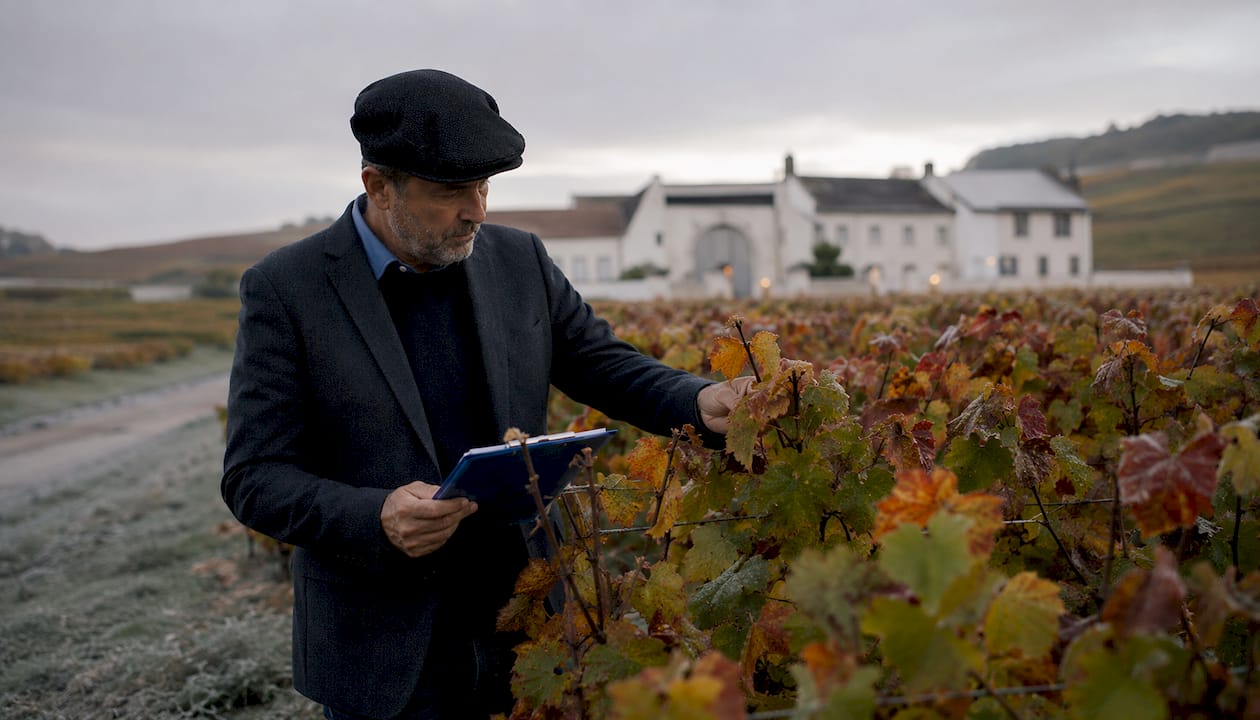
After ageing, each bottle undergoes riddling (gradual inversion to collect lees in the neck), followed by disgorgement (freezing and expelling the yeast plug), and finally dosage (a small addition of wine and sugar to set the final sweetness level). The result is a wine of considerable structural complexity, with fine, persistent bubbles that form from nucleation sites within the glass rather than dissolving quickly at the surface.
Charmat method: Prosecco’s fruit-forward freshness
Prosecco’s secondary fermentation takes place not in individual bottles but in large, pressurised stainless steel tanks. The base wine, made predominantly from Glera grapes, undergoes its second fermentation in these tanks over a matter of weeks, preserving the grape’s primary aromatics — pear, apple, white flowers, and sometimes a delicate honeyed note. Because the wine spends far less time in contact with lees, it retains a vivid, fruit-driven character that would be muted by extended autolysis.
The practical trade-offs between the two methods are significant:
- Complexity vs. freshness: Méthode traditionnelle builds layered, autolytic depth; Charmat preserves bright, primary aromatics.
- Ageing potential vs. immediacy: Champagne can develop in the cellar for years; Prosecco is designed to be consumed young, typically within one to three years of production.
- Cost vs. accessibility: Bottle fermentation is labour-intensive and time-consuming, which is reflected directly in retail price; tank fermentation is efficient and scalable, keeping Prosecco accessible.
- Bubble character: Champagne’s bubbles tend to be finer and longer-lasting; Prosecco’s are frothier and more exuberant at first pour.
Pro Tip: When reading a Prosecco label, look for “DOCG” and the name Conegliano-Valdobbiadene or Asolo — these signal hillside fruit and higher production standards. On a Champagne label, a disgorgement date (often printed near the base) tells you how long the wine has been in bottle since release, which helps you judge freshness.
Where each wine comes from and the naming rules that protect them
Geography is not merely a romantic footnote for these wines; it is the legal foundation upon which their identities rest.
The Champagne region
Champagne lies roughly 150 kilometres northeast of Paris, a cool, northerly wine region with chalky soils that impart high natural acidity to the grapes — the structural backbone that makes Champagne age so gracefully. The region’s principal subzones each contribute distinct character: the Côte des Blancs is the heartland of Chardonnay, producing wines of citrus precision and mineral tension; the Montagne de Reims is dominated by Pinot Noir, lending body and red-fruit depth; and the Vallée de la Marne is the traditional home of Pinot Meunier, adding roundness and early approachability.
Under Champagne AOC law, only wine produced within this defined region, from approved grape varieties, and following prescribed winemaking protocols may carry the name “Champagne.” The appellation’s protections are among the most rigorously enforced in the world of wine.
Prosecco’s DOC and DOCG zones
Prosecco is produced across a broad DOC zone spanning parts of Veneto and Friuli-Venezia Giulia in northeastern Italy. Within that larger zone, two DOCG areas represent the apex of quality: Conegliano-Valdobbiadene and Asolo. The steep hillside vineyards of Conegliano-Valdobbiadene — recognised by UNESCO as a World Heritage Site — produce Prosecco Superiore with greater concentration and complexity than the broader DOC. Within Valdobbiadene, the tiny Cartizze subzone (a single hill of approximately 107 hectares) commands the highest prices and is considered the grand cru of Prosecco.
Climatically, the contrast with Champagne is pronounced. Champagne’s cool, marginal climate produces grapes with high acidity and restrained fruit. Most Prosecco DOC comes from a warmer continental climate, yielding riper, more generously aromatic fruit, while the hillside DOCG pockets benefit from altitude and aspect to retain freshness and definition.
The grapes behind each style and what they tell you about the wine
Champagne’s three principal varieties
Champagne is built on three main grapes: Chardonnay, Pinot Noir, and Pinot Meunier, though a handful of other varieties are authorised under AOC rules. Chardonnay brings elegance, citrus, and mineral precision; Pinot Noir contributes structure, body, and red-fruit complexity; Pinot Meunier adds floral charm and early drinkability. When a single variety dominates, the style shifts noticeably:
- Blanc de Blancs: 100% Chardonnay — lean, citrus-driven, mineral, and age-worthy.
- Blanc de Noirs: Pinot Noir and/or Pinot Meunier — richer, fuller-bodied, with red-fruit and brioche notes.
- Rosé Champagne: typically a blend with a small addition of still red wine, or produced by brief skin contact — strawberry, raspberry, and cream.
Prosecco’s Glera-led character
Prosecco is primarily made from Glera, an aromatic variety that gives the wine its signature pear, apple, and white-flower profile. DOC and DOCG regulations mandate that Glera constitutes the dominant proportion of any Prosecco blend, with small allowances for other local varieties. Prosecco Rosé, a relatively recent addition to the appellation, blends Glera with Pinot Nero and has grown rapidly in popularity, offering a delicate salmon hue and a slightly more textured palate.
Tasting keywords to use when shopping:
- Champagne: toast, brioche, lemon curd, green apple, chalk, hazelnut, red cherry (in Blanc de Noirs).
- Prosecco: pear drop, white peach, jasmine, cream, green apple, light honey (in sweeter styles).
How Champagne and Prosecco taste, and what the label sweetness terms mean
Flavour profiles and mouthfeel
Champagne’s defining character is its layered complexity. The autolytic notes of toast and brioche — products of extended lees contact during bottle fermentation — sit alongside fruit notes ranging from green apple and lemon zest in younger non-vintage expressions to dried apricot, honey, and roasted nuts in aged vintages. The chalky soils of the region contribute a mineral tension that gives Champagne its characteristic length and precision on the finish.
Prosecco’s aromatics are immediate and generous: ripe pear, white peach, apple blossom, and a light creaminess that makes it instantly appealing. Because the Charmat method preserves primary fruit rather than building autolytic depth, Prosecco is designed to be enjoyed for what it is — vivid, fragrant, and undemanding in the best possible sense.
Bubble character differs meaningfully between the two. Champagne’s fine, persistent mousse coats the palate and contributes to the wine’s textural richness. Prosecco’s bubbles are larger and more exuberant, creating a frothy, lively sensation that dissipates more quickly but delivers an immediate sense of festivity.
Sweetness levels and label language
Label terminology can mislead buyers, particularly because Extra Dry Prosecco is, despite its name, often perceptibly sweeter than Brut. The table below maps the most common label terms to their residual sugar ranges, drawing on the dosage categories used across both regions.
| Label Term | Residual Sugar (g/L) | Notes |
|---|---|---|
| Brut Nature / Zero Dosage | 0–6 g/L | Bone-dry; rare in Prosecco, more common in Champagne |
| Extra Brut | 0–6 g/L | Very dry; found in both regions |
| Brut | 6–12 g/L | The most common dry style in Champagne |
| Extra Dry | 12–17 g/L | Counterintuitively, slightly sweeter; the most popular Prosecco style |
| Dry (Secco) | 17–32 g/L | Noticeably sweet; suits fruit-forward pairings |
Tasting notes to orient your palate:
- Brut Champagne: crisp, dry, with lemon, toast, and a clean mineral finish.
- Extra Brut Champagne: austere and precise, best with oysters or caviar.
- Extra Dry Prosecco: lightly sweet, pear-forward, and approachable — the classic aperitif style.
- Brut Prosecco: drier and crisper than Extra Dry; suits those who prefer less residual sweetness.
Pro Tip: When pairing with caviar and Champagne, always choose Extra Brut or Brut Nature — the absence of residual sugar allows the salinity and mineral depth of the caviar to express itself without competition from sweetness.
Quality tiers and ageing potential compared
Champagne’s hierarchy
Champagne operates across three principal quality tiers. Non-vintage (NV) Champagne, the flagship of most houses, blends base wine from the current year with reserve wines from previous vintages to achieve a consistent house style. Vintage Champagne is produced only in declared years of exceptional quality, drawing on fruit from a single harvest and ageing for a minimum of three years on lees. Prestige cuvées represent the pinnacle of each house’s production — wines of extraordinary complexity, often sourced from specific grand cru vineyards and aged for many years before release.
The practical implication for buyers: longer lees contact produces deeper autolytic character, greater structural complexity, and a wine that can continue developing in the cellar for a decade or more. NV Champagne is best enjoyed within three to five years of disgorgement; vintage and prestige expressions reward patience.
Prosecco’s tiers
- Prosecco DOC: The broad appellation; widely available, fruit-forward, and best consumed within one to two years of production.
- Prosecco Superiore DOCG (Conegliano-Valdobbiadene): Hillside fruit, greater concentration, and more defined aromatics; drink within two to three years.
- Cartizze DOCG: The premium microzone within Valdobbiadene; richer, more complex, and priced accordingly.
- Vintage Prosecco (Rive): Single-village or single-vineyard expressions from DOCG zones; the most terroir-expressive Proseccos available.
A quality DOCG Prosecco, particularly a Cartizze or a Rive bottling, can offer genuine complexity and distinction at a price point well below entry-level Champagne. For occasions where the budget is firm but the expectation of quality is not, this is where discerning buyers look first.
What Australian buyers can expect to pay, and why
Price is where the champagne vs prosecco differences become most tangible for Australian shoppers. Prosecco’s production volume was reported at around 660 million bottles in 2024, more than twice Champagne’s average annual output — a scale that keeps retail prices accessible. Champagne’s labour-intensive bottle fermentation, mandatory ageing periods, appellation scarcity, and global brand prestige all contribute to a significantly higher price floor.
As a general guide for the Australian market, entry-level Champagne typically commands a meaningfully higher retail price than entry-level Prosecco, reflecting both the production cost differential and the import and duty costs on French wine in Australia.
| Category | Typical Australian Retail Range | Notes |
|---|---|---|
| Entry-level Prosecco DOC | A$15–A$25 | Fresh, fruit-forward; ideal for casual entertaining |
| Quality Prosecco DOCG | A$25–A$40 | Conegliano-Valdobbiadene or Asolo; noticeably more complex |
| Entry-level NV Champagne | A$50–A$70 | House-style blends; reliable quality |
| Mid-range NV Champagne | A$80 and above | Greater house prestige and lees complexity |
| Vintage / Prestige Champagne | A$150 and above | Exceptional ageing potential; occasion-specific |
Note: these ranges are indicative of typical Australian retail pricing and will vary by retailer, vintage, and import conditions.
Buying tips for Australian shoppers:
- Seek out DOCG Prosecco over generic DOC when quality matters; the price premium is modest and the difference in the glass is real.
- Check the disgorgement date on Champagne bottles — a wine disgorged more than four years ago may have lost its freshness unless it was cellared correctly.
- Specialist wine retailers and curated online retailers typically offer better provenance and storage conditions than supermarkets for both styles.
- For event purchasing guidance, factor in shipping, chilling logistics, and per-head quantities before committing to a single style.
Food pairings and occasions: when to choose Champagne, when to choose Prosecco
Classic Champagne pairings
Champagne’s high acidity, fine mousse, and autolytic complexity make it one of the most food-versatile wines in existence. Its affinity for salinity is legendary: oysters, caviar, and cured fish are among the most celebrated matches. The wine’s structure also cuts through richness with precision — fried chicken, creamy brie, and butter-poached lobster all find a natural counterpart in a well-chosen Brut or Extra Brut. For a tasting-forward dinner where the wine is as much the subject as the food, a vintage Champagne alongside a carefully selected cheese course is difficult to surpass.
Prosecco’s natural territory
Prosecco’s fruit-forward generosity and lighter body make it the natural aperitif wine. Light antipasti, prosciutto, melon, and delicate seafood all complement its floral aromatics without competing. In a Spritz — the Venetian aperitivo of Prosecco, Aperol or Campari, and soda — it is practically irreplaceable. For fruit-forward desserts such as panna cotta or a light berry tart, a Dry or Extra Dry Prosecco provides a harmonious, not cloying, sweetness.
Occasion guidance:
- Champagne: formal celebrations, wedding toasts, prestige gifting, tasting dinners, and any moment where the wine itself is the centrepiece.
- Prosecco: aperitif hour, casual garden parties, cocktail receptions, and occasions where volume and approachability matter more than gravitas.
- Either performs well: cocktail receptions where guests span a range of wine knowledge, and celebratory brunches where both freshness and festivity are welcome.
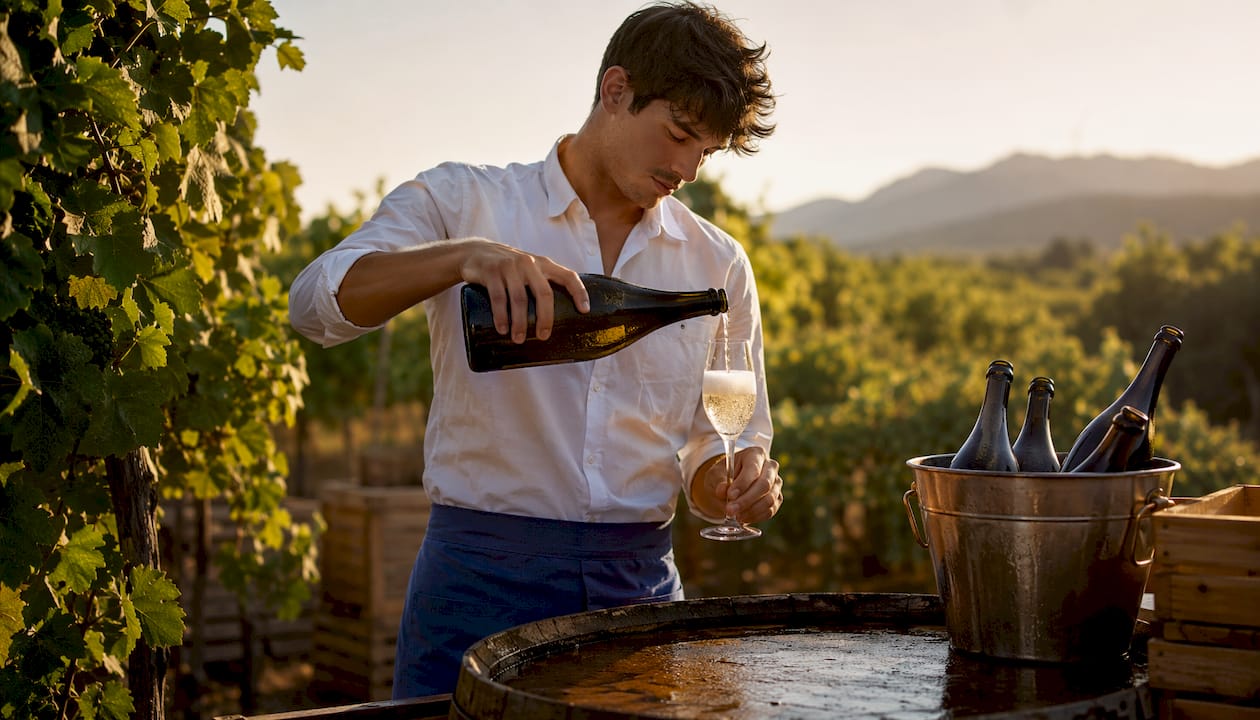
A practical rule: allow approximately six glasses per 750ml bottle, regardless of style. For a cocktail reception, budget one bottle per two guests over the first hour; for a seated dinner with Champagne as the sole wine, one bottle per person is a comfortable allowance.
A practical checklist for choosing the right bottle for your event
Step-by-step selection
- Define the occasion tone. Formal celebration or prestige gifting calls for Champagne; aperitif, casual entertaining, or cocktail base calls for Prosecco.
- Consider the menu. Rich, savoury, or umami-forward dishes pair best with Champagne’s structure; light, fresh, or fruit-forward menus suit Prosecco’s aromatics.
- Set a realistic per-bottle budget. For events where volume matters, a quality DOCG Prosecco at A$25–A$40 per bottle is a far more sustainable choice than entry-level Champagne.
- Calculate quantities. Six glasses per bottle; one bottle per two guests for a one-hour reception, one bottle per person for a full dinner service.
- Plan chilling logistics. Both styles should be served at 8–10°C. Allow at least three hours in a refrigerator or 30 minutes in an ice bucket.
- Choose appropriate glassware. A tulip-shaped flute or a white wine glass preserves aromatics better than a coupe for both styles.
Sample shopping combinations for three event types
- Cocktail reception (30 guests): 10 bottles of DOCG Prosecco for the aperitif hour, plus 5 bottles of NV Champagne for the toast. Efficient, elegant, and budget-conscious.
- Seated dinner (10 guests): 10 bottles of vintage or prestige Champagne, allowing the wine to carry the evening as a conversation piece in its own right.
- Casual summer BBQ (20 guests): 12–15 bottles of Prosecco DOC or DOCG, served in white wine glasses over ice, with a Spritz station as an optional extra.
When Prosecco is a suitable Champagne substitute: for any occasion where the wine is a backdrop rather than the focus, a quality DOCG Prosecco is a gracious and considered choice. Communicate this to guests by naming the producer and the appellation — “a Conegliano-Valdobbiadene Superiore” carries its own prestige and signals that the selection was deliberate, not merely economical. For event reception planning, the choice of wine is one of the most visible signals of the host’s attention to detail.
Aptent’s perspective: when we choose Champagne and when we choose Prosecco
At Aptent, the distinction between these two wines is best captured by an analogy drawn from Forbes: Champagne is the tailored tuxedo — structured, precise, and worn for moments that demand presence. Prosecco is the Italian linen suit — approachable, relaxed, and perfectly suited to the occasions that make up the texture of a well-lived life.
When Aptent curates a private tasting dinner or a prestige gifting experience, the choice is invariably a vintage Champagne — specifically, a wine like Le secret de Jules, where the depth of lees contact and the character of a declared vintage year give guests something genuinely worth contemplating. For aperitif receptions, corporate welcome drinks, or any occasion where the wine should invite conversation rather than demand it, a quality DOCG Prosecco from Conegliano-Valdobbiadene is our considered recommendation. The quality-over-price principle applies in both directions: never serve an entry-level Champagne when a Cartizze Prosecco would be more impressive, and never substitute Prosecco for Champagne when the occasion genuinely calls for the latter’s gravitas.
Key takeaways
Champagne and Prosecco differ fundamentally in origin and production method, and those two facts explain virtually every difference in flavour, texture, and price that Australian buyers will encounter.
| Point | Details |
|---|---|
| Origin and production | Champagne is a French AOC wine made by bottle fermentation; Prosecco is an Italian DOC/DOCG wine made by the Charmat tank method. |
| Flavour and bubbles | Champagne delivers autolytic complexity (toast, brioche) with fine, persistent bubbles; Prosecco offers primary fruit and floral aromatics with frothier, lighter bubbles. |
| Sweetness labelling | Extra Dry Prosecco is perceptibly sweeter than Brut; always check the label term and its g/L range before purchasing. |
| Price and value | Entry-level Champagne typically starts around A$50–A$70 in Australia; quality DOCG Prosecco delivers genuine complexity from A$25–A$40. |
| Aptent’s recommendation | For prestige occasions, choose Aptent’s Vintage Champagne, Le secret de Jules; for aperitifs and casual events, select a DOCG Prosecco. |
Aptent’s approach to sparkling wine curation
Aptent’s selection of sparkling wines is guided by the same principle that governs every product in the range: provenance, authenticity, and the conviction that the right wine, chosen with care, transforms an occasion into a memory. The curated Champagne collection, including the Champagne Pol Couronne range, reflects a deliberate preference for producers whose winemaking philosophy prioritises terroir expression and lees complexity over volume. For readers wishing to explore the full range of sparkling wine styles and pairing possibilities, Aptent’s editorial resources offer detailed guidance on Champagne Cuvée 1887 Brut and the principles behind selecting the right bottle for any occasion.
Aptent’s curated Champagne selection for discerning Australian buyers
For those who have read this far and are ready to act on the distinction between these two magnificent sparkling wines, Aptent’s Vintage Champagne, Le secret de Jules, is the natural starting point.
Le secret de Jules is a vintage expression sourced from a prestigious French producer, offering the autolytic depth, structural precision, and ageing potential that define great Champagne. Aptent recommends it for formal celebrations, prestige gifting, and tasting dinners where the wine is expected to carry the evening. For those purchasing as a gift, the Aptent gifting service offers curated presentation and delivery options suited to Australian buyers, with packaging that reflects the occasion’s significance. Corporate clients and private hosts seeking a fully managed sparkling wine experience for their next event are welcome to enquire through Aptent’s gourmet events service. Visit Aptent’s full collection to explore the complete range of Champagne, Prosecco, and luxury gourmet pairings available for delivery across Australia.
Useful sources
The following authoritative sources underpin the factual claims in this article and are recommended for readers who wish to read further.
- Wine Folly: Champagne vs Prosecco — The Real Differences — appellation law, terroir contrast, price signals, and production method overview.
- Decanter: Prosecco vs Champagne — What’s the Difference? — production method detail, lees contact, Glera grape character, and bubble quality.
- Forbes: What’s the Difference Between Champagne and Prosecco? — production volume data, market context, and the tuxedo/linen suit analogy.
- Champagne School: Champagne vs Prosecco Comparison — DOCG zone detail, Cartizze, dosage categories, and quality tier comparisons.
- Delish: Prosecco vs Champagne — What’s the Difference? — label terminology, Extra Dry sweetness nuance, and consumer-facing tasting guidance.
- Food & Wine: What’s the Difference Between Prosecco and Champagne? — winemaking process narrative, grape variety detail, and flavour profile descriptions.
Recommended
- Champagne selection for events: the 2026 guide – APTENT. GOURMET
- First Press vs Second Press Champagne: Understanding the Differences – APTENT. GOURMET
- Champagne Cuvée 1887 Brut: A Masterclass in Elegance and Complexity – APTENT. GOURMET
- How champagne bubbles form: the science explained – APTENT. GOURMET


