
Private island dining event: sommelier-led wine and caviar
A private island dining event is a private, invitation-only tasting experience centred on premium wine and caviar, curated and hosted by a specialist such as Aptent Gourmet’s APTENT. Gourmet. Guests receive a sommelier-led flight of three to five caviar varieties, paired wines, and full-service hospitality, all built around a single evening’s guest list rather than an open venue. The value sits in the education as much as the indulgence: a knowledgeable host walking guests through provenance, texture and pairing logic, with portions typically measured at moderate amounts per person per variety to ensure proper tasting.
Key Takeaways
A private island dining event succeeds when sommelier-led education, precise portioning and 24-hour pre-event confirmation combine into one seamless, fully staffed experience.
| Point | Details |
|---|---|
| Core definition | A private, invitation-only, sommelier-led wine and caviar tasting for HNW individuals and corporate bookers. |
| Portion planning | Serve an appropriate amount of caviar per person, per variety, across a flight of three to five types. |
| Confirm details early | Lock the final guest count and dietary needs roughly 24 hours before the event. |
| Cost drivers | Caviar rarity, imported wine, staff travel and bespoke menu design shift the final price most. |
| Recommended provider | APTENT. Gourmet handles sourcing, cold-chain logistics and sommelier-led service as one coordinated offering. |
Table of Contents
- What is a private island dining event, and what does it include?
- How much caviar and wine per guest?
- When should you start planning a private tasting?
- What happens on the day of the event?
- What drives the cost of a private tasting event?
- How do you choose a private tasting provider?
- Why choose APTENT. Gourmet for a private tasting
- Book a private tasting through Aptent
- Sources
What is a private island dining event, and what does it include?
The format is deliberately intimate. Most hosts cap guest numbers well below a standard corporate function, favouring a smaller circle where every attendee can taste, ask questions and hear the sommelier’s commentary without competing for attention. Guides to elegant caviar tastings consistently recommend small, focused guest lists and evening timing, which suits the reflective pace the format demands.
A well-built event brings together several moving parts, each with a defined role:
- A sommelier-led tasting sequence, guiding guests through each caviar and wine pairing in order
- A curated caviar flight, usually three to five varieties presented on ice
- Matched wines or Champagnes, selected to complement rather than compete with each tin
- Canapé or plated accompaniments, such as blinis and crème fraîche
- Service staff, including a maître d’, lead sommelier, chef and front-of-house team
- Presentation elements: mother-of-pearl spoons, crushed ice displays and labelled tins
Beyond that core, most providers offer optional extras: printed tasting notes, branded place cards, a live cooking station, event photography, or transport arrangements if the venue sits somewhere remote. These additions shift the evening from a tasting into a full occasion, and they’re worth discussing early rather than bolted on at the last minute.
Responsibilities split cleanly between provider and host. The provider handles sourcing, staffing, cold-chain logistics and the tasting script. The host confirms the guest list, signs off on the menu, and flags dietary requirements before the final week. Anyone weighing up formats first should look at how different caviar tasting event types compare before locking in a structure.
How much caviar and wine per guest?
Portion planning is where amateur setups fall apart. Serve too little and the tasting feels stingy; serve too much and richer varieties overwhelm the palate before the flight finishes. The standard guidance sits at 10 to 20 grams per person, per variety, for a genuine comparative tasting.
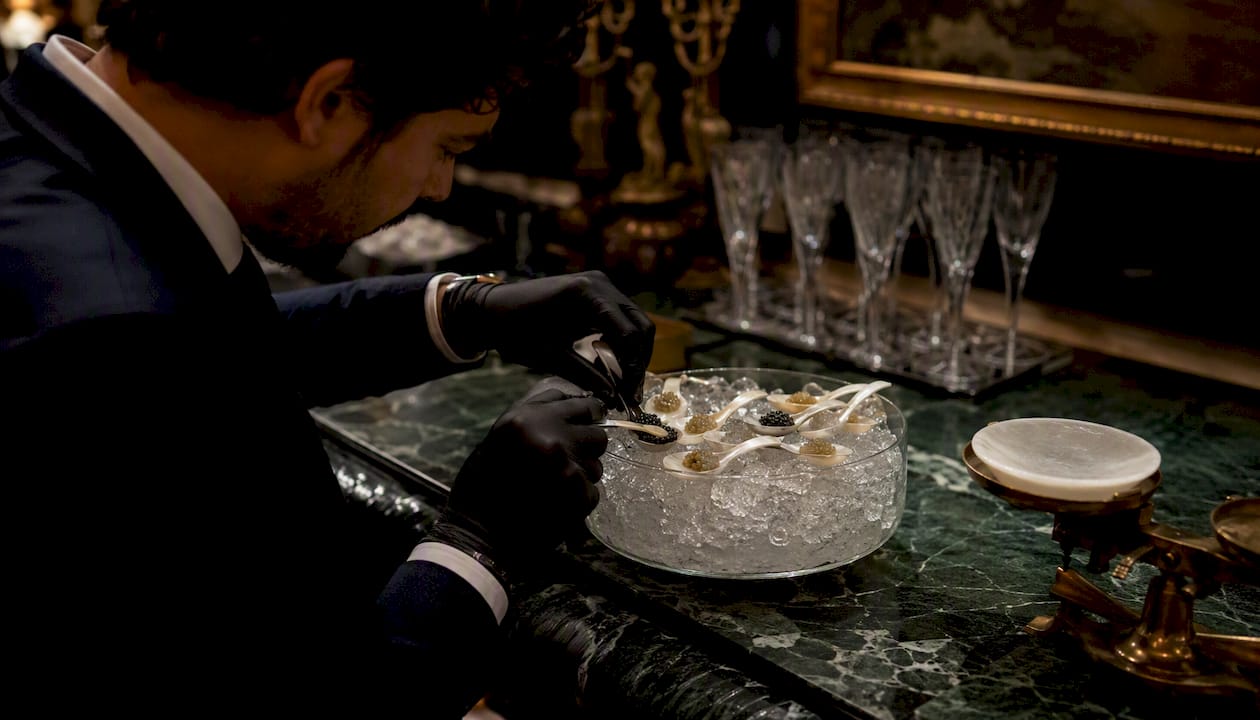
Pro Tip: Reception-style events with guests moving and mingling tend toward the lower end of that range; seated, plated courses where caviar is the centrepiece justify the higher end.
| Element | Guidance |
|---|---|
| Serving size | a moderate, appropriate amount per person, per variety |
| Flight structure | 3–5 varieties, mild to bold |
| Serving temperature | held chilled on crushed ice |
| Utensils | Mother-of-pearl, glass or bone (never metal) |
Flight design follows the same light-to-bold logic as a wine tasting. Starting with a milder, buttery variety and building toward something bolder and briny protects the palate from fatigue, and a good sommelier will narrate why each varietal was chosen, from vineyard-style provenance stories to how salinity and texture shift across different caviar species.
Pairing logic matters just as much as sequencing. Brut Champagne and chilled vodka remain the classic pairing choices, because their clean, neutral profiles let the caviar’s flavour lead. Heavy citrus and spicy condiments do the opposite, masking the delicate, faintly nutty notes a good tin delivers. Every tin stays sealed on ice until the moment of service. Opening it early exposes the caviar to air and warmth, and the flavour degrades fast.
When should you start planning a private tasting?
Personalisation is what separates a memorable evening from a generic one, and it happens in stages rather than all at once, as explained in detail in Private Classes | blameitonbacchus.
- Initial briefing. Discuss guest count, occasion, budget and any must-have varieties or wines.
- Menu and pairing sign-off. Confirm the flight sequence, accompaniments and any bespoke touches.
- Guest list and dietary details. Collect allergies, drink preferences, accessibility needs and special requests such as toasts or announcements.
- Logistics checks. Confirm permits, transport, staffing and cold-chain handling for the caviar itself.
- Final confirmation, roughly 24 hours prior. Lock the guest count and any last-minute changes.
Professional planners treat that 24-hour window as non-negotiable, since it’s the last point where staffing, portions and seating can flex without compromising the event.
Pro Tip: Book a short walk-through with the lead sommelier or event host the day before. Fifteen minutes spent confirming names, pronunciations and seating quirks pays off tenfold once service begins.
What happens on the day of the event?
A private tasting typically runs across a defined window, from welcome drinks through the tasting flight, plated or canapé service, and a closing stretch for farewells. The sequence behind the scenes is tightly choreographed:
- The maître d’ arrives early to oversee setup and table styling
- The sommelier briefs staff on the evening’s flight and pairing rationale
- Caviar is kept sealed on ice until each course is called
- Wines are poured to timed cues, so nothing sits too long before tasting
- Accompaniments are plated fresh, and tins are cleared promptly to avoid warming
Presentation carries real weight here. Crushed ice centrepieces keep tins at temperature, label cards identify each variety and its pairing, and the pacing is controlled precisely so nothing oxidises or warms before it reaches a glass or spoon.
Pro Tip: Build premium non-alcoholic pairings into the flight itself rather than offering them as an afterthought. Guests who don’t drink deserve the same considered pairing logic as everyone else.
What drives the cost of a private tasting event?
Price moves on a handful of clear levers: the rarity and grade of caviar, whether wines are imported, staff travel and overnight accommodation, bespoke menu development, equipment hire, and the guest-to-staff service ratio. Delivery logistics and any permits required for the venue add further weight, particularly for remote or island locations.
- Caviar grade and rarity (rarer roe commands a steep premium)
- Imported wines and Champagnes versus domestic selections
- Staff travel, accommodation and service ratio
- Bespoke menu design and tasting-note production
- Equipment hire, transport and any required permits
For scale, corporate wine tasting guides put a quality, facilitated event at roughly $65 to $150 per person, depending on format and inclusions, though a bespoke caviar-driven evening with rare varieties typically sits above that band. Lead times stretch when sourcing rare tins or building a fully bespoke menu, so booking early protects both availability and price. Always confirm deposit amounts, payment schedules and cancellation cut-off windows in writing before the date is locked.
How do you choose a private tasting provider?
Not every operator promising a “luxury tasting” can back it up. A short vetting pass saves considerable regret:
- Ask for sommelier credentials and examples of past events
- Confirm provenance and traceability for both caviar and wine
- Check the cold-chain and food-safety plan in detail
- Verify insurance and any permits required for the venue
- Request sample menus and a clear tasting-flight structure
Vague answers on sourcing, no documented cold-chain plan, or reluctance to confirm final guest-count timing are all warning signs. A refusal to put insurance or references in writing is another. The stronger operators lean the other way: documented sourcing, a clear tasting structure, and a visible history of similar events, which is exactly the standard APTENT. Gourmet holds itself to.
Why choose APTENT. Gourmet for a private tasting
Aptent’s Gourmet arm sources rare wines, Champagne and high-grade caviar from established global producers, then builds each tasting around that curated supply rather than whatever happens to be available. A typical booking runs through a discovery call, menu and pairing sign-off, a full logistics and cold-chain plan, and day of execution led by a sommelier and dedicated event host.
- Discovery call to scope guest count, occasion and budget
- Menu and pairing sign-off, built from the curated product range
- Logistics and cold-chain planning for every tin and bottle
- Day-of execution led by a sommelier and Maison Hostess
Reach out through the Gourmet Events page to start a briefing, or browse the caviar collection if you’re sourcing product for an existing event first.
A note on what makes these evenings work
The tastings that stay with guests aren’t the ones with the rarest tin on the table. They’re the ones where a sommelier’s story about a vineyard or a roe’s origin turns a spoonful into something worth remembering. Get the curation and the pacing right, and the rest follows.
Book a private tasting through Aptent
Ordering rare caviar and fine wine piecemeal from multiple suppliers, then hiring separate event staff, is how most private tastings blow their budget and timeline. Aptent solves that by putting sourcing, pairing and service under one curated offering, so you’re booking one relationship instead of coordinating five.
That matters most for corporate planners juggling multiple vendors on a tight date, and for private hosts who want the sommelier narrative and cold-chain handling sorted without chasing separate quotes. Whether you need a full tasting evening or want to start smaller with a 30g tasting portion to sample the product first, the next step is the same: get in touch through Gourmet Events with your guest count and preferred date, and Aptent will scope the tasting from there.
Sources
- How to Host a Caviar Tasting Flight
- Ultimate Guide to Hosting a Perfect Caviar Party: Tips & Pairings
- How to Host an Elegant Caviar Tasting Party
- Corporate wine tasting event: complete planning guide


