
Aptent's Sommelier Wines for Oysters by Flavor and Preparation
For oysters, reach for a dry, high-acid, mineral-driven white or a Blanc de Blancs Champagne. The most reliable styles are Champagne, Chablis, Muscadet, Sancerre, Albariño, and Picpoul, each prized for the same qualities: bracing acidity and a saline edge that mirrors the brine. Steer clear of tannic reds with raw oysters. They clash with shellfish minerality and turn metallic on the palate.
TL;DR:
- Briny oysters pair best with high-acid, mineral-driven whites like Muscadet, Chablis, and Blanc de Blancs Champagne, which complement their saltiness and brine.
- The oyster’s flavor variety, such as briny, fruity, creamy, or metallic, should guide your wine choice, with specific pairings like Muscadet for briny or Chablis for metallic oysters.
- Cooked or dressed oysters require fuller, rounder whites or sparkling wines to balance added richness and smoky flavors, unlike raw oysters that need restraint.
- Serve wines at 7 to 10°C in tulip glasses, sip between bites, and avoid adding lemon to preserve the mineral qualities of the pairing.
- Aptent offers a curated selection of mineral-focused whites and Blanc de Blancs Champagne, emphasizing precise matching for oysters and seafood.
Table of Contents
- What is the best wine for oysters?
- How does oyster flavour change the wine you should choose?
- Does the wine change when oysters are cooked or dressed?
- What temperature and glassware suit oysters and wine?
- What does Aptent recommend for an oyster and wine pairing?
- Our favourite oyster pairing, and why it’s worth experimenting
- Bring the pairing home with Aptent
- Sources
What is the best wine for oysters?
Each style earns its place through a slightly different mechanism, and knowing the distinctions turns a good pairing into a memorable one.
- Champagne (Blanc de Blancs, extra brut): the effervescence scrubs the palate clean between mouthfuls, while minimal dosage keeps the focus on the oyster rather than the wine.
- Muscadet sur lie: searing acid and unmistakable sea salt make it the Atlantic coast’s default pour, and extended lees ageing gives it a faint creaminess that suits richer oysters, a character The Manual traces back to the Melon de Bourgogne grape.
- Chablis: unoaked Chardonnay with a flinty, almost struck-match quality that flatters metallic or mineral oysters without competing.
- Sancerre and other Loire sauvignon blancs: crisp, herbal, and precise, built for briny oysters that need a wine with backbone.
- Albariño and Picpoul: citrus-driven whites from Spain’s Rías Baixas and France’s Languedoc, both carrying that seawater tang oyster lovers chase.
- Fino and manzanilla sherry, dry Riesling, Chenin Blanc: specialist alternatives for bolder or unusually briny oysters, with sherry’s oxidative, nutty profile working especially well against very salty specimens.
Aptent’s curated white wine collection leans heavily on several of these regions for exactly this reason.
How does oyster flavour change the wine you should choose?
Oysters aren’t uniform. Their flavour shifts with the water they grow in, a concept the wine trade calls merroir, and that variation should steer your glass.
Briny, saline oysters (Pacific coast varieties are a common example) want a wine with equally assertive acid and salt, such as Muscadet or fino sherry. Melon or fruit-forward oysters, milder and slightly sweet, pair beautifully with the citrus lift of Albariño or Picpoul. Custardy, creamy oysters with a fuller texture ask for something with a touch of lees character or roundness, where Chablis or a lightly aged Muscadet earns its keep. Metallic oysters, often the ones with higher copper or iron notes, need Chablis’s flinty minerality to meet that intensity rather than fight it.
- Briny → Muscadet, fino sherry
- Fruity/melon → Albariño, Picpoul
- Creamy/custardy → Chablis, lees-aged Muscadet
- Metallic → Chablis, dry Riesling
Pro Tip: Order a mixed dozen and taste the same wine against each oyster. The flavour swing from one variety to the next will teach you more about pairing than any tasting note ever could.
Does the wine change when oysters are cooked or dressed?
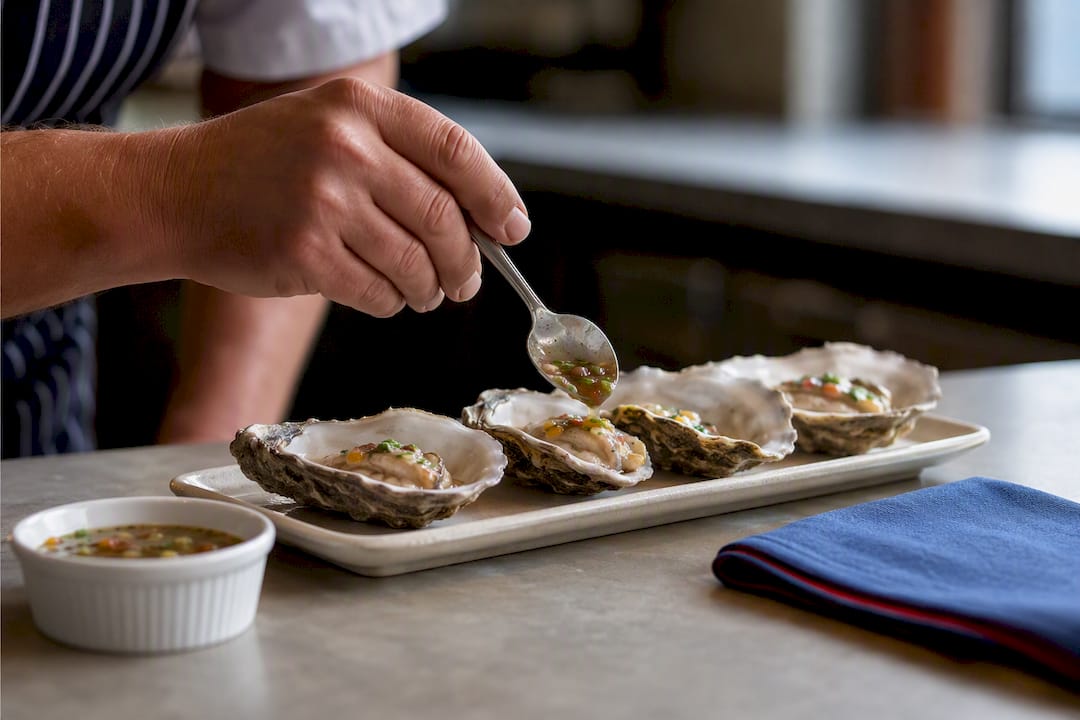
Raw oysters demand restraint: lean, unoaked whites or a brut sparkler, nothing that muddies the brine.
Once oysters hit heat or get dressed up, the rules loosen considerably. Grilled, smoked, or charred oysters bring smoky, caramelised notes that overwhelm a delicate Muscadet, so shift to fuller whites with real body, or even a chilled, low-tannin red served slightly cooler than usual. Oysters Rockefeller or anything under a creamy sauce need a rounder white to match that richness, where Chenin Blanc’s weight and gentle honeyed edge holds up far better than a bone-dry Sancerre. Fried or battered oysters, meanwhile, suit sparkling wine particularly well, since the bubbles cut through the oil the same way they clean up raw brine.
- Raw: unoaked white or brut sparkler, nothing riper.
- Grilled or smoked: fuller-bodied white or a chilled light red.
- Rockefeller or creamy sauce: rounder white, Chenin Blanc or similar.
- Fried or battered: sparkling wine, dry and well chilled.
What temperature and glassware suit oysters and wine?
A few degrees of serving temperature and the right glass shape do more for a pairing than switching bottles entirely, a point Wine Enthusiast makes repeatedly in its pairing guidance.
- Serve Champagne and other sparklers at 7 to 9°C, in a tulip glass rather than a flute if you want the aromatics to open up.
- Serve Chablis, Muscadet, and Sancerre closer to 8 to 10°C, in a white wine tulip that concentrates the mineral notes.
- Pour small tasting measures, sip, taste the oyster, then sip again. The second sip should taste cleaner and slightly sweeter if the pairing works.
- Skip the lemon if the wine already carries strong citrus character. It can flatten minerality rather than lift it. A light mignonette is more forgiving.
Pro Tip: If you’re buying wine specifically for a dozen oysters, chill an extra bottle behind the first. Palates adjust fast once the brine gets going, and a second pour rarely goes to waste.
What does Aptent recommend for an oyster and wine pairing?
Aptent curates its wine selection around exactly this kind of precision matching, favouring producers whose Chardonnay, Melon de Bourgogne, and Chardonnay-based Champagne show the mineral tension oysters demand. A Blanc de Blancs Champagne with extra-brut dosage remains our most-requested recommendation for a raw oyster platter, prized for the same restraint sommeliers look for elsewhere in this guide. Readers building a full pairing menu can browse Aptent’s Champagne and seafood pairing walkthrough for a dish-by-dish breakdown.
Our favourite oyster pairing, and why it’s worth experimenting
A house favourite is a Blanc de Blancs Champagne against a briny rock oyster: the acid meets the salt head-on, and the bubbles do the rest. Try the same bottle against a creamier variety and the pairing shifts entirely. That’s the lesson worth taking home. Occasion, weather, and your own palate all move the goalposts, so treat every recommendation here as a starting point, not a rule.
Bring the pairing home with Aptent
Aptent is the direct route to the bottles this guide recommends, without hunting across multiple retailers for the right Blanc de Blancs or a properly chilled Muscadet-style white. Our curated white wine collection is built around the same acid-and-minerality principles covered above, and our Champagne range includes Olim for a classic Blanc de Blancs style and Tradition Brut for an extra-brut option that keeps focus squarely on the oyster.

Beyond the bottle, Aptent runs private gourmet events pairing wine with caviar and other fine fare for hosts who want the full tasting experience handled from start to finish, alongside a range of serving accessories suited to a proper tasting table. Browse the full Aptent storefront to build your next oyster night, or get in touch to check availability for an event booking.
Sources
- Four Tried-and-True Oyster and Wine Pairings | Wine Enthusiast
- Merroir explained: An oyster and wine pairing guide | Wine Spectator
- What is Muscadet? | The Manual
- Best wines for oysters: Chablis, Champagne, and Muscadet | WineWiki


