
200 ml–30 L Champagne Bottle Sizes: Buying and Handling for Events
Champagne is bottled in formats ranging from the miniature 200 ml piccolo to the monumental 30 L Melchizedek. The standard bottle holds 750 ml, and a magnum doubles that to 1.5 L, or two standard bottles. Move up the scale and a Jeroboam equals four standard bottles, a Methuselah equals eight, and the naming keeps climbing through biblical kings all the way to formats reserved for grand ceremonial pours. A full chart, the origins of these names, and guidance on choosing the right size follow below.
TL;DR:
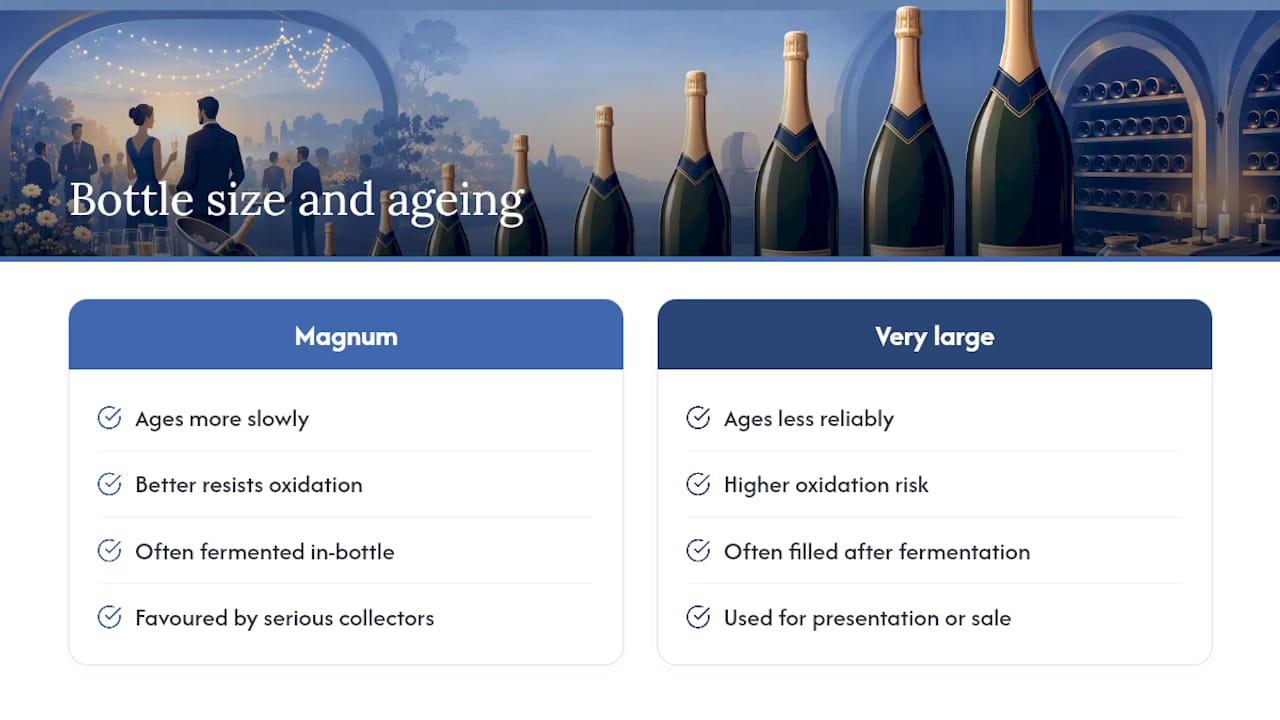
- Larger formats like Jeroboam and Methuselah are usually filled after fermentation to avoid handling risks and are less common in retail.
- Champagne bottle names originate from biblical kings, not regulation, and serve as markers of tradition and prestige rather than technical specifications.
- Magnums age more slowly and resist oxidation better than standard bottles, making them ideal for long-term cellaring and special occasions.
- Large-format bottles require early sourcing planning and special handling, including stable serving stands and assistance, especially for formats above a Jeroboam.
- Buying a Magnum instead of two standard bottles offers the same amount of wine, better aging potential, and a more impressive presentation on the table.
Table of Contents
- Champagne bottle sizes chart: names, volumes and serves
- Where do the champagne bottle names come from?
- Does bottle size change how champagne ages?
- Which champagne size suits your occasion?
- Aptent’s perspective on sourcing large-format champagne for events
- Aptent’s curated champagnes, magnums and event ordering
- Sources
Champagne bottle sizes chart: names, volumes and serves
Every recognised format multiplies the standard 750 ml bottle by a whole number, which makes conversions straightforward once you know the scale. The list below runs from the smallest practical format to the largest ceremonial bottles, most of which you will only ever see at a grand reception or in a specialist collector’s cellar.
Serving estimates assume a standard flute pour of around 100 to 125 ml, which is the industry norm cited across Bubble & Flute’s size guide.
Piccolo through to magnum sit on most retailer shelves without any trouble. Once you pass the Jeroboam mark, you are usually into house allocations or bespoke orders, and anything above a Nebuchadnezzar is typically a commissioned piece rather than a stock item. The Champagne interprofession’s own reference on bottle formats confirms this scarcity at the top end, and it is worth factoring into your timeline if you have your heart set on anything larger than a Balthazar for an event.
Where do the champagne bottle names come from?
The names attached to large-format champagne bottles are traditional, not technical. There is no regulatory body assigning “Nebuchadnezzar” to 15 litres. The convention grew out of nineteenth-century champagne houses drawing on biblical kings to lend gravity and mystique to their biggest, most theatrical bottles.
Champagne De Lozey’s history of the naming system traces several of these names to Old Testament rulers. A Jeroboam takes its name from the first king of the northern Kingdom of Israel. A Methuselah, six litres of champagne, borrows the name of the Bible’s longest-lived man, a fitting reference for a bottle built to age. G.H.Mumm’s own material on its Methuselah format echoes this, treating the name as a mark of prestige and occasion rather than a technical spec.
Does bottle size change how champagne ages?
Yes, and the difference is real enough to matter if you are cellaring for a future celebration. Magnums generally age more slowly and resist oxidation better than standard bottles, largely because of the ratio between the wine’s volume and the surface area exposed to the small amount of oxygen sealed under the cork. Champagne houses cite this as one reason serious collectors favour the format, as champagne.fr’s technical notes on bottling explain.
There is a production catch worth knowing before you buy a giant bottle expecting the same ageing story. Most houses ferment their wine in standard bottles or Magnums, then decant it into the very large formats for sale or presentation rather than running a full secondary fermentation inside an 18 or 30 litre vessel. De Lozey notes this directly: very large formats are often filled after fermentation because of the pressure and handling risks involved. If you are buying for long-term cellaring rather than a one-off event, a Magnum is the more dependable choice, and pairing it with correct storage conditions matters just as much as the format itself.
Which champagne size suits your occasion?
Matching the bottle to the moment is mostly about guest count, portability, and how much theatre you want.
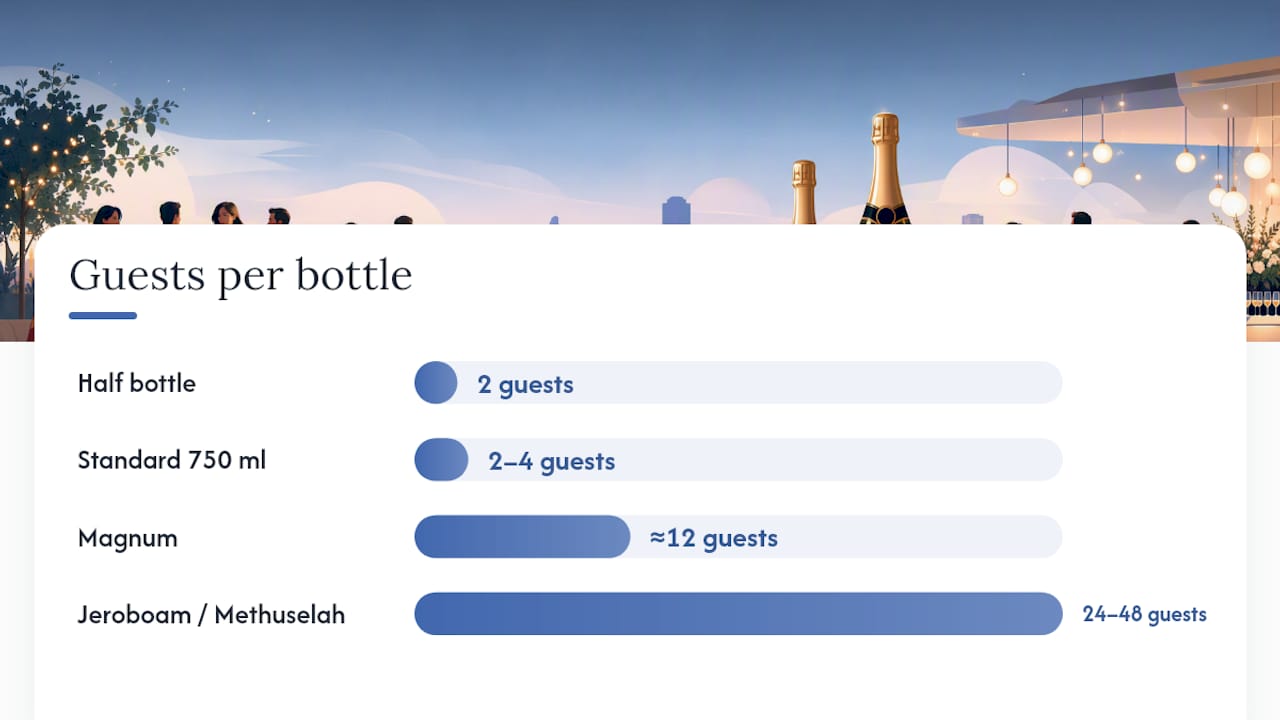
- A half bottle suits a quiet picnic or a single glass each for two people without waste.
- A standard 750 ml bottle covers an intimate dinner for two to four guests.
- A Magnum serves around 12 flutes and is the sweet spot for dinner parties, since it also ages more gracefully if you want to open a matching bottle on an anniversary.
- A Jeroboam or Methuselah makes sense for a wedding table of 24 to 48 guests, and doubles as a striking centrepiece.
- A Salmanazar or larger belongs at a big reception, where the format itself becomes part of the entertainment.
Chill large formats for longer than you would a standard bottle. A Magnum needs roughly two to three hours in an ice bucket, and anything larger benefits from a slow chill in a cool room beforehand rather than a rushed ice bath. Leave sabrage to someone experienced and never attempt it on a format you have not handled before. Solomon and Primat bottles are heavy enough that they need two people to lift and pour safely, so arrange help in advance rather than improvising on the night. If you are staging a champagne tower for a large formats, proper etiquette and pouring technique will save you a sticky floor.
Pro Tip: Buy a Magnum instead of two standard bottles when you can. You get the same total pour, better ageing if you hold one back, and a far more impressive bottle on the table for the same wine.
Aptent’s perspective on sourcing large-format champagne for events
Sourcing anything above a Jeroboam is a lead-time exercise, not a same-week purchase. Experience curating champagne for private boutique events shows that the biggest formats are typically allocated by the house well in advance, and bespoke labelling or presentation cases add further weeks to production.
Our advice to anyone planning a wedding or a large reception around a showpiece bottle is simple: confirm the format’s availability the moment the date is locked in, not a month out. Handling logistics also deserve attention early. A Salmanazar or larger needs a stable, well-supported serving stand and at least two people for pouring, and that is worth briefing your event staff on before the day. For guidance on building out a full champagne selection for an event, matching formats to guest numbers early avoids a scramble later.
— APTENT
Aptent’s curated champagnes, magnums and event ordering
A curated champagne selection gives you a direct route to the formats this guide has covered, sourced from producers chosen for authenticity rather than volume. Rather than chasing down a rare Jeroboam through multiple retailers, you can view what is currently available, including bottles like Les Filles des Vendanges, and work from there.
For weddings, corporate functions, or private tastings that call for large formats and matched service, Gourmet Events services coordinate sourcing, presentation, and delivery around your date, so you avoid the lead-time pressure that catches most last-minute orders. If a gift is the occasion rather than an event, a Gourmet Gift Card lets the recipient choose their own bottle. Start by browsing the full range at Aptent Gourmet or requesting an event quote, and allow extra time if your heart is set on anything larger than a Magnum.
Sources
- The Champagne bottle
- Does size matter? A guide to champagne bottle sizes (Bubble & Flute)
- The names of the different champagne bottles | Champagne De Lozey


