
90 Minutes to an Effortless At Home Wine Tasting
The simplest at home wine tasting that actually works is four to six wines, poured into identical glasses at 60 ml each, tasted through a structured 90-minute flow. Pick a theme tonight, buy your bottles tomorrow, print a simple tasting mat, and you have everything you need for an evening of genuine discovery rather than idle sipping.
TL;DR:
- Use four to six wines with identical glasses and a structured 90-minute flow to ensure an engaging and coherent tasting experience.
- Choose a clear theme, such as region, grape variety, or price point, and set a budget that prioritizes the anchor wine to maintain consistency.
- Pour 60 ml per taste, order wines from light to full-bodied, and build time into the schedule for silent smell-and-look assessments before tasting.
- Keep food simple with plain crackers, mild cheeses, and fresh fruit, avoiding heavily spiced or strong-flavored items during the formal flight.
- Conduct blind tastings to promote honest scoring and lively discussion, and consider curated tasting kits to simplify planning and ensure quality.
Table of Contents
- What you need for a home wine tasting
- Choosing wines and a theme worth comparing
- Pour sizes, tasting order and a 90-minute run sheet
- Food and palate cleansers: what belongs on the table
- Formats and icebreakers that make the evening memorable
- Host tips and mistakes to avoid
- Aptent’s checklist for a polished tasting
- What actually matters when you host a wine tasting
- Browse curated tasting kits and book a private tasting
- Sources
What you need for a home wine tasting
You do not need a cellar’s worth of crystal to host something memorable. What you do need is consistency: the same glass shape for every guest, because shape genuinely changes how a wine presents on the nose and palate. A single ISO-style universal glass, bought in bulk from a homewares shop, does the job for reds, whites and sparkling alike.
Beyond glassware, the shopping list is short:
- A spittoon or a couple of discreet cups guests can use without ceremony
- A jug of water for rinsing glasses and for guests who want to pace themselves
- Plain palate cleansers such as water crackers or torn baguette
- A corkscrew (a waiter’s friend, not a novelty gadget) and a pour measurer or jigger
- Printed tasting mats, one per guest, with space to note appearance, nose, palate and finish
If you own fewer glasses than guests, run the tasting in pairs, two wines to a glass, and only rinse between pours when the previous wine was heavily aromatic, such as an oaked chardonnay. A quick water rinse between lighter wines is unnecessary and wastes time you would rather spend talking.
Choosing wines and a theme worth comparing
A tasting without a theme is just drinking with extra steps. The theme gives your guests something to argue about, which is half the fun. Consider these approaches:
- Same grape, different regions — a pinot noir from the Yarra Valley against one from Burgundy and one from Central Otago.
- Same region, different producers — three shiraz from the Barossa Valley at different price points.
- Price-point blind — a $15 bottle, a $40 bottle and a $90 bottle, guests guess which is which.
- A vertical — the same label across three or four vintages, if you can source it.
- Occasion-based — a champagne and sparkling flight for a celebration, or a cold-weather flight of full-bodied reds.
Set a total budget first, then divide it unevenly. Spend more on the anchor wine that anchors the comparison and less on the supporting bottles. The host should generally be the one buying and curating the selection, because a coherent theme falls apart quickly when everyone brings whatever they fancy and there is no throughline to discuss.
For most groups, four to six wines is the sweet spot: fewer than four feels thin, and past eight the palate starts flattening out and every wine begins to taste vaguely the same. Buy one spare bottle of something crowd-pleasing in case a guest’s palate needs a reset, and check a specialist bottle shop or an online gourmet retailer if your theme calls for something harder to find locally.
Pour sizes, tasting order and a 90-minute run sheet
A standard tasting pour is 60 ml (about 2 ounces), which works out to roughly 12 pours per 750 ml bottle. For six guests tasting five wines, that is 30 pours per wine, meaning one bottle comfortably covers everyone with a couple of pours to spare for a second look.
Order matters more than most first-time hosts expect. The rule of thumb runs:
- Sparkling before still wine
- White before rosé, rosé before red
- Light-bodied before full-bodied
- Dry before sweet, and lower alcohol before higher alcohol
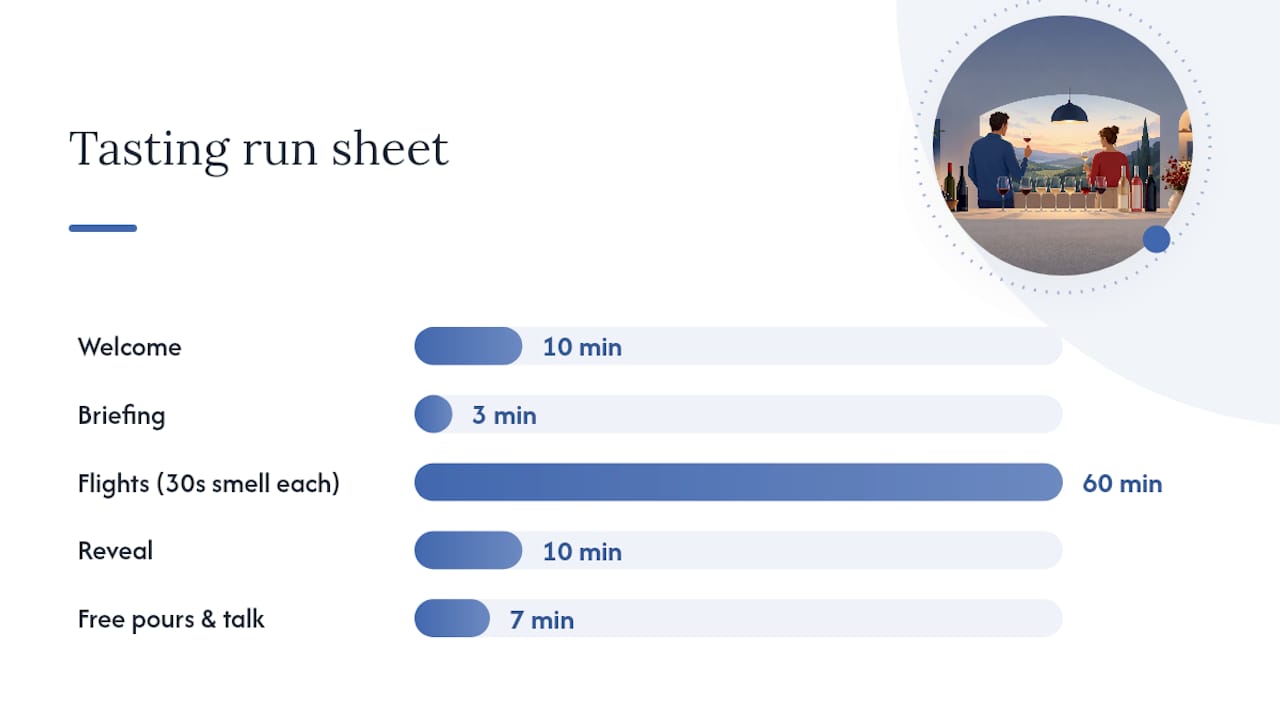
A tested 90-minute structure breaks down neatly: ten minutes for welcome and settling in, three minutes briefing guests on the format and the mat, roughly sixty minutes for the structured flights themselves, ten minutes for the reveal, and whatever is left for free pours and conversation.
Pro Tip: Build a short silent smell-and-look window into each flight, thirty seconds before anyone speaks. It stops the loudest guest’s opinion becoming everyone else’s opinion.
Budget ten to fifteen minutes per wine when guests are still writing notes, less once the group finds its rhythm.
Food and palate cleansers: what belongs on the table
Keep the spread deliberately plain during the structured tasting, following practical holiday meal prep tips for busy home cooks to ensure easy-to-eat and complementary bites. Wine Folly recommends single-serve, easy-to-eat bites that complement rather than compete with what is in the glass:
- Plain bread or unsalted crackers
- Mild cheeses without strong rind or ash coatings
- Fresh fruit, particularly grapes, apple or pear
- A small amount of cured meat, kept modest so it does not dominate
Skip anything heavily spiced, smoked, or drenched in vinegar or citrus during the formal flight. Chilli, garlic and strong pickles will flatten a wine’s aromatics faster than anything else on the table. Save the bigger spread, whether that is a cheese board or a full pairing station, for after the reveal.
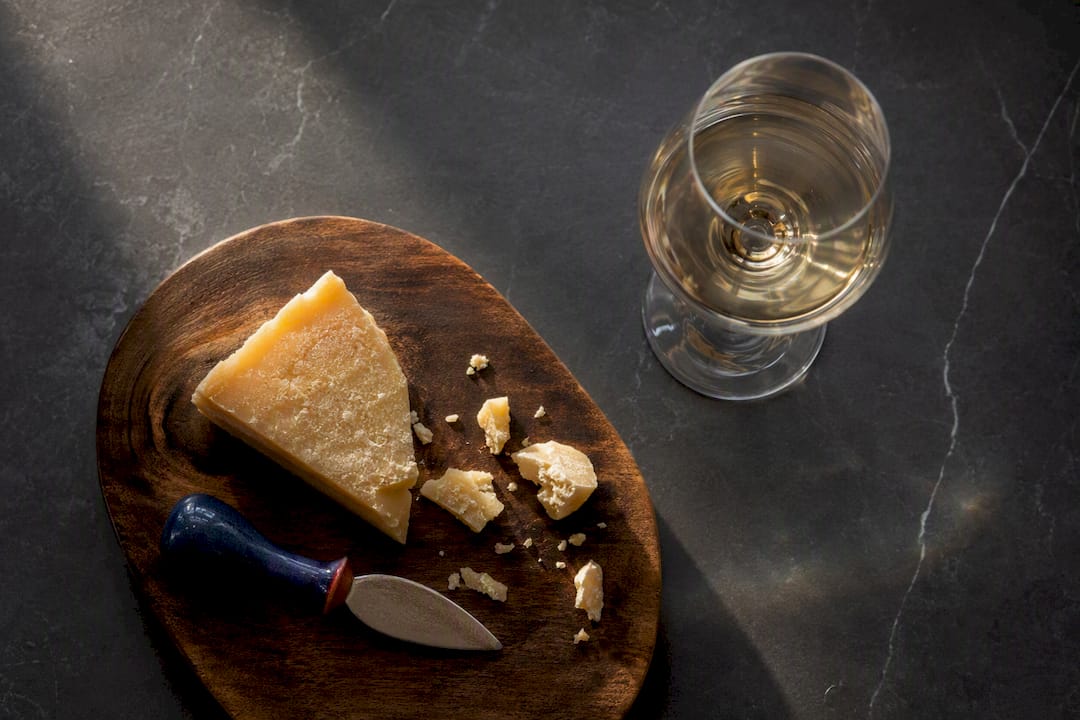
Pro Tip: If you want to illustrate a point rather than just decorate the table, choose one deliberate pairing, a nutty aged cheese against an oxidative white, and explain why it works before guests move on to free pouring.
Formats and icebreakers that make the evening memorable
A blind tasting is the single easiest format to elevate an ordinary evening. Wrap each bottle in a paper bag or foil, number them, and ask guests to score privately before anyone says a word. Tasting blind tends to produce more honest scoring than an open pour, because nobody is anchoring their opinion to a label or a price tag.
A few formats to try, depending on the mood you want:
- Price-point blind — guests rank wines by perceived quality, then you reveal the actual prices.
- Grape versus region — same variety, wildly different climates, guests guess origin.
- Bring-a-bottle with a price cap — everyone brings one bottle under a set amount, host arranges the order.
Keep scoring simple. A 1 to 10 scale per wine, noted on the mat, is enough to spark a proper debate at the reveal. The scoring and the reveal are genuinely the social hook of the whole night. The argument over who guessed correctly, and the surprise when a $15 bottle beats a $60 one, is what people talk about on the drive home.
Host tips and mistakes to avoid
Skip scented candles, diffusers and heavy perfume. Strong ambient scents interfere with what guests actually smell in the glass, and neutral lighting matters just as much, since warm bulbs or coloured lamps distort how a wine’s colour reads in the glass.
- Keep pours modest and spaced, with water and a discreet spit option always within reach
- Sort transport home before the first cork comes out, not after
- Brief the group in under three minutes, then step back
Pro Tip: Resist the urge to lecture. A short story about where a wine comes from, followed by a simple prompt like “what fruit does this remind you of?”, draws people into the conversation far better than a monologue on terroir.
Aptent’s checklist for a polished tasting
Curated tasting selections are built around exactly the structure above: a coherent theme, a workable number of bottles, and materials that make hosting simple rather than stressful.
A checklist worth keeping on hand before your next tasting:
- Shopping list matched to your theme and guest count
- Pour sizes calculated against your bottle count (60 ml per taste, roughly 12 pours per 750 ml)
- A timed flow, from welcome through reveal to free pour
- A printable tasting mat with space for appearance, nose, palate, finish and score
For deeper background on formats, browse Aptent’s guide to wine tasting experiences or its notes on glassware selection before your next event.
What actually matters when you host a wine tasting
The conventional advice on this topic obsesses over the wrong details. Endless articles fuss over decanter shapes and cellar temperature charts when the real determinant of a good tasting is structure: a theme guests can argue about, a pour size that lets everyone taste six wines without anyone getting sloppy, and a host who facilitates rather than performs.
Where most home tastings fail is not the wine selection. It is pacing. Hosts either rush through six bottles in forty minutes, leaving no room for the silent smell-and-look window that actually shapes an honest opinion, or they let the evening sprawl without a reveal, so the night just fades into ordinary drinks. The reveal is the payoff. Build toward it deliberately.
If there is one thing to prioritise above glassware, food, or even the wines themselves, it is the blind element. An open tasting where everyone can see the label rarely produces an honest conversation. A blind flight, even a rough one with paper bags and a marker pen, turns a pleasant evening into one people remember and want to repeat.
— APTENT
Browse curated tasting kits and book a private tasting
A tasting that is already assembled, sourced and paired can save time for anyone who would rather skip the bottle-shop trip and the guesswork on theme. A curated tasting kit typically arrives with a selection of bottles chosen around a coherent theme, printed tasting cards for each wine, and careful packing suited to home delivery, so the structure this guide describes is already built in before your guests arrive.
For a larger occasion, corporate event or milestone celebration, Gourmet Events pairs fine wine with boutique caviar service for a genuinely elevated private tasting, and an enquiry typically starts with a short conversation about guest numbers, theme and venue before a proposal is put together. If you want to raise the stakes on your next flight, add a tin of Baeri signature caviar alongside your final pour, or pick up a gift card for the wine lover on your list. Visit the Aptent Gourmet shop to browse current selections and start planning your next tasting.
Sources
- Host a wine tasting party — Wine Folly
- How to host a wine tasting at home — Wineful Living
- How to host a wine tasting at home — Tasteparty


