
Host a Six Wine Blind Tasting at Home with Sommelier Tips
Six wines, six opaque bags, a chilled bottle of something sparkling and a room that stays quiet until the reveal: that is the minimum viable blind tasting setup. Build from a chosen format, conceal every bottle with a private key, pour identical measures into matching glasses, and hand out simple scorecards. The Wine & Spirits Education Trust and Master of Wine practitioners have refined this structure for decades. A curated tasting benefits from the same rigour.
TL;DR:
- Limiting the tasting to four to six wines keeps palate fatigue manageable and makes the experience more engaging, especially for casual groups.
- Proper concealment using opaque bags, foil wraps, or numbered decanters is essential to prevent visual cues that could bias tasting judgments.
- Serving wines in a specific order—sparkling first, white whites, then reds and sweet wines—protects the palate and ensures more accurate evaluation.
- Scorecards should be simple and quick to complete, focusing on appearance, nose, palate, and overall impression, to avoid slowing down the tasting process.
- Reusing bottles or the use of a Curavin system is unnecessary for single events, but preparing the setup beforehand prevents common mistakes like label exposure or temperature issues.
Table of Contents
- Choosing a format and working out how many bottles to buy
- Supplies and concealment: how to hide bottles properly
- What order should wines be served in?
- Building a scorecard that guests will actually fill in
- Running the night: timing, rules and the reveal
- Common setup mistakes and how to fix them on the night
- Guiding guests with different levels of tasting experience
- Training your palate during the tasting itself
- Adapting the format beyond wine
- How Aptent would stage a small blind tasting
- Let Aptent handle the wine list while you handle the guest list
- Sources
Choosing a format and working out how many bottles to buy
The format decides everything else, so settle it before you buy a single bottle. A price-point challenge (cheap versus expensive, same grape) suits sceptics who think they can always spot the pricier pour. A single-varietal flight works for beginners because it removes one variable and lets guests focus purely on regional or stylistic difference. Region-versus-region and vertical tastings (same wine, different vintages) reward more experienced palates who already have reference points to argue from.
For a first-timer’s night, one theme beats all others: the same grape across three price tiers. It gives guests a genuine “aha” moment when the mid-range bottle beats the expensive one, which happens more often than most people expect.
- Casual party: 4 to 6 wines keeps palate fatigue low and the night moving.
- Study session: 6 to 8 wines suits guests who want to compare structure in depth.
- Pour size: aim for a moderate pour size that keeps palate fatigue low.
- Bottle maths: multiply guests by wines by pour size, then divide by 750 ml to get total bottles needed.
Browsing the different types of wine tasting experiences before you commit to a theme saves you from buying bottles that do not actually serve the format you chose.
Supplies and concealment: how to hide bottles properly
Concealment is the one job you cannot half do. Opaque wine bags are the simplest option, though brown paper bags with the neck taped shut work just as well. Foil wraps suit sparkling wines and screw caps, and numbered decanters lift the whole evening if you are hosting anything resembling a boutique event. Whichever method you choose, keep a private answer key on your phone or a folded card in your pocket. Never rely on memory once four or five bottles are in play.
Glassware matters more than most hosts assume. Identical, all-purpose glasses remove a variable that would otherwise skew perception, and it is exactly why professional tasters insist on structural evidence over visual cues like bottle shape or glass style. Rinse between different wine types if guests are moving from red to white, but not between wines of the same colour unless someone is sensitive to residue.
Your essential kit list:
- Spittoon or dump bucket (one per four to five guests)
- Water jugs and plain crackers for palate resets
- Pens, scorecards and a kitchen timer
- Marker for numbering the underside of glasses or decanters
- Rubbish bin within easy reach of the pouring station
Pro Tip: Number the base of each glass with a washable marker rather than the bag. Bags shift, glasses do not, and you will thank yourself when a guest picks up the wrong pour halfway through.
If you plan to reuse open bottles across multiple sessions, small transfer bottles and sparkling stoppers extend shelf life. A Coravin system is worth considering only if you are running tastings often enough to justify the cost. For a single evening, it is overkill.
What order should wines be served in?
Serving order protects both the wine and the exercise. Pour in the wrong sequence and a big, tannic red will flatten everyone’s palate before the delicate white ever gets a fair hearing.
- Sparkling wines first, to cleanse and wake the palate.
- Light, unoaked whites next.
- Aromatic whites (think Riesling or Gewürztraminer styles).
- Rosé, if included.
- Light reds, followed by medium-bodied reds.
- Full-bodied, tannic reds.
- Sweet or fortified wines last.
Serve whites around 10°C, lighter reds between 12 and 15°C, and fuller reds between 15 and 18°C. Pull reds from the rack 20 to 30 minutes before pouring if your house runs cool, and give whites the same window out of the fridge if they have been chilled hard. For groups beyond eight guests, nominate one dedicated pourer and pre-stage the next flight on a side table so nobody is left waiting on a warm glass. If a wine is unusually high in alcohol or heavily oaked, move it later in the running order regardless of colour. It will otherwise dominate everything poured after it.
Building a scorecard that guests will actually fill in
A scorecard only works if it takes seconds to fill in between pours, not minutes. Keep the fields tight: appearance, nose, palate, balance, an overall score out of ten, and guess fields for variety, region and price bracket.
Two scoring modes suit different crowds. Rank-order scoring, where guests simply place the six wines from favourite to least favourite, works best for a party atmosphere because there is no wrong answer to defend. Points-based scoring, closer to what the WSET teaches, suits a study group that wants to track accuracy over multiple sessions.
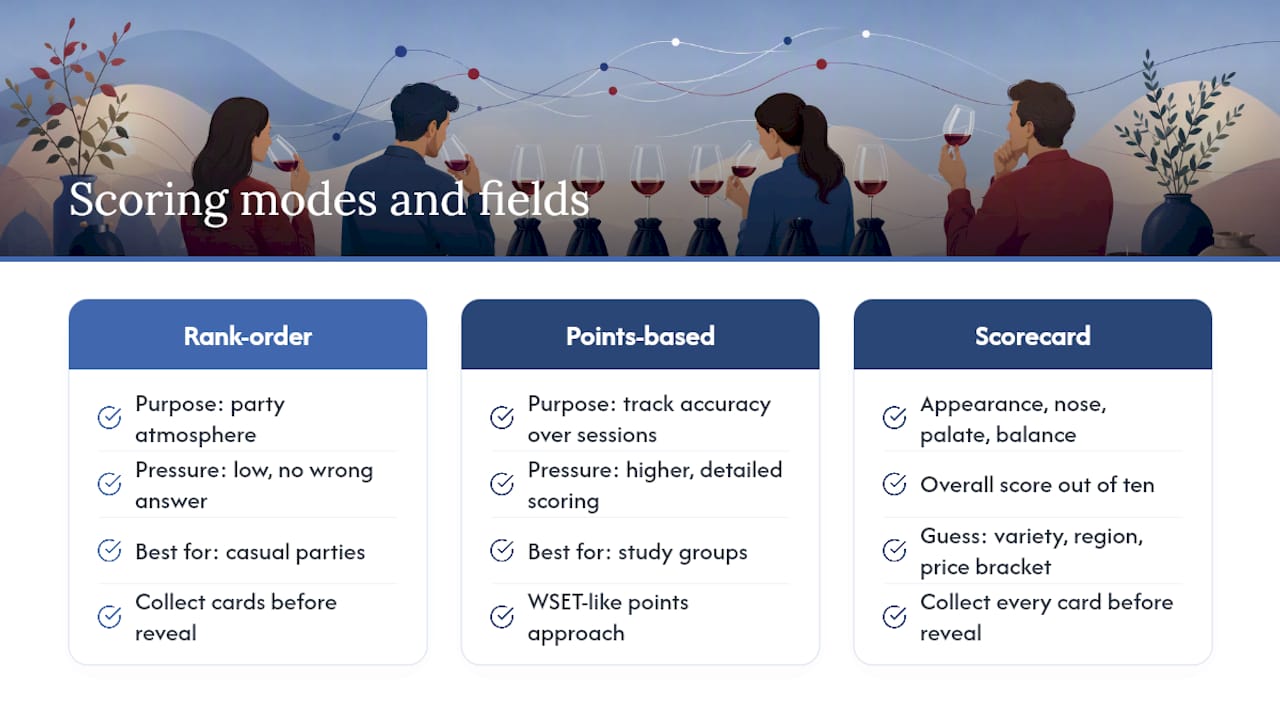
Collect every card before you reveal a single label. Guests will quietly revise their guesses once someone else’s opinion lands, and that ruins the data for everyone. For groups larger than ten, a shared digital form on a phone speeds up collation. A small prize (the next bottle, a return match, bragging rights) settles most ties without needing a formal tiebreaker system.
Running the night: timing, rules and the reveal
- Open with a five-minute briefing covering the format, the ground rules and how scoring works.
- Allow three to four minutes per wine before moving to the next pour.
- Collect all scorecards once the final wine has been tasted.
- Run the reveal and discussion for at least 20 minutes, unwrapping one bottle at a time.
Two rules keep the exercise honest: no sharing guesses mid-flight, and palate cleansers (water, plain crackers) only between wines, never anything fatty or strongly flavoured. Sommeliers consistently point to deduction through elimination as the single most useful skill to teach guests during the reveal. Rather than guessing outright, ask them to first rule out what a wine cannot be.
Pro Tip: When you unwrap each bottle, read out one or two scorecard comments that best match the wine before revealing the label. It turns the reveal into a genuine “who nailed it” moment rather than a simple show and tell.
For office or corporate groups, appoint table captains to run scoring at each cluster and a single roving facilitator to manage timing and the master reveal.
Common setup mistakes and how to fix them on the night
Too many wines is the most frequent error. Beyond eight pours, palates fatigue and scorecards blur together. Visible label cues, such as a distinctive cork or capsule left half exposed, undo the whole exercise, so check every bag before guests arrive. Mismatched glassware and poor temperature control both distort perception more than hosts expect, and serving anything fatty (cheese, charcuterie, dips) during the flight coats the palate and flattens everyone’s ability to discriminate between wines. Save the heavier food for after the reveal.
Quick fixes for the night itself:
- Re-bag a bottle immediately if a label slips into view.
- Add an extra minute of palate rest if one wine is clearly dominating the conversation.
- Reorder on the fly if a wine turns out far more powerful than expected.
- Remind guests, gently, to rinse their glass with water if they seem to be carrying flavour between pours.
Offer a non-alcoholic option (sparkling water with a citrus twist works well) so non-drinkers can still take part in the guessing without feeling sidelined. Run through your checklist 15 to 30 minutes before guests arrive: bottles concealed and numbered, glasses set, scorecards stacked, water jugs full, and the answer key somewhere only you can find it.
Guiding guests with different levels of tasting experience
A room of six guests rarely means six equal palates, and that mismatch is exactly what makes blind tastings interesting rather than intimidating. For complete beginners, give them a vocabulary crutch before pouring starts: three words for aroma (fruity, earthy, floral), three for texture (light, medium, full), and permission to say “I don’t know” without embarrassment. Experienced guests need the opposite treatment. Push them toward the elimination method rather than a straight guess, asking them to name what a wine definitely is not before committing to what it is.
Pairing a novice with a more experienced taster at the same table, rather than seating by friend group, tends to lift the whole table’s engagement. The novice hears real reasoning out loud; the experienced taster gets to articulate thinking they usually keep internal. Avoid the trap of letting the most confident voice in the room announce guesses first. Once someone states a wine “is obviously a Shiraz,” quieter guests stop trusting their own palate and simply nod along.
Keep the scoring language forgiving too. A rank-order card removes the pressure of being “wrong” about a grape variety, which matters enormously for a first-time taster who might otherwise disengage after one bad guess. Save the harder, points-based accuracy scoring for a repeat group who has asked for it.
Training your palate during the tasting itself
The structure that Master of Wine practitioners rely on, moving methodically from appearance to nose to palate, exists precisely because it turns a single guess into a repeatable skill. Encourage guests to state what they see before they smell, and what they smell before they taste. Colour intensity and hue narrow down grape variety and age far more reliably than most people assume, and skipping straight to a sip wastes that information.
Build in a deliberate pause after the nose stage. Ask guests to name two aromas out loud before moving to the palate. This small delay forces active engagement rather than passive sipping, and it is the same discipline that underpins structured tasting education at a professional level.
The elimination technique deserves a proper introduction rather than a passing mention. Rather than asking “what is this wine,” prompt guests to ask “what can this wine not be.” High acidity rules out most warm-climate reds. A lack of oak character rules out heavily aged styles. This reframing turns guessing into reasoning, and reasoning is the actual skill being trained, not trivia recall.
Running the same format twice across a season, with new wines each time, builds far more capability than one elaborate one-off night ever will. Palates improve with repetition, not intensity.
Adapting the format beyond wine
The same setup translates cleanly to spirits, with a few adjustments. Whisky and gin both benefit from smaller pours (15 to 20 ml) and a longer gap between tastes, since higher alcohol content fatigues the palate faster than wine does. Add a small amount of water to each spirit pour partway through; it opens up aromatics that neat spirits often hide.
Olive oil tastings follow an almost identical structure, minus the glassware. Small cups, bread for cleansing, and the same appearance to nose to palate sequence work well, with colour swapped for viscosity as the visual cue. Chocolate and coffee both adapt easily too, particularly for guests who do not drink alcohol, and both reward the same elimination-style questioning about origin and roast or bean percentage.
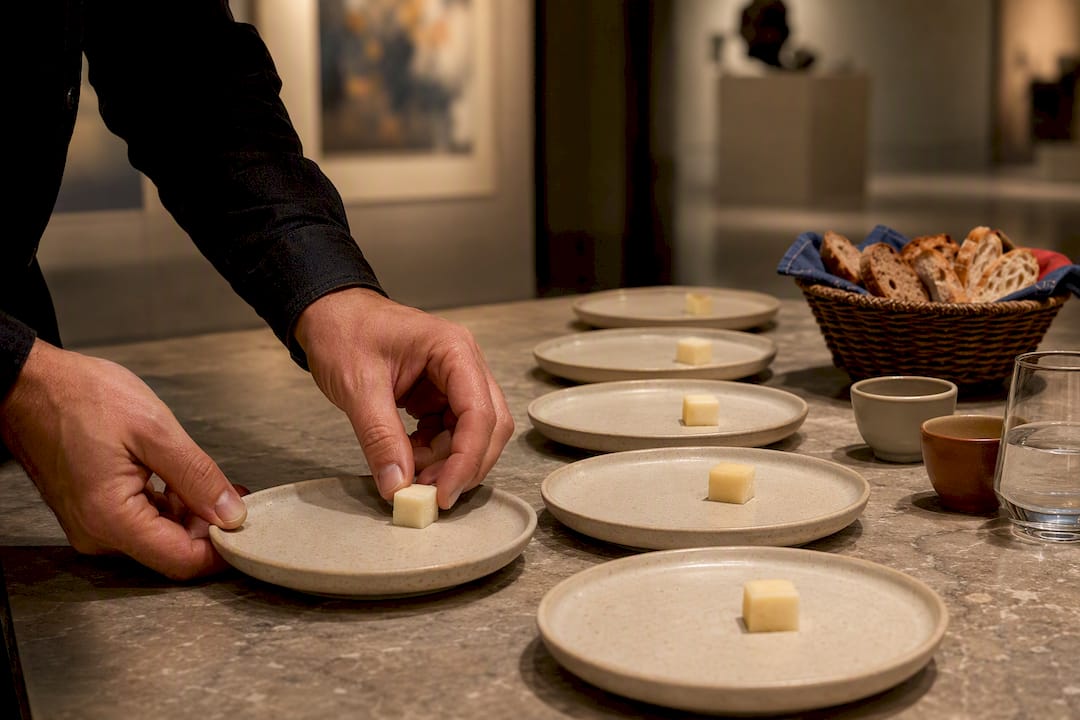
Cheese pairs naturally as a post-reveal course rather than a blind category of its own, mostly because texture and aroma make concealment difficult without ruining the product. If you do want to run a genuinely blind cheese flight, numbered plates and a strict no-rind-visible rule are essential, and pour sizes should be tiny: a thumbnail-sized piece is plenty per taster.
How Aptent would stage a small blind tasting
A well-curated flight needs benchmarks and one genuine surprise, which is where a curated selection earns its place over a random supermarket run. Simple upgrades, matching glassware and labelled, covered decanters, lift the whole evening without extra effort. Save richer bites, including caviar, for after the reveal, once palates are free to enjoy rather than analyse. Consider a boutique event service over DIY once your guest list or wine list grows past what one host can comfortably manage alone, an approach echoed in broader thinking on curated culinary experiences.
— APTENT
Let Aptent handle the wine list while you handle the guest list
Running a blind tasting well takes real preparation, and not every host has a spare weekend to source six well-matched bottles blind, or the storage to keep a proper cellar on hand. A curated wine selection removes that guesswork entirely, pairing bottles that genuinely reward comparison rather than simply filling glasses.
For a larger gathering or a corporate event, Aptent’s Gourmet Events service handles the entire evening as a private, boutique experience, curated selection, staged reveal and all, so you get to host rather than run logistics. If you would rather build your own flight, browse Aptent’s gourmet accessories for glass markers, spoons and stoppers, or head to Aptent Gourmet to explore the current wine and caviar selection and get your night booked in.
Sources
For deeper technique, Jancis Robinson’s essential tools guide and VinePair’s sommelier tips are worth bookmarking. For glassware specifics, see Aptent’s guide to selecting glassware.
- Blind tasting, part 1 – essential tools | Jancis Robinson
- 6 Somms Share Their Top Tips for Blind Tasting Wine | VinePair
- How to Host a Blind Wine Tasting | The Wine Voyage


