
Serve 15–30 g Portions: Host Caviar With Vodka Properly
Yes, vodka is a classic and technically sound partner for caviar, prized for its neutrality and cold, palate-cleansing bite. Choose a clean, unflavoured vodka served ice-cold, keep your caviar chilled on ice until the moment of service, and use non-reactive spoons. This guide unpacks the vodka styles, serving protocol, and accompaniments that turn a good tin of roe into a genuinely refined tasting.
TL;DR:
- Serving vodka between minus 6°C and minus 18°C enhances the tasting experience by thickening the spirit and mellowing alcohol heat.
- Wheat vodka pairs best with buttery, large-pearled caviar, while rye vodka suits firmer, brinier roe, and potato vodka complements richer, creamier caviars.
- Keep caviar on ice no more than ten minutes before serving to preserve its aroma and avoid over-chilling, which mutes flavor.
- Use non-reactive spoons and minimal accompaniments like plain toast or boiled potato to avoid distracting from delicate flavors.
- Avoid flavored or sweetened vodkas and serving caviar as shots to maintain the clarity and nuance of the pairing.
Table of Contents
- Why vodka and caviar are a classic pairing
- Choosing the right vodka style for your caviar
- Matching vodka to different caviar types
- How to serve caviar and vodka properly
- What to serve alongside vodka and caviar
- Mistakes to avoid when pairing vodka with caviar
- A host’s checklist for a proper vodka and caviar tasting
- Bring the tasting home with Aptent
- Sources
- FAQ
Why vodka and caviar are a classic pairing
Vodka’s neutrality is the entire point. A clean spirit with no residual sugar, botanicals, or oak influence adds nothing to compete with the roe’s flavour, and served at the right chill, it resets your palate between spoonfuls rather than layering on top of the last one.
Temperature does most of the work here. Ice-cold vodka thickens slightly, muting the perceived burn of alcohol and letting it glide over the tongue rather than announce itself. That same coldness slows the caviar’s aroma just enough to keep each pearl distinct instead of blurring into the next.
The tradition runs deep, tracing back through Russian and Eastern European court dining, where sturgeon roe and grain spirits shared the table long before caviar became a byword for luxury elsewhere. What’s worth noting is that the custom survived not out of habit but because the logic holds up under scrutiny:
- Neutral spirits don’t mask delicate, briny, or buttery notes the way aromatic drinks can.
- Cold temperature slows oxidation on the tongue, extending how long you can taste the roe’s nuance.
- A short, sharp sip clears residual salt and oil before the next spoonful.
Choosing the right vodka style for your caviar
Not all vodkas behave the same way on the palate, and the base grain matters more than most drinkers assume. Wheat vodkas tend to have the softest, roundest mouthfeel, which makes them the most forgiving match across a range of caviars, especially buttery, large-pearled varieties. Forbes’ expert guidance on vodka styles points to wheat as the most versatile base for exactly this reason.
Rye vodkas carry a firmer, slightly spiced finish that stands up well against brinier, more assertive roe, where a softer spirit would simply disappear. Potato vodkas run fuller and creamier still, and suit caviars with a rich, almost custardy texture that needs a vodka with enough body to hold its own alongside it.
The rule that matters most: stick to neutral, multiple-distilled vodkas and avoid anything flavoured or sweetened.
- Wheat vodka: soft, round, versatile, pairs well across most caviar styles.
- Rye vodka: firmer structure and light spice, suits brinier roe.
- Potato vodka: fuller body, matches creamier, richer caviars.
- Flavoured or citrus-infused vodkas: avoid outright, as they fight the roe rather than framing it.
Statistic Callout: Chilling matters more than most hosts realise. Serving vodka between roughly minus 6°C and minus 18°C is the range experts recommend, cold enough that the spirit thickens and the alcohol heat recedes, but not so cold it loses all character. A domestic freezer set to its coldest setting gets you there reliably.
Matching vodka to different caviar types
Egg size, fat content, and salinity all shift what a caviar needs from its vodka. Larger, oilier pearls carry more fat on the palate and benefit from a vodka soft enough not to clash with that richness, while smaller, brinier eggs can handle a spirit with a touch more structure.
Aptent’s Baeri Signature caviar, with its buttery, approachable profile, sits comfortably alongside a wheat vodka, letting the roe’s nutty smoothness lead. The Oscietre Signature, firmer and more mineral in character, can carry a rye vodka’s slightly firmer edge without being overwhelmed by it.
If you’re tasting more than one caviar in a sitting, sequence matters. Food & Wine’s guidance on tasting technique recommends moving from the lightest, most delicate roe through to the most assertive, resetting with a small vodka sip between each.
- Buttery, large-pearled caviar (Baeri-style): pair with a soft wheat vodka.
- Brinier, firmer roe (Oscietre-style): pair with a structured rye vodka.
- Multiple caviars in one sitting: taste lightest to boldest, with a cleansing sip between each.
How to serve caviar and vodka properly
Getting the temperature and setup right does more for the tasting than any accompaniment ever will. CaviarGuide’s serving protocol is built around one idea: everything stays cold, and nothing reactive touches the roe.
- Chill vodka glasses in the freezer for at least an hour, and keep the bottle stored there until the moment of pouring.
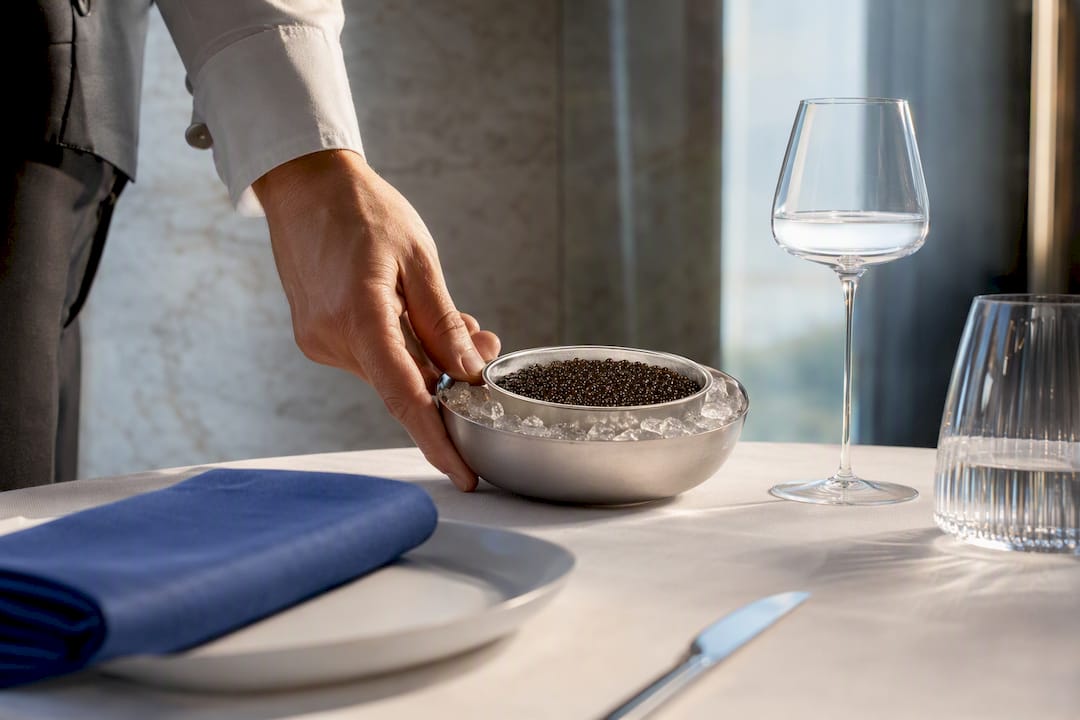
- Nest the caviar tin in a bed of crushed ice inside a proper ice cradle or bowl, angled so any meltwater drains away rather than pooling near the tin.
- Serve with mother-of-pearl, horn, bone, or gold-plated spoons. Metal cutlery reacts with the roe and taints its flavour within seconds.
- Portion around 15 to 30 grams of caviar per guest for a tasting, more if caviar is the meal’s centrepiece.
- Pour vodka in small measures, roughly 15 to 30 millilitres per round, enough to sip and reset without dulling the palate.
Pro Tip: Set your caviar tin on the ice cradle no more than ten minutes before your guests arrive. Caviar loses aroma quickly once opened, and over-chilling it too far in advance mutes the very nuance you’re serving it to showcase.
For hosts planning to serve several courses of it, Aptent’s guide to caviar service vessels covers presentation options in more depth. If you’re pairing quantities against a full guest list, Aptent’s notes on portioning caviar for events are worth a look before you buy.
What to serve alongside vodka and caviar
Less is genuinely more here. Blinis, plain unsalted toast, or a small round of boiled potato give the roe something to sit on without competing for attention, which is precisely why professional service guidance keeps accompaniments this minimal.
Strong aromatics, heavily seasoned garnishes, or anything acidic will fight the caviar rather than frame it. Onion, dill, and sour cream have their place in some traditions, but a serious tasting benefits from tasting the roe plain first, then adding a single accompaniment at most.
- Plain blinis or unsalted toast: neutral base, doesn’t compete with the roe.
- Boiled potato: soft, mild, absorbs nothing that would clash.
- Skip strong aromatics like raw onion, capers, or heavily dressed garnishes for a purist tasting.
- Champagne or still mineral water work as alternatives to vodka for guests who prefer them, though Champagne’s acidity changes the pairing dynamic rather than simply cleansing.
Pace the tasting deliberately: taste the caviar first, then sip, rather than knocking back vodka and caviar together. Limit yourself to a handful of rounds before the palate starts to dull.
Mistakes to avoid when pairing vodka with caviar
The most common error is reaching for a flavoured vodka, believing it adds interest. It does the opposite, drowning out the very subtlety you’re paying for. A close second is over-chilling caviar so aggressively, or for so long, that it loses its aroma before anyone’s had a spoonful.
Letting meltwater touch the roe is a quieter mistake but just as damaging; it dilutes flavour and softens texture within minutes. Treating vodka as a shot to be thrown back rather than sipped slowly also undercuts the entire premise of the pairing.
- Flavoured or sweetened vodka: masks the roe instead of framing it.
- Over-chilling caviar for too long before service: mutes aroma.
- Meltwater contact: dilutes flavour and softens pearl texture.
- Vodka served as a shot rather than sipped slowly: defeats the palate-cleansing purpose.
Pro Tip: Open your caviar tin only once the table is seated and ready. Once exposed to air, roe begins to lose its top notes within roughly twenty minutes, so timing the opening to guest arrival matters more than almost any other detail.
For hosts wanting more presentation ideas beyond the plate itself, Wild Foodz’s collection of food presentation examples offers useful visual inspiration for canapé styling.
A host’s checklist for a proper vodka and caviar tasting
Running a tasting well comes down to timing more than anything else: vodka in the freezer an hour ahead, caviar on ice no more than ten minutes before guests sit, spoons already at each place setting. Tastings and private events draw on curated sourcing to keep every detail, from tin to spoon, consistent. If you’d rather have this managed for you, the next section covers how.
— APTENT
Bring the tasting home with Aptent
Aptent is the practical route for anyone who wants this pairing done right without sourcing vodka styles and caviar grades separately. Our Baeri Signature caviar comes in tasting-friendly sizes suited to exactly the portions this guide recommends, while the Oscietre Signature gives structure-loving palates a firmer, brinier option to sit alongside a rye vodka.

If assembling the full setup yourself, ice cradle, spoons, temperature timing, sounds like more effort than you want to spend on a Friday night, Aptent’s Gourmet Events service handles it for you, pairing curated caviar selections with vodka or Champagne for private tastings and corporate gatherings. Browse the full range at Aptent Gourmet and book a tasting sized to your guest list.
Sources
- The best vodkas to pair with caviar, according to an expert — Forbes
- How to serve caviar: expert techniques & pairings — CaviarGuide
- How to eat caviar the professional way — Food & Wine
- Tasting Table guidance on serving caviar and pairing choices — Tasting Table
FAQ
Does caviar go well with vodka?
Yes, vodka’s neutrality and cold temperature make it one of the most reliable partners for caviar, cleansing the palate between bites without masking the roe’s flavour.
What alcohol is best with caviar?
Vodka is the traditional choice, with Champagne as the classic alternative for those who prefer a touch of acidity alongside the roe.
What is the best vodka to pair with caviar?
A clean, unflavoured, multiple-distilled vodka works best; wheat vodkas suit buttery caviars like Aptent’s Baeri Signature, while rye vodkas suit brinier styles such as Oscietre.
How do you eat caviar and vodka together?
Taste the caviar plain first from a non-reactive spoon, then sip a small, ice-cold measure of vodka to reset the palate before the next spoonful.


