
3–5 Seconds to Taste It: How a Caviar Bump Reveals Quality
A caviar bump is a small dollop of roe, typically a small amount used for caviar bumps, placed on the back of the hand and eaten in a single bite, no spoon required after service. It carries a double meaning: a genuine tasting technique borrowed from professional buyers, and a modern, social-media-fuelled ritual for sharing luxury in public. Nobody snorts anything. The name is theatre; the method is culinary craft.
TL;DR:
- The traditional caviar bump originated as a quick tasting method used by traders in the Caspian Sea to evaluate roe quality, relying on hand warmth and body contact.
- Proper technique involves placing a small portion of caviar on the hand’s webbing, pausing to allow warmth to enhance aroma, then pressing the roe against the palate with the tongue.
- Cleanliness and hygiene are crucial, with trained servers using dedicated spoons and handling caviar carefully to avoid contamination or spoilage.
- The social media trend has amplified the bump’s popularity, driven largely by its visual appeal and low-cost way for casual audiences to experience luxury caviar.
- Its growing use in restaurants ranges from a comparison tool between varieties to a tableside spectacle, but it remains a small, deliberate portion rather than a casual gesture.
Table of Contents
- Where the caviar bump tradition began
- How to take a caviar bump the right way
- Why the caviar bump became a social media trend
- Etiquette, hygiene and safety around caviar bumps
- APTENT. Gourmet’s view on portioning and hosting
- Is the caviar bump here to stay?
- Buy caviar, accessories, or book a private tasting with APTENT. Gourmet
- Sources
- FAQ
Where the caviar bump tradition began
Long before it had a name suited to a TikTok caption, the bump was a working tool. Traders and chefs in the Caspian Sea region used it to judge roe quickly and honestly, warming a small amount against the skin to check for the buttery smoothness, aroma, and pop that separate a fine tin from a mediocre one. The Irish Times traces the bump method back to these traditional tasting practices, noting its role as a genuine sampling technique rather than a novelty invented for an audience.
The hand serves a specific purpose here that a spoon or a cracker never could:
- Body heat gently lifts the aromatics in the roe, revealing nuances that stay dormant at fridge temperature.
- The webbing between thumb and forefinger creates a natural, shallow well, ideal for holding a small amount without crushing the pearls.
- Tasting straight from the skin removes competing flavours (bread, butter, blini) so a buyer or chef can judge the caviar on its own merits.
That practical habit never disappeared. It simply waited in professional kitchens and trading rooms until someone thought to put it on a menu, and diners thought to film it.
How to take a caviar bump the right way
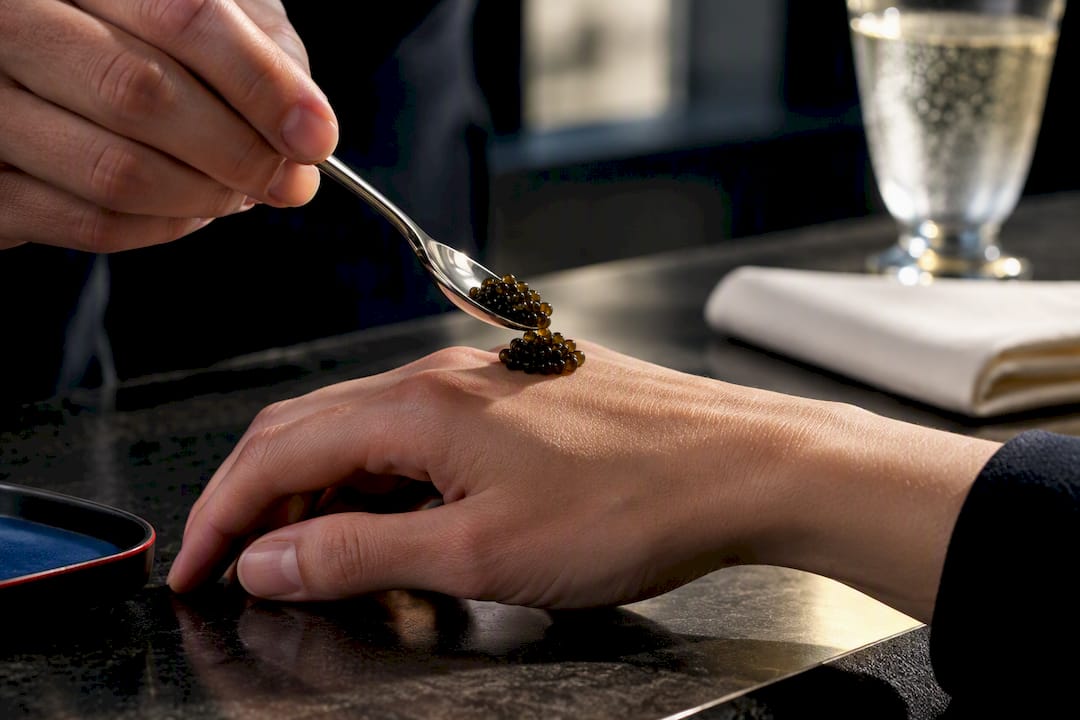
Technique matters more than most first timers expect, and getting it wrong is usually a hygiene problem rather than a taste one. Start with a portion of a small amount used for caviar bumps, roughly what the New York Times documents as the standard serving size, placed on the fleshy webbing between your thumb and index finger. A server should place it there directly using a mother-of-pearl, bone, or wooden spoon, never metal, which reacts with the roe and dulls its nutty richness, a point the New York Times also notes when describing proper service.
Here’s the sequence worth following:
- Wash and dry your hands before the caviar arrives at the table.
- Let the server place the portion on the webbing of your hand, not your wrist or palm.
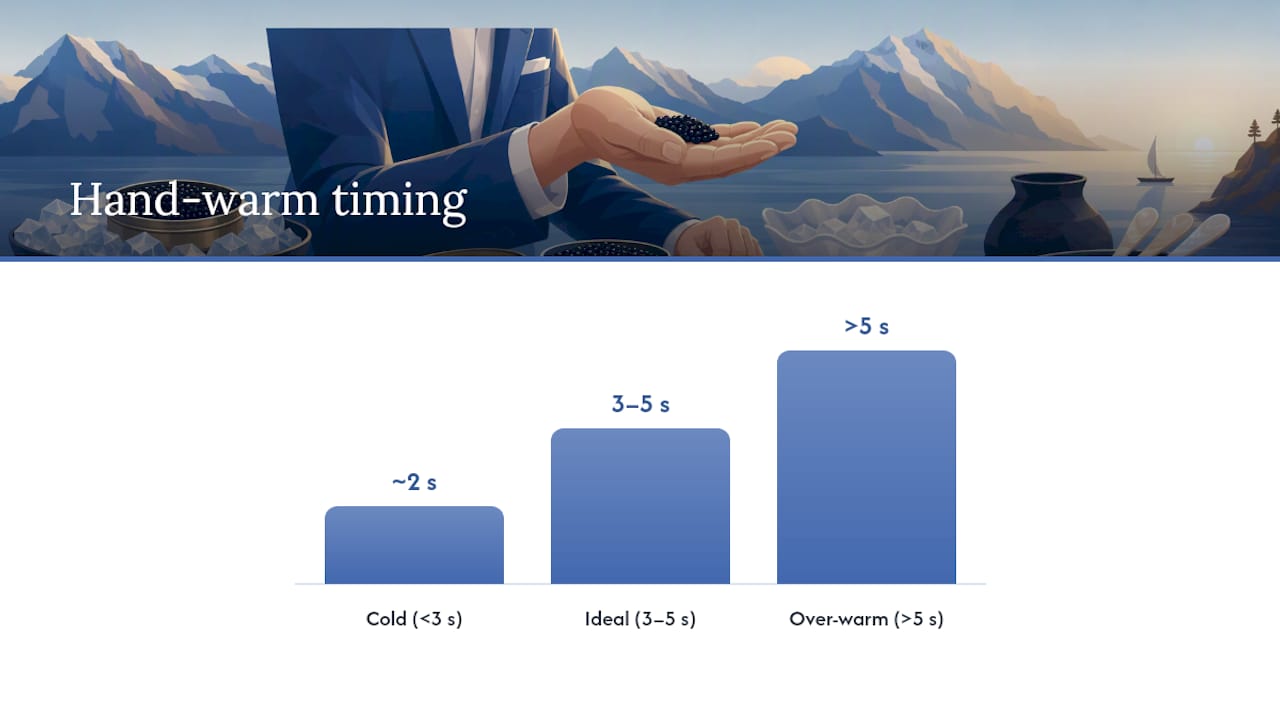
- Pause for a few seconds. This lets the caviar warm slightly and lets its aroma open up.
- Lift your hand to your mouth and press the roe against your palate with your tongue rather than chewing hard.
- Let the pearls burst naturally before swallowing.
The most common mistake is impatience: gulping the bump cold, straight off a spoon, misses the entire point of the warming step. Tasting Table’s guidance on hand-eaten caviar makes the same point, describing how a brief pause against warm skin changes both texture and flavour before it reaches your tongue.
Pro Tip: Give the caviar three to five seconds of hand warmth before eating it. Any longer and the roe starts to lose its structure; any shorter and you’re simply eating it cold, which defeats the purpose of the bump entirely.
Why the caviar bump became a social media trend
The bump’s rise owes almost everything to how well it photographs. A single, glistening dollop on the back of a manicured hand is a ready-made close-up, and the Irish Times points to enormous social platform reach behind the trend’s spread, with related tags amassing well over a billion views across short-form video. Celebrities posting bumps at dinner did the rest, turning a trader’s habit into a shareable ritual almost overnight.
Part of the appeal is economic, not just visual. A full tin of Osetra or Baeri caviar is a serious purchase, but a bump lets someone taste genuine luxury for the price of a small side dish, a low-commitment entry point into a product that has always guarded its exclusivity closely.
That democratisation has critics, and they’re not shy about it. Etiquette purists argue the bump strips away the ceremony that once surrounded caviar service, the blinis, the crème fraîche, the mother-of-pearl spoon laid just so, replacing it with something closer to a bar trick. Venues, meanwhile, have leaned into the theatre on purpose:
- Restaurants use bumps as comparative tastings, letting guests sample Osetra against Baeri without committing to a full tin.
- Broadsheet’s coverage of Australian menus shows the format spreading through local hospitality as both a sampling device and a piece of tableside spectacle.
- Some venues frame the bump explicitly as an add-on experience rather than a course, pricing it accordingly.
Etiquette, hygiene and safety around caviar bumps
The word “bump” invites an obvious, unfortunate joke, and it’s worth killing outright: this is food, eaten, never inhaled. Any mimicry of snorting you see online is pure theatre, a wink at the slang term rather than an instruction. Genuine hygiene matters far more than the joke does.
Well-run service means a server places the portion directly onto clean skin using a dedicated, single-use spoon, never a communal one dipped tin to tin. If you have a seafood or fish allergy, treat caviar with the same caution you’d apply to any roe or shellfish product, and say so before it’s served. Warning signs worth noticing as a guest include caviar sitting unchilled at room temperature, staff handling tins with bare hands rather than gloves or a clean spoon, or a server placing the bump anywhere other than a clean patch of skin.
APTENT. Gourmet’s view on portioning and hosting
Chefs and hosts increasingly treat the bump as a deliberate portioning tool rather than an afterthought, and the Irish Times reports on its use for side-by-side sampling between varieties. A few practical habits separate a considered tasting from a gimmick:
- Micro-bumps of around 3 grams work well as a comparative device across two or three varieties, letting a guest taste difference rather than just quantity.
- Curated sourcing matters more than portion size. A novice taster forgives a small serving far more readily than an unreliable one.
- Hosts running a full tasting rather than a single bump should look at portioning frameworks built for hosting a luxury caviar tasting at home, and compare the flavour profiles behind Beluga versus Osetra before deciding what to pour.
Is the caviar bump here to stay?
The bump earns its popularity honestly: it democratises a genuinely exclusive product and gives it a shareable, photogenic moment, something caviar has rarely had outside white tablecloths. The trivialisation risk is real too, but it shows up mainly when a venue serves the bump with no context, no sourcing story, nothing beyond the trick itself. For a host, the test is simple: a bump adds value when it introduces a guest to real caviar; it looks gimmicky when it’s the whole show. Either way, the meaning behind the trend hasn’t changed. It’s still a small taste of something rare, eaten the way tasters have always eaten it.
— APTENT
Buy caviar, accessories, or book a private tasting with APTENT. Gourmet
If a bump has piqued your curiosity, the natural next step is tasting properly curated caviar rather than guessing at quality online. Suppliers often source roe and accompaniments directly from reputable producers, so tins typically arrive with traceable stories rather than mystery labels.

Browse the Caviar and accessories collection for tins sized for sampling through to full service, including mother-of-pearl spoons suited to proper bump etiquette, or start smaller with a 30g Baeri Signature Caviar tin sized exactly for a home tasting. For plating inspiration beyond the bump itself, Wild Foodz’s guide to vibrant food presentation is worth a look before your next gathering.
For anyone hosting a group, corporate event, or milestone celebration, APTENT Privé’s private tasting events pair curated caviar and wine with guided service, so your guests experience the ritual done properly rather than improvised. Get in touch to check availability for your next occasion.
Sources
- Caviar ‘Bumps’ Are All the Rage — The New York Times
- Caviar bump: Dublin food trend — The Irish Times
- Why you should try eating caviar right off of your hand — Tasting Table
- Why are caviar bumps on so many menus around Australia — Broadsheet
FAQ
Why do people do a bump of caviar?
People eat a caviar bump because it’s a fast, low-commitment way to taste luxury roe without ordering blinis or a full tin, and because it photographs well for social sharing. The technique itself started as a professional method traders used to judge quality before it became a dining trend.
How much caviar is a bump?
A standard bump is a small amount of roe, placed on the back of the hand and eaten in one bite, per reporting on the trend’s typical serving size. Some venues serve slightly larger tasting portions when offering side-by-side comparisons between varieties.
What does caviar bump mean in slang?
The “bump” wording plays on drug slang purely for shock value and shareability, but the act itself is entirely food-based. You eat it from the back of your hand; nobody inhales anything, and the theatrical mimicry some diners do is a wink at the joke, not an instruction.
How do you properly take a caviar bump?
Let a server place the portion on the webbing between your thumb and index finger, pause a few seconds so body heat opens the aroma, then lift your hand to your mouth and press the roe to your palate with your tongue. Use a non-metal spoon for placement, since metal utensils dull the caviar’s flavour.
Where can I buy caviar suited for a bump at home?
APTENT. Gourmet’s caviar collection includes smaller tins, such as the 30g Baeri Signature Caviar, sized appropriately for sampling and home bumps rather than a full tasting spread.


