
Keep Cellars at 10–15°C: Champagne Storage for Collectors
Champagne rewards patience, but only when it is kept between 10°C and 15°C, away from light, in air with enough humidity to keep the cork supple. Stability matters more than hitting an exact number on the thermometer. Once a bottle is opened, reseal it with an airtight champagne stopper, refrigerate it immediately, and drink it within 24 to 48 hours to preserve most of its sparkle.
TL;DR:
- Maintaining a stable temperature between 10°C and 15°C is crucial, with sudden fluctuations causing more damage than slight deviations within the range.
- Humidity levels should stay above 60% to prevent cork drying out and oxygen intrusion, which lead to faster oxidation and loss of freshness.
- Champagne bottles can be stored upright or lying down since internal pressure keeps the cork sealed; lying down saves space without harming the wine.
- An opened bottle should be resealed with a metal champagne stopper, refrigerated immediately, and consumed within 24 to 48 hours for optimal sparkle.
- Proper transportation involves gentle handling and avoiding heat exposure, with settling time of 24 to 48 hours before opening after shipping or driving.
Table of Contents
- What is the ideal champagne storage guide for temperature, light and humidity?
- How should you care for an opened bottle of champagne?
- Which champagnes are worth cellaring long-term?
- How do you handle and transport champagne safely?
- What temperature should champagne be served at, and how do you chill it fast?
- Why trust this guide, and where to go deeper
- Balancing the cellar with the glass
- Curated champagne, the right accessories, and events that handle it all properly
- Sources
- FAQ
What is the ideal champagne storage guide for temperature, light and humidity?
Temperature control sits at the top of any serious champagne storage guide, and the numbers are less forgiving than most collectors assume. The Champagne Bureau’s storage guidance puts the ideal band at 10 to 15°C, while Moët & Chandon’s own advice allows a slightly wider window of roughly 7 to 18°C, provided the temperature does not swing rapidly. That last caveat is the one collectors overlook. A cellar that drifts from 12°C to 22°C over a hot afternoon and back again overnight does more damage to a bottle’s ageing trajectory than one that sits at a steady 16°C year round. Heat accelerates chemical reactions inside the bottle and can disturb the fine, persistent bead that separates good champagne from average sparkling wine.
Humidity is the quiet partner to temperature. A cork that dries out lets in oxygen, and oxidised champagne loses its freshness fast.
Light is the enemy most people forget until it’s too late. Moët’s guidance is blunt: light damages the wine, particularly UV exposure through clear glass, which is why every serious producer bottles champagne in tinted glass and why you should never leave a bottle on a sunlit shelf as decoration. If you want a bottle on display, use a dummy or an empty bottle and keep the real thing in the dark, a practise the Champagne Bureau specifically recommends for dedicated, odour-free storage spaces.
Position matters less than people think. Champagne can be stored upright or lying down; unlike still wine, its cork does not need constant contact with liquid to stay moist, because the pressure inside the bottle keeps it sealed regardless of orientation. Lying bottles down is the more space-efficient option for a wine rack or cellar, but upright storage in a dedicated fridge is perfectly fine for bottles you plan to drink within a year or two.
Vibration and thermal shock deserve equal attention. Constant movement, such as storage near a washing machine or a compressor-heavy fridge, disturbs sediment and stresses the cork over time. Keep bottles on stable shelving, away from heaters and direct appliance vibration, and let deliveries settle before shifting them into long-term storage.
- Temperature: 10 to 15°C, stable, away from direct heat sources
- Humidity: above 60%, ideally 60 to 80%, to protect the cork
- Light: dark storage only or an opaque cover for display bottles
- Position: upright or lying down both work; lying down saves space
- Vibration: stable shelving, away from appliances and foot traffic
Pro Tip: If you’re storing champagne in a domestic fridge long term, keep a separate wine fridge instead. Standard kitchen fridges run drier than 60% humidity and open constantly, which stresses corks over months of storage.
For a deeper dive into cellar conditions beyond champagne, Aptent’s guide to storing fine wine correctly covers the same principles applied to still wine collections.
How should you care for an opened bottle of champagne?
An opened bottle isn’t a lost cause, but it needs the right gear and a tight timeline. Follow these steps:
- Reseal immediately with a specialised metal champagne stopper fitted with a rubber ring and locking latches. Standard cork stoppers or kitchen wrap won’t hold the internal pressure and will let the fizz escape within hours.
- Refrigerate straight away. Cold slows the loss of carbon dioxide and keeps aromatics from fading.
- Drink within 24 to 48 hours. Joseph Perrier’s FAQ confirms that a properly resealed bottle holds most of its sparkle within that window, but effervescence declines steadily after that.
- Label the bottle with the date it was opened, and avoid repeated fridge-to-room-temperature cycles, which stress the seal further.
Common mistakes: using a regular cork, leaving the bottle upright and unsealed on the counter, or assuming a “quiet” spot in the pantry is as good as the fridge.
Which champagnes are worth cellaring long-term?
Not every bottle in your collection deserves years in the dark, and knowing which ones do is where a real champagne aging guide earns its keep. Moët’s guidance draws a clear line between non-vintage champagne, generally best drunk within a few months to three years of purchase, and vintage or prestige cuvées, which can reward seven to ten years or more in the cellar depending on the producer. Joseph Perrier notes that some collectors push certain vintages out to 20 years, though that is a matter of personal preference rather than a universal rule.
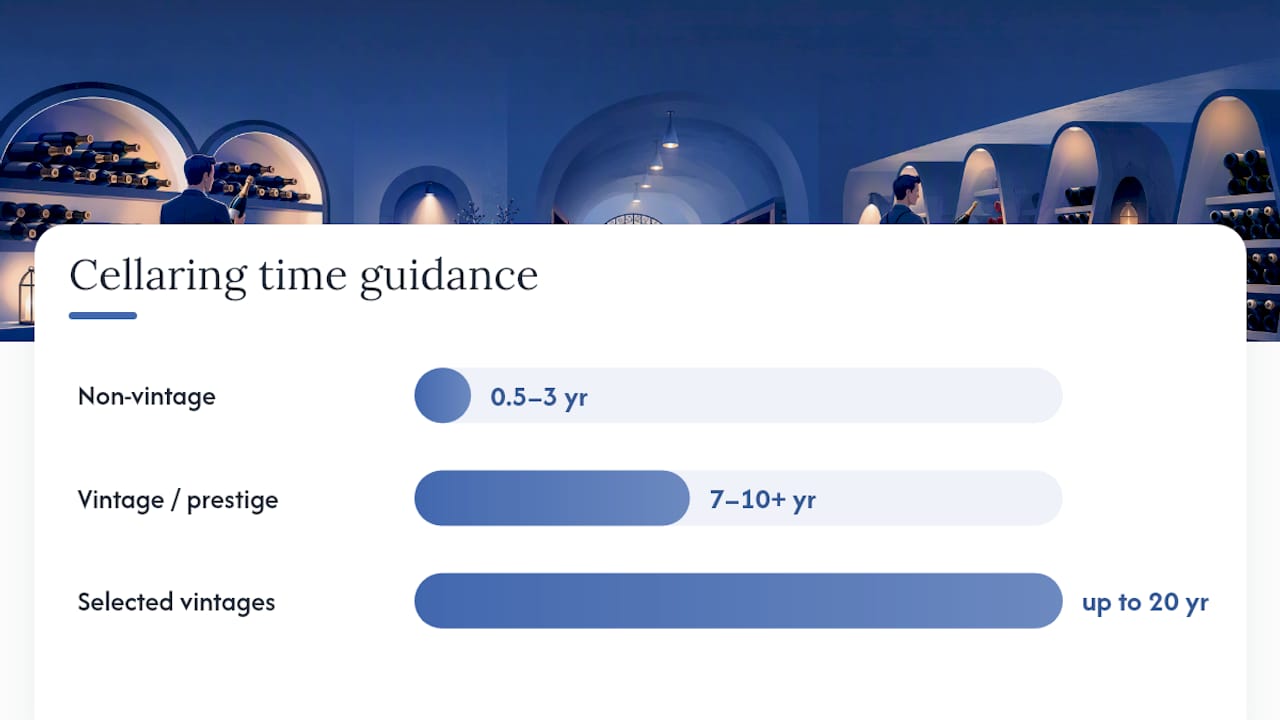
Bottle size changes the equation. Magnums and larger formats age more slowly than standard 750ml bottles because the ratio of wine to the small amount of oxygen trapped under the cork is more favourable, giving the wine a gentler, longer evolution. If you’re building a serious long-term collection, magnums are worth the extra shelf space, and Aptent’s guide to champagne bottle sizes breaks down handling considerations across formats from splits to jeroboams.
Watch for these signs that a bottle is evolving and worth tasting sooner rather than later:
- Deepening colour, from pale straw toward gold or amber
- Aromatics shifting from fresh fruit toward toasted, nutty, or brioche notes
- A visibly softer, less persistent bead when poured
Taste periodically rather than waiting for a single “perfect” moment. Opening one bottle from a case every year or two tells you far more about where that wine is heading than any timeline on a label ever will.
How do you handle and transport champagne safely?
Getting a bottle home or to an event intact matters as much as how you store it afterwards. If a bottle has been shipped or driven any distance, let it settle upright for 24 to 48 hours before opening, a step the Champagne Bureau specifically recommends to let the wine recover from movement and any temperature stress.
- Never leave bottles in a car boot on a warm day, even for a short errand
- Use insulated bags or boxes for transport in hot weather
- Avoid sudden jolts or rough handling during loading and unloading
- If a bottle has been exposed to heat, don’t open it straight away; let it stabilise in a cool, dark spot first and treat it conservatively
Pro Tip: Planning champagne service for an event? Coordinate delivery timing with your caterer or florist so bottles aren’t sitting in a hot vehicle or on an unshaded table before service. Event food planning partners and centrepiece suppliers can help you sequence deliveries so the wine arrives last and cold.
What temperature should champagne be served at, and how do you chill it fast?
Serving temperature depends on style. Most brut champagnes taste best between 7°C and 9°C, while lighter rosés and some fuller vintage styles are more expressive a touch warmer, closer to 10 to 12°C, according to Moët’s serving guidance. Chilling in the fridge takes two to three hours; an ice bucket filled with equal parts ice and water gets there in 20 to 30 minutes, and an ice and salt bath is faster still.
- Never use the freezer. Rapid freezing causes thermal shock, can force the cork out under pressure, and disrupts the wine’s structure
- An ice bucket with water (not just ice) chills faster and more evenly than ice alone
- Ice and salt lowers the temperature further for a genuine emergency chill
If you’re planning service for a larger gathering, Aptent’s guide to champagne reception ideas covers timing multiple bottles for a crowd without compromising temperature.
Why trust this guide, and where to go deeper
This guide draws on storage rules published directly by the Champagne Bureau and producers including Moët & Chandon and Joseph Perrier, cross-referenced against the practical handling knowledge Aptent applies to its own curated selection of rare champagnes. The guide draws on expertise from boutique tasting events where cellar handling is part of the service, not an afterthought.
For readers who want the science behind the fizz, Aptent’s explainer on how champagne bubbles form is worth a read, as is the guide to champagne selection for events if you’re buying for a gathering rather than a cellar.
Balancing the cellar with the glass
The best collections aren’t the ones with the most bottles gathering dust. They’re the ones with a rhythm: some bottles set aside for a decade-long project, others opened without ceremony on a Tuesday. Try tasting one bottle from your cellar each season to track how it’s evolving, rather than waiting for a milestone that may never arrive.
— APTENT
Curated champagne, the right accessories, and events that handle it all properly
This service provides collectors a shortcut past the guesswork of sourcing rare champagne and the gear to store it properly, all from one curated source rather than piecing it together across specialist retailers. The Aptent shop carries a selection of prestigious champagnes alongside fine wines and caviar, sourced with the same authenticity standards collectors expect from a dedicated cellar supplier.

If you need the specialised stoppers, racks, or serviceware this guide recommends, the gourmet accessories collection has what you need to keep an opened bottle sealed properly between pours. For collectors planning a private tasting or a corporate event where cellar handling and service expertise matter as much as the bottles themselves, Aptent’s gourmet events service pairs champagne and caviar with the kind of hospitality that gets storage and service right from delivery to pour. Browse the shop, add a bottle or a stopper to your cart, or enquire about booking an event to get started.
Sources
- CHAMPAGNE WINES — storage guidance (Champagne Bureau, 2025)
- Guidelines for storing Champagne Moët & Chandon | Moët & Chandon
- FAQ | Joseph Perrier Champagne
FAQ
What is the ideal champagne storage temperature?
Between 10°C and 15°C is ideal, with the Champagne Bureau noting that stability matters more than hitting an exact figure within that range.
Can champagne be aged like still wine?
Non-vintage champagne is best drunk within a few months to three years, while vintage and prestige cuvées can age well for seven to ten years or more, according to Moët & Chandon.
Should champagne be stored upright or lying down?
Either works. Champagne’s internal pressure keeps the cork sealed regardless of position, so lying bottles down mainly saves shelf space in a wine rack or cellar.
How long does an opened bottle of champagne last?
An opened bottle resealed immediately with an airtight metal stopper keeps for 24 to 48 hours in the fridge, per Joseph Perrier’s guidance, though it steadily loses sparkle after that.
What is the best way to chill champagne quickly?
Use an ice bucket filled with ice and water for 20 to 30 minutes, or an ice and salt bath for a faster chill; never use the freezer, which risks thermal shock to the bottle.


